
22 Best Investing Books
The best investing books, ranked by how many expert sources recommend them, with guidance for beginners, index investing, stock analysis, and investor behavior.
Our take
Investing books can help with several different decisions: how to build a portfolio, how to evaluate a business, or how to keep emotions from directing a financial plan. A book about choosing individual stocks serves a different purpose from a beginner's guide to diversified funds, and neither can settle every question about someone's finances.
For a simple introduction to indexing, The Little Book of Common Sense Investing concentrates on costs and long-term ownership. A Random Walk Down Wall Street adds market history and competing investment ideas. Readers interested in businesses can turn to The Intelligent Investor or One Up On Wall Street, while The Psychology of Money focuses on behavior and the different experiences people bring to financial decisions.
Check editions and local context before relying on tax, account, or product details, especially in US-focused guides. Begin with The Little Book of Common Sense Investing for the indexing argument, or The Psychology of Money if you want an accessible discussion of how people think about wealth.
22 books · 13 sources · Last updated
As an Amazon Associate, we earn from qualifying purchases (at no extra cost to you).
How to choose from this list
Skip to the full rankingIf you're new to investing: The Little Book of Common Sense Investing → The Bogleheads' Guide to Investing
If you want a broader portfolio framework: A Random Walk Down Wall Street → The Four Pillars of Investing
If you want to study individual companies: One Up On Wall Street → The Intelligent Investor → The Essays of Warren Buffett
If you want to examine investor behavior: The Psychology of Money → The Behavioral Investor → The Most Important Thing
If you need personal finance foundations: I Will Teach You To Be Rich → The Simple Path to Wealth
If you're ready for specialist situations: You Can Be a Stock Market Genius
The 22 books, ranked
Ranked by how many expert sources name each book. Ties go to the book more people recommend.

The Intelligent Investor
For patient readers who want a foundation in value and investment temperament. Graham's margin-of-safety approach makes discipline central, though the older financial examples and dense chapters are easier to navigate with modern commentary.
What it's about
Benjamin Graham outlines a value-investing philosophy that distinguishes investing from speculation and emphasizes disciplined decision-making. He examines how investors can assess value, respond to market fluctuations, and use a margin of safety when considering purchases.
Also recommended by
7 people Warren Buffett recommended this book
Warren Buffett
"I obviously recommend, first and foremost, [this book]. Considered to be the 'Bible of Value Investing.'" - Warren Buffett
Warren Buffett's recommendation of this book  DJ Vlad recommended this book
DJ Vlad
"The single biggest influence on how I buy and sell stocks." - DJ Vlad
DJ Vlad's recommendation of this book  Kevin Rose recommended this book
Kevin Rose
"The foundation for investing." - Kevin Rose
Kevin Rose's recommendation of this book  Peter Mallouk recommended this book
Peter Mallouk
"A phenomenal book." - Peter Mallouk
Peter Mallouk's recommendation of this book  Bill Ackman recommended this book
Bill Ackman
"I found it fascinating." - Bill Ackman
Bill Ackman's recommendation of this book  Jamie Dimon recommended this book
Jamie Dimon
On Jamie Dimon's list of favorite books.
Jamie Dimon's recommendation of this book +1
More recommendations
- Ryan Petersen
"[Part of] my biz book canon." - Ryan Petersen
- Ryan Petersen

For readers interested in evaluating businesses and understanding the responsibilities of ownership. Cunningham organizes Buffett's writing by theme, though the corporate finance and accounting discussions assume more background than an introductory personal-investing guide.
What it's about
Lawrence Cunningham selects and organizes Warren Buffett's writings into lessons on business and investing. The collection presents Buffett's views on corporate management, finance, and ownership, offering readers a systematic introduction to the principles underlying his business philosophy.
Also recommended by
2 people- Bill Ackman recommended this book
Bill Ackman
One of 11 Books Bill Ackman told a young man to read before hiring him.
Bill Ackman's recommendation of this book  Patrick O'Shaughnessy recommended this book
Patrick O'Shaughnessy
"Touting advice from Buffett is so clichéd in the investment world, but for good a reason." - Patrick O'Shaughnessy
Patrick O'Shaughnessy's recommendation of this book

For readers who want to understand financial behavior before studying investment techniques. Housel's short essays make uncertainty, temperament, and personal experience accessible, though the reflective approach offers few detailed instructions for constructing a portfolio.
What it's about
Morgan Housel explores financial behavior through nineteen short stories about money and the people who use it. He examines the influence of personal history, ego, and incentives on choices that are often presented as purely mathematical decisions.
Also recommended by
1 person- Ankur Warikoo recommended this book
Ankur Warikoo
"Possibly the only money book one needs to read!" - Ankur Warikoo
Ankur Warikoo's recommendation of this book

The Little Book of Common Sense Investing
The Only Way to Guarantee Your Fair Share of Stock Market Returns
For readers who want the argument for low-cost index funds explained clearly. Bogle keeps costs and long-term ownership central, though the narrow focus and US market setting leave less room for other financial-planning needs.
What it's about
John Bogle makes the case for buying and holding broadly diversified, low-cost index funds. He explains how expenses affect investment results and develops a long-term approach to participating in the stock market.
Also recommended by
3 people- Warren Buffett recommended this book
Warren Buffett
"Investors – large and small – should [read this book]." - Warren Buffett
Warren Buffett's recommendation of this book  Charlie Munger recommended this book
Charlie Munger
"A useful contribution to [the author's] fellow citizens." - Charlie Munger
Charlie Munger's recommendation of this book  Mr. Money Mustache recommended this book
Mr. Money Mustache
"Read any book by [this author], the founder of Vangard." - MMM
Mr. Money Mustache's recommendation of this book

For readers who want market history connected with the case for diversified investing. Malkiel explains competing approaches in accessible terms, though the broad scope makes it longer than a simple introductory portfolio guide.
What it's about
Burton Malkiel examines investment theories, market bubbles, and the difficulty of consistently predicting stock prices. His guide argues for diversification and a disciplined approach, connecting the history of financial markets with practical considerations in building a portfolio over a lifetime.
Also recommended by
2 people- Mr. Money Mustache recommended this book
Mr. Money Mustache
"A great explanation of why index investing rules, written by a very wise professor/investor guy who has personally researched and debunked most of the common 'wisdom' that exists about stock trading today." - MMM
Mr. Money Mustache's recommendation of this book  Bill Gurley recommended this book
Bill Gurley
"Offers the most pragmatic advice for the long-term saver." - Bill Gurley
Bill Gurley's recommendation of this book

You Can Be a Stock Market Genius
Uncover the Secret Hiding Places of Stock Market Profits
For experienced stock investors interested in corporate events and overlooked situations. Greenblatt makes specialist reasoning vivid through cases, though the cheerful title understates the research, valuation skill, and risks involved in pursuing those opportunities.
What it's about
Joel Greenblatt examines investing opportunities created by corporate events such as spin-offs and restructurings. Case studies explain how unusual situations can produce overlooked securities, while exploring research, valuation, and the risks involved in pursuing opportunities outside familiar stock-market territory.
Also recommended by
1 person- Bill Ackman recommended this book
Bill Ackman
One of 11 Books Bill Ackman told a young man to read before hiring him.
Bill Ackman's recommendation of this book

The Bogleheads' Guide to Investing
For beginners who want a broad framework around diversified, low-cost investing. The authors connect portfolio choices with saving and personal planning, though the US account structures and tax examples require adaptation elsewhere and current verification.
What it's about
Mel Lindauer, Taylor Larimore, and Michael LeBoeuf explain an investing approach inspired by John Bogle. Their guide discusses saving, diversification, costs, and building a personal investment strategy, emphasizing disciplined decisions and a sustained approach to long-term financial goals.

For experienced readers who want a more thoughtful vocabulary for risk and investment judgment. Marks connects uncertainty, cycles, and contrarian thinking, though the reflective lessons are less suitable for someone seeking an initial step-by-step portfolio plan.
What it's about
Howard Marks distills his investment philosophy through lessons drawn from his client memos and experience. He examines risk, the relationship between price and value, market cycles, and contrarian thinking, emphasizing judgment rather than a simple formula for success.
Also recommended by
5 people- Warren Buffett recommended this book
Warren Buffett
"This is that rarity, a useful book." - Warren Buffett
Warren Buffett's recommendation of this book  Peter Attia recommended this book
Peter Attia
One of Peter Attia's answers to "any books you feel would make your reading list?"
Peter Attia's recommendation of this book - Bill Gurley recommended this book
Bill Gurley
Bill Gurley recommended this book on Quora.
Bill Gurley's recommendation of this book - Patrick O'Shaughnessy recommended this book
Patrick O'Shaughnessy
"One of my favorite books on value/distressed investing." - Patrick O'Shaughnessy
Patrick O'Shaughnessy's recommendation of this book  Lyn Alden recommended this book
Lyn Alden
"It’s accessible, short, qualitative rather than numbers-driven, and deeply insightful." - Lyn Alden
Lyn Alden's recommendation of this book

For readers who want to investigate individual companies rather than simply follow market tips. Lynch makes business observation approachable, though familiar products are only a starting point and cannot replace financial analysis or a realistic assessment of risk.
What it's about
Peter Lynch argues that individual investors can uncover promising companies through familiar products and everyday observations. Written with John Rothchild, his guide explains how to investigate those leads and connect business fundamentals with informed stock selection.
Also recommended by
2 people- Bill Ackman recommended this book
Bill Ackman
One of 11 Books Bill Ackman told a young man to read before hiring him.
Bill Ackman's recommendation of this book - Bill Gurley recommended this book
Bill Gurley
"Any investor starts with just building bedrock and that comes from reading. [For example,] you can read [this book]." - Bill Gurley
Bill Gurley's recommendation of this book

The Simple Path to Wealth
Your Road Map to Financial Independence and a Rich, Free Life
For readers who want a straightforward approach to saving and financial independence. Collins keeps the portfolio discussion easy to follow, though the US focus and concentrated examples require adaptation to different countries and individual circumstances.
What it's about
Collins presents an approach to financial independence centered on saving, avoiding debt, and investing through low-cost index funds. Originally developed from advice to his daughter, the book discusses market volatility, accumulating wealth, and supporting a more independent life.
Also recommended by
1 person- Mr. Money Mustache recommended this book
Mr. Money Mustache
"Teaches everything you really need to be a successful lifetime investor, yet it’s ridiculously simple." - MMM
Mr. Money Mustache's recommendation of this book
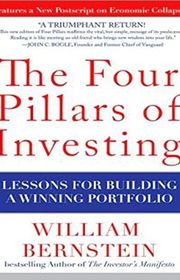
The Four Pillars of Investing
For readers ready to connect portfolio construction with financial history, psychology, and industry incentives. Bernstein provides a broader intellectual foundation than a short index-fund guide, though the detail and blunt assessments demand sustained attention.
What it's about
William Bernstein organizes investing around theory, history, psychology, and the investment business. He connects those subjects with diversification, costs, risk, and disciplined portfolio management, examining both how markets behave and how investors can misunderstand their own decisions.

The Outsiders
Eight Unconventional CEOs and Their Radically Rational Blueprint for Success
For readers who want to examine how executives deploy a company’s resources. The capital-allocation profiles add a management perspective to valuation guides, though the retrospective focus on exceptional performers limits how confidently their results can be generalized.
What it's about
William Thorndike profiles eight unconventional chief executives whose companies achieved exceptional shareholder returns. He examines their approaches to capital allocation, cash flow, and per-share value, drawing lessons from methods that departed from popular management fashions.
Also recommended by
7 people- Charlie Munger recommended this book
Charlie Munger
"Details the extraordinary success of CEOs who took a radically different approach to corporate management." - Charlie Munger
Charlie Munger's recommendation of this book - Warren Buffett recommended this book
Warren Buffett
"An outstanding book about CEOs who excelled at capital allocation." - Warren Buffett
Warren Buffett's recommendation of this book  Brian Armstrong recommended this book
Brian Armstrong
"Stories about eight CEOs and how they mastered capital allocation." - Brian Armstrong
Brian Armstrong's recommendation of this book  Michael Mauboussin recommended this book
Michael Mauboussin
"It is, and should at the top of the reading list for CEOs and investors." - Michael Mauboussin
Michael Mauboussin's recommendation of this book - Patrick O'Shaughnessy recommended this book
Patrick O'Shaughnessy
"Contains great lessons for investors because it highlights the importance of capital allocation." - Patrick O'Shaughnessy
Patrick O'Shaughnessy's recommendation of this book  Sam Hinkie recommended this book
Sam Hinkie
"A business-y thing." - Sam Hinkie
Sam Hinkie's recommendation of this book +1
More recommendations
- Michael Dell
"A good read for any business leader but especially those willing to chart their own course."- Michael Dell
- Michael Dell

The Only Investment Guide You'll Ever Need
For beginners who want saving, investing, and practical money decisions discussed together. Tobias makes the subject conversational and approachable, though the linked edition's US tax and account details need checking against current rules.
What it's about
Andrew Tobias presents a conversational introduction to saving and investing in this 2016 edition. Explanations cover the stock market, tax strategies, and retirement planning, combining practical financial topics with humor and an emphasis on understandable guidance.
Also recommended by
1 person Mark Cuban recommended this book
Mark Cuban
"The only investment guide I have read that truly made sense." - Mark Cuban
Mark Cuban's recommendation of this book
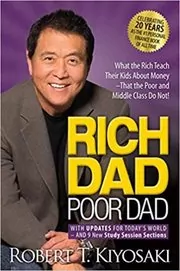
Rich Dad Poor Dad
What the Rich Teach Their Kids About Money That the Poor and Middle Class Do Not!
For beginners who want a provocative introduction to assets, cash flow, and financial independence. Kiyosaki's contrasting stories are memorable, though the simplified categories and anecdotal claims provide much less implementation detail than a practical investment guide.
What it's about
Rich Dad, Poor Dad contrasts the money lessons Kiyosaki says he learned from his poor biological father and his rich mentor. Through simple stories he explains assets versus liabilities, cash flow, and why working only for a paycheck rarely leads to lasting wealth.
Also recommended by
3 people Will Smith recommended this book
Will Smith
Will Smith mentioned sharing this book with his son.
Will Smith's recommendation of this book  Anthony Pompliano recommended this book
Anthony Pompliano
"My favorite book of all time." - Anthony Pompliano
Anthony Pompliano's recommendation of this book  Patrick Bet-David recommended this book
Patrick Bet-David
Patrick Bet-David recommended this book on his website.
Patrick Bet-David's recommendation of this book

I Will Teach You To Be Rich
For beginners who need their banking, spending, saving, and investing routines connected. Sethi makes implementation more concrete than an investment-only book, though the US products and account guidance need adapting to your location and the current edition.
What it's about
Ramit Sethi presents a six-week approach to personal finance centered on banking, saving, spending, and investing. His program emphasizes practical systems and getting started, connecting everyday money decisions with longer-term financial security and personal ambitions.
Also recommended by
2 people Andrew Wilkinson recommended this book
Andrew Wilkinson
"One key thing stuck with me: Saving is about percentages, not dollars." - Andrew Wilkinson
Andrew Wilkinson's recommendation of this book - Mr. Money Mustache recommended this book
Mr. Money Mustache
"Is [this book] still worth reading? Yes – especially if you are a financial beginner." - MMM
Mr. Money Mustache's recommendation of this book

Beating the Street
For readers already familiar with Lynch's approach who want more examples of his research process. The case-based discussions add practical texture, though historical company selections do not provide a ready-made strategy for today's market.
What it's about
Peter Lynch explains his approach to researching companies, selecting stocks, and building investment portfolios. Written with John Rothchild, the book combines his professional experience with practical discussions of mutual funds and the insights individual investors can develop themselves.
Also recommended by
1 person- Bill Ackman recommended this book
Bill Ackman
One of 11 Books Bill Ackman told a young man to read before hiring him.
Bill Ackman's recommendation of this book

Thinking, Fast and Slow
For readers who want a deeper account of judgment and recurring decision errors. Kahneman provides useful concepts for examining investment behavior, though the book is not a portfolio manual and some cited findings have faced later scrutiny.
What it's about
Kahneman explores two modes of thought: quick, intuitive responses and slower, deliberate reasoning. Drawing on psychological research, he examines how biases and impressions shape decisions, and when intuition helps or misleads in personal and professional life.
Also recommended by
19 people Bill Gates recommended this book
Bill Gates
List of books Bill Gates read in 2012.
Bill Gates's recommendation of this book  Ray Dalio recommended this book
Ray Dalio
Ray Dalio mentioned this book in his book, "Principles."
Ray Dalio's recommendation of this book  Scott Adams recommended this book
Scott Adams
One of the books on Scott Adams' "Persuasion Reading List."
Scott Adams's recommendation of this book  Naval Ravikant recommended this book
Naval Ravikant
"Fine book but it didn’t need to be an entire book. A blog post would have gotten the point across." - Naval Ravikant
Naval Ravikant's recommendation of this book  Ev Williams recommended this book
Ev Williams
"I love surprising scientific findings, as well as information about how our brains work. [This book] is a treasure trove of both." - Ev Williams
Ev Williams's recommendation of this book  Marc Andreessen recommended this book
Marc Andreessen
"Captivating dive into human decision making, marred by inclusion of several/many? psychology studies that fail to replicate. Will stand as a cautionary tale?" - Marc Andreessen
Marc Andreessen's recommendation of this book +13
More recommendations
- Stewart Brand
Stewart Brand recommended this book on his "Selected Books for the Manual for Civilization" blog post.
- Bryan Johnson
"I started reading [this book] and I became increasingly convinced of my own fickleness and inability to actually act rationally in life." - Bryan Johnson
- Derek Sivers
"If you liked 'Predictably Irrational' or 'Stumbling on Happiness' or any of those pop-psychology books, well, this is the Godfather of all of their work." - Derek Sivers
- Sam Altman
One of Sam Altman's answers to "What are some of the best books you recommend for a young startup founder?"
- Ron Conway
"Covers all three phases of [the author's] career: his early days working oncognitive bias, his work on prospect theory, and his later work on happiness." - Ron Conway
- Jason Fried
"I enjoyed [this book]. Fascinating." - Jason Fried
- Nassim Taleb
"A landmark book in social thought, in the same league as The Wealth of Nations by Adam Smith and The Interpretation of Dreams by Sigmund Freud." - Nassim Taleb
- Sahil Lavingia
Sahil Lavingia recommended this book on Notion.
- Mark Manson
Mark Manson recommended this book on his website.
- Jay Shetty
"[One] of my favourite books." - Jay Shetty
- Michiko Kakutani
"Has become essential reading in many baseball front offices and among coaching staffs." - Michiko Kakutani
- Preston Pysh
"An incredible book!" - Preston Pysh
- Ben Greenfield
Most Recommended Books reached out to Ben Greenfield directly.
- Stewart Brand

For readers interested in the quality of a business beyond its reported numbers. Fisher’s emphasis on management and long-term prospects complements valuation-focused texts, though gathering reliable qualitative evidence is demanding and judgments remain subjective.
What it's about
Philip A. Fisher presents his approach to selecting stocks through a thorough understanding of businesses and their growth potential. This collection includes his investment principles and additional writings, with introductory reflections from his son Ken Fisher.
Also recommended by
2 people- Warren Buffett recommended this book
Warren Buffett
"I am an eager reader of whatever [this author] has to say, and I recommend him to you." - Warren Buffett
Warren Buffett's recommendation of this book - DJ Vlad recommended this book
DJ Vlad
"The 3rd most important book in my path to educating myself about the stock market." - DJ Vlad
DJ Vlad's recommendation of this book

A Beginner's Guide to the Stock Market
For complete beginners who want a short introduction to market vocabulary and stock transactions. Kratter lowers the initial reading barrier, though the compressed treatment provides less depth on diversification and evaluating strategies than a fuller investing reference.
What it's about
Matthew Kratter introduces the workings of the stock market for readers new to investing and trading. He explains basic terminology, approaches to selecting stocks, and mistakes beginners commonly make, presenting his own strategies for navigating buying and selling decisions.

For young adults who want a concise outline before committing to a longer investment book. Bernstein makes the main obstacles explicit, though the short format points toward further reading rather than supplying every implementation detail.
What it's about
William Bernstein offers young adults a concise roadmap to saving and investing for retirement. He explains the appeal of simple, low-cost investments and identifies obstacles involving saving habits, financial knowledge, market history, emotions, and the investment industry.

The Behavioral Investor
For readers who understand investment mechanics but struggle with the decisions surrounding them. Crosby links psychology with portfolio behavior, though the conceptual discussion requires translating its lessons into concrete personal rules and review habits.
What it's about
Daniel Crosby examines how social influences, neurological processes, and psychological biases shape investment decisions. He connects these patterns to portfolio construction and investor behavior, offering an approach to managing money that begins with understanding the forces behind financial choices.

The Coffeehouse Investor
How to Build Wealth, Ignore Wall Street, and Get On with Your Life
For readers who want investing to occupy less of their daily attention. Schultheis emphasizes simple principles and life beyond market predictions, though the relaxed treatment offers less detail for readers seeking security analysis or specialist strategies.
What it's about
Bill Schultheis argues that investing can be simplified by saving consistently, diversifying, and accepting market returns. He explains how reducing attention to stock predictions and daily fluctuations can support financial planning while leaving more time for other priorities.
Sources
- 1
The 11 Best Investing Books [That You Can't Miss]
ofdollarsanddata.com
- 2
12 Best Investing Books for Beginners
juststartinvesting.com
- 3
Investing Books
goodreads.com
- 4
Essential reading: Best investing books for building financial knowledge
investmentnews.com
- 5
Books for the investing
reddit.com
- 6
20 Best Books to Learn Stock Trading in 2026
stockbrokers.com
- 7
Recommended Books on Personal Finance, Investing, and Retirement Planning
help.boldin.com
- 8
Books to read
reddit.com
- 9
The 15 Best Investing Books Of All Time
theadvisorcoach.com
- 10
Best Investment Books | Finance Reading List
stockeducation.com
- 11
The Best Investing Books of 2026
twelfthmagpie.com
- 12
Investment Books
goodreads.com
- 13
100 Best Investment Books of All Time
shortform.com


Edited by
Software engineer whose passion for tracking book recommendations from podcasts inspired the creation of MRB.
Lead investor at 3one4 Capital whose startup expertise and love for books helped shape MRB and its growth.
Comments
Did we miss something? Have feedback?
Help us improve this page by sharing your thoughts