
20 Best Stock Trading Books
The best stock trading books, ranked by expert source recommendation counts, with notes on chart analysis, psychology, risk, and alternatives to active trading.
Our take
Stock trading books address several different jobs: understanding markets, selecting an approach, managing exposure, and responding to uncertainty without abandoning a plan. Some focus on charts or company research. Others examine the psychology of speculation or describe historical failures. The investing books here also offer a useful comparison with buying and selling individual stocks actively.
Technical Analysis of the Financial Markets provides a detailed charting reference, while How to Make Money in Stocks combines company criteria with price behavior. Trading in the Zone concentrates on expectations and discipline, and The New Trading for a Living connects several parts of the trading process. Market Wizards presents contrasting practitioner experiences. For a wider perspective, When Genius Failed studies institutional risk, while The Little Book of Common Sense Investing makes the case for a less active alternative.
Start by deciding whether you want market context, a particular analytical method, or help evaluating your own process; no book turns a trading approach into guaranteed returns.
20 books · 17 sources · Last updated
As an Amazon Associate, we earn from qualifying purchases (at no extra cost to you).
How to choose from this list
Skip to the full rankingIf you're comparing trading with investing: A Random Walk Down Wall Street → The Little Book of Common Sense Investing
If you want a broad trading framework: The New Trading for a Living
If you want to study charts: Technical Analysis of the Financial Markets
If you want to examine trading psychology: Trading in the Zone → Reminiscences of a Stock Operator
If you study growth-stock methods: How to Make Money in Stocks → Trade Like a Stock Market Wizard
If you want to understand risk failures: When Genius Failed
The 20 books, ranked
Ranked by how many expert sources name each book. Ties go to the book more people recommend.

The Intelligent Investor
For readers who want to assess business value before thinking about trading signals. Its margin of safety framework provides a disciplined contrast to speculation, though the older examples and detailed analysis require patience and do not address rapid execution.
What it's about
Benjamin Graham outlines a value-investing philosophy that distinguishes investing from speculation and emphasizes disciplined decision-making. He examines how investors can assess value, respond to market fluctuations, and use a margin of safety when considering purchases.
Also recommended by
7 people Warren Buffett recommended this book
Warren Buffett
"I obviously recommend, first and foremost, [this book]. Considered to be the 'Bible of Value Investing.'" - Warren Buffett
Warren Buffett's recommendation of this book  DJ Vlad recommended this book
DJ Vlad
"The single biggest influence on how I buy and sell stocks." - DJ Vlad
DJ Vlad's recommendation of this book  Kevin Rose recommended this book
Kevin Rose
"The foundation for investing." - Kevin Rose
Kevin Rose's recommendation of this book  Peter Mallouk recommended this book
Peter Mallouk
"A phenomenal book." - Peter Mallouk
Peter Mallouk's recommendation of this book  Bill Ackman recommended this book
Bill Ackman
"I found it fascinating." - Bill Ackman
Bill Ackman's recommendation of this book  Jamie Dimon recommended this book
Jamie Dimon
On Jamie Dimon's list of favorite books.
Jamie Dimon's recommendation of this book +1
More recommendations
- Ryan Petersen
"[Part of] my biz book canon." - Ryan Petersen
- Ryan Petersen

For readers who want to compare how experienced traders think about risk, losses, and discipline. The interviews show that approaches can differ substantially, though selected success stories cannot establish which method will work for another trader.
What it's about
Jack Schwager interviews leading traders across financial markets to explore how they developed their approaches. Their accounts of major wins and losses reveal contrasting strategies, practical lessons, and the discipline involved in managing risk.
Also recommended by
3 people Adam Robinson recommended this book
Adam Robinson
"Somehow [the author] cannily got the world's best traders to reveal amazing insider secrets!" - Adam Robinson
Adam Robinson's recommendation of this book  Nassim Taleb recommended this book
Nassim Taleb
"Twenty years from now, [this book] will still be fresh. There is no other like it." - Nassim Taleb
Nassim Taleb's recommendation of this book  Raoul Pal recommended this book
Raoul Pal
Raoul Pal recommended this book on Twitter.
Raoul Pal's recommendation of this book

Reminiscences of a Stock Operator
For readers who learn through narrative and want to examine speculation’s emotional pressures. Its fictionalized historical account makes recurring behavioral mistakes memorable, though market structures and trading practices differ substantially from those of its original setting.
What it's about
Edwin Lefèvre fictionalizes the career of speculator Jesse Livermore through a trader's account of market successes and setbacks. The narrative explores ambition, judgment, emotional discipline, and the lessons learned from taking risks in early American financial markets.
Also recommended by
3 people Barry Silbert recommended this book
Barry Silbert
"For crypto traders." - Barry Silbert
Barry Silbert's recommendation of this book  Mike Novogratz recommended this book
Mike Novogratz
"I've given 40 copies away probably. [...] And for anyone who wants to be a trader or an investor, this is the Bible." - Mike Novogratz
Mike Novogratz's recommendation of this book  Paul Tudor Jones recommended this book
Paul Tudor Jones
"It was given to me by my first boss as the most important book I could read." - Paul Tudor Jones
Paul Tudor Jones's recommendation of this book

For individual investors interested in investigating familiar companies rather than interpreting charts alone. Its accessible framework connects observation with business research, though recognizing a product is only a starting point and does not establish an attractive valuation.
What it's about
Peter Lynch argues that individual investors can uncover promising companies through familiar products and everyday observations. Written with John Rothchild, his guide explains how to investigate those leads and connect business fundamentals with informed stock selection.
Also recommended by
2 people- Bill Ackman recommended this book
Bill Ackman
One of 11 Books Bill Ackman told a young man to read before hiring him.
Bill Ackman's recommendation of this book  Bill Gurley recommended this book
Bill Gurley
"Any investor starts with just building bedrock and that comes from reading. [For example,] you can read [this book]." - Bill Gurley
Bill Gurley's recommendation of this book

For readers who want to examine the case against consistently predicting market prices. Its investment history and portfolio discussion supply broader context than a trading manual, though the argument favors long term investing over practical trading techniques.
What it's about
Burton Malkiel examines investment theories, market bubbles, and the difficulty of consistently predicting stock prices. His guide argues for diversification and a disciplined approach, connecting the history of financial markets with practical considerations in building a portfolio over a lifetime.
Also recommended by
2 people Mr. Money Mustache recommended this book
Mr. Money Mustache
"A great explanation of why index investing rules, written by a very wise professor/investor guy who has personally researched and debunked most of the common 'wisdom' that exists about stock trading today." - MMM
Mr. Money Mustache's recommendation of this book - Bill Gurley recommended this book
Bill Gurley
"Offers the most pragmatic advice for the long-term saver." - Bill Gurley
Bill Gurley's recommendation of this book

For readers studying a rule based approach that combines company performance with price behavior. Its historical charts make the method concrete, though applying a named system requires independent testing, disciplined execution, and acceptance of losses.
What it's about
William O’Neil explains his CAN SLIM approach to selecting stocks and deciding when to buy or sell. Historical market examples and charts illustrate how company performance, price behavior, and disciplined rules fit into his investment method.

The Little Book of Common Sense Investing
The Only Way to Guarantee Your Fair Share of Stock Market Returns
For readers deciding whether active stock trading fits their aims at all. Its focus on costs and broad indexing provides a clear alternative, though it offers little instruction on selecting individual trades or interpreting short term price movements.
What it's about
John Bogle makes the case for buying and holding broadly diversified, low-cost index funds. He explains how expenses affect investment results and develops a long-term approach to participating in the stock market.
Also recommended by
3 people- Warren Buffett recommended this book
Warren Buffett
"Investors – large and small – should [read this book]." - Warren Buffett
Warren Buffett's recommendation of this book  Charlie Munger recommended this book
Charlie Munger
"A useful contribution to [the author's] fellow citizens." - Charlie Munger
Charlie Munger's recommendation of this book - Mr. Money Mustache recommended this book
Mr. Money Mustache
"Read any book by [this author], the founder of Vangard." - MMM
Mr. Money Mustache's recommendation of this book

Technical Analysis of the Financial Markets
A Comprehensive Guide to Trading Methods and Applications
For readers ready to learn the vocabulary and tools of chart analysis in depth. Its broad reference coverage supports comparing techniques, though understanding indicators does not establish that a trading rule has a reliable advantage after costs.
What it's about
John J. Murphy explains how traders interpret price charts and technical indicators across financial markets. The guide covers trends, chart patterns, candlesticks, and intermarket relationships, connecting analytical tools with their applications in stocks and futures.
Also recommended by
1 person- Raoul Pal recommended this book
Raoul Pal
"It’s really good!" - Raoul Pal
Raoul Pal's recommendation of this book

Trading in the Zone
Master the Market with Confidence, Discipline, and a Winning Attitude
For traders who understand their tools but struggle with inconsistent behavior around uncertainty and losses. Its focused discussion makes psychological habits easier to examine, though mindset work cannot create a profitable strategy or replace evidence about trading performance.
What it's about
Mark Douglas explores why traders repeat mistakes despite knowing their strategies. His discussion of beliefs, uncertainty, risk, and probability focuses on developing a consistent mental approach without treating individual trade outcomes as predictable.

For readers interested in the quality of a business as well as its financial statements. Its investigative questions give company research direction, though the intensive qualitative approach takes time and does not make growth forecasts reliably predictable.
What it's about
Philip A. Fisher presents his approach to selecting stocks through a thorough understanding of businesses and their growth potential. This collection includes his investment principles and additional writings, with introductory reflections from his son Ken Fisher.
Also recommended by
2 people- Warren Buffett recommended this book
Warren Buffett
"I am an eager reader of whatever [this author] has to say, and I recommend him to you." - Warren Buffett
Warren Buffett's recommendation of this book - DJ Vlad recommended this book
DJ Vlad
"The 3rd most important book in my path to educating myself about the stock market." - DJ Vlad
DJ Vlad's recommendation of this book

For readers who want to examine the behavior behind financial decisions before choosing a method. Its short essays make uncertainty and personal experience easy to reflect on, though it provides little direct instruction on valuation or trade execution.
What it's about
Morgan Housel explores financial behavior through nineteen short stories about money and the people who use it. He examines the influence of personal history, ego, and incentives on choices that are often presented as purely mathematical decisions.
Also recommended by
1 person- Ankur Warikoo recommended this book
Ankur Warikoo
"Possibly the only money book one needs to read!" - Ankur Warikoo
Ankur Warikoo's recommendation of this book

Irrational Exuberance
For readers interested in how narratives and crowd behavior can influence asset prices. Its analysis puts individual trading decisions in a wider social context, though understanding bubbles does not supply a dependable signal for timing their reversal.
What it's about
Robert Shiller examines how investor enthusiasm, social influences, and psychological forces can produce unstable asset prices. This expanded edition considers stock, housing, and bond markets, discussing financial bubbles and ways to reduce their risks and consequences.
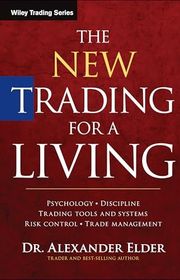
The New Trading for a Living
For readers who want psychology, analytical tools, and risk control considered within one trading workflow. Its breadth makes it a useful organizing reference, though its proposed tools require testing rather than assuming the book establishes their profitability.
What it's about
Alexander Elder combines trading psychology, technical analysis, risk control, and record keeping in a guide to developing a trading process. Examples connect market tools with decisions about entering positions, managing exposure, reviewing trades, and maintaining discipline.

A Beginner's Guide to the Stock Market
For complete beginners who want a short introduction to stock market terms and basic decisions. Its concise explanations lower the initial reading burden, though the compressed coverage and confident title should not be mistaken for sufficient preparation to risk money.
What it's about
Matthew Kratter introduces the workings of the stock market for readers new to investing and trading. He explains basic terminology, approaches to selecting stocks, and mistakes beginners commonly make, presenting his own strategies for navigating buying and selling decisions.

How to Day Trade for a Living
A Beginner's Guide to Trading Tools and Tactics, Money Management, Discipline and Trading Psychology
For beginners who want an overview of day-trading tools, routines, and terminology. Its practical orientation clarifies what the activity involves, though reading a starter guide does not demonstrate an edge or make pursuing trading income a dependable plan.
What it's about
Andrew Aziz introduces intraday trading through market mechanics, stock selection, platforms, and chart reading. Discussions of strategies, risk and account management, and trading psychology explain the practical steps involved in planning and executing trades.

For readers who want a personal account of competitive trading and the habits behind one career. Its candid narrative connects pressure with decision-making, though the author’s experience and market era cannot be treated as a general recipe for success.
What it's about
Martin Schwartz recounts his career in the high-pressure world of Wall Street trading, from options to futures and hedge funds. Stories of successes, setbacks, and personal lessons accompany explanations of the techniques and habits he developed along the way.

Stocks for the Long Run
For readers who want historical context for the role of equities in a portfolio. Its extensive return data makes comparisons concrete, though conclusions depend on the markets, periods, and assumptions examined and cannot guarantee future outcomes.
What it's about
Jeremy Siegel examines historical returns from stocks and other assets, connecting market performance with inflation, economic change, and investment strategy. The book uses long term data to explain his case for equities while discussing fluctuations and investor behavior.
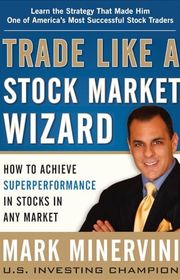
Trade Like a Stock Market Wizard
For readers specifically studying momentum oriented growth-stock selection. Its defined framework links company characteristics with price behavior and trade management, though historical winners and personal results do not guarantee that the approach will transfer to new market conditions.
What it's about
Mark Minervini presents his approach to selecting and trading growth stocks through fundamental characteristics, price patterns, and risk management. Historical examples illustrate how he evaluates candidates, plans entries, and responds when a position fails to meet expectations.

The Little Book That Still Beats the Market
For readers who want a short introduction to systematic value investing. Its company ranking method makes profitability and price easier to compare, though the formula’s historical performance does not remove uncertainty, implementation costs, or periods of disappointing results.
What it's about
Joel Greenblatt explains a systematic value-investing approach that ranks companies by profitability and price. This revised guide uses accessible examples and research to present his stock-selection formula, explore its rationale, and discuss the patience required to follow it.
Also recommended by
2 people- Mr. Money Mustache recommended this book
Mr. Money Mustache
"Really a lesson on value investing fundamentals; how to understand if a company actually is a good deal to buy." - MMM
Mr. Money Mustache's recommendation of this book  Lyn Alden recommended this book
Lyn Alden
"One short read I’d recommend to stock pickers." - Lyn Alden
Lyn Alden's recommendation of this book

For readers who want a detailed example of how leverage, models, and confidence can interact. Its institutional case study makes risk failures concrete, though it explains a particular historical collapse rather than providing a personal trading system.
What it's about
Roger Lowenstein examines Long-Term Capital Management through interviews and internal records. The account explores the hedge fund's investment methods, its partners' confidence in mathematical models, and the Wall Street culture surrounding its enormous exposure to risk.
Also recommended by
4 people Max Levchin recommended this book
Max Levchin
One of Max Levchin's answers to "what's your favourite business book you'd advise to young entrepreneurs?"
Max Levchin's recommendation of this book - Barry Silbert recommended this book
Barry Silbert
"For crypto traders." - Barry Silbert
Barry Silbert's recommendation of this book  Shane Parrish recommended this book
Shane Parrish
"It was great to re-read this." - Shane Parrish
Shane Parrish's recommendation of this book  David Friedberg recommended this book
David Friedberg
"A great story." - David Friedberg
David Friedberg's recommendation of this book
Sources
- 1
20 Best Books to Learn Stock Trading in 2026 - StockBrokers.com
stockbrokers.com
- 2
The 10 Best Trading Books of All Time | IG UK
ig.com
- 3
7 Best Stock Trading Books for Beginners & Advanced Traders
patternswizard.com
- 4
8 Best Stock Trading Books for Beginners
motilaloswal.com
- 5
Top 15 Books on Investment, Trading and Stock Market - Groww
groww.in
- 6
Best Trading Books | TradeLearn
tradelearn.co.uk
- 7
Stock Trading Books
goodreads.com
- 8
10 Best Stock Market Books for Beginners [Updated 2026]
wallstreetmojo.com
- 9
11 Good Books About Stock Market for Beginners – Career Development Yale School of Management
cdo.som.yale.edu
- 10
The Best Stock Market Books for Beginners
earlybirdbooks.com
- 11
Stock Market Books
goodreads.com
- 12
12 GREAT books to learn Investing & the Stock markets! [summary included!] : r/FluentInFinance
reddit.com
- 13
The Best Trading Books of All Time
tradingwithrayner.com
- 14
The 10 Best Trading Books To Read (From Beginner To Pro)
wrtrading.com
- 15
Any recomendations on trading books? : r/Trading
reddit.com
- 16
My Overall Top Trading Books After 12+ Years of Trading : r/Daytrading
reddit.com
- 17
Are there any good books to learn investing and trading? : r/portfolios
reddit.com



Edited by
Software engineer whose passion for tracking book recommendations from podcasts inspired the creation of MRB.
Lead investor at 3one4 Capital whose startup expertise and love for books helped shape MRB and its growth.
Comments
Spotted a missing book, a wrong order or a mistake? Tell us and we'll fix this page.
We're a reading guide, not the author or publisher, so we can't send books or pass on messages.