
22 Best Finance Books
The best finance books, ranked by how many expert sources recommend each one, with notes on who each book suits and where to start for your money goals.
Our take
Finance books can help you organize a paycheck, understand investing, or see how money moves through banks and markets. The useful starting point depends on the question you're trying to answer. A guide to paying off debt does a different job from a book about stock valuation or the culture of a trading floor.
For everyday decisions, I Will Teach You To Be Rich offers a structured program, while Get Good with Money uses exercises to address a wider financial foundation. Your Money or Your Life asks what your earnings cost in time and energy. For investing, The Little Book of Common Sense Investing makes a focused case for index funds; The Intelligent Investor takes a more demanding approach to value and market behavior. Liar's Poker provides a narrative view of Wall Street.
Start with the book closest to your immediate problem, then choose a second that fills a different gap.
22 books · 15 sources · Last updated
As an Amazon Associate, we earn from qualifying purchases (at no extra cost to you).
How to choose from this list
Skip to the full rankingIf you're organizing your finances: I Will Teach You To Be Rich → Get Good with Money
If debt is your first concern: The Total Money Makeover
If you're new to investing: The Little Book of Common Sense Investing → A Random Walk Down Wall Street
If you want financial independence: Your Money or Your Life → The Simple Path to Wealth
If you want to study value investing: The Intelligent Investor
If you want to understand money behavior: The Psychology of Money → The Millionaire Next Door
The 22 books, ranked
Ranked by how many expert sources name each book. Ties go to the book more people recommend.

For readers who confuse a high salary with lasting wealth. The household research offers a useful counterweight to motivational money books, though its American millionaire profiles and figures come from an earlier era.
What it's about
Thomas Stanley and William Danko examine the habits of wealthy Americans, contrasting accumulated wealth with high incomes and conspicuous spending. Their research explores budgeting, frugality, occupations, and family decisions, challenging familiar images of how millionaires live.
Also recommended by
2 people Mr. Money Mustache recommended this book
Mr. Money Mustache
"The main thing it will do is give you reassurance that I am not actually making this shit up. I’m following a very time-honored formula for making you rich." - MMM
Mr. Money Mustache's recommendation of this book  Bernie Sanders recommended this book
Bernie Sanders
"I love [this book]. It talks about how it is a myth that most millionaires in America have inherited their money." - Bernie Sanders
Bernie Sanders's recommendation of this book

For readers who understand basic money concepts but want to examine their own behavior. Its short essays make uncertainty, incentives, and personal experience memorable, though reflection on habits provides less procedural detail than a budgeting or account setup guide.
What it's about
Morgan Housel uses nineteen short stories to explore how people think about money. He examines how personal experience, emotion, pride, and incentives shape financial choices, arguing that behavior matters alongside knowledge in investing and managing wealth.
Also recommended by
6 people Daniel Pink recommended this book
Daniel Pink
"Few people write about finance with the graceful clarity of [this author]." - Daniel Pink
Daniel Pink's recommendation of this book  Howard Marks recommended this book
Howard Marks
"[The author]’s observations often hit the daily double: they say things that haven’t been said before, and they make sense." - Howard Marks
Howard Marks's recommendation of this book  Anthony Pompliano recommended this book
Anthony Pompliano
"Want to read a great book? Go grab [this one]." - Anthony Pompliano
Anthony Pompliano's recommendation of this book  Michael Mauboussin recommended this book
Michael Mauboussin
"A wonderful and wise book." - Michael Mauboussin
Michael Mauboussin's recommendation of this book  Blake Randall recommended this book
Blake Randall
"" - Blake Randall
Blake Randall's recommendation of this book  Brad Feld recommended this book
Brad Feld
"Wonderful book." - Brad Feld
Brad Feld's recommendation of this book
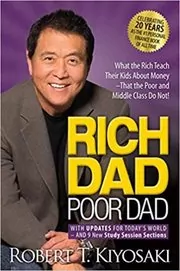
Rich Dad Poor Dad
What the Rich Teach Their Kids About Money That the Poor and Middle Class Do Not!
For readers curious about ownership and income-producing assets. The contrasting family stories make those ideas approachable, but the book offers fewer concrete steps than Sethi and uses financial definitions that need careful scrutiny.
What it's about
Rich Dad, Poor Dad contrasts the money lessons Kiyosaki says he learned from his poor biological father and his rich mentor. Through simple stories he explains assets versus liabilities, cash flow, and why working only for a paycheck rarely leads to lasting wealth.
Also recommended by
3 people Will Smith recommended this book
Will Smith
Will Smith mentioned sharing this book with his son.
Will Smith's recommendation of this book - Anthony Pompliano recommended this book
Anthony Pompliano
"My favorite book of all time." - Anthony Pompliano
Anthony Pompliano's recommendation of this book  Patrick Bet-David recommended this book
Patrick Bet-David
Patrick Bet-David recommended this book on his website.
Patrick Bet-David's recommendation of this book

I Will Teach You To Be Rich
For earners who want clear steps for organizing their finances. The six-week structure makes automation and conscious spending more actionable than the philosophical books here, though much of the account and credit advice is US-focused.
What it's about
Ramit Sethi presents a six-week approach to personal finance centered on banking, saving, spending, and investing. His program emphasizes practical systems and getting started, connecting everyday money decisions with longer-term financial security and personal ambitions.
Also recommended by
2 people Andrew Wilkinson recommended this book
Andrew Wilkinson
"One key thing stuck with me: Saving is about percentages, not dollars." - Andrew Wilkinson
Andrew Wilkinson's recommendation of this book - Mr. Money Mustache recommended this book
Mr. Money Mustache
"Is [this book] still worth reading? Yes – especially if you are a financial beginner." - MMM
Mr. Money Mustache's recommendation of this book

The Richest Man in Babylon
For beginners who remember stories better than worksheets. The short parables make saving and restraint easy to grasp, though the old-fashioned language and simple lessons won't answer questions about modern accounts or taxes.
What it's about
George S. Clason presents lessons about money through parables set in ancient Babylon. The stories examine thrift, financial planning, saving, and investing, using the experiences of their characters to introduce practical principles of managing and building personal wealth.
Also recommended by
5 people DJ Vlad recommended this book
DJ Vlad
Most Recommended Books reached out to DJ Vlad directly.
DJ Vlad's recommendation of this book  Daymond John recommended this book
Daymond John
One of Daymond John's answers to "most-gifted or recommeded books?"
Daymond John's recommendation of this book  Sophia Amoruso recommended this book
Sophia Amoruso
"100 years later all the advice still holds up, which I find really great." - Sophia Amoruso
Sophia Amoruso's recommendation of this book - Anthony Pompliano recommended this book
Anthony Pompliano
"[One of] the three most impactful books for me." - Anthony Pompliano
Anthony Pompliano's recommendation of this book  Tai Lopez recommended this book
Tai Lopez
"Read this book." - Tai Lopez
Tai Lopez's recommendation of this book

The Simple Path to Wealth
Your Road Map to Financial Independence and a Rich, Free Life
For beginners seeking a straightforward route into long-term investing. Collins connects simple portfolios with financial independence more directly than Graham's stock analysis, but the fund choices and retirement accounts are largely geared to Americans.
What it's about
Collins presents an approach to financial independence centered on saving, avoiding debt, and investing through low-cost index funds. Originally developed from advice to his daughter, the book discusses market volatility, accumulating wealth, and supporting a more independent life.
Also recommended by
1 person- Mr. Money Mustache recommended this book
Mr. Money Mustache
"Teaches everything you really need to be a successful lifetime investor, yet it’s ridiculously simple." - MMM
Mr. Money Mustache's recommendation of this book

For readers who need a firm routine for tackling consumer debt. The small-debt-first approach prioritizes momentum and clear rules, but it can cost more interest than paying the highest-rate debt first.
What it's about
Dave Ramsey presents a structured approach to changing money habits, paying down debt and building savings. The guide discusses common financial myths and uses practical resources to support planning for emergencies, retirement and other household financial goals.
Also recommended by
1 person Shay Carl recommended this book
Shay Carl
Shay Carl recommended this book in the "Tools of Titans" book.
Shay Carl's recommendation of this book

The Intelligent Investor
For investors ready to study value rather than chase market excitement. Graham gives more depth on valuation discipline than the household money guides, but the original examples are dated and some chapters demand patience.
What it's about
Benjamin Graham outlines a value-investing philosophy that distinguishes investing from speculation and emphasizes disciplined decision-making. He examines how investors can assess value, respond to market fluctuations, and use a margin of safety when considering purchases.
Also recommended by
7 people Warren Buffett recommended this book
Warren Buffett
"I obviously recommend, first and foremost, [this book]. Considered to be the 'Bible of Value Investing.'" - Warren Buffett
Warren Buffett's recommendation of this book - DJ Vlad recommended this book
DJ Vlad
"The single biggest influence on how I buy and sell stocks." - DJ Vlad
DJ Vlad's recommendation of this book  Kevin Rose recommended this book
Kevin Rose
"The foundation for investing." - Kevin Rose
Kevin Rose's recommendation of this book  Peter Mallouk recommended this book
Peter Mallouk
"A phenomenal book." - Peter Mallouk
Peter Mallouk's recommendation of this book  Bill Ackman recommended this book
Bill Ackman
"I found it fascinating." - Bill Ackman
Bill Ackman's recommendation of this book  Jamie Dimon recommended this book
Jamie Dimon
On Jamie Dimon's list of favorite books.
Jamie Dimon's recommendation of this book +1
More recommendations
- Ryan Petersen
"[Part of] my biz book canon." - Ryan Petersen
- Ryan Petersen

For readers whose financial decisions are driven by fear, comparison, or impatience. The short essays explain behavior more directly than the account-by-account guides here, but they won't provide a detailed budget or investment plan.
What it's about
Morgan Housel explores financial behavior through nineteen short stories about money and the people who use it. He examines the influence of personal history, ego, and incentives on choices that are often presented as purely mathematical decisions.
Also recommended by
1 person- Ankur Warikoo recommended this book
Ankur Warikoo
"Possibly the only money book one needs to read!" - Ankur Warikoo
Ankur Warikoo's recommendation of this book

Your Money or Your Life
9 Steps to Transforming Your Relationship with Money and Achieving Financial Independence
For readers weighing financial independence against the time their job consumes. Its spending exercises connect money with personal values more closely than the investing guides here, but tracking your spending takes sustained effort.
What it's about
Vicki Robin and Joe Dominguez offer a program for rethinking the relationship between earning, spending, and personal values. Exercises help readers examine financial habits, reduce expenses, build savings, and consider what constitutes enough for a satisfying life.
Also recommended by
3 people- Mr. Money Mustache recommended this book
Mr. Money Mustache
"If you just get whatever the latest edition of that book is, it really teaches you a philosophy that’s pretty similar to mine." - MMM
Mr. Money Mustache's recommendation of this book  Ali Abdaal recommended this book
Ali Abdaal
"completely changed my relationship with money." - Ali Abdaal
Ali Abdaal's recommendation of this book  Roberto Blake recommended this book
Roberto Blake
"[One of my] 5 favorite personal finance books." - Roberto Blake
Roberto Blake's recommendation of this book

Think and Grow Rich
For readers interested in the goal-setting philosophy behind many wealth books. It emphasizes persistence and purpose rather than budgets or portfolios, but its anecdotes and claims about thought aren't a reliable financial method.
What it's about
Napoleon Hill presents a philosophy of achievement centered on definite goals, persistent effort, and directed thought. Using stories of successful business figures, he explores desire, planning, cooperation, and overcoming fear as elements of his approach to wealth.
Also recommended by
7 people Neville Medhora recommended this book
Neville Medhora
"I’d bet money this book has restored countless relationships, made millions of millionaires and saved many lives." - Neville Medhora
Neville Medhora's recommendation of this book - Shay Carl recommended this book
Shay Carl
"Amazing." - Shay Carl
Shay Carl's recommendation of this book - Daymond John recommended this book
Daymond John
"The main takeaway from [this book] was goal-setting. It was the fact that if you don't set a specific goal, then how can you expect to hit it?" - Daymond John
Daymond John's recommendation of this book - Anthony Pompliano recommended this book
Anthony Pompliano
"[One of] the three most impactful books for me." - Anthony Pompliano
Anthony Pompliano's recommendation of this book  Tom Bilyeu recommended this book
Tom Bilyeu
Tom Bilyeu recommended this book on his website.
Tom Bilyeu's recommendation of this book  Jen Sincero recommended this book
Jen Sincero
"Do what he says (and really do all of it) and you will be large and in charge." - Jen Sincero
Jen Sincero's recommendation of this book +1
More recommendations
- Patrick Bet-David
Patrick Bet-David recommended this book on his website.
- Patrick Bet-David

The Little Book of Common Sense Investing
The Only Way to Guarantee Your Fair Share of Stock Market Returns
For investors who want to understand the case for buying the market. Bogle focuses tightly on diversification and costs, making this shorter than Malkiel's survey, though its central argument becomes repetitive in places.
What it's about
John Bogle makes the case for buying and holding broadly diversified, low-cost index funds. He explains how expenses affect investment results and develops a long-term approach to participating in the stock market.
Also recommended by
3 people- Warren Buffett recommended this book
Warren Buffett
"Investors – large and small – should [read this book]." - Warren Buffett
Warren Buffett's recommendation of this book  Charlie Munger recommended this book
Charlie Munger
"A useful contribution to [the author's] fellow citizens." - Charlie Munger
Charlie Munger's recommendation of this book - Mr. Money Mustache recommended this book
Mr. Money Mustache
"Read any book by [this author], the founder of Vangard." - MMM
Mr. Money Mustache's recommendation of this book

For readers who want evidence behind a diversified investment strategy. Malkiel covers market theories and portfolio choices more broadly than Bogle's shorter book, but the breadth makes it a longer and occasionally technical read.
What it's about
Burton Malkiel examines investment theories, market bubbles, and the difficulty of consistently predicting stock prices. His guide argues for diversification and a disciplined approach, connecting the history of financial markets with practical considerations in building a portfolio over a lifetime.
Also recommended by
2 people- Mr. Money Mustache recommended this book
Mr. Money Mustache
"A great explanation of why index investing rules, written by a very wise professor/investor guy who has personally researched and debunked most of the common 'wisdom' that exists about stock trading today." - MMM
Mr. Money Mustache's recommendation of this book  Bill Gurley recommended this book
Bill Gurley
"Offers the most pragmatic advice for the long-term saver." - Bill Gurley
Bill Gurley's recommendation of this book

For readers who already think carefully about saving but want to reconsider when and why they spend. Its emphasis on experiences challenges automatic accumulation, though the framework assumes resources and predictability that many households do not have.
What it's about
Bill Perkins argues for using money to create meaningful experiences throughout life rather than accumulating savings indefinitely. He examines the changing balance of time, health, and wealth, offering a framework for deciding when experiences and generosity matter most.
Also recommended by
2 people- Anthony Pompliano recommended this book
Anthony Pompliano
"A fantastic book with a simple message." - Anthony Pompliano
Anthony Pompliano's recommendation of this book - Ali Abdaal recommended this book
Ali Abdaal
"A practical guide to getting the most out of your money." - Ali Abdaal
Ali Abdaal's recommendation of this book

For younger adults who want a conversational introduction to everyday financial decisions. Its attention to money conversations and early independence makes the material relatable, though US systems and generational examples narrow the fit for some readers.
What it's about
Erin Lowry introduces personal finance for young adults navigating limited incomes and unfamiliar responsibilities. She covers budgeting, credit cards, debt, and student loans alongside awkward money conversations with friends and partners, connecting financial choices to everyday situations.

For ambitious savers interested in reaching financial independence earlier. Sabatier gives earning more and building side income greater attention than the frugality classics, but his pace of progress won't fit every income or household.
What it's about
Sabatier draws on his journey toward financial independence to offer an alternative to a conventional working life and retirement timetable. The guide examines earning, saving, investing, and managing money, connecting financial choices with the goal of gaining more control over time.

For young adults facing their first financial decisions. Kobliner offers a broad reference on everyday money questions rather than a motivational philosophy, but the details on taxes, loans, and retirement accounts mainly apply in America.
What it's about
Beth Kobliner introduces personal finance for adults in their twenties and thirties. Explanations of debt, credit, taxes, saving, and investing connect everyday money decisions with longer-term goals, addressing the financial questions that often arise when starting an independent life.

For readers rebuilding their finances who want guided exercises and a broad checklist. Aliche extends beyond debt repayment into insurance and estate planning, though the many tasks take time and the financial details are US-focused.
What it's about
Tiffany Aliche presents ten steps toward what she calls financial wholeness, drawing on her recovery from financial setbacks. Checklists, worksheets, and expert contributions connect budgeting, debt reduction, saving, and wealth building with a broader picture of financial security.

For readers who want to make regular saving less dependent on repeated decisions. Its emphasis on automation gives a simple organizing principle, though the title overstates certainty and the proposed system still depends on income, costs, and investment outcomes.
What it's about
David Bach presents a personal finance plan built around making saving and investing automatic. He discusses paying yourself first, managing debt, homeownership, and retirement, emphasizing regular habits rather than relying on elaborate budgets or unusually high earnings.
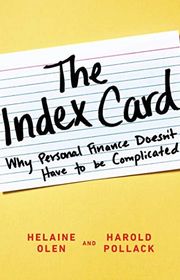
The Index Card
For beginners who want a compact set of financial principles before tackling a detailed program. Its rules make the essentials easy to revisit, but readers with complex circumstances will need more guidance on implementation.
What it's about
Helaine Olen and Harold Pollack expand a small set of money rules into a guide to saving, investing, debt, insurance, and financial advice. They explain why managing everyday finances can be simpler than the financial industry suggests.
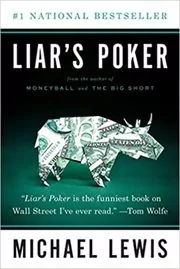
Liar's Poker
For readers who want to understand Wall Street through an insider's experience. Lewis makes the incentives and sales culture of bond trading vivid, but this account of the 1980s won't teach you household budgeting.
What it's about
Part memoir, part exposé, this book describes Lewis’s years as a young bond salesman at Salomon Brothers, capturing the swagger, fear, and excess of 1980s Wall Street and the birth of the mortgage-backed securities boom.
Also recommended by
4 people Tim Ferriss recommended this book
Tim Ferriss
"A very exciting book." - Tim Ferriss
Tim Ferriss's recommendation of this book  Tim O’Reilly recommended this book
Tim O’Reilly
"A time machine into this place when our financial economy went crazily wrong." - Tim O’Reilly
Tim O’Reilly's recommendation of this book  Chamath Palihapitiya recommended this book
Chamath Palihapitiya
"Probably my favorite book." - Chamath Palihapitiya
Chamath Palihapitiya's recommendation of this book  Trung Phan recommended this book
Trung Phan
"About the Trading industry." - Trung Phan
Trung Phan's recommendation of this book

For readers who need to clarify their priorities before choosing financial products or tactics. Its concise planning framework keeps decisions connected to personal goals, though a short plan does not remove the need for detailed calculations and periodic revision.
What it's about
Carl Richards explains an approach to financial planning centered on identifying what matters most. He connects personal priorities with decisions about saving, investing, and insurance, emphasizing a manageable plan that can be adjusted as life changes.
Sources
- 1
The Best Personal Finance Books in 2026: Our Editor’s Picks
thepennyhoarder.com
- 2
16 best finance books
savethestudent.org
- 3
Good Books About Investing And Finance
goodreads.com
- 4
10 Finance Books I’d Recommend to Almost Anyone
course.devoncoombs.com
- 5
Any Personal Finance Books You'd Recommend?
reddit.com
- 6
Recommendation for best wealth building books.
reddit.com
- 7
10 Best Money Books to Read First (Ranked) | My Millennial Guide
mymillennialguide.com
- 8
The Best Money Books, Financial Podcasts and Blogs | Money
money.com
- 9
Best Personal Finance Books for 2026
smartasset.com
- 10
Finance Books: The 14 Best Titles to Master Money & Build Wealth
fourminutebooks.com
- 11
Money Books
goodreads.com
- 12
Finance book recommendations : r/irishpersonalfinance
reddit.com
- 13
The best finance books to read in 2026
panmacmillan.com
- 14
Which book actually changed how you think about money? : r/BettermentBookClub
reddit.com
- 15
Personal Finance Books To Start Reading
penguinrandomhouse.com




Edited by
Software engineer whose passion for tracking book recommendations from podcasts inspired the creation of MRB.
Lead investor at 3one4 Capital whose startup expertise and love for books helped shape MRB and its growth.
Comments
Did we miss something? Have feedback?
Help us improve this page by sharing your thoughts