
13 Best Mergers and Acquisitions Books
The best mergers and acquisitions books, ranked by how many expert sources recommend each one, with notes for owners, analysts, and deal professionals.
Our take
Mergers and acquisitions involve more than agreeing on a price. A transaction brings together strategy, valuation, financing, negotiation, due diligence, and the work of combining businesses after closing. Books in this area serve different readers: an owner considering a sale needs a different starting point from an analyst building a model or a manager planning integration.
For an accessible overview, begin with Mergers & Acquisitions For Dummies or Mergers and Acquisitions from A to Z. Investment Banking and Valuation give more attention to financial analysis, while The Art of M&A is a substantial reference across the process. Make the Deal focuses on negotiation and contractual choices. After closing, Mergers & Acquisitions Integration Handbook and Agile M&A shift attention toward coordination and execution. For a narrative view of deal dynamics, Barbarians at the Gate offers a vivid case. Start with your role in the transaction, then choose the level of technical detail you need.
13 books · 8 sources · Last updated
As an Amazon Associate, we earn from qualifying purchases (at no extra cost to you).
How to choose from this list
Skip to the full rankingIf you're new to the deal process: Mergers & Acquisitions For Dummies → Mergers and Acquisitions from A to Z
If you need financial analysis skills: Investment Banking → Valuation
If you need a substantial reference: The Art of M&A
If you want to understand negotiation: Make the Deal
If you manage integration: Mergers & Acquisitions Integration Handbook → Agile M&A
If you're preparing to sell a middle-market company: Mergers and Acquisitions Playbook
The 13 books, ranked
Ranked by how many expert sources name each book. Ties go to the book more people recommend.

Mergers & Acquisitions For Dummies
For business owners and newcomers who need the vocabulary and sequence of a deal explained clearly. The broad introduction makes specialist books easier to approach afterward, though experienced advisers may want more technical or jurisdiction-specific detail.
What it's about
Bill Snow guides readers through buying and selling businesses, explaining transaction types, target selection, valuation, financing, and negotiation. The book also covers due diligence, purchase agreements, and integration, making the deal process accessible to owners, executives, and aspiring professionals.

Mergers and Acquisitions from A to Z
Strategic and Practical Guidance for Buyers and Sellers
For owners and advisers who want the whole transaction organized into practical stages. Checklists and sample materials make it easier to connect strategy with execution, though the broad scope provides less depth on any one valuation or integration problem.
What it's about
Andrew Sherman guides buyers and sellers through the strategic and legal stages of mergers and acquisitions. Case studies, checklists, and sample documents support discussions of valuation, financing, due diligence, deal structure, closing, board responsibilities, and post-acquisition integration.

For practitioners who need a substantial reference across the deal lifecycle. Its wide procedural coverage supports targeted consultation, though the size and legal detail make it a demanding introduction and edition differences matter.
What it's about
Alexandra Reed Lajoux guides readers through mergers, acquisitions, and buyouts from initial strategy to integration. Topics include valuation, financing, due diligence, deal structure, documentation, and closing, with legal cases and lessons from financial and regulatory upheaval.

Mergers, Acquisitions, and Corporate Restructurings
For graduate students and practitioners who want transactions placed within strategy, research, and corporate restructuring. The scope extends beyond buying companies, though its textbook density and legal framework require more commitment than an introductory guide.
What it's about
Patrick Gaughan examines the strategies, motives, and legal frameworks behind mergers, acquisitions, and corporate restructuring. Research, graphs, and case studies place different forms of transactions within their historical development and changing international business context.

For readers who want to see bargaining, ambition, and financing collide in a real transaction. The narrative makes deal dynamics memorable, though one unusually large 1980s buyout is not a template for a typical acquisition.
What it's about
Bryan Burrough and John Helyar reconstruct the struggle to acquire RJR Nabisco in a massive leveraged buyout. Executives, bankers, and competing bidders maneuver through negotiations that expose the ambition, rivalry, and financial engineering behind the deal.
Also recommended by
4 people Chamath Palihapitiya recommended this book
Chamath Palihapitiya
"Excellent." - Chamath Palihapitiya
Chamath Palihapitiya's recommendation of this book  Jason Calacanis recommended this book
Jason Calacanis
"Next level." - Jason Calacanis
Jason Calacanis's recommendation of this book  Keith Rabois recommended this book
Keith Rabois
"Suggested reading this book this am on stage at Techweek." - Keith Rabois
Keith Rabois's recommendation of this book  Trung Phan recommended this book
Trung Phan
"About the Private Equity industry." - Trung Phan
Trung Phan's recommendation of this book

For analysts who want to work through the financial methods behind transactions. Worked examples connect valuation and buyout analysis more directly than strategy-focused books, though readers need accounting foundations and time to practice the calculations.
What it's about
Joshua Rosenbaum and Joshua Pearl explain the analytical methods used in investment banking. Worked examples and valuation frameworks cover comparable companies, precedent transactions, discounted cash flow, leveraged buyouts, and the financial analysis behind mergers and acquisitions.

Mergers & Acquisitions Integration Handbook
Helping Companies Realize The Full Value of Acquisitions
For managers responsible for turning a signed deal into a functioning combined business. Integration planning receives more sustained attention than in broad acquisition guides, though the frameworks still need adapting to organizational scale, culture, and deal objectives.
What it's about
Scott Whitaker explains how to plan and manage the integration of acquired or merged companies. The handbook assesses complexity and risk, builds the business case for integration, and outlines a scalable framework for turning transaction objectives into operating results.

Mergers, Acquisitions, and Other Restructuring Activities
An Integrated Approach to Process, Tools, Cases, and Solutions
For students who want the deal process connected with tools, research, and cases. Its integrated structure offers more analytical practice than a short overview, though the textbook format and financial modeling can be demanding without prior study.
What it's about
Donald DePamphilis organizes mergers and acquisitions around the stages of the deal process. The textbook covers planning, valuation and modeling, financing, deal structure, and alternative restructuring strategies, using research and cases to examine practical decisions.

For readers who need to understand what a company is worth before discussing a transaction price. It provides deeper valuation analysis than general deal guides, though it assumes financial literacy and is not primarily an M&A process manual.
What it's about
McKinsey's Tim Koller, Marc Goedhart, and David Wessels explain the principles and methods of corporate valuation. The guide covers performance analysis, forecasting, capital structure, and management decisions, connecting financial assessment with the creation of long-term company value.
Also recommended by
2 people Bill Gurley recommended this book
Bill Gurley
Bill Gurley recommended this book on Quora.
Bill Gurley's recommendation of this book  Michael Mauboussin recommended this book
Michael Mauboussin
Michael Mauboussin recommended this book on Twitter.
Michael Mauboussin's recommendation of this book

For corporate development teams struggling with handoffs, changing priorities, and coordination. Applying project-management techniques makes the emphasis more operational than a valuation textbook, though the approach requires adapting existing team habits rather than simply following a checklist.
What it's about
Kison Patel applies Agile project management to mergers and acquisitions, from deal sourcing through integration. Case studies and practical techniques such as standups, priority backlogs, and retrospectives show how teams can improve coordination, adaptability, and management of complex transactions.

For advanced students and researchers interested in why transactions create or destroy value. Its combination of disciplines provides a broader analytical frame than a practitioner checklist, though the density and research focus make it a substantial academic read.
What it's about
Sudi Sudarsanam analyzes mergers and acquisitions as an interconnected process, combining finance, strategy, economics, law, and organizational theory. Comparing European and American markets, he examines value creation, risk, target selection, valuation, deal structure, and integration through research and cases.
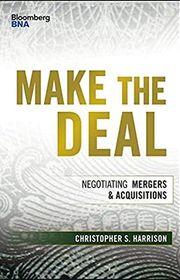
Make the Deal: Negotiating Mergers and Acquisitions
For dealmakers who want to understand how contractual terms allocate risk during negotiations. Examples connect business objectives with acquisition agreements, though the legal focus and US transaction context make it less suitable as a first introduction to M&A.
What it's about
Christopher Harrison examines the negotiation of acquisition agreements, including transaction structures, pricing provisions, and allocation of risk. Contract examples, negotiation data, and deal experiences show how financial objectives interact with legal terms throughout a transaction.

For middle-market owners preparing a business for sale. Its seller-side perspective makes presentation and process choices more concrete than a general corporate-finance text, though buyers and large-company deal teams may need a different reference.
What it's about
Mark Filippell explains how owners can prepare a middle-market business for sale. His practical guide addresses presenting the company, managing the sale timetable, and working through a transaction to pursue a favorable outcome.
Sources
- 1
Top 10 Best Mergers and Acquisitions Books [Updated 2026]
wallstreetmojo.com
- 2
6 Most Important Books on Mergers and Acquisitions
mnacommunity.com
- 3
Top 10 Mergers & Acquisitions Books
info.nyif.com
- 4
Mergers Acquisitions Books
goodreads.com
- 5
M&A Associate- reading recommendations
reddit.com
- 6
The Best Mergers and Acquisitions Books of 2026
conqueryourexam.com
- 7
A list of the best mergers and acquisitions books for every M&A lawyer
lexpert.ca
- 8
10 Best M&A Books Recommended by Experts (2026)
dealroom.net


Edited by
Software engineer whose passion for tracking book recommendations from podcasts inspired the creation of MRB.
Lead investor at 3one4 Capital whose startup expertise and love for books helped shape MRB and its growth.
Comments
Spotted a missing book, a wrong order or a mistake? Tell us and we'll fix this page.
We're a reading guide, not the author or publisher, so we can't send books or pass on messages.