
29 Best Personal Finance Books
The best personal finance books, ranked by expert source recommendation counts, with guidance for beginners, money habits, debt, and long-term investing.
Our take
Personal finance books help with different problems: getting organized, handling debt, understanding investing, or deciding what money is meant to support. Some provide a sequence of tasks, while others question habits and expectations. A useful first book should match the decision in front of you, rather than promise to solve every financial question at once.
Broke Millennial and Get a Financial Life introduce responsibilities that often arrive in early adulthood. I Will Teach You To Be Rich emphasizes practical systems, while Your Money or Your Life asks how earning and spending relate to time and values. The Psychology of Money considers behavior and uncertainty. For investment principles, The Little Book of Common Sense Investing and The Bogleheads' Guide to Investing offer more focused reading. Die With Zero shifts attention toward the timing of experiences and spending.
Start with the area you understand least, and check the edition and geographic context before applying details about accounts, taxes, or financial products.
29 books · 30 sources · Last updated
As an Amazon Associate, we earn from qualifying purchases (at no extra cost to you).
How to choose from this list
Skip to the full rankingIf you're new to managing money: Broke Millennial → Get a Financial Life
If you want practical financial systems: I Will Teach You To Be Rich → Get Good with Money
If debt repayment is your main concern: The Total Money Makeover
If you want to examine money habits: The Psychology of Money → Your Money or Your Life
If you want investing principles: The Little Book of Common Sense Investing → The Bogleheads' Guide to Investing
If you want to reconsider saving and spending: Die With Zero
The 29 books, ranked
Ranked by how many expert sources name each book. Ties go to the book more people recommend.

I Will Teach You To Be Rich
For beginners who want a concrete system for banking, saving, spending, and investing. Its emphasis on action and automation makes getting started manageable, though the US products, institutions, and conversational confidence need adaptation to individual circumstances.
What it's about
Ramit Sethi presents a six-week approach to personal finance centered on banking, saving, spending, and investing. His program emphasizes practical systems and getting started, connecting everyday money decisions with longer-term financial security and personal ambitions.
Also recommended by
2 people Andrew Wilkinson recommended this book
Andrew Wilkinson
"One key thing stuck with me: Saving is about percentages, not dollars." - Andrew Wilkinson
Andrew Wilkinson's recommendation of this book  Mr. Money Mustache recommended this book
Mr. Money Mustache
"Is [this book] still worth reading? Yes – especially if you are a financial beginner." - MMM
Mr. Money Mustache's recommendation of this book

For readers who want to question the assumption that visible consumption signals financial security. Its distinction between income and accumulated wealth offers a useful perspective, though the older US research and selected households limit broad conclusions.
What it's about
Thomas Stanley and William Danko examine the habits of wealthy Americans, contrasting accumulated wealth with high incomes and conspicuous spending. Their research explores budgeting, frugality, occupations, and family decisions, challenging familiar images of how millionaires live.
Also recommended by
2 people- Mr. Money Mustache recommended this book
Mr. Money Mustache
"The main thing it will do is give you reassurance that I am not actually making this shit up. I’m following a very time-honored formula for making you rich." - MMM
Mr. Money Mustache's recommendation of this book  Bernie Sanders recommended this book
Bernie Sanders
"I love [this book]. It talks about how it is a myth that most millionaires in America have inherited their money." - Bernie Sanders
Bernie Sanders's recommendation of this book

For readers who want to understand the emotional side of saving and investing. Its short essays explain why expectations and experience matter, though they offer perspective rather than a complete system for managing accounts and bills.
What it's about
Morgan Housel uses nineteen short stories to explore how people think about money. He examines how personal experience, emotion, pride, and incentives shape financial choices, arguing that behavior matters alongside knowledge in investing and managing wealth.
Also recommended by
6 people Daniel Pink recommended this book
Daniel Pink
"Few people write about finance with the graceful clarity of [this author]." - Daniel Pink
Daniel Pink's recommendation of this book  Howard Marks recommended this book
Howard Marks
"[The author]’s observations often hit the daily double: they say things that haven’t been said before, and they make sense." - Howard Marks
Howard Marks's recommendation of this book  Anthony Pompliano recommended this book
Anthony Pompliano
"Want to read a great book? Go grab [this one]." - Anthony Pompliano
Anthony Pompliano's recommendation of this book  Michael Mauboussin recommended this book
Michael Mauboussin
"A wonderful and wise book." - Michael Mauboussin
Michael Mauboussin's recommendation of this book  Blake Randall recommended this book
Blake Randall
"" - Blake Randall
Blake Randall's recommendation of this book  Brad Feld recommended this book
Brad Feld
"Wonderful book." - Brad Feld
Brad Feld's recommendation of this book

Your Money or Your Life
9 Steps to Transforming Your Relationship with Money and Achieving Financial Independence
For readers who want to connect money decisions with time, values, and a sense of enough. Its reflective exercises distinguish it from a quick budgeting manual, though the detailed tracking and financial independence focus require sustained engagement.
What it's about
Vicki Robin and Joe Dominguez offer a program for rethinking the relationship between earning, spending, and personal values. Exercises help readers examine financial habits, reduce expenses, build savings, and consider what constitutes enough for a satisfying life.
Also recommended by
3 people- Mr. Money Mustache recommended this book
Mr. Money Mustache
"If you just get whatever the latest edition of that book is, it really teaches you a philosophy that’s pretty similar to mine." - MMM
Mr. Money Mustache's recommendation of this book  Ali Abdaal recommended this book
Ali Abdaal
"completely changed my relationship with money." - Ali Abdaal
Ali Abdaal's recommendation of this book  Roberto Blake recommended this book
Roberto Blake
"[One of my] 5 favorite personal finance books." - Roberto Blake
Roberto Blake's recommendation of this book

The Simple Path to Wealth
Your Road Map to Financial Independence and a Rich, Free Life
For readers drawn to financial independence who want a straightforward investing philosophy. Its conversational explanations make market volatility easier to discuss, though the US fund examples and concentrated recommendations need assessment in a reader’s own circumstances.
What it's about
Collins presents an approach to financial independence centered on saving, avoiding debt, and investing through low-cost index funds. Originally developed from advice to his daughter, the book discusses market volatility, accumulating wealth, and supporting a more independent life.
Also recommended by
1 person- Mr. Money Mustache recommended this book
Mr. Money Mustache
"Teaches everything you really need to be a successful lifetime investor, yet it’s ridiculously simple." - MMM
Mr. Money Mustache's recommendation of this book

For readers who want a clearly ordered plan centered on paying down debt and changing habits. Its direct style supplies structure, though the rigid prescriptions and assumptions about investing and credit deserve independent scrutiny.
What it's about
Dave Ramsey presents a structured approach to changing money habits, paying down debt and building savings. The guide discusses common financial myths and uses practical resources to support planning for emergencies, retirement and other household financial goals.
Also recommended by
1 person Shay Carl recommended this book
Shay Carl
Shay Carl recommended this book in the "Tools of Titans" book.
Shay Carl's recommendation of this book
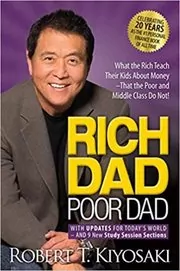
Rich Dad Poor Dad
What the Rich Teach Their Kids About Money That the Poor and Middle Class Do Not!
For readers curious about a widely influential money narrative that challenges dependence on a salary. Its simple stories make its perspective accessible, though anecdotal evidence and broad claims should not be treated as an investing or tax manual.
What it's about
Rich Dad, Poor Dad contrasts the money lessons Kiyosaki says he learned from his poor biological father and his rich mentor. Through simple stories he explains assets versus liabilities, cash flow, and why working only for a paycheck rarely leads to lasting wealth.
Also recommended by
3 people Will Smith recommended this book
Will Smith
Will Smith mentioned sharing this book with his son.
Will Smith's recommendation of this book - Anthony Pompliano recommended this book
Anthony Pompliano
"My favorite book of all time." - Anthony Pompliano
Anthony Pompliano's recommendation of this book  Patrick Bet-David recommended this book
Patrick Bet-David
Patrick Bet-David recommended this book on his website.
Patrick Bet-David's recommendation of this book

For readers who understand basic money concepts but want to examine their own behavior. Its short, reflective chapters make uncertainty and personal experience central, though it offers perspective rather than a stepwise plan for accounts or investments.
What it's about
Morgan Housel explores financial behavior through nineteen short stories about money and the people who use it. He examines the influence of personal history, ego, and incentives on choices that are often presented as purely mathematical decisions.
Also recommended by
1 person- Ankur Warikoo recommended this book
Ankur Warikoo
"Possibly the only money book one needs to read!" - Ankur Warikoo
Ankur Warikoo's recommendation of this book

For readers who struggle to turn good intentions into regular saving. Its automation focus makes a simple principle concrete, though the narrow framework and optimistic examples provide less help with unstable income or complex financial decisions.
What it's about
David Bach presents a personal finance plan built around making saving and investing automatic. He discusses paying yourself first, managing debt, homeownership, and retirement, emphasizing regular habits rather than relying on elaborate budgets or unusually high earnings.

For young adults who want money explained through familiar social situations as well as financial concepts. Its attention to conversations lowers the entry barrier, though the US student loan and credit context limits direct transfer elsewhere.
What it's about
Erin Lowry introduces personal finance for young adults navigating limited incomes and unfamiliar responsibilities. She covers budgeting, credit cards, debt, and student loans alongside awkward money conversations with friends and partners, connecting financial choices to everyday situations.

The Intelligent Investor
For readers ready to study investing as a discipline rather than simply organize household money. The focus on valuation and temperament offers depth, though its density and historical examples make it a demanding first finance book.
What it's about
Benjamin Graham outlines a value-investing philosophy that distinguishes investing from speculation and emphasizes disciplined decision-making. He examines how investors can assess value, respond to market fluctuations, and use a margin of safety when considering purchases.
Also recommended by
7 people Warren Buffett recommended this book
Warren Buffett
"I obviously recommend, first and foremost, [this book]. Considered to be the 'Bible of Value Investing.'" - Warren Buffett
Warren Buffett's recommendation of this book  DJ Vlad recommended this book
DJ Vlad
"The single biggest influence on how I buy and sell stocks." - DJ Vlad
DJ Vlad's recommendation of this book  Kevin Rose recommended this book
Kevin Rose
"The foundation for investing." - Kevin Rose
Kevin Rose's recommendation of this book  Peter Mallouk recommended this book
Peter Mallouk
"A phenomenal book." - Peter Mallouk
Peter Mallouk's recommendation of this book  Bill Ackman recommended this book
Bill Ackman
"I found it fascinating." - Bill Ackman
Bill Ackman's recommendation of this book  Jamie Dimon recommended this book
Jamie Dimon
On Jamie Dimon's list of favorite books.
Jamie Dimon's recommendation of this book +1
More recommendations
- Ryan Petersen
"[Part of] my biz book canon." - Ryan Petersen
- Ryan Petersen

For beginners who want an organized framework that extends beyond a monthly budget. Its broad definition of financial wellbeing connects several responsibilities, though the US systems and many tasks make adaptation and pacing important.
What it's about
Tiffany Aliche presents ten steps toward what she calls financial wholeness, drawing on her recovery from financial setbacks. Checklists, worksheets, and expert contributions connect budgeting, debt reduction, saving, and wealth building with a broader picture of financial security.

For readers who want to question saving indefinitely without considering when experiences matter most. Its focus on timing introduces a different perspective, though the proposals depend heavily on resources, uncertain future needs, and personal priorities.
What it's about
Bill Perkins argues for using money to create meaningful experiences throughout life rather than accumulating savings indefinitely. He examines the changing balance of time, health, and wealth, offering a framework for deciding when experiences and generosity matter most.
Also recommended by
2 people- Anthony Pompliano recommended this book
Anthony Pompliano
"A fantastic book with a simple message." - Anthony Pompliano
Anthony Pompliano's recommendation of this book - Ali Abdaal recommended this book
Ali Abdaal
"A practical guide to getting the most out of your money." - Ali Abdaal
Ali Abdaal's recommendation of this book
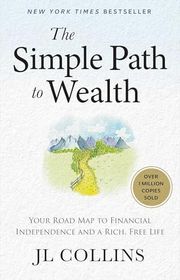
The Simple Path to Wealth
For readers who want an accessible introduction to a deliberately simple investing philosophy. Its emphasis on broad index funds contrasts with Graham's company analysis, though American account examples and a strong stock-market focus narrow the perspective.
What it's about
JL Collins presents an approach to financial independence built around spending less, avoiding costly complexity, and investing in broad index funds. The book discusses market fluctuations, asset allocation, and the habits involved in building and using long-term savings.

The Little Book of Common Sense Investing
The Only Way to Guarantee Your Fair Share of Stock Market Returns
For readers who want Bogle’s argument for diversified, low cost investing explained directly. Its concentrated treatment of costs and long horizons gives it clarity, though it focuses on investment principles rather than a complete household financial plan.
What it's about
John Bogle makes the case for buying and holding broadly diversified, low-cost index funds. He explains how expenses affect investment results and develops a long-term approach to participating in the stock market.
Also recommended by
3 people- Warren Buffett recommended this book
Warren Buffett
"Investors – large and small – should [read this book]." - Warren Buffett
Warren Buffett's recommendation of this book  Charlie Munger recommended this book
Charlie Munger
"A useful contribution to [the author's] fellow citizens." - Charlie Munger
Charlie Munger's recommendation of this book - Mr. Money Mustache recommended this book
Mr. Money Mustache
"Read any book by [this author], the founder of Vangard." - MMM
Mr. Money Mustache's recommendation of this book

The Richest Man in Babylon
For beginners who remember stories more readily than financial terminology. Clason uses short parables to make saving and restraint memorable, though the simplicity offers little detail on modern products, taxes, or difficult household circumstances.
What it's about
George S. Clason presents lessons about money through parables set in ancient Babylon. The stories examine thrift, financial planning, saving, and investing, using the experiences of their characters to introduce practical principles of managing and building personal wealth.
Also recommended by
5 people- DJ Vlad recommended this book
DJ Vlad
Most Recommended Books reached out to DJ Vlad directly.
DJ Vlad's recommendation of this book  Daymond John recommended this book
Daymond John
One of Daymond John's answers to "most-gifted or recommeded books?"
Daymond John's recommendation of this book  Sophia Amoruso recommended this book
Sophia Amoruso
"100 years later all the advice still holds up, which I find really great." - Sophia Amoruso
Sophia Amoruso's recommendation of this book - Anthony Pompliano recommended this book
Anthony Pompliano
"[One of] the three most impactful books for me." - Anthony Pompliano
Anthony Pompliano's recommendation of this book  Tai Lopez recommended this book
Tai Lopez
"Read this book." - Tai Lopez
Tai Lopez's recommendation of this book

For investors who want the reasoning behind broad diversification rather than only a set of instructions. Malkiel examines competing market theories and investment approaches, though the historical discussion is denser than the shorter household finance guides.
What it's about
Burton Malkiel examines investment theories, market bubbles, and the difficulty of consistently predicting stock prices. His guide argues for diversification and a disciplined approach, connecting the history of financial markets with practical considerations in building a portfolio over a lifetime.
Also recommended by
2 people- Mr. Money Mustache recommended this book
Mr. Money Mustache
"A great explanation of why index investing rules, written by a very wise professor/investor guy who has personally researched and debunked most of the common 'wisdom' that exists about stock trading today." - MMM
Mr. Money Mustache's recommendation of this book  Bill Gurley recommended this book
Bill Gurley
"Offers the most pragmatic advice for the long-term saver." - Bill Gurley
Bill Gurley's recommendation of this book
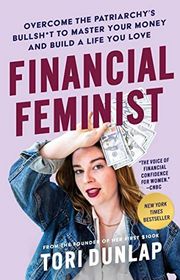
Financial Feminist
For readers who want practical money management discussed alongside gender and structural barriers. Its combination of financial basics and social context distinguishes it from individual-habits books, though the forceful voice and American focus will not suit everyone.
What it's about
Tori Dunlap examines budgeting, debt, investing, and earning through a framework centered on women's financial independence. Exercises and expert conversations connect personal money habits with the social messages and structural obstacles that influence people's financial lives.

For young adults who want a practical reference across unfamiliar financial responsibilities. Its organized explanations make targeted lookup useful, though details about accounts, insurance, loans, and taxes are US focused and depend on the edition.
What it's about
Beth Kobliner introduces personal finance for adults in their twenties and thirties. Explanations of debt, credit, taxes, saving, and investing connect everyday money decisions with longer-term goals, addressing the financial questions that often arise when starting an independent life.

Think and Grow Rich
For readers interested in a historical motivational approach to ambition and persistence. Hill offers memorable prompts for goal setting, though the success stories and claims about thought are not evidence of a reliable wealth-building formula.
What it's about
Napoleon Hill presents a philosophy of achievement centered on definite goals, persistent effort, and directed thought. Using stories of successful business figures, he explores desire, planning, cooperation, and overcoming fear as elements of his approach to wealth.
Also recommended by
7 people Neville Medhora recommended this book
Neville Medhora
"I’d bet money this book has restored countless relationships, made millions of millionaires and saved many lives." - Neville Medhora
Neville Medhora's recommendation of this book - Shay Carl recommended this book
Shay Carl
"Amazing." - Shay Carl
Shay Carl's recommendation of this book - Daymond John recommended this book
Daymond John
"The main takeaway from [this book] was goal-setting. It was the fact that if you don't set a specific goal, then how can you expect to hit it?" - Daymond John
Daymond John's recommendation of this book - Anthony Pompliano recommended this book
Anthony Pompliano
"[One of] the three most impactful books for me." - Anthony Pompliano
Anthony Pompliano's recommendation of this book  Tom Bilyeu recommended this book
Tom Bilyeu
Tom Bilyeu recommended this book on his website.
Tom Bilyeu's recommendation of this book  Jen Sincero recommended this book
Jen Sincero
"Do what he says (and really do all of it) and you will be large and in charge." - Jen Sincero
Jen Sincero's recommendation of this book +1
More recommendations
- Patrick Bet-David
Patrick Bet-David recommended this book on his website.
- Patrick Bet-David

For readers considering business ownership rather than only salary-based saving. DeMarco makes scalability and customer value central to the argument, though entrepreneurial risk and selected personal experience limit any promise of faster financial independence.
What it's about
MJ DeMarco challenges the conventional route of employment, gradual saving, and retirement. Drawing on entrepreneurial experience, he advocates building businesses and scalable systems that serve customers, arguing that ownership can offer a different path to wealth.
Also recommended by
1 person Hal Elrod recommended this book
Hal Elrod
"The best book I've ever read on how to build wealth for freedom." - Hal Elrod
Hal Elrod's recommendation of this book

The Bogleheads' Guide to Investing
For readers who want an investing reference built around diversification, costs, and disciplined decisions. Its multiple contributors provide broader coverage than a single argument, though the US accounts and tax material depend on edition and location.
What it's about
Mel Lindauer, Taylor Larimore, and Michael LeBoeuf explain an investing approach inspired by John Bogle. Their guide discusses saving, diversification, costs, and building a personal investment strategy, emphasizing disciplined decisions and a sustained approach to long-term financial goals.
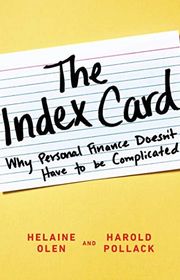
The Index Card
For readers who feel overwhelmed by complicated financial advice and want a compact set of principles. Its clarity makes a first overview easier, though simplified rules and US policy assumptions leave individual exceptions and detailed implementation unresolved.
What it's about
Helaine Olen and Harold Pollack expand a small set of money rules into a guide to saving, investing, debt, insurance, and financial advice. They explain why managing everyday finances can be simpler than the financial industry suggests.

Women & Money
For women who want to examine the emotional and relationship barriers surrounding money decisions. Its direct encouragement addresses confidence alongside practical topics, though the prescriptive voice and US financial context will not fit every reader.
What it's about
Suze Orman addresses the financial and emotional obstacles that can prevent women from taking charge of their money. She combines practical financial guidance with discussions of confidence, relationships, and self-worth, encouraging greater involvement in decisions about personal security.

For readers interested in why defaults and the presentation of choices affect financial behavior. Its broader decision framework can illuminate everyday money systems, though it is mainly about choice architecture rather than a personal budgeting or investing plan.
What it's about
Richard Thaler and Cass Sunstein examine how the presentation of choices influences decisions. They describe nudges that preserve options while changing defaults or context, using examples from health, finance, and public policy to explore their approach to choice architecture.
Also recommended by
3 people Ben Shapiro recommended this book
Ben Shapiro
"A somewhat creepy book." - Ben Shapiro
Ben Shapiro's recommendation of this book - Mr. Money Mustache recommended this book
Mr. Money Mustache
"On decision making." - MMM
Mr. Money Mustache's recommendation of this book  Kevin Systrom recommended this book
Kevin Systrom
Kevin Systrom recommended this book on Facebook.
Kevin Systrom's recommendation of this book

For readers who want to examine learned beliefs and emotional reactions around money. Eker offers direct reflection exercises, though his stark contrasts between rich and poor oversimplify circumstances and do not establish why financial outcomes differ.
What it's about
T. Harv Eker argues that learned beliefs about money form a financial blueprint that shapes earning and spending. He contrasts habits he associates with wealthy and struggling people, then proposes exercises for changing those patterns.
Also recommended by
2 people- Jen Sincero recommended this book
Jen Sincero
"Does a great job of listing off the thoughts that either lead us to financial success or financial failure." - Jen Sincero
Jen Sincero's recommendation of this book - Patrick Bet-David recommended this book
Patrick Bet-David
Patrick Bet-David recommended this book on his website.
Patrick Bet-David's recommendation of this book

For beginners who want financial habits connected with cooking, work, relationships, and everyday choices. Its lifestyle approach makes the subject approachable, though readers seeking detailed investment analysis or a comprehensive technical reference will need another book.
What it's about
Chelsea Fagan presents personal finance as part of everyday life, from budgeting and investing to cooking and maintaining a home. Expert contributions and practical examples explore spending decisions, career choices, and money conversations, helping beginners connect finances with their priorities.

For readers overwhelmed by elaborate financial plans and competing priorities. The focus on identifying what matters makes planning more manageable than a product-heavy guide, though the simple framework still requires detailed follow-through and regular revision.
What it's about
Carl Richards explains an approach to financial planning centered on identifying what matters most. He connects personal priorities with decisions about saving, investing, and insurance, emphasizing a manageable plan that can be adjusted as life changes.

For women beginning to organize debt, saving, and longer term goals. Its accessible tone connects money habits with personal experience, though the broad introduction and US context leave more complex or locally specific questions for other resources.
What it's about
Bola Sokunbi offers women an introduction to managing debt, saving, and building wealth. Combining financial concepts with personal experiences, she addresses money habits, budgeting, and future planning while encouraging readers to take a more active role in their finances.
Sources
- 1
13 Best Personal Finance Money Books 2020 | The Strategist
nymag.com
- 2
Best Personal Finance Books to Read in 2025
businessinsider.com
- 3
20 Best Personal Finance Books You Should Read Now
lifehack.org
- 4
Best Personal Finance Books Of 2026
cnbc.com
- 5
25 Best Personal Finance Books to Read in 2026
thepennyhoarder.com
- 6
Best Personal Finance Books for 2026
smartasset.com
- 7
Top 25 timeless personal finance books - MoneySense
moneysense.ca
- 8
Personal Finance Books
goodreads.com
- 9
The 14 Best Finance Books of All Time
fourminutebooks.com
- 10
Best Personal Finance Books to Read in 2025
businessinsider.com
- 11
Money Management Books
goodreads.com
- 12
Need book recommendations (by female authors) for becoming financially literate, with FI/RE as the theme.
reddit.com
- 13
100 Best Money Management Books of All Time
shortform.com
- 14
Personal Finance Books Shelf
goodreads.com
- 15
Any Personal Finance Books You'd Recommend?
reddit.com
- 16
16 best finance books
savethestudent.org
- 17
Recommended Books on Personal Finance, Investing, and Retirement Planning | Boldin Help Center
help.boldin.com
- 18
Wealth Management Books
goodreads.com
- 19
20 Must-Read Books to Build Wealth and Financial Freedom
due.com
- 20
Best books on financial literacy and personal finance
eupersonalfinance.eu
- 21
The 12 Best Personal Finance Books for the Savvy Reader
due.com
- 22
Best Financial Literacy Books
thebostonadvisor.com
- 23
Top 10 Best Wealth Management Books | WallStreetMojo [Updated 2026]
wallstreetmojo.com
- 24
30 best books for financial advisors - InvestmentNews
investmentnews.com
- 25
Favorite personal finance books? : r/PersonalFinanceCanada
reddit.com
- 26
The best finance books to read in 2026
panmacmillan.com
- 27
Learn how to budget, save and invest with these books | The Week US
theweek.com
- 28
Best Finance Books: 12 Essential Guides For Mastery
mypersonalfinance.com
- 29
Personal Finance book recs?
reddit.com
- 30
What are your favorite books that have helped your career/business?
reddit.com



Edited by
Software engineer whose passion for tracking book recommendations from podcasts inspired the creation of MRB.
Lead investor at 3one4 Capital whose startup expertise and love for books helped shape MRB and its growth.
Comments
Did we miss something? Have feedback?
Help us improve this page by sharing your thoughts