
14 Best Urban Planning Books
The best urban planning books, ranked by how many expert sources recommend each one, with notes on who they suit, from city enthusiasts to working planners.
Our take
Urban planning connects streets and buildings with transport, housing, infrastructure, and political choices. These books help readers notice how those systems affect daily life, but they work at different scales. Some focus on a walk, a street, or a public space. Others explain the institutions and histories behind an entire city. Students, planners, and interested residents can choose according to whether they need an introduction, a design reference, or a deeper account of power and inequality.
Happy City offers an accessible starting point, while The Death and Life of Great American Cities challenges readers to observe neighborhood life closely. Walkable City and Cities for People concentrate on human-scale design. The Works explains infrastructure, and The Image of the City examines navigation and perception. For the forces behind the physical landscape, turn to The Power Broker or The Color of Law. Start with one broad introduction, then follow the question that changes how you look at your own surroundings.
14 books · 9 sources · Last updated
As an Amazon Associate, we earn from qualifying purchases (at no extra cost to you).
How to choose from this list
Skip to the full rankingIf you're new to urban planning: Happy City → The Death and Life of Great American Cities
If you want more walkable streets: Walkable City → Walkable City Rules → Cities for People
If you want to observe public spaces closely: The Social Life of Small Urban Spaces → Great Streets
If you want to understand urban power and inequality: The Power Broker → The Color of Law
If you want to understand infrastructure and navigation: The Works → The Image of the City
If you want a longer view of urban form: The City in History → A Pattern Language
The 14 books, ranked
Ranked by how many expert sources name each book. Ties go to the book more people recommend.

The Death and Life of Great American Cities
For readers who want to understand how everyday street life challenges grand planning schemes. Jacobs teaches close observation of mixed neighborhoods, though the argument grows from particular American cities and is not a complete account of contemporary planning.
What it's about
Jane Jacobs challenges prevailing urban planning through observations of streets and neighborhoods. She examines safety, diversity, and the conditions that allow communities to flourish, arguing that large redevelopment schemes often undermine the vitality they are meant to create.
Also recommended by
3 people Sam Altman recommended this book
Sam Altman
This book was on Sam Altman's bookshelf.
Sam Altman's recommendation of this book  Ramit Sethi recommended this book
Ramit Sethi
Ramit Sethi mentioned this book in the "What to Read Next" newsletter.
Ramit Sethi's recommendation of this book  Chris Dixon recommended this book
Chris Dixon
"Classic book that I admit I hadn’t read and my colleagues at a16z crypto got me to read." - Chris Dixon
Chris Dixon's recommendation of this book

For newcomers interested in how urban design affects everyday relationships and well-being. Montgomery offers an accessible bridge between city form and lived experience, though the persuasive examples provide less technical detail than design or policy references.
What it's about
Montgomery investigates how urban design influences happiness, relationships, and everyday behavior. Visiting cities and examining research and experiments, he explores transportation, public space, and neighborhood planning as ways to create more connected and enjoyable urban lives.
Also recommended by
1 person Mr. Money Mustache recommended this book
Mr. Money Mustache
"Spectacularly opened up my mind." - MMM
Mr. Money Mustache's recommendation of this book

For readers who want an approachable case for making streets more welcoming to people on foot. Speck connects design choices with a practical agenda, though the American downtown emphasis needs adaptation to other urban settings.
What it's about
Jeff Speck argues that walkability is central to the health and vitality of American downtowns. Drawing on urban planning experience, he examines how design and policy decisions can create streets and communities where walking is practical and appealing.
Also recommended by
1 person- Ramit Sethi recommended this book
Ramit Sethi
Ramit Sethi mentioned this book in the "What to Read Next" newsletter.
Ramit Sethi's recommendation of this book

Cities for People
For planners and curious residents who want streets examined at walking pace. Gehl’s illustrated focus on human scale makes public-space design tangible, though the design-led approach gives less attention to financing, land ownership, and political implementation.
What it's about
Jan Gehl argues for urban design shaped by human senses, movement, and everyday social life. Illustrated discussions examine streets and public spaces at walking pace, offering methods for creating lively, safe, sustainable, and healthy cities.
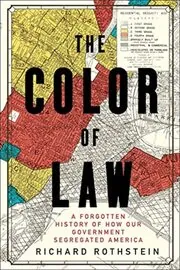
The Color of Law
A Forgotten History of How Our Government Segregated America
For readers who want to understand how public policy helped produce residential segregation in the United States. Rothstein adds a necessary institutional history to design-focused reading, though its national focus and legal history do not form a general planning manual.
What it's about
A history of how federal, state, and local governments deliberately created and maintained residential segregation in the United States. It links housing policy to the racial lines that still shape neighborhoods, schools, and wealth.

For readers who want a browsable collection of design ideas across buildings and neighborhoods. Alexander and his collaborators connect human needs with recurring spatial patterns, though the substantial catalogue offers propositions to test rather than universally applicable solutions.
What it's about
Christopher Alexander and his colleagues present an approach to designing houses, neighborhoods, and public spaces with the participation of those who use them. The book offers guidance intended to connect people's needs with architecture, planning, and construction.
Also recommended by
6 people Patrick Collison recommended this book
Patrick Collison
Patrick Collison labeled this book "particularly great."
Patrick Collison's recommendation of this book  Naval Ravikant recommended this book
Naval Ravikant
"Love [this book]." - Naval Ravikant
Naval Ravikant's recommendation of this book - Sam Altman recommended this book
Sam Altman
This book was on Sam Altman's bookshelf.
Sam Altman's recommendation of this book  Stewart Brand recommended this book
Stewart Brand
Stewart Brand recommended this book on his "Selected Books for the Manual for Civilization" blog post.
Stewart Brand's recommendation of this book  Gretchen Rubin recommended this book
Gretchen Rubin
"I’m not a visual person, but this book taught me to see the world around me in an entirely new way." - Gretchen Rubin
Gretchen Rubin's recommendation of this book  Liz Lambert recommended this book
Liz Lambert
"[The author] is a writer and a thinker about architecture and about how we build." - Liz Lambert
Liz Lambert's recommendation of this book

For readers who want to see how political power shapes infrastructure and neighborhoods. Caro makes institutional influence and its human costs unusually concrete, though the enormous biography demands time and concentrates on one builder and region.
What it's about
Robert Moses transforms New York through bridges, parks, highways, and urban redevelopment while accumulating extraordinary political influence. Caro’s biography investigates how an unelected official acquired power, maintained it, and reshaped the lives of the city’s residents.
Also recommended by
4 people Ryan Holiday recommended this book
Ryan Holiday
"One of the most magnificent books I’ve ever read." - Ryan Holiday
Ryan Holiday's recommendation of this book  Sam Hinkie recommended this book
Sam Hinkie
"My favorite writer." - Sam Hinkie
Sam Hinkie's recommendation of this book  Shane Parrish recommended this book
Shane Parrish
"It’s amazing. But it’s not a light read." - Shane Parrish
Shane Parrish's recommendation of this book  Trung Phan recommended this book
Trung Phan
"About the Urban Planning industry." - Trung Phan
Trung Phan's recommendation of this book

For readers who want a broad historical argument about what cities have been and could become. Mumford links urban form with social purposes across centuries, though the sweeping narrative and strong judgments demand patience and comparison with later scholarship.
What it's about
Lewis Mumford follows the development of cities from early settlements through classical, medieval and modern urban life. He examines how religion, commerce, political power and capitalism shaped their structures, purposes and effects on the people living in them.
Also recommended by
2 people Keith Rabois recommended this book
Keith Rabois
Keith Rabois recommended this book on a Medium blog post.
Keith Rabois's recommendation of this book - Patrick Collison recommended this book
Patrick Collison
Patrick Collison labeled this book "substantially above average."
Patrick Collison's recommendation of this book

The High Cost of Free Parking
For readers who want to understand parking as a major urban policy decision. Shoup traces costs that simple parking counts miss, though the detailed economic argument is demanding and its American institutional context may need translation elsewhere.
What it's about
Donald Shoup argues that free parking carries hidden economic and environmental costs, encouraging car dependence and urban sprawl. His analysis proposes charging market prices for curb parking, investing revenue in local improvements, and removing requirements for off-street parking in new development.

The Image of the City
For readers interested in how people navigate and mentally organize a city. Lynch gives observation a concise vocabulary of paths, edges, and landmarks, though the small set of older American case studies limits its geographic and historical range.
What it's about
Kevin Lynch examines how residents perceive and remember the form of their cities. Drawing on studies of Boston, Los Angeles, and Jersey City, he develops the concept of imageability as a way to evaluate urban environments and inform planning.

For readers ready to turn an interest in walkability into specific design questions. Speck’s short rules are easier to consult than a sustained argument, though a checklist cannot replace local evidence, professional judgment, or negotiation over competing needs.
What it's about
Jeff Speck presents 101 practical rules for making towns and cities more walkable. Grouped by subject and illustrated with examples, they address parking, car dependence, comfortable public spaces and the steps citizens and planners can take to advance change.

Great Streets
For readers who want to study the physical details behind streets people value. Allan B. Jacobs uses drawings and comparisons more closely than broad urban manifestos, though design observation alone cannot explain every economic or social difference between places.
What it's about
Allan B. Jacobs investigates the physical qualities that make streets successful through comparisons of urban spaces around the world. Drawings, measurements, maps, and observations of street use support an analysis of design choices and their relationship with urban life.

The Social Life of Small Urban Spaces
For readers who want to learn by watching how people actually use plazas and other small public spaces. Whyte makes observation concrete and engaging, though the older, largely New York research needs testing against other climates, cultures, and settings.
What it's about
William H. Whyte investigates how people use small urban public spaces through observation of plazas, parks, and pedestrian behavior. His Street Life Project connects everyday patterns of sitting and gathering with the design decisions that make places more inviting.

For readers curious about the systems hidden behind everyday city life. Ascher’s graphics explain infrastructure more directly than the planning-theory books, though the New York focus and publication era limit its coverage of other places and newer technology.
What it's about
Kate Ascher explains the infrastructure that keeps a city functioning, using New York as her main example. Text and graphics reveal how transportation, electricity, water, sewage, garbage, and other systems operate behind everyday urban life.
Sources
- 1
100 Best Urban Planning Books of All Time
shortform.com
- 2
Top 10 Urban Planning Books
planningtank.com
- 3
The best urbanism books: 18 reads for anyone shaping a city
allthingsurban.net
- 4
6 fascinating books about urban planning
modernmrsdarcy.com
- 5
7 Urban Planning Books That Drove Us to Build Local Logic
locallogic.co
- 6
Urban Planning Books
goodreads.com
- 7
Books for new urban planners?
reddit.com
- 8
What are some books that you think every urban planner should read?
reddit.com
- 9
100 Essential Books of Planning: American Planning Association
guides.lib.berkeley.edu







Edited by
Software engineer whose passion for tracking book recommendations from podcasts inspired the creation of MRB.
Lead investor at 3one4 Capital whose startup expertise and love for books helped shape MRB and its growth.
Comments
Did we miss something? Have feedback?
Help us improve this page by sharing your thoughts