
13 Best Positivity Books
The best positivity books, ranked by how many expert sources recommend each one, with notes for choosing practical exercises, encouragement, and spiritual perspectives.
Our take
Positivity books offer different ways to think about confidence, setbacks, attention, and hope. Some use psychological research and exercises, others draw on personal stories, philosophy, or religious belief. Their tone matters too: a forceful motivational voice can appeal to one reader while another prefers quiet reassurance or a more analytical explanation. The books also differ in how much room they give to difficult circumstances and emotions.
Learned Optimism focuses on the explanations people give for setbacks, while Declutter Your Mind connects reflection with everyday priorities. How to Stop Worrying and Start Living offers practical principles through stories. For gentler reading, The Comfort Book gathers short pieces to revisit. The Power of Positive Thinking presents a distinctly Christian approach, and As A Man Thinketh a brief philosophical argument. Man's Search for Meaning considers purpose through an intensely difficult personal history. Start with Seligman for a focused framework, Carnegie for everyday principles, or Haig if you want something brief and reassuring.
13 books · 9 sources · Last updated
As an Amazon Associate, we earn from qualifying purchases (at no extra cost to you).
How to choose from this list
Skip to the full rankingIf you want to examine pessimistic habits: Learned Optimism
If you want practical reflections on worry: How to Stop Worrying and Start Living
If you want gentler reading in small pieces: The Comfort Book
If you want a Christian approach: The Power of Positive Thinking
If you prefer energetic motivation: You Are a Badass
If you want a serious reflection on purpose: Man's Search for Meaning
The 13 books, ranked
Ranked by how many expert sources name each book. Ties go to the book more people recommend.
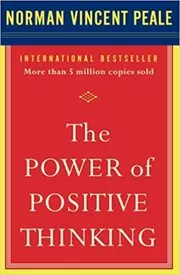
The Power of Positive Thinking
For readers who want confidence discussed through Christian faith and prayer. Peale's stories give the spiritual approach a practical tone, though that worldview is central and the anecdotes provide inspiration rather than a research-based psychological guide.
What it's about
Norman Vincent Peale combines Christian faith, prayer, and practical exercises in a guide to approaching everyday difficulties with confidence. Personal stories support his advice on discouragement, worry, and cultivating a more optimistic outlook on life.
Also recommended by
1 person Steve Harvey recommended this book
Steve Harvey
"Powerful." - Steve Harvey
Steve Harvey's recommendation of this book
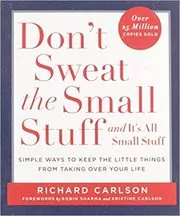
Don't Sweat the Small Stuff . . . and It's All Small Stuff
Simple Ways to Keep the Little Things from Taking Over Your Life
For readers who want brief reminders to put everyday frustrations in perspective. Carlson's short reflections are easy to revisit, though their focus on small pressures can feel too simple when the problem is serious or beyond individual control.
What it's about
Richard Carlson offers brief reflections and practices for responding more calmly to everyday frustrations. He encourages readers to reconsider minor conflicts and pressures, change their perspective, and cultivate habits that prevent small problems from dominating attention and relationships.
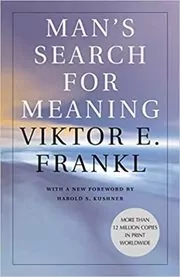
Man's Search for Meaning
For readers who want a serious reflection on purpose under extreme circumstances. Frankl connects personal experience with psychological ideas, though the concentration-camp account and philosophical discussion make this far more demanding than an everyday encouragement book.
What it's about
Viktor Frankl combines his account of imprisonment in Nazi concentration camps with an introduction to logotherapy. He explores the search for meaning, arguing that purpose and one's response to suffering can remain significant even under extreme circumstances.
Also recommended by
36 people Jordan Peterson recommended this book
Jordan Peterson
Recommended on Jordan Peterson's website.
Jordan Peterson's recommendation of this book  Jocko Willink recommended this book
Jocko Willink
Jocko Willink covered this book in "Jocko Podcast" Ep. 78
Jocko Willink's recommendation of this book  Esther Perel recommended this book
Esther Perel
"The book I’ve probably gifted the most is [this book], since I’m 16." - Esther Perel
Esther Perel's recommendation of this book  Emma Watson recommended this book
Emma Watson
"Loved it. Really loved it." - Emma Watson
Emma Watson's recommendation of this book  Naval Ravikant recommended this book
Naval Ravikant
"Wow it's dark." - Naval Ravikant
Naval Ravikant's recommendation of this book  David Blaine recommended this book
David Blaine
"One of my favorite books." - David Blaine
David Blaine's recommendation of this book +30
More recommendations
- Terry Crews
"Incredible." - Terry Crews
- Jimmy Fallon
"Talks about the meaning of life, and I believe you come out a better person from reading it." - Jimmy Fallon
- Tony Robbins
"Taught me that if you change the meaning, you change everything." - Tony Robbins
- Simon Sinek
"Single most important book you can read." - Simon Sinek
- Michael Gervais
"Outlines methods to discover deep meaning and purpose in life." - Michael Gervais
- Daniel Pink
"A hugely important book for me." - Daniel Pink
- Ev Williams
On the "books read" section of Ev Williams' GoodReads profile.
- Bryan Johnson
"His basic point is no matter the conditions we surround ourselves in, we can author our life." - Bryan Johnson
- Dustin Moskovitz
Dustin Moskovitz recommended this book on Twitter.
- Sam Altman
This book was on Sam Altman's bookshelf.
- Chelsea Handler
"One of those beautiful accounts of a terrible time in our history. His calm and sagaciousness, while witnessing one horror after another played out during his time in three separate concentration camps, is awe inspiring." - Chelsea Handler
- Ryan Holiday
"Looks at how we find purpose by dedicating ourselves to a cause, learning to love and finding a meaning to our suffering." - Ryan Holiday
- Maria Popova
"A meditation on what the gruesome experience of Auschwitz taught [the author] about the primary purpose of life: the quest for meaning, which sustained those who survived." - Maria Popova
- Aniela Gregorek
"A book I have gifted to many people because it changed the way I think about human suffering and grace in life." - Aniela Gregorek
- Fedor Holz
"[From it] I interpreted that we cannot avoid suffering, but we can choose how to cope with it, and that having meaning in our life is essential." - Fedor Holz
- Turia Pitt
"[If people are] doing a bit of soul searching, hands down [I give them this book]." - Turia Pitt
- Chip Conley
"If I were to take the meaning of [this book], and turn it into an equation, it would be despair equals suffering minus meaning." - Chip Conley
- Dave Elitch
Dave Elitch mentioned this book on "The Tim Ferriss Show" podcast.
- PewDiePie
"A great tool to help people. [...] In case something really bad happens, I feel like, from reading this book, I'm better equipped to handle it." - PewDiePie
- Shane Parrish
"As hard as you think your life is, it pales in comparison to Auschwitz." - Shane Parrish
- Phil Jackson
"An important book for me." - Phil Jackson
- Tom Bilyeu
Tom Bilyeu recommended this book on his website.
- Lex Fridman
"I reread [this book] quite often." - Lex Fridman
- Mark Manson
Mark Manson recommended this book on his website.
- Alastair Humphreys
"Slim but packed with wisdom that I often come back to. I really recommend you read it." - Alastair Humphreys
- Steve Kerr
"Incredibly inspiring." - Steve Kerr
- Robin Black
"One of the great books ever written exists because of one of the worst times in human history. From suffering comes beauty." - Robin Black
- Jim Kwik
"Illustrates that it’s not our circumstances but the decisions we make that diminish or develop us." - Jim Kwik
- Michael Hyatt
Michael Hyatt recommended this book on his website.
- Patrick Bet-David
Patrick Bet-David recommended this book on his website.
- Terry Crews
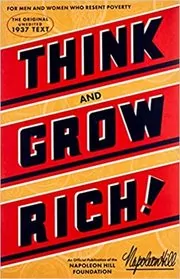
Think and Grow Rich
For readers interested in a classic motivational philosophy of ambition and persistence. Hill's goal-centered approach gives belief a practical direction, though the selected success stories and wealth-focused outlook offer a narrower perspective than a balanced account of achievement.
What it's about
Napoleon Hill presents a philosophy of achievement centered on definite goals, persistent effort, and directed thought. Using stories of successful business figures, he explores desire, planning, cooperation, and overcoming fear as elements of his approach to wealth.
Also recommended by
7 people Neville Medhora recommended this book
Neville Medhora
"I’d bet money this book has restored countless relationships, made millions of millionaires and saved many lives." - Neville Medhora
Neville Medhora's recommendation of this book  Shay Carl recommended this book
Shay Carl
"Amazing." - Shay Carl
Shay Carl's recommendation of this book  Daymond John recommended this book
Daymond John
"The main takeaway from [this book] was goal-setting. It was the fact that if you don't set a specific goal, then how can you expect to hit it?" - Daymond John
Daymond John's recommendation of this book  Anthony Pompliano recommended this book
Anthony Pompliano
"[One of] the three most impactful books for me." - Anthony Pompliano
Anthony Pompliano's recommendation of this book  Tom Bilyeu recommended this book
Tom Bilyeu
Tom Bilyeu recommended this book on his website.
Tom Bilyeu's recommendation of this book  Jen Sincero recommended this book
Jen Sincero
"Do what he says (and really do all of it) and you will be large and in charge." - Jen Sincero
Jen Sincero's recommendation of this book +1
More recommendations
- Patrick Bet-David
Patrick Bet-David recommended this book on his website.
- Patrick Bet-David
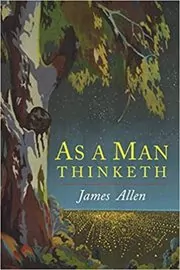
As A Man Thinketh
For readers who want a short philosophical prompt toward self-discipline and reflection. Allen's direct style makes the central argument memorable, though its strong emphasis on personal thought gives less attention to circumstances outside a person's control.
What it's about
James Allen argues that patterns of thought shape character and the circumstances of life. This short philosophical work encourages deliberate reflection and self-discipline, presenting the cultivation of constructive thinking as a path toward purpose and personal development.
Also recommended by
3 people Tony Robbins recommended this book
Tony Robbins
"I’ve read this book more than a dozen times and often give it as a gift." - Tony Robbins
Tony Robbins's recommendation of this book - Shay Carl recommended this book
Shay Carl
"One of my favorite books. I think that we so undervalue the power of thought." - Shay Carl
Shay Carl's recommendation of this book - Jen Sincero recommended this book
Jen Sincero
"Considering the fact that if you can really truly get that skill down, you can create the most awesome life ever, reading this book, over and over and over until it becomes second nature is time well spent." - Jen Sincero
Jen Sincero's recommendation of this book
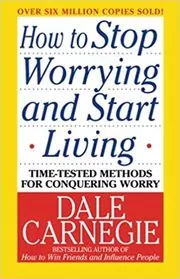
How to Stop Worrying and Start Living
For readers who prefer practical principles and stories about responding to worry. Carnegie keeps attention on manageable actions, though the historical examples and anecdotal format provide less structured practice than a dedicated exercise-based guide.
What it's about
Carnegie offers practical approaches to handling worry in work and everyday life. Examples and advice address financial concerns, fatigue, criticism, and personal outlook, encouraging readers to focus on actionable responses rather than remain absorbed in anxiety.
Also recommended by
3 people Terry Crews recommended this book
Terry Crews
"Such a great book." - Terry Crews
Terry Crews's recommendation of this book  Tim Ferriss recommended this book
Tim Ferriss
"Surprisingly sophisticated." - Tim Ferriss
Tim Ferriss's recommendation of this book  Patrick Bet-David recommended this book
Patrick Bet-David
Patrick Bet-David recommended this book on his website.
Patrick Bet-David's recommendation of this book
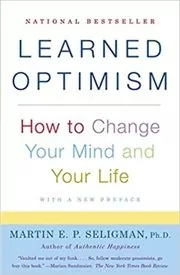
For readers who want to examine how they explain setbacks. Seligman's research-informed framework and exercises give optimism a more specific focus, though learning to question habitual interpretations takes repeated practice rather than one encouraging read.
What it's about
Martin Seligman explores how people explain setbacks and why those explanations influence their responses. Drawing on research into learned helplessness, he offers exercises for challenging pessimistic habits, with applications to work, school, sport, and everyday life.
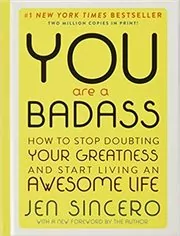
You Are a Badass
How to Stop Doubting Your Greatness and Start Living an Awesome Life
For readers who respond to irreverent encouragement and a forceful challenge to self-doubt. Sincero's humor makes reflection feel lively, though the spiritual assumptions and anecdotal success stories may not suit readers seeking a more analytical approach.
What it's about
Jen Sincero uses personal stories, humor, and exercises to address self-doubt and habits that interfere with personal ambitions. Her motivational guide encourages readers to examine limiting beliefs, make deliberate changes, and pursue a life aligned with their desires.
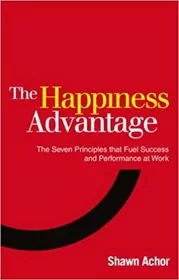
For readers interested in connecting outlook with everyday work habits. Achor organizes an upbeat argument into practical principles, though the workplace-centered examples and broad claims about performance need more context than the motivational presentation always provides.
What it's about
Shawn Achor argues that happiness can support success rather than merely follow it. Drawing on positive psychology and workplace examples, he presents seven principles for developing a more positive outlook, manageable goals and supportive relationships.
Also recommended by
2 people Tai Lopez recommended this book
Tai Lopez
"Interesting book on how to be happy." - Tai Lopez
Tai Lopez's recommendation of this book  Ali Abdaal recommended this book
Ali Abdaal
Ali Abdaal recommended this book on his website.
Ali Abdaal's recommendation of this book
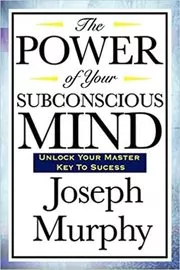
The Power of Your Subconscious Mind
For readers exploring New Thought ideas about imagination and habitual belief. Murphy offers accessible stories and exercises, though his broad claims about the subconscious form a spiritual self-help framework and should not be read as established science.
What it's about
Joseph Murphy explores his belief that subconscious thought shapes everyday experience. He combines illustrative stories with exercises in suggestion, visualization, and changing habitual thinking, applying his ideas to confidence, relationships, work, and personal difficulties.
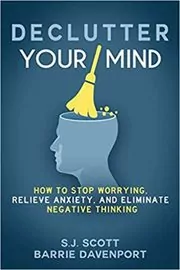
Declutter Your Mind
How to Stop Worrying, Relieve Anxiety, and Eliminate Negative Thinking
For readers who want exercises that connect recurring thoughts with values and daily priorities. Scott and Davenport organize several practical approaches in one place, though the broad mix requires selecting useful practices rather than expecting every exercise to fit.
What it's about
S.J. Scott and Barrie Davenport offer exercises for addressing mental clutter and recurring negative thoughts. Their approach combines mindfulness, reflection on personal values, and changes to goals, relationships, and distractions to help readers clarify their priorities.
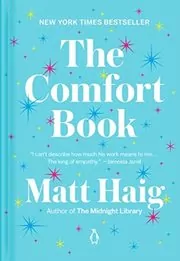
The Comfort Book
For readers who want gentle reassurance in small pieces rather than a demanding program. Haig's notes and stories are easy to revisit, though the fragmentary format offers companionship and perspective rather than a structured set of exercises.
What it's about
A patchwork of very short reflections, stories, quotes and reminders written for days when everything feels too much, this book gathers ideas that helped Haig through his own dark times and offers gentle, non‑preachy reassurance that feelings can change.
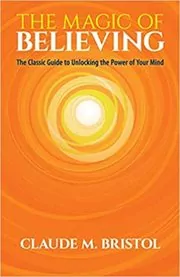
The Magic of Believing
For readers interested in a classic belief-centered approach to achievement. Bristol's stories and visualization exercises give the philosophy a practical shape, though its sweeping claims about belief rely on anecdotes and spiritual assumptions rather than established psychological evidence.
What it's about
Claude Bristol proposes that focused belief can influence personal achievement. Drawing on anecdotes and New Thought ideas, he discusses the subconscious mind, visualization, suggestion, and techniques for directing thought toward goals in work and everyday life.
Sources
- 1
22 Best Positive Thinking Books: Transform Your Mindset
upjourney.com
- 2
7 Positive Thinking Books You Should Read
successconsciousness.com
- 3
15 Positive Thinking Books You Need for a Happy Life - LifeHack
lifehack.org
- 4
100 Best Positivity Books of All Time (Updated for 2026)
shortform.com
- 5
Positivity Books
goodreads.com
- 6
12 Best Affirmation Books: Daily Positivity That Actually Works
books.org
- 7
21 Best Books on Positive Thinking for 2026
choosingtherapy.com
- 8
What's a book that helped you get a positive mindset : r/suggestmeabook
reddit.com
- 9
Books, Handbooks, and Textbooks | Positive Psychology Center
ppc.sas.upenn.edu
Edited by
Software engineer whose passion for tracking book recommendations from podcasts inspired the creation of MRB.
Lead investor at 3one4 Capital whose startup expertise and love for books helped shape MRB and its growth.
Comments
Spotted a missing book, a wrong order or a mistake? Tell us and we'll fix this page.
We're a reading guide, not the author or publisher, so we can't send books or pass on messages.