
22 Best Topology Books
The best topology books, ranked by how many expert sources recommend each, with notes on first courses, advanced texts, geometric intuition, and who each suits.
Our take
Topology studies properties of spaces that persist under suitable continuous changes, but its books follow several different paths. General topology develops the language of spaces, continuity, compactness, and convergence. Algebraic topology uses algebraic structures to investigate spaces, while differential topology brings smooth maps and manifolds into the picture. Choosing a book means matching both your mathematical background and the direction you want to pursue.
For a first course, Mendelson's Introduction to Topology offers a compact progression, Armstrong's Basic Topology emphasizes geometric ideas, and Munkres's Topology supplies a longer foundation. Jänich's Topology is a shorter, visual companion. Counterexamples in Topology helps test your understanding of definitions rather than replace a course. Hatcher's Algebraic Topology is a later step, while Milnor's Topology from the Differentiable Viewpoint opens a different route for readers with analysis. The Knot Book provides a concrete specialty to explore. Start with the branch your course or interests require, then choose the level and amount of detail you can work through carefully.
22 books · 9 sources · Last updated
As an Amazon Associate, we earn from qualifying purchases (at no extra cost to you).
How to choose from this list
Skip to the full rankingIf you're taking a first course: Introduction to Topology → Topology
If you want a geometric introduction: Basic Topology
If you want to test your understanding: Counterexamples in Topology
If you're moving into algebraic topology: Algebraic Topology
If you're ready for differential topology: Topology from the Differentiable Viewpoint → Differential Topology
If you want a concrete visual specialty: The Knot Book
The 22 books, ranked
Ranked by how many expert sources name each book. Ties go to the book more people recommend.

Topology
For undergraduates who want a thorough foundation in point-set topology before moving into fundamental groups and covering spaces. Its careful structure and exercises support a full course, though the extended foundational development can feel slow to visually motivated readers.
What it's about
James Munkres introduces general and algebraic topology in two connected parts. The text develops topological spaces, continuity, connectedness, and compactness before exploring fundamental groups, covering spaces, surfaces, and applications, with examples and exercises throughout.

A Concise Course in Algebraic Topology
For graduate students who want a compact route through a broad algebraic-topology syllabus. Its efficient organization makes connections visible, though the compressed arguments and advanced perspective make it demanding as an unaided first encounter.
What it's about
J. P. May presents algebraic topology for advanced graduate students, combining classical treatments with developments in the field. Chapters cover foundational topics, include problems for further exploration, and conclude with sketches of areas beyond the standard introductory course.

Algebraic Topology
For students ready to connect geometric examples with fundamental groups, homology, and cohomology. Its pictures and varied exercises build useful intuition, though the substantial chapters assume mathematical maturity and are easier with guidance through a first course.
What it's about
Allen Hatcher introduces algebraic topology through fundamental groups, covering spaces, homology, cohomology, and homotopy theory. Geometric explanations, examples, and exercises build intuition, while optional sections extend the main course into topics often omitted from introductory treatments.

Basic Topology
For undergraduates who want geometric examples and a route toward algebraic invariants. The illustrated approach gives the subject shape early, though its broad tour develops some point-set topics less extensively than a dedicated general-topology text.
What it's about
M. A. Armstrong introduces point-set, geometric, and algebraic topology through the search for invariants of spaces. Illustrated explanations and exercises connect continuity, compactness, fundamental groups, surfaces, homology, knots, and covering spaces for students with prior mathematical preparation.

General Topology
For readers seeking a substantial point-set topology text and reference. Its coverage of convergence and related structures supports later analysis, though the breadth and density can overwhelm beginners who mainly need an initial set of examples.
What it's about
Stephen Willard introduces general topology through convergence, compactness, metrization, uniform spaces, and function spaces, alongside geometric topics involving connectedness and homotopy. Exercises introduce additional examples, while historical notes and references support further study of the subject.

Introduction to Topology
For undergraduates who want a compact first course that builds from sets and metric spaces. The gradual progression makes abstraction manageable, though the limited scope means readers interested in algebraic topology will soon need another text.
What it's about
Bert Mendelson develops the foundations of topology for undergraduates familiar with calculus proofs. Beginning with sets and metric spaces, the text progresses to topological spaces, connectedness, and compactness, with exercises supporting each stage.

Topology from the Differentiable Viewpoint
For readers who want a short, focused introduction to differential topology through smooth maps and degree. The economical arguments reveal how much a few tools accomplish, though the compressed exposition rewards prior analysis and careful rereading.
What it's about
John Milnor gives a concise introduction to differential topology, beginning with smooth manifolds and maps. He develops tangent spaces, orientations, vector fields, homotopy, and degree, with proofs of Sard's theorem and the Hopf theorem.

Differential Topology
For students moving from multivariable analysis toward smooth manifolds and transversality. Its geometric explanations make the central methods approachable, though readers need a solid foundation in analysis and linear algebra rather than only familiarity with point-set topology.
What it's about
Victor Guillemin and Alan Pollack introduce differential topology using transversality as a central tool. Written for students with analysis and linear algebra, the text explores smooth manifolds, mappings, intersection theory, and related ideas through explanations and exercises.
Also recommended by
1 person Eric Weinstein recommended this book
Eric Weinstein
Eric Weinstein tweet about books that mattered enough to him.
Eric Weinstein's recommendation of this book

Counterexamples in Topology
For students who understand the definitions but struggle to see why theorem hypotheses matter. The organized examples expose failed implications clearly, though it is a companion reference and works poorly as a substitute for a first course.
What it's about
Lynn Arthur Steen and J. Arthur Seebach organize topological examples to show which properties do and do not imply others. Explanations, diagrams, and exercises support the study of these relationships and the construction of further counterexamples.

General Topology
For readers who want general topology with a strong connection to analysis. Its integrated problems develop substantial additional material, though the graduate-level presentation and older conventions make it heavier than a gentle undergraduate introduction.
What it's about
John Kelley develops general topology as a foundation for modern analysis, offering both a graduate text and a reference. Integrated problems range from conceptual exercises and counterexamples to applications and small theories that extend the main discussion.

Topology
For students who want a shorter and more visual route into topological ideas. Its illustrations give abstract definitions a geometric setting, though the selective, brisk treatment benefits from a fuller companion when you need more practice or reference detail.
What it's about
Klaus Jänich introduces topological spaces, continuity, quotient spaces, compactness, homotopy, and covering spaces through concise explanations and illustrations. The text connects foundational concepts with geometric constructions, while a supplementary chapter develops the set-theoretic background used in the discussion.

Elements Of Algebraic Topology
For students who want a careful, concrete development of homology and cohomology. Its systematic treatment of chain-level constructions supports rigorous calculation, though the emphasis is narrower than a text giving equal attention to fundamental groups and homotopy theory.
What it's about
James Munkres develops algebraic topology through a concrete treatment of homology and cohomology. Chain complexes, simplicial methods, duality, and related theorems provide the framework, while examples and exercises connect algebraic constructions with the study of topological spaces.

Essential Topology
For undergraduates who want an overview that reaches beyond point-set definitions into algebraic ideas. The motivating examples show what topology can accomplish, though the breadth makes it less complete as a reference in any one branch.
What it's about
Martin Crossley takes undergraduate readers from continuity and topological spaces to homotopy, homology, and fibre bundles. Examples motivate the main ideas, with discussions of the Euler number and the hairy ball theorem connecting definitions to recognizable mathematical problems.

Introduction to Topology and Modern Analysis
For readers who want topology to support a wider education in analysis. Its connected treatment of continuity and linearity supplies useful motivation, though students seeking a direct route into algebraic or geometric topology will find the emphasis less aligned.
What it's about
George Simmons introduces topology and modern analysis through the related ideas of continuity and linearity. His textbook explores the mathematical structures behind these concepts, connecting geometric and analytical perspectives for readers developing their understanding of abstract mathematics.

Schaums Outline of General Topology
For students who need additional worked problems while taking a general-topology course. The step-by-step solutions make it useful for checking techniques, though the outline format provides less motivation and conceptual development than a full textbook.
What it's about
Seymour Lipschutz presents a concise review of general topology supported by solved and supplementary problems. Step-by-step solutions and explanations help readers practice the subject's methods and reinforce material studied in a college course.

Principles of Topology
For students who want general topology connected with geometric intuition and analysis. Its range helps place basic definitions within a wider mathematical picture, though the movement into several specialties gives less depth than dedicated advanced texts.
What it's about
Fred Croom introduces topology with an emphasis on geometric intuition and applications to analysis. The text covers metric and topological spaces, continuity, connectedness, compactness, and related constructions, then introduces geometric, differential, and algebraic topics through exercises and examples.
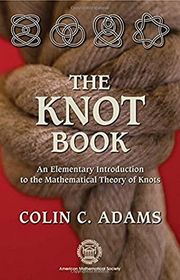
For readers who want a concrete, visual way to explore a branch of topology. Its accessible knot problems give invariants and proofs a tangible purpose, though the specialized focus does not replace a general course in topological spaces.
What it's about
Colin Adams introduces the mathematical study of knots through diagrams, examples, and exercises. Beginning with simple knots, he develops ways to distinguish and manipulate them, connecting accessible problems with invariants, surfaces, and questions from contemporary knot theory.

Topology and Geometry for Physicists
For physics students who want topology and geometry connected with field-theory applications. Its specialized motivation makes abstract tools easier to place within physics, though the breadth and assumed mathematical background make it less suitable as a first general-topology text.
What it's about
Charles Nash and Siddhartha Sen introduce topology and differential geometry for physics students. Manifolds, homotopy, homology, cohomology, fibre bundles, and Morse theory lead to applications involving defects, Yang-Mills theories, instantons, and monopoles.

Differential Topology
For graduate students who want a deeper treatment of smooth manifolds, embeddings, and related methods. Its geometric development supports substantial further study, though the technical demands and exercise range make it a harder entry point than a short introductory treatment.
What it's about
Morris Hirsch introduces the topological ideas used to study differentiable manifolds, including immersions, embeddings, and Morse theory. Geometric explanations accompany exercises ranging from theorem applications to further theoretical developments, with attention to surfaces and cobordism.

Algebraic Topology
For advanced undergraduates who want algebraic topology organized around homotopy-theoretic ideas. Its sustained theoretical development offers an alternative to a geometry-led introduction, though the older, compact presentation assumes confidence with abstract arguments.
What it's about
C. R. F. Maunder develops elementary algebraic topology from a homotopy-theoretic viewpoint for advanced undergraduates and beginning graduate students. The text connects topological problems with algebraic methods, giving substantial attention to homotopy theory and duality in homology manifolds.

For students who want algebraic topology motivated by connections with other mathematics. Its examples provide several routes into the subject, though the less conventional progression can be harder to align with a standard homology-centered course.
What it's about
William Fulton introduces algebraic topology by emphasizing connections with other branches of mathematics. His first course develops ideas including winding numbers, fundamental groups, homology, and cohomology, using those relationships to motivate the subject's methods and applications.

For readers studying manifolds through geometry and their connections with mathematical physics. Its integrated viewpoint places topology within a larger framework, though it is a second volume and assumes more background than a self-contained introductory topology course.
What it's about
Boris Dubrovin, Anatoly Fomenko, and Sergei Novikov develop the geometry and topology of manifolds in this second volume. The text expands modern geometric education beyond curves and surfaces, providing mathematical foundations useful in fields such as relativity.
Sources
- 1
20 Best Books on Topology (2022 Review)
bestbookshub.com
- 2
100 Best Topology Books of All Time (Updated for 2026)
shortform.com
- 3
Reading List
promys.org
- 4
The 10 Best General Topology Books—Any Level
celsiuselements.com
- 5
Topology Books
goodreads.com
- 6
Topology book recommendations
reddit.com
- 7
topology texts
reddit.com
- 8
Notes on Introductory Topology Books
pi.math.cornell.edu
- 9
A Concise Course in Algebraic Topology: Literature Survey
math.uchicago.edu





Edited by
Software engineer whose passion for tracking book recommendations from podcasts inspired the creation of MRB.
Lead investor at 3one4 Capital whose startup expertise and love for books helped shape MRB and its growth.
Comments
Did we miss something? Have feedback?
Help us improve this page by sharing your thoughts