
26 Best Differential Geometry Books
The best differential geometry books, ranked by how many expert sources recommend each one, with notes for students at different levels and physics readers.
Our take
Differential geometry uses calculus to study shape, curvature and spaces that may not fit inside ordinary three-dimensional intuition. The books here range from curves and surfaces to smooth manifolds, Riemannian geometry and tools used in physics. Choosing the right level matters: an elementary geometry text may expect multivariable calculus, while a graduate reference can assume topology and considerable proof experience.
For a concrete first course, Differential Geometry of Curves and Surfaces by do Carmo develops geometric reasoning through examples and exercises. Visual Differential Geometry and Forms offers a diagram-rich perspective. An Introduction to Manifolds and Introduction to Smooth Manifolds build the abstract language needed for further study. Differential topology texts examine smooth mappings and global structure, while Introduction to Riemannian Manifolds develops metrics and curvature. Physics-oriented books such as Geometry, Topology and Physics explain why these structures matter in physical theories.
Start with do Carmo for classical geometry, Tu for manifolds or Needham if visual arguments help you learn.
26 books · 9 sources · Last updated
As an Amazon Associate, we earn from qualifying purchases (at no extra cost to you).
How to choose from this list
Skip to the full rankingIf you want classical curves and surfaces: Differential Geometry of Curves and Surfaces
If you learn through geometric pictures: Visual Differential Geometry and Forms
If you're ready for abstract manifolds: An Introduction to Manifolds → Introduction to Smooth Manifolds
If you want to understand differential forms: A Visual Introduction to Differential Forms and Calculus on Manifolds → Differential Forms in Algebraic Topology
If you know manifolds and want curvature: Introduction to Riemannian Manifolds
If your goal is theoretical physics: Geometry, Topology and Physics → Gauge Fields, Knots and Gravity
The 26 books, ranked
Ranked by how many expert sources name each book. Ties go to the book more people recommend.

An Introduction to Manifolds
For learners beginning manifold theory who want definitions supported by examples and exercises. Its route toward differential forms and cohomology is relatively focused, but it leaves Riemannian metrics for later study and still expects mathematical maturity.
What it's about
Loring Tu introduces smooth manifolds by connecting ideas from algebra, topology, and analysis. Definitions, examples, and exercises build toward differential forms and de Rham cohomology, giving readers a foundation for calculating basic topological invariants of simple spaces.

Introduction to Smooth Manifolds
For graduate students who want a detailed foundation in the language of smooth manifolds. Motivations, examples and exercises make it a substantial reference, but its length and abstract prerequisites demand more commitment than a first course on surfaces.
What it's about
John Lee develops the theory of smooth manifolds for graduate study, beginning with basic structures and smooth maps. Examples, motivations, and exercises lead into submanifolds and more advanced topics, connecting the subject's foundational language with tools used throughout differential geometry.

Differential Forms in Algebraic Topology
For readers who already know manifolds and want differential forms connected with algebraic topology. Its geometric approach gives de Rham theory and characteristic classes a coherent framework, but the graduate-level arguments require substantial mathematical preparation.
What it's about
Raoul Bott and Loring Tu use differential forms to illuminate algebraic topology. Their graduate-level treatment develops de Rham theory, the Čech-de Rham complex, spectral sequences, and characteristic classes, connecting geometric methods with broader topological questions and techniques.
Also recommended by
1 person Eric Weinstein recommended this book
Eric Weinstein
Eric Weinstein tweet about books that mattered enough to him.
Eric Weinstein's recommendation of this book

Topology from the Differentiable Viewpoint
For students who want a brief, elegant encounter with differential topology. Its concrete route reaches substantial results quickly, but the compressed exposition and different focus make it a companion to geometric study rather than a curvature textbook.
What it's about
John Milnor gives a concise introduction to differential topology, beginning with smooth manifolds and maps. He develops tangent spaces, orientations, vector fields, homotopy, and degree, with proofs of Sard's theorem and the Hopf theorem.

Differential Topology
For students who want differential topology developed through concrete mappings and transversality. Its approachable explanations connect local constructions with global consequences, but readers seeking metrics and curvature will need a separate differential geometry text.
What it's about
Victor Guillemin and Alan Pollack introduce differential topology using transversality as a central tool. Written for students with analysis and linear algebra, the text explores smooth manifolds, mappings, intersection theory, and related ideas through explanations and exercises.
Also recommended by
1 person- Eric Weinstein recommended this book
Eric Weinstein
Eric Weinstein tweet about books that mattered enough to him.
Eric Weinstein's recommendation of this book
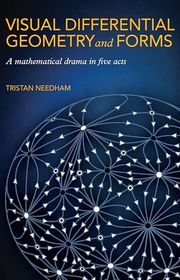
Visual Differential Geometry and Forms
For readers who build understanding through diagrams and geometric arguments. Its visual explanations connect curvature, forms and physics in an unusual way, but the substantial scope still requires mathematical effort and does not remove the need for prerequisites.
What it's about
Tristan Needham develops differential geometry and differential forms through geometric reasoning and hand-drawn illustrations. Curvature, Gauss-Bonnet, spacetime and integral theorems become parts of a connected visual account, linking classical results with modern geometry and physics.

For mathematically mature readers who want extensive motivation alongside a rigorous introduction to manifolds. Its historical perspective and detailed explanations reward patient study, but the length makes it less efficient than a focused course textbook.
What it's about
The opening volume develops the mathematical foundations of differential geometry through manifolds, differential structures, tangent bundles, tensors, and vector fields. It introduces the language and tools needed to study geometric spaces beyond the familiar setting of Euclidean calculus.

For readers who want a concise, rigorous bridge from advanced calculus to differential forms and Stokes’s theorem. Its compact arguments expose the underlying structure clearly, but the brevity and demanding exercises make it challenging for independent beginners.
What it's about
Michael Spivak develops advanced calculus through differentiation and integration in several variables, differential forms, and manifolds. This concise mathematical treatment culminates in Stokes' theorem, connecting modern methods with the classical results of Green, Gauss, and Stokes.
Also recommended by
1 person- Eric Weinstein recommended this book
Eric Weinstein
Eric Weinstein tweet about books that mattered enough to him.
Eric Weinstein's recommendation of this book

Differential Geometry
For readers who want a classical, calculation-oriented treatment of curves and surfaces. Worked examples and diagrams make geometric techniques tangible, but the older notation and presentation need some adjustment alongside a modern manifold-based course.
What it's about
Erwin Kreyszig introduces the differential geometry of curves and surfaces in three-dimensional Euclidean space. Explanations, diagrams and worked examples develop the subject's concepts and methods, with problems and answers supporting both theoretical understanding and practical applications.

Differential Geometry of Curves and Surfaces
For students ready for a rigorous first course in curves and surfaces. Its balance of geometric ideas, linear algebra and exercises develops lasting intuition, but the proofs and problems require more preparation than an informal visual introduction.
What it's about
Manfredo do Carmo introduces differential geometry through the local and global properties of curves and surfaces. Examples and exercises develop geometric reasoning around curvature, geodesics, and related structures, connecting calculations with broader results about the shapes and behavior of surfaces.
Foundations of Differential Geometry, Volume 1
For advanced students and researchers who need a classical reference on the structural machinery of geometry. Its systematic treatment of bundles and connections remains influential, but the dense exposition and prerequisites favor reference use over a first introduction.
What it's about
Shoshichi Kobayashi and Katsumi Nomizu develop foundational differential geometry through manifolds, Lie groups, bundles and connections. This first volume builds the structural language used to study geometric objects and the ways local descriptions fit into global frameworks.
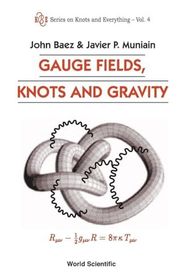
Gauge Fields, Knots and Gravity
For physics-oriented readers who want forms, bundles and curvature introduced with applications in view. Its progression from electromagnetism toward gauge theory and gravity gives the mathematics direction, but the pace assumes substantial mathematical and physical preparation.
What it's about
John Baez and Javier Muniain introduce differential geometry through connections with physics. Manifolds, forms, bundles and curvature provide a language for electromagnetism, gauge theory and general relativity, leading toward relationships between knot theory and quantum gravity.

Geometry, Topology and Physics
For physics students who need geometry and topology connected with field theories. Its applications give the mathematical structures a clear purpose, but the broad coverage and specialized notation can make it demanding as a first rigorous geometry course.
What it's about
Mikio Nakahara introduces differential geometry and topology as tools for theoretical physics. The text connects mathematical techniques with gauge theories, anomalies, and bosonic string theory, showing how geometric ideas help describe and analyze physical systems.

Lectures on Classical Differential Geometry
For readers who value a traditional geometric treatment with historical context. Its examples and connections to the subject’s development make classical curves and surfaces vivid, but the older style offers less preparation for modern abstract manifold language.
What it's about
Dirk Struik introduces the classical differential geometry of curves and surfaces through definitions, examples, illustrations, and problems. Historical and biographical references place the mathematics in context, encouraging readers to connect geometric reasoning with the development of the subject and its original sources.

Riemannian Geometry
For graduate students who want geometric intuition connected with analytical techniques and global theorems. Its range supports deeper study after manifold basics, but the advanced arguments and prerequisites make it a demanding first Riemannian geometry book.
What it's about
Peter Petersen combines geometric and analytical approaches to Riemannian geometry. The text develops central techniques and theorems before exploring advanced topics, offering a course of study for readers already familiar with manifold theory, including tensors, differential forms, and Lie groups.

For mathematically prepared physics readers who want geometric structures motivated by physical theories. Its broad connections make abstract tools feel purposeful, but the substantial scope and sometimes unfamiliar notation require careful, selective reading.
What it's about
Theodore Frankel connects differential geometry and topology with classical and modern physics. Geometric intuition about surfaces leads into differential forms, Lie groups, and vector bundles, with applications involving mechanics, electromagnetism, relativity, and gauge fields linking mathematical structures to physical theories.
A Visual Introduction to Differential Forms and Calculus on Manifolds
For undergraduates who know vector calculus and want geometric intuition for differential forms. Its illustrations and gradual motivation make abstract definitions easier to approach, but it focuses on forms and manifold calculus rather than a complete curvature course.
What it's about
Jon Pierre Fortney introduces differential forms and calculus on manifolds using extensive figures and geometric explanations. Definitions and theorems emerge from motivating examples, helping mathematics and physics students connect familiar vector calculus with more abstract geometric tools.

Differential Manifolds
For readers moving beyond basic manifold theory into deeper differential topology. Its treatment of smooth structures and surgery offers a path toward substantial classification results, but the advanced scope makes it unsuitable for a first introduction to geometry.
What it's about
Antoni Kosinski develops differential topology from foundational manifold theory to smooth structures and surgery. The exposition introduces the h-cobordism theorem and the classification of differential structures on spheres, connecting geometric constructions with the methods used to distinguish smooth manifolds.

Elementary Differential Geometry
For undergraduates who want curves and surfaces introduced through diagrams, examples and familiar calculus. Its relatively accessible progression supports a first course, but readers aiming at abstract manifold theory will need another book for the next stage.
What it's about
Andrew Pressley introduces the differential geometry of curves and surfaces using multivariable calculus and linear algebra. Numerous diagrams and examples support mathematical explanations, giving readers a visual route into geometric questions and the methods used to formulate and answer them.
Introduction to Riemannian Manifolds
For students who know smooth manifolds and want a carefully developed introduction to curvature. Its explanations connect technical tools with major geometric theorems, but it assumes the manifold background that a curves-and-surfaces course alone may not provide.
What it's about
John Lee develops Riemannian geometry with an emphasis on the meaning of curvature. Metrics, connections and geodesics support the study of major theorems relating curvature and topology, preparing readers for more advanced work on Riemannian manifolds.

Lectures on Symplectic Geometry
For readers who already know basic differential geometry and want an introduction to symplectic ideas. Its lecture-based progression connects forms with mechanics and reduction, but it assumes foundations that a newcomer should study in a more general text first.
What it's about
Ana Cannas da Silva introduces symplectic geometry for readers familiar with differential geometry. Symplectic forms and algebra lead into Lagrangian submanifolds, almost complex structures, Hamiltonian mechanics, and reduction, connecting foundational definitions with topics that support more advanced study.

Riemannian Geometry
For beginning graduate students ready to study metrics, geodesics and curvature beyond surface theory. Its progression reaches substantial global results, but the concise explanations work best with a solid foundation in differentiable manifolds.
What it's about
Manfredo do Carmo develops Riemannian geometry for beginning graduate students in mathematics and physics. Starting with differentiable manifolds, the book builds the language and fundamental results of the subject, progressing toward a proof of the Sphere Theorem.

For students who want to move from familiar curves and surfaces toward abstract manifolds. Its figures and examples help connect those stages, but the compact treatment expects confidence with analysis and linear algebra rather than teaching them from scratch.
What it's about
Wolfgang Kühnel begins with the geometry of curves and surfaces before developing the theory of general manifolds. Figures and examples support discussions of connections and curvature, linking concrete geometric intuition with concepts that require undergraduate analysis and linear algebra.

For mathematically confident readers who want a compact treatment emphasizing intrinsic geometry and geometric reasoning. Its distinctive problems provide worthwhile practice, but the concise presentation leaves less explanatory support than a larger introductory textbook.
What it's about
Victor Toponogov presents a concise introduction to the differential geometry of curves and surfaces. Geodesics, intrinsic geometry, and comparison results connect fundamental concepts with more advanced ideas, while original problems invite readers to develop their understanding through geometric reasoning.

Elementary Differential Geometry
For students who want differential forms and frame fields introduced within concrete surface geometry. That toolkit creates useful connections to later study, but its notation and method may feel unfamiliar if you expect a purely coordinate-based presentation.
What it's about
Barrett O'Neill introduces the geometry of curves and surfaces through calculus, differential forms, and frame fields. Examples connect these tools with curvature, mappings, and surface geometry, developing techniques for examining both local behavior and broader geometric properties.

For readers who want to see how calculus leads toward topological invariants. Its progression through forms, bundles and characteristic classes connects several subjects, but the ambitious destination requires sustained work and comfort with increasingly abstract arguments.
What it's about
Ib Madsen and Jørgen Tornehave develop de Rham cohomology and characteristic classes from differential forms and curvature. The exposition moves from open sets to manifolds, integration, vector bundles, and the Gauss-Bonnet theorem, with exercises supporting the transition from calculus to topology.
Sources
- 1
100 Best Differential Geometry Books of All Time
shortform.com
- 2
References for Differential Geometry and Topology
people.clas.ufl.edu
- 3
MA3402 Differential Forms on Manifolds - Fall 2025
wiki.math.ntnu.no
- 4
Reading list for basic differential geometry?
mathoverflow.net
- 5
Differential Geometry (MMath)
goodreads.com
- 6
Looking for differential geometry textbook
reddit.com
- 7
Books reccomandation (Topology, Differential Geometry ...)
reddit.com
- 8
Teaching myself differential topology and differential geometry
math.stackexchange.com
- 9
Best Books for Differential Geometry: Rigorous and Visual
celsiuselements.com






Edited by
Software engineer whose passion for tracking book recommendations from podcasts inspired the creation of MRB.
Lead investor at 3one4 Capital whose startup expertise and love for books helped shape MRB and its growth.
Comments
Did we miss something? Have feedback?
Help us improve this page by sharing your thoughts