
8 Best Surgery Books
The best surgery books, ranked by how many expert sources recommend each one, with notes to help medical students and residents choose reviews and references.
Our take
Surgery reading serves several purposes: building scientific foundations, understanding clinical decisions, preparing for a rotation, and reviewing for examinations. The best choice depends on your stage of training and the kind of explanation you need. These books are aimed mainly at medical students and surgical trainees, with a strong emphasis on general surgery and US examination formats.
Dr. Pestana's Surgery Notes offers a compact review, while Surgical Recall supports question-and-answer practice. NMS Surgery gives students more explanatory coverage. For sustained study, Sabiston Textbook of Surgery and Schwartz's Principles of Surgery provide much larger references; choose one that fits your course and learning style rather than trying to read both at once. Current Surgical Therapy concentrates on management discussions, and The ABSITE Review serves a specific resident examination. Start with your program's requirements, then select a review book or reference to fill a particular gap. Check the edition your training program recommends, since surgical practice and examination content change.
8 books · 8 sources · Last updated
As an Amazon Associate, we earn from qualifying purchases (at no extra cost to you).
How to choose from this list
Skip to the full rankingIf you need a compact clerkship review: Dr. Pestana's Surgery Notes → NMS Surgery
If you want question-and-answer practice: Surgical Recall
If you want a comprehensive surgical foundation: Sabiston Textbook of Surgery
If you prefer an alternative comprehensive reference: Schwartz's Principles of Surgery
If you are reviewing during residency: Current Surgical Therapy → The ABSITE Review
If you want focused diagnostic reading: Cope's Early Diagnosis of the Acute Abdomen
The 8 books, ranked
Ranked by how many expert sources name each book. Ties go to the book more people recommend.

For trainees who need a broad reference connecting biological principles with surgical practice. The detailed chapters support deeper study than a recall guide, though the scale is impractical for reading straight through during a short clerkship.
What it's about
This textbook connects the biological foundations of disease with the practice of general surgery. Evidence-based chapters and operative illustrations cover diagnosis, perioperative care, and surgical management, providing a broad reference for trainees and practicing surgeons.

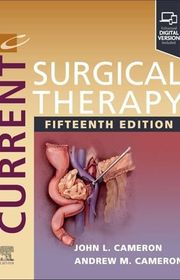
Current Surgical Therapy
For residents who want concise discussions organized around management decisions. Its practical disease-focused chapters complement a larger foundational textbook, though the compact treatment assumes background knowledge and gives less space to basic science.
What it's about
This general surgery reference organizes topics around disease presentation, underlying mechanisms, diagnosis, and treatment. Concise chapters discuss selecting surgical approaches, minimizing complications, and anticipated outcomes, with illustrations supporting clinical review and preparation for surgical board examinations.

Schwartz's Principles Of Surgery
For trainees seeking another comprehensive foundation in general surgery. The combination of basic science and clinical topics supports sustained study, though the multi-volume scope is better suited to reference work than a pocket-sized rotation companion.
What it's about
This comprehensive surgical reference brings together the scientific foundations and clinical practice of general surgery. It examines surgical disease and treatment within an evidence-based framework, addressing advances in diagnosis, operative techniques, and care for surgical patients.
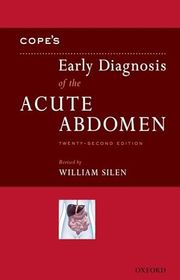
Cope's Early Diagnosis of the Acute Abdomen
For students and trainees who want focused reading on diagnostic judgment in acute abdominal presentations. Its concentrated clinical perspective fills a gap left by broad reviews, though the narrow scope cannot cover general surgery as a whole.
What it's about
William Silen updates Zachary Cope's account of evaluating acute abdominal pain. The text explores diagnostic reasoning and the initial assessment of abdominal emergencies, connecting clinical observations with the problems trainees encounter while learning to recognize surgical illness.

Dr. Pestana's Surgery Notes
For students seeking a compact review during a surgery rotation. Short explanations and patient vignettes provide a manageable way to revisit common presentations, though the compression leaves gaps that require fuller references and clinical teaching.
What it's about
Carlos Pestana offers a compact review of core surgery topics for clinical rotations and examinations. Brief discussions of diagnostic and therapeutic tools accompany 180 patient vignettes, giving students material for self-testing and reviewing common surgical presentations.

NMS Surgery
For medical students who want explanations beyond a compact rotation review. The organized coverage provides a substantial foundation for understanding surgical topics, though its size and detail make it less convenient for last-minute exam preparation.
What it's about
This review guide organizes essential surgery material for medical students during clerkships and examination preparation. Concise coverage, illustrations, study aids, and USMLE-style questions combine explanations of surgical principles with opportunities to test knowledge and reinforce key concepts.

Surgical Recall
For students who want active recall before cases and teaching rounds. The paired questions and answers make rapid self-testing easy, though memorizing brief responses offers less depth than working through a full explanation or clinical discussion.
What it's about
This surgical review uses a two-column question-and-answer format to prepare students for rotations and examinations. Procedure summaries, mnemonics, acronyms, and practical operating-room guidance emphasize rapid recall and active participation while reviewing essential surgical knowledge and terminology.

The ABSITE Review
For surgical residents preparing for the US in-training examination. The outline format makes a large syllabus easier to review quickly, though its emphasis on examinable facts offers less clinical reasoning than a comprehensive textbook.
What it's about
Steven M. Fiser organizes surgical knowledge in an outline format for the American Board of Surgery In-Training Examination. Lists, tables, algorithms, and illustrations support rapid review of basic science, general surgery, and surgical subspecialties for residents.
Sources
- 1
Medical Knowledge - The Association for Surgical Education
surgicaleducation.com
- 2
Surgery - Medical Reference eBooks - LibGuides at University of Alabama Health Sciences Library
libraryguides.cchs.ua.edu
- 3
Surgery - MS3 Clerkships: Information Resources - Research Guides at George Washington University
guides.himmelfarb.gwu.edu
- 4
Surgery Books
goodreads.com
- 5
Useful Reference Materials - CAGS
cags-accg.ca
- 6
Textbooks for new general surgery residents : r/SurgicalResidency
reddit.com
- 7
These books can boost your specialty knowledge on rotation | American Medical Association
ama-assn.org
- 8
Best Surgery Books and Resources for the Surgery rotation, clerkship, and NBME Shelf Exam 2023 - Med School Advice
medschooladvice.com


Edited by
Software engineer whose passion for tracking book recommendations from podcasts inspired the creation of MRB.
Lead investor at 3one4 Capital whose startup expertise and love for books helped shape MRB and its growth.
Comments
Did we miss something? Have feedback?
Help us improve this page by sharing your thoughts