
20 Best Cancer Books
The best cancer books, ranked by how many expert sources recommend each one, with notes on medical history, personal accounts, caregiving, and where to start.
Our take
Books about cancer serve different needs. Some explain how research and treatment developed, while others describe illness from a patient’s or family member’s perspective. There are also practical references, scientific textbooks, and essays about identity, care, and mortality. A personal account can make an experience understandable without representing every cancer, treatment, or outcome.
The Emperor of All Maladies provides a broad historical framework, while The Philadelphia Chromosome follows a particular path from discovery to treatment. When Breath Becomes Air and Between Two Kingdoms explore different relationships with work, family, and an uncertain future. Mom's Cancer brings a relative’s perspective into graphic form, and The Cancer Journals connects illness with bodily identity and social expectations. Being Mortal considers how care can reflect a person’s priorities across serious illness more broadly.
Start with the purpose that matters to you: understanding the science, finding a personal voice, or considering how to support someone else. More technical references ask for different preparation than memoirs.
20 books · 9 sources · Last updated
As an Amazon Associate, we earn from qualifying purchases (at no extra cost to you).
How to choose from this list
Skip to the full rankingIf you want cancer’s scientific history: The Emperor of All Maladies → The Philadelphia Chromosome → The Cancer Chronicles
If you want personal experiences of illness: When Breath Becomes Air → Between Two Kingdoms → The Bright Hour
If you want illness and identity explored: The Cancer Journals → Autobiography of a Face → The Undying
If you want a family member’s perspective: Mom's Cancer → The Middle Place
If you want food ideas during treatment: What to Eat During Cancer Treatment
If you want advanced biological detail: The Biology of Cancer
The 20 books, ranked
Ranked by how many expert sources name each book. Ties go to the book more people recommend.

When Breath Becomes Air
For readers drawn to a personal account of illness from someone trained in medicine. Its questions about work, identity, and meaning give the memoir a distinct perspective, though terminal illness and family loss make it emotionally demanding.
What it's about
Near the end of his neurosurgery training, Paul Kalanithi is diagnosed with terminal lung cancer and begins asking what makes a life meaningful. His memoir is clear-eyed, intimate, and deeply humane.
Also recommended by
8 people Bill Gates recommended this book
Bill Gates
"This book left me in tears." - Bill Gates
Bill Gates's recommendation of this book  Melinda Gates recommended this book
Melinda Gates
Melinda Gates recommended this book on Likewise.com.
Melinda Gates's recommendation of this book  Anthony Pompliano recommended this book
Anthony Pompliano
"[One of the] best books I read in 2017." - Anthony Pompliano
Anthony Pompliano's recommendation of this book  Patrick O'Shaughnessy recommended this book
Patrick O'Shaughnessy
"The memoir of a successful neurosurgeon who is diagnosed with lung cancer." - Patrick O'Shaughnessy
Patrick O'Shaughnessy's recommendation of this book  Tim Cook recommended this book
Tim Cook
"Best book on re-examining life and values." - Tim Cook
Tim Cook's recommendation of this book  Peter King recommended this book
Peter King
"One of the best books I've read in years." - Peter King
Peter King's recommendation of this book +2
More recommendations
- Shauna Niequist
Shauna Niequist recommended this book on Twitter.
- James Clear
"[One of] the 10 best nonfiction books of all-time." - James Clear
- Shauna Niequist

The Immortal Life of Henrietta Lacks
For readers interested in the relationship between scientific progress and the people affected by research. Its attention to consent, race, and family experience broadens the subject beyond cancer biology, though it is reported history rather than a patient guide.
What it's about
Rebecca Skloot investigates the life of Henrietta Lacks, whose cells were taken without her knowledge and became important tools in medical research. Her reporting connects scientific advances with the experiences of Lacks's family and questions of consent, race, and justice.
Also recommended by
1 person A.J. Jacobs recommended this book
A.J. Jacobs
"Great writer." - A.J. Jacobs
A.J. Jacobs's recommendation of this book

For readers who want a broad history connecting cancer science with the people trying to understand it. Its narrative approach makes a complex subject approachable, though the historical scope offers context rather than current treatment guidance.
What it's about
Siddhartha Mukherjee recounts the history of cancer through patients, researchers, and changing ideas about the disease. Combining medical history with clinical experiences, he traces efforts to understand and treat cancer alongside the human consequences of that struggle.
Also recommended by
4 people Peter Attia recommended this book
Peter Attia
One of Peter Attia's answers to "any books you feel would make your reading list?"
Peter Attia's recommendation of this book - Bill Gates recommended this book
Bill Gates
"I loved [this] brilliant book about cancer." - Bill Gates
Bill Gates's recommendation of this book  Laura R Walker recommended this book
Laura R Walker
"For friends who have faced or are facing cancer, I often give them [this book]." - Laura R Walker
Laura R Walker's recommendation of this book  Cathie Wood recommended this book
Cathie Wood
"Fantastic book...a must read!" - Cathie Wood
Cathie Wood's recommendation of this book

For readers interested in how care decisions can reflect a person’s priorities. Its patient and family stories give medical choices a human context, though the scope includes aging and serious illness broadly rather than cancer alone.
What it's about
Atul Gawande examines how medicine responds to aging and terminal illness, drawing on patient stories and his own experience. He considers the tension between extending life, preserving independence, and understanding what matters most to people approaching death.
Also recommended by
1 person Steve Kerr recommended this book
Steve Kerr
Steve Kerr recommended this book on Twitter.
Steve Kerr's recommendation of this book

For readers interested in the uncertain transition from intensive illness back into everyday life. Its attention to identity after treatment expands beyond diagnosis alone, though the experiences belong to one young adult and are not a universal recovery pattern.
What it's about
Just after college, Jaouad moves to Paris dreaming of life as a foreign correspondent, then receives a leukemia diagnosis. Her memoir follows years of treatment and the harder, stranger task of returning to ordinary life after survival.
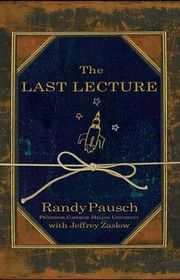
The Last Lecture
For readers who want reflections on priorities, relationships, and legacy after a terminal diagnosis. Its lesson-centered structure differs from a detailed illness diary, though the encouraging tone may feel too purposeful for readers seeking room for unresolved emotions.
What it's about
Facing terminal cancer, professor Randy Pausch develops a final lecture about childhood dreams, learning, and the people who shaped his life. Written with Jeffrey Zaslow, the book extends those reflections into stories about family, work, and the use of time.
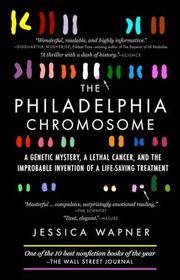
The Philadelphia Chromosome
For readers who want a focused history of how a biological discovery developed into a targeted cancer treatment. Its reporting follows researchers and patients across decades, though the scientific detail asks more concentration than a general memoir.
What it's about
Wapner traces research connecting an unusual chromosome with chronic myeloid leukemia and the development of a targeted treatment. Reporting on scientists, physicians, and patients shows how discoveries accumulated over decades before changing the possibilities of care.
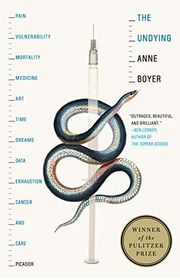
The Undying
For readers who want a cancer account that also questions the social systems surrounding illness. Its mixture of memoir and cultural criticism offers an unsentimental perspective, though the fragmented, argumentative form is less straightforward than a chronological narrative.
What it's about
After a breast-cancer diagnosis, Boyer examines treatment, paid work, caregiving, and the language used around illness. Her account combines personal experience with literary and social criticism, asking how institutions and cultural expectations shape the experience of being sick.

For readers questioning easy explanations for why illness happens. Bowler connects personal uncertainty with her study of religious ideas about success and suffering, though the explicitly Christian context may be less immediate for readers seeking a secular memoir.
What it's about
After a stage IV cancer diagnosis, Kate Bowler reconsiders beliefs about success, faith, and controlling life's outcomes. Her memoir confronts the explanations people offer for suffering while finding humor, love, and unexpected beauty amid uncertainty.
Also recommended by
1 person- Bill Gates recommended this book
Bill Gates
"A wise and funny memoir from a young woman facing her own mortality." - Bill Gates
Bill Gates's recommendation of this book
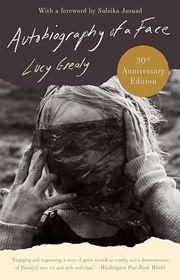
Autobiography of a Face
For readers interested in the long aftermath of childhood illness and its relationship to self-image. Its focus on appearance, loneliness, and belonging reaches beyond treatment, though the emotional and physical suffering make it a demanding memoir.
What it's about
Grealy recounts childhood cancer, surgery, and the lasting effects of changes to her face. The memoir follows her search for belonging and self-understanding, connecting medical experiences with questions about beauty, loneliness, and how a person comes to see herself.

For readers who prefer a graphic memoir that uses humor alongside fear and uncertainty. Its visual account makes everyday treatment experiences tangible, though the personal style and breast-cancer focus represent one person’s particular circumstances.
What it's about
Cartoonist Marisa Acocella Marchetto recounts her breast cancer experience in a graphic memoir. As a diagnosis interrupts wedding plans and everyday life, colorful illustrations and humor convey the fears, relationships, medical appointments, and practical challenges surrounding her treatment.
Mom's Cancer
For relatives who want an illustrated account of how illness reshapes a family. Its caregiver viewpoint captures practical confusion and changing roles with brevity, though the compressed comic format cannot explore every person’s experience in equal depth.
What it's about
Fies documents his mother’s lung-cancer diagnosis and treatment through words and drawings. The graphic account follows his family’s efforts to understand medical information, support one another, and manage the practical and emotional changes brought by serious illness.

Mortality
For readers who want short, direct essays about illness without a religious framework. Hitchens brings a public writer’s attention to language and argument, though the unfinished reflections remain closely bound to his own temperament and circumstances.
What it's about
Christopher Hitchens reflects on illness and approaching death after his diagnosis with esophageal cancer. These writings examine pain, treatment, altered relationships, and the language surrounding disease while recording his determination to face mortality without turning to religious consolation.
The Biology of Cancer
For students and scientifically prepared readers who want a sustained account of cancer mechanisms. Its textbook structure and diagrams support detailed study, though it requires biological background and is substantially more technical than the narrative histories here.
What it's about
Weinberg presents cancer biology as a course of study, connecting cellular processes, molecular mechanisms, and discoveries from research. Explanations, illustrations, and teaching features build a detailed conceptual framework for students and readers seeking depth in the underlying science.
The Bright Hour
For readers who want intimate reflections on family life while facing terminal illness. Its attention to ordinary days gives mortality a domestic scale, though the situation is painful and may be difficult to read during a similar experience.
What it's about
Riggs writes about living with terminal breast cancer while raising two sons and sharing family life with her husband. The memoir considers daily routines, love, uncertainty, and the effort to inhabit the time available without knowing its limits.

For readers who want scientific questions explored through a writer’s encounter with illness in his own family. Its combination of reporting and personal uncertainty provides a different scale from a sweeping history, though it is not a treatment reference.
What it's about
After the woman he loved receives a cancer diagnosis, George Johnson investigates the disease and the researchers studying it. His account combines their personal experience with the history, biological puzzles, and scientific uncertainties that make cancer difficult to understand and treat.
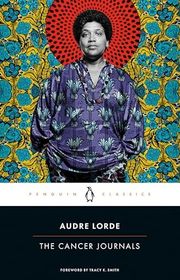
The Cancer Journals
For readers interested in illness, bodily identity, and the politics of being heard. Lorde’s combination of personal writing and feminist analysis offers a distinct perspective, though the essays reflect a particular historical moment and individual experience.
What it's about
Lorde combines journal entries, memoir, and essays about breast cancer and mastectomy. She examines grief, bodily change, silence, and expectations placed on women, connecting personal experience with her perspective as a Black lesbian feminist and poet.
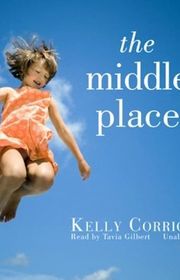
The Middle Place
For readers interested in being both a parent and an adult child during illness. Its father-daughter relationship gives the cancer experience a family-centered perspective, though personal memories and affection take precedence over explaining medicine or the healthcare system.
What it's about
Corrigan writes about facing cancer while her father also becomes ill. Moving between memories of childhood and her responsibilities as a wife and mother, she explores dependence, family attachment, and the uncertain space between caring for others and needing care.
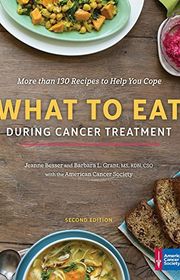
What to Eat During Cancer Treatment
For patients and caregivers seeking recipes organized around difficulties with eating during treatment. Its practical format offers a different purpose from memoirs and histories, though food choices still need adapting to individual symptoms, preferences, and clinical needs.
What it's about
This American Cancer Society guide combines recipes with information about eating during cancer treatment. Sections address problems such as altered taste, nausea, sore mouth, and unintended weight loss, with material on food safety and support for caregivers.

For readers interested in a spiritual interpretation of a personal cancer experience. Its focus on fear and self-understanding distinguishes it from medical histories, though the author’s account of recovery does not establish that her beliefs caused it.
What it's about
Anita Moorjani recounts her cancer illness, a near-death experience, and the recovery that followed. She interprets these events through a spiritual perspective, reflecting on fear, cultural expectations, and self-acceptance while explaining how her understanding of life changed.
Sources
- 1
Cancer in Books: A Reading List of 50, and How to Read Them
cancerexplained.org
- 2
Cancer Books
goodreads.com
- 3
Favorite Books about Cancer
reddit.com
- 4
Any good reads for cancer patient?
reddit.com
- 5
8 Books We’d Add to Dr. Izzie Stevens’ Reading List
shondaland.com
- 6
8 Must-Read Books Related To Cancer
ohcare.com
- 7
Top 10 books about cancer
theguardian.com
- 8
Living with Cancer
bloodcancerunited.org
- 9
American Cancer Society Books
cancer.org




Edited by
Software engineer whose passion for tracking book recommendations from podcasts inspired the creation of MRB.
Lead investor at 3one4 Capital whose startup expertise and love for books helped shape MRB and its growth.
Comments
Did we miss something? Have feedback?
Help us improve this page by sharing your thoughts