
14 Best Psychedelic Books
The best psychedelic books, ranked by how many expert sources recommend each one, with notes on who each suits, from curious readers to students of the field.
Our take
Books about psychedelics ask different kinds of questions. Some examine research and its history, others record personal experiences, and others interpret altered consciousness through philosophy or spirituality. Reading across those approaches can help you understand the field without confusing a compelling account with evidence that a treatment works or a theory is true.
How to Change Your Mind offers a broad journalistic introduction, while LSD: My Problem Child looks back through a participant in the drug’s early history. Acid Dreams expands the political and cultural context. For personal writing, A Really Good Day stays close to ordinary life, while True Hallucinations moves toward speculative exploration. The Doors of Perception and Heaven and Hell and The Joyous Cosmology emphasize literary and philosophical reflection. Practical frameworks and older research discussions need reading in their historical context. Start with How to Change Your Mind for an overview, then choose a history or firsthand account that matches your curiosity.
14 books · 9 sources · Last updated
As an Amazon Associate, we earn from qualifying purchases (at no extra cost to you).
How to choose from this list
Skip to the full rankingIf you want a broad introduction: How to Change Your Mind → Acid Dreams
If you want the history of LSD: LSD → Acid Dreams
If you’re interested in counterculture: The Electric Kool-Aid Acid Test → True Hallucinations
If you prefer personal accounts: A Really Good Day
If you want philosophical perspectives: The Doors of Perception and Heaven and Hell → The Joyous Cosmology
If you’re studying approaches to experience and integration: The Psychedelic Explorer's Guide → Consciousness Medicine
The 14 books, ranked
Ranked by how many expert sources name each book. Ties go to the book more people recommend.

Food of the Gods
For readers curious about the cultural role of psychoactive plants and McKenna’s influence. Its wide-ranging argument is intellectually provocative, though its claims about human evolution are speculative and should not be read as settled anthropology.
What it's about
Terence McKenna explores humanity's relationship with mind-altering substances from prehistoric times onward. He examines plants and drugs including tobacco, opium, marijuana, and psilocybin, connecting their cultural roles with his ideas about spirituality and human evolution.
Also recommended by
1 person Joe Rogan recommended this book
Joe Rogan
Joe Rogan's favorite book in 2009.
Joe Rogan's recommendation of this book

How to Change Your Mind
For general readers who want an accessible bridge between psychedelic history, research, and personal experience. Its journalistic structure gives the subject a clear entry point, though developments since publication require a more recent scientific update.
What it's about
Michael Pollan investigates psychedelic drugs through their history, contemporary scientific research, and his own experiences. He explores what altered states may reveal about consciousness while examining research into their potential therapeutic uses.
Also recommended by
12 people Amelia Boone recommended this book
Amelia Boone
"Fantastic book." - Amelia Boone
Amelia Boone's recommendation of this book  Aubrey Marcus recommended this book
Aubrey Marcus
"Has done a better job than any I’ve read so far on this subject at rationally, calmly, and scientifically exploring just how impactful psychedelics can be for the individual and our culture." - Aubrey Marcus
Aubrey Marcus's recommendation of this book  Hamilton Morris recommended this book
Hamilton Morris
Hamilton Morris mentioned a passage from this book on Twitter.
Hamilton Morris's recommendation of this book  Michael Mauboussin recommended this book
Michael Mauboussin
"[One of the] books that helped me think better in 2018." - Michael Mauboussin
Michael Mauboussin's recommendation of this book  Naval Ravikant recommended this book
Naval Ravikant
Naval Ravikant's answer to "do you have any advice for dealing with the death of a parent?"
Naval Ravikant's recommendation of this book  Paul Stamets recommended this book
Paul Stamets
Paul Stamets mentioned this book on "The Tim Ferriss Show" podcast.
Paul Stamets's recommendation of this book +6
More recommendations
- Peter Attia
"Excellent." - Peter Attia
- Stewart Butterfield
"A great overview of research into the therapeutic uses of psychedelics." - Stewart Butterfield
- Tim Ferriss
"One of my favorite books of the last five years." - Tim Ferriss
- Vinod Khosla
"A fun exploration of psychedelic drugs, especially for someone who has never tried them." - Vinod Khosla
- Yuval Noah Harari
"Changed my mind, or at least some of the ideas held in my mind." - Yuval Noah Harari
- Kara Swisher
"Wonderful." - Kara Swisher
- Peter Attia

For readers interested in LSD’s discovery and its changing place in science and culture. The firsthand perspective gives the history unusual immediacy, though the author’s reflections and older research context need distinguishing from current evidence.
What it's about
Albert Hofmann recounts LSD's discovery and its journey from psychiatric research to recreational use and prohibition. His personal history includes investigations of sacred plants in Mexico, correspondence with influential figures, and reflections on mystical experience.

True Hallucinations
Being an Account of the Author's Extraordinary Adventures in the Devil's Paradise
For readers who want a firsthand window into McKenna’s imaginative world and Amazon expedition. Its mixture of travel narrative and unusual experiences is distinctive, though personal interpretations and metaphysical claims cannot be treated as scientific findings.
What it's about
Terence McKenna recounts an Amazon expedition undertaken with his brother Dennis and a small group of friends. Their search for shamanic hallucinogens becomes an account of unusual experiences, speculative inquiry, and questions about consciousness and language.
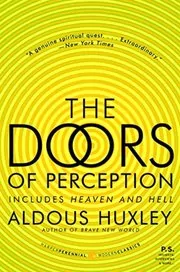
The Doors of Perception and Heaven and Hell
For readers interested in the literary and philosophical language of altered perception. Huxley’s paired essays connect personal experience with art and mysticism, though their reflections are neither clinical evidence nor a reliable account of everyone’s experience.
What it's about
These paired essays begin with Huxley's mescaline experiment and widen into a meditation on art, mysticism, and altered consciousness. Together they ask how much of reality the ordinary mind leaves out.
Also recommended by
4 people Dr. Andrew Weil recommended this book
Dr. Andrew Weil
"Came first [in terms of my interests]." - Dr. Andrew Weil
Dr. Andrew Weil's recommendation of this book  Michael Pollan recommended this book
Michael Pollan
"A very famous book about what were not then known as psychedelics." - Michael Pollan
Michael Pollan's recommendation of this book  Ryan Shea recommended this book
Ryan Shea
Ryan Shea recommended this book on his website.
Ryan Shea's recommendation of this book  Douglas Murray recommended this book
Douglas Murray
"About something really interesting and dangerous." - Douglas Murray
Douglas Murray's recommendation of this book

For readers interested in an early modern DMT research project and participants’ accounts. Its combination of study history and interpretation is distinctive, though speculative explanations of consciousness go beyond what the reported research can establish.
What it's about
Rick Strassman recounts his research project investigating DMT, a powerful, short-acting psychedelic. He discusses the study's development and participants' experiences while exploring possible connections between altered consciousness, near-death experiences, and mystical states through his own interpretations.
Also recommended by
2 people- Joe Rogan recommended this book
Joe Rogan
"Joe Rogan thinks it’s an amazing book and mentions it often." - JRE Library
Joe Rogan's recommendation of this book  Jordan Peterson recommended this book
Jordan Peterson
"A very interesting book." - Jordan Peterson
Jordan Peterson's recommendation of this book
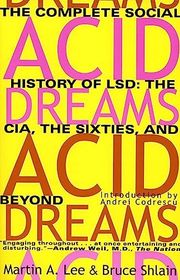
Acid Dreams: The Complete Social History of LSD: The CIA, the Sixties, and Beyond
For readers who want political and cultural history rather than a personal journey. Its treatment of intelligence programs and counterculture gives LSD a wider context, though the account reflects the evidence and historical frame available when written.
What it's about
Martin Lee and Bruce Shlain trace LSD’s movement from scientific research and covert intelligence programs into the counterculture. Their social history examines the people, institutions, and conflicts that shaped the drug’s role in twentieth-century American life.
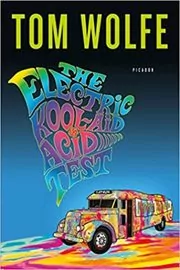
The Electric Kool-Aid Acid Test
For readers who want the atmosphere and personalities of the American psychedelic counterculture. Wolfe’s immersive reporting makes the Merry Pranksters’ world vivid, though the stylized voice offers a very different experience from analytical history or research.
What it's about
This nonfiction chronicle follows novelist Ken Kesey and the Merry Pranksters as they crisscross America in a wildly painted bus, staging LSD‑fueled “Acid Tests” and colliding with musicians, bikers, and Beats in a vivid portrait of 1960s counterculture.
Also recommended by
2 people- Jordan Peterson recommended this book
Jordan Peterson
"A great book." - Jordan Peterson
Jordan Peterson's recommendation of this book  Tim O’Reilly recommended this book
Tim O’Reilly
"[Gets you] into the world of psychedelia and that era of the ‘70s." - Tim O’Reilly
Tim O’Reilly's recommendation of this book

For readers studying how psychedelic advocates frame preparation, experience, and integration. Its range connects several traditions and research interests, though the author’s framework should not be treated as a current clinical protocol or assurance of safety.
What it's about
James Fadiman surveys psychedelic research and accounts of experiences involving self-exploration, therapy, spirituality, and creativity. Drawing on his work in the field, he discusses preparation, setting, guidance, and integration while presenting his views on the possibilities and risks of psychedelic use.
Also recommended by
2 people Peter Attia recommended this book
Peter Attia
One of Peter Attia's answers to "what book do you feel humanity needs right now?"
Peter Attia's recommendation of this book - Michael Pollan recommended this book
Michael Pollan
"Actually has very good advice for people who want to guide, or are shopping for a guide." - Michael Pollan
Michael Pollan's recommendation of this book

A Really Good Day
How Microdosing Made a Mega Difference in My Mood, My Marriage, and My Life
For readers who want a personal account of microdosing’s place in everyday family life. Its diary-like perspective makes the questions concrete, though one person’s reported improvement cannot establish effectiveness or safety for others.
What it's about
In this candid memoir, Waldman spends a month microdosing LSD to manage a severe mood disorder after other treatments fail. Part personal diary, part report on drug policy and mental health, it follows one risky experiment and its effects on family life.

For readers studying the spiritual vocabulary of the 1960s psychedelic movement. Its adaptation of a Tibetan text makes the authors’ worldview explicit, though it is an interpretive countercultural manual rather than modern clinical guidance.
What it's about
Timothy Leary, Ralph Metzner, and Richard Alpert reinterpret the Tibetan Book of the Dead as a framework for psychedelic experiences. This countercultural manual connects altered states with meditation and spiritual consciousness, presenting the authors' model for psychological transformation.

For readers drawn to philosophical reflections on consciousness and the sense of self. Watts connects personal experiences with questions about existence, though the contemplative interpretation should be approached as a worldview rather than an empirical explanation.
What it's about
Alan Watts recounts experiences of altered consciousness associated with LSD, mescaline, and psilocybin. Combining personal observation with philosophical reflection, he explores perception, identity, and the insights he believes these experiences can offer into humanity's relationship with existence.
Also recommended by
1 person Ed Cooke recommended this book
Ed Cooke
"Well worth the read." - Ed Cooke
Ed Cooke's recommendation of this book
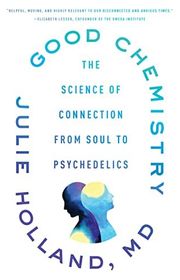
Good Chemistry: The Science of Connection, from Soul to Psychedelics
For readers interested in how a psychiatrist connects belonging, mental health, and altered states. Its broad discussion places psychedelics alongside other experiences of connection, though the blend of neuroscience and interpretation is not an individualized treatment guide.
What it's about
Julie Holland explores human connection through psychiatry, neuroscience, spiritual experience, and psychedelics. She considers loneliness, social bonds, and experiences of belonging while presenting her perspective on how people seek stronger relationships with themselves, others, and the world around them.

Consciousness Medicine
Indigenous Wisdom, Entheogens, and Expanded States of Consciousness for Healing and Growth
For readers interested in the intersection of expanded states, spiritual traditions, and therapeutic practice. Its emphasis on preparation and integration offers a coherent framework, though the authors’ approach is not equivalent to independently established clinical evidence.
What it's about
Françoise Bourzat and Kristina Hunter explore expanded states of consciousness in therapeutic and spiritual practice. Drawing on Indigenous traditions and contemporary approaches, the book emphasizes preparation, guidance, and integration when discussing psychedelics and other methods of personal exploration.
Also recommended by
1 person Tim Ferriss recommended this book
Tim Ferriss
"Brand-new, but I’m already on my second read." - Tim Ferriss
Tim Ferriss's recommendation of this book
Sources
- 1
PAC - Psychedelic Reading List
psychedelicassociation.net
- 2
Psychedelic Literature: Top 10 Books About Psychedelics
psychedelic.support
- 3
11 Stimulating Books About Psychedelics
celadonbooks.com
- 4
Best Psychedelic Knowledge (92 books)
goodreads.com
- 5
Books on psychedelia?
reddit.com
- 6
Any good psychedelic book recommendations?
reddit.com
- 7
Further Reading and Viewing
michaelpollan.com
- 8
7 of the best psychedelic books ever written
bigthink.com
- 9
The Best Psychedelic Books: A Psychonaut's Reading List
hali.foundation






Edited by
Software engineer whose passion for tracking book recommendations from podcasts inspired the creation of MRB.
Lead investor at 3one4 Capital whose startup expertise and love for books helped shape MRB and its growth.
Comments
Did we miss something? Have feedback?
Help us improve this page by sharing your thoughts