
12 Best Medical Books
The best medical books, ranked by how many expert sources recommend each one, with notes to help students and curious readers choose where to start.
Our take
Medical books can show what a diagnosis means, how discoveries change treatment, and what happens when a healthcare system puts people under pressure. This selection is especially useful for prospective medical students and general readers who want to understand the profession through stories. The books offer personal accounts, history, ethics, and fiction rather than a shared course of clinical instruction.
The differences matter when choosing a starting point. When Breath Becomes Air approaches medicine through personal reflection, while The Emperor of All Maladies follows a disease across centuries. Being Mortal considers the priorities that should shape care, and The Immortal Life of Henrietta Lacks connects scientific progress with consent and inequality. For a closer look at hospital training, The Intern Blues uses diaries and The House of God turns to satire. Start with When Breath Becomes Air for an intimate account, or Being Mortal if questions about care draw you in.
12 books · 10 sources · Last updated
As an Amazon Associate, we earn from qualifying purchases (at no extra cost to you).
How to choose from this list
Skip to the full rankingIf you want a personal introduction: When Breath Becomes Air
If you want to understand difficult care decisions: Being Mortal → Complications
If you're considering medical training: The Intern Blues → This is Going to Hurt
If you want medical history and ethics: The Emperor of All Maladies → The Immortal Life of Henrietta Lacks
If you want a surgeon's perspective: Do No Harm
If you're curious about the brain: The Man Who Mistook His Wife for a Hat
The 12 books, ranked
Ranked by how many expert sources name each book. Ties go to the book more people recommend.

For readers interested in how care can respect a person's priorities. Gawande makes difficult questions about aging and medical intervention unusually approachable, though its largely American examples offer perspective rather than a guide to every healthcare system.
What it's about
Atul Gawande examines how medicine responds to aging and terminal illness, drawing on patient stories and his own experience. He considers the tension between extending life, preserving independence, and understanding what matters most to people approaching death.
Also recommended by
1 person Steve Kerr recommended this book
Steve Kerr
Steve Kerr recommended this book on Twitter.
Steve Kerr's recommendation of this book

For readers who want medical history with scientific depth. Its sustained focus on one disease connects laboratory discovery, treatment, and public attitudes, though the length and biological detail require more patience than a short clinical memoir.
What it's about
Siddhartha Mukherjee recounts the history of cancer through patients, researchers, and changing ideas about the disease. Combining medical history with clinical experiences, he traces efforts to understand and treat cancer alongside the human consequences of that struggle.
Also recommended by
4 people Peter Attia recommended this book
Peter Attia
One of Peter Attia's answers to "any books you feel would make your reading list?"
Peter Attia's recommendation of this book  Bill Gates recommended this book
Bill Gates
"I loved [this] brilliant book about cancer." - Bill Gates
Bill Gates's recommendation of this book  Laura R Walker recommended this book
Laura R Walker
"For friends who have faced or are facing cancer, I often give them [this book]." - Laura R Walker
Laura R Walker's recommendation of this book  Cathie Wood recommended this book
Cathie Wood
"Fantastic book...a must read!" - Cathie Wood
Cathie Wood's recommendation of this book

When Breath Becomes Air
For readers who want an intimate introduction to medicine's human stakes. Kalanithi connects professional ambition with questions about meaning more personally than the broader histories here, though terminal illness and bereavement make it emotionally demanding.
What it's about
Near the end of his neurosurgery training, Paul Kalanithi is diagnosed with terminal lung cancer and begins asking what makes a life meaningful. His memoir is clear-eyed, intimate, and deeply humane.
Also recommended by
8 people- Bill Gates recommended this book
Bill Gates
"This book left me in tears." - Bill Gates
Bill Gates's recommendation of this book  Melinda Gates recommended this book
Melinda Gates
Melinda Gates recommended this book on Likewise.com.
Melinda Gates's recommendation of this book  Anthony Pompliano recommended this book
Anthony Pompliano
"[One of the] best books I read in 2017." - Anthony Pompliano
Anthony Pompliano's recommendation of this book  Patrick O'Shaughnessy recommended this book
Patrick O'Shaughnessy
"The memoir of a successful neurosurgeon who is diagnosed with lung cancer." - Patrick O'Shaughnessy
Patrick O'Shaughnessy's recommendation of this book  Tim Cook recommended this book
Tim Cook
"Best book on re-examining life and values." - Tim Cook
Tim Cook's recommendation of this book  Peter King recommended this book
Peter King
"One of the best books I've read in years." - Peter King
Peter King's recommendation of this book +2
More recommendations
- Shauna Niequist
Shauna Niequist recommended this book on Twitter.
- James Clear
"[One of] the 10 best nonfiction books of all-time." - James Clear
- Shauna Niequist
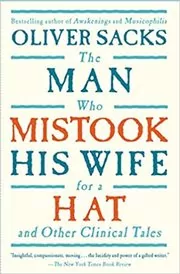
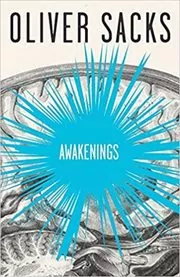
For readers curious about the relationship between brain function and identity. Sacks gives individual experience more attention than a conventional neurology overview, though the unusual cases offer a selective picture rather than a systematic introduction.
What it's about
In this collection of clinical tales, Sacks follows patients whose brains alter memory, recognition, movement, and identity. Strange symptoms become deeply human stories about how people rebuild a sense of self.
Also recommended by
1 person Jordan Peterson recommended this book
Jordan Peterson
Recommended on Jordan Peterson's website.
Jordan Peterson's recommendation of this book
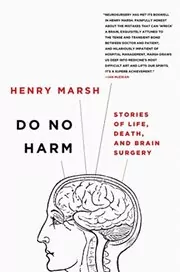
For readers who want a surgeon's candid examination of responsibility. Marsh gives mistakes and difficult decisions unusual prominence, though the technical detail, distressing outcomes, and strongly personal viewpoint make this a demanding introduction to hospital work.
What it's about
Marsh opens the door to the operating theatre and the split-second decisions of brain surgery. Drawing on triumphs, failures, and haunting complications, he shows how much skill, luck, and strain sit behind every operation.
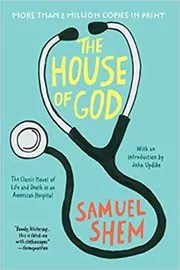
For readers who want medical training examined through fiction and dark satire. Its attack on institutional habits is sharper than the reflective memoirs here, though the sexual attitudes and deliberately abrasive humor can be alienating.
What it's about
Roy Basch starts his internship at a brutal Boston teaching hospital and quickly learns that idealism is no match for sleeplessness, bureaucracy, and death. Guided by the Fat Man's dark survival rules, he tries to stay sane without losing his conscience.
Also recommended by
1 person- Jordan Peterson recommended this book
Jordan Peterson
Recommended on Jordan Peterson's website.
Jordan Peterson's recommendation of this book

The Immortal Life of Henrietta Lacks
For readers interested in the people and ethical questions behind medical discovery. Skloot combines family reporting with scientific history to make consent and inequality concrete, though the interwoven timelines require more attention than a straightforward biography.
What it's about
Rebecca Skloot investigates the life of Henrietta Lacks, whose cells were taken without her knowledge and became important tools in medical research. Her reporting connects scientific advances with the experiences of Lacks's family and questions of consent, race, and justice.
Also recommended by
1 person A.J. Jacobs recommended this book
A.J. Jacobs
"Great writer." - A.J. Jacobs
A.J. Jacobs's recommendation of this book

This is Going to Hurt
For readers who want a brisk, darkly funny account of junior hospital work. The diary structure conveys everyday pressures more directly than a broad policy history, though British institutional detail and blunt humor will not suit everyone.
What it's about
Based on secret diaries from his years as a junior doctor, Kay describes the realities of working in the National Health Service, especially in obstetrics and gynaecology. Long nights, impossible decisions and darkly funny disasters build into a furious, heartbreaking portrait of modern medicine.

For readers interested in how doctors make decisions when certainty is unavailable. Its linked essays examine error, judgment, and professional learning with accessible detail, though the surgical emphasis gives a narrower view than a general account of healthcare.
What it's about
Through accounts from surgical practice, Atul Gawande examines the uncertainty underlying medical decisions. He explores mistakes, difficult diagnoses, and ethical dilemmas to consider what happens when imperfect knowledge meets the urgent responsibility of caring for a patient.

Mountains Beyond Mountains
The Quest of Dr. Paul Farmer, a Man Who Would Cure the World
For readers interested in medicine beyond the hospital and across national borders. Its close reporting connects clinical care with poverty and political choices, though the focus on one unusually driven physician leaves less room for competing approaches.
What it's about
Tracy Kidder follows physician Paul Farmer's efforts to bring modern medical care to impoverished communities. His account connects Farmer's work across several countries with questions about infectious disease, inequality, politics, and the obligations of medicine.
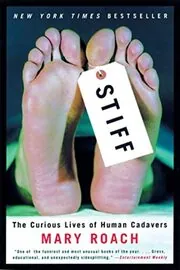
For curious general readers who appreciate humor alongside uncomfortable subjects. Roach makes medical research tangible through the uses of donated bodies, though graphic descriptions and irreverence may be difficult for readers seeking a gentler introduction.
What it's about
Roach explores what happens to human bodies after death, from medical training and crash tests to decomposition and organ research. Morbid, funny, and unexpectedly humane, it shows how cadavers have shaped science and medicine.

For prospective doctors who want several perspectives on the pressures of training. The diary format captures uncertainty and exhaustion with unusual immediacy, though its historical hospital setting should not stand in for every contemporary residency experience.
What it's about
Robert Marion follows three pediatric interns through their demanding first year of medical training, drawing on diaries they kept during the experience. Their accounts reveal exhaustion, uncertainty, hospital bureaucracy, and the emotional pressures of caring for seriously ill children.
Sources
- 1
Medicine Reading List: Books to Read Before Medical School
theukcatpeople.co.uk
- 2
7 Books Every Medical Student Should Read | Oxford Scholastica
oxfordscholastica.com
- 3
11 great books hand-picked by doctors for your reading list | American Medical Association
ama-assn.org
- 4
Best Books for Medical Students (435 books)
goodreads.com
- 5
10 most influential books for doctors, voted by you | MDLinx
mdlinx.com
- 6
Reading Recommendations | UBC Branch for Global Surgical Care
globalsurgery.med.ubc.ca
- 7
Book recs before starting med school? : r/premed
reddit.com
- 8
What are good books about medicine? : r/suggestmeabook
reddit.com
- 9
50 Of The Best Medical Books to Read if You Love Medicine | Book Riot
bookriot.com
- 10
Seven books to read if you’re a medicine student | Top Universities
topuniversities.com




Edited by
Software engineer whose passion for tracking book recommendations from podcasts inspired the creation of MRB.
Lead investor at 3one4 Capital whose startup expertise and love for books helped shape MRB and its growth.
Comments
Did we miss something? Have feedback?
Help us improve this page by sharing your thoughts