
14 Best Medicine Books
The best medicine books, ranked by how many expert sources recommend each one, with notes on medical memoirs, history, ethics, and the realities of care.
Our take
Medicine books can reveal what a clinical encounter looks like from several sides: the doctor making a difficult decision, the patient living with uncertainty, the family trying to be heard, or the researcher tracing a disease. These books suit curious general readers and people considering a medical career. Their strengths lie in experience, history, and ethical questions, with very different styles of storytelling.
When Breath Becomes Air offers an intimate memoir, while Do No Harm and This Is Going to Hurt examine the pressures of hospital work. Being Mortal asks how care can reflect a person's priorities. For a longer historical perspective, choose The Emperor of All Maladies. The Immortal Life of Henrietta Lacks and The Spirit Catches You and You Fall Down bring consent, culture, and inequality into focus. How Doctors Think explores individual judgment, while The Checklist Manifesto looks at teamwork and avoidable mistakes. Start with the human question that interests you, then pair a firsthand account with a broader investigation.
14 books · 8 sources · Last updated
As an Amazon Associate, we earn from qualifying purchases (at no extra cost to you).
How to choose from this list
Skip to the full rankingIf you want a personal introduction: When Breath Becomes Air → Being Mortal
If you want the realities of hospital work: This Is Going to Hurt → Do No Harm
If you want medical history: The Emperor of All Maladies
If you want ethics, culture, and consent: The Immortal Life of Henrietta Lacks → The Spirit Catches You and You Fall Down
If you want to understand decisions and mistakes: How Doctors Think → Complications → The Checklist Manifesto
If you want medicine through fiction: The House of God
The 14 books, ranked
Ranked by how many expert sources name each book. Ties go to the book more people recommend.

When Breath Becomes Air
For readers seeking a personal account of becoming a patient after training as a doctor. Its short, reflective form brings illness and meaning closer than a broad history, though grief and unfinished ambitions make it emotionally demanding.
What it's about
Near the end of his neurosurgery training, Paul Kalanithi is diagnosed with terminal lung cancer and begins asking what makes a life meaningful. His memoir is clear-eyed, intimate, and deeply humane.
Also recommended by
8 people Bill Gates recommended this book
Bill Gates
"This book left me in tears." - Bill Gates
Bill Gates's recommendation of this book  Melinda Gates recommended this book
Melinda Gates
Melinda Gates recommended this book on Likewise.com.
Melinda Gates's recommendation of this book  Anthony Pompliano recommended this book
Anthony Pompliano
"[One of the] best books I read in 2017." - Anthony Pompliano
Anthony Pompliano's recommendation of this book  Patrick O'Shaughnessy recommended this book
Patrick O'Shaughnessy
"The memoir of a successful neurosurgeon who is diagnosed with lung cancer." - Patrick O'Shaughnessy
Patrick O'Shaughnessy's recommendation of this book  Tim Cook recommended this book
Tim Cook
"Best book on re-examining life and values." - Tim Cook
Tim Cook's recommendation of this book  Peter King recommended this book
Peter King
"One of the best books I've read in years." - Peter King
Peter King's recommendation of this book +2
More recommendations
- Shauna Niequist
Shauna Niequist recommended this book on Twitter.
- James Clear
"[One of] the 10 best nonfiction books of all-time." - James Clear
- Shauna Niequist

For readers who want a sustained history of a disease and the attempts to understand it. Its combination of research history and patient experience offers more scientific context than a memoir, though the long narrative requires patience.
What it's about
Siddhartha Mukherjee recounts the history of cancer through patients, researchers, and changing ideas about the disease. Combining medical history with clinical experiences, he traces efforts to understand and treat cancer alongside the human consequences of that struggle.
Also recommended by
4 people Peter Attia recommended this book
Peter Attia
One of Peter Attia's answers to "any books you feel would make your reading list?"
Peter Attia's recommendation of this book - Bill Gates recommended this book
Bill Gates
"I loved [this] brilliant book about cancer." - Bill Gates
Bill Gates's recommendation of this book  Laura R Walker recommended this book
Laura R Walker
"For friends who have faced or are facing cancer, I often give them [this book]." - Laura R Walker
Laura R Walker's recommendation of this book  Cathie Wood recommended this book
Cathie Wood
"Fantastic book...a must read!" - Cathie Wood
Cathie Wood's recommendation of this book

For readers interested in what good care means when extending life conflicts with personal priorities. It gives aging and the limits of medicine a wider treatment than the illness memoirs, though it raises difficult questions without easy answers.
What it's about
Atul Gawande investigates the medical treatment of aging and dying through patients' experiences and personal reflection. He asks how care can better respect people's priorities when safety, longevity, independence, and quality of life come into conflict.
Also recommended by
1 person Ryan Shea recommended this book
Ryan Shea
Ryan Shea recommended this book on his website.
Ryan Shea's recommendation of this book
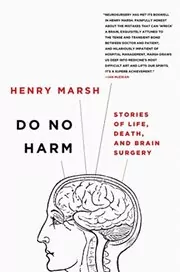
For readers curious about the responsibility and uncertainty behind brain surgery. Marsh’s candid attention to errors and judgment offers a less polished view of surgical work, though the detailed accounts of suffering can be hard to read.
What it's about
Marsh opens the door to the operating theatre and the split-second decisions of brain surgery. Drawing on triumphs, failures, and haunting complications, he shows how much skill, luck, and strain sit behind every operation.

The Immortal Life of Henrietta Lacks
For readers interested in the people behind medical discoveries and the ethics of research. The family-centered reporting gives consent and inequality a concrete setting, though it is an investigative narrative rather than a comprehensive history of bioethics.
What it's about
Rebecca Skloot investigates the life of Henrietta Lacks, whose cells were taken without her knowledge and became important tools in medical research. Her reporting connects scientific advances with the experiences of Lacks's family and questions of consent, race, and justice.
Also recommended by
1 person A.J. Jacobs recommended this book
A.J. Jacobs
"Great writer." - A.J. Jacobs
A.J. Jacobs's recommendation of this book

This is Going to Hurt
For readers who want the daily pressures of hospital work conveyed through short diary entries. Its dark humor makes a direct contrast with more reflective memoirs, though the NHS setting and graphic anecdotes offer one particular working experience.
What it's about
Based on secret diaries from his years as a junior doctor, Kay describes the realities of working in the National Health Service, especially in obstetrics and gynaecology. Long nights, impossible decisions and darkly funny disasters build into a furious, heartbreaking portrait of modern medicine.
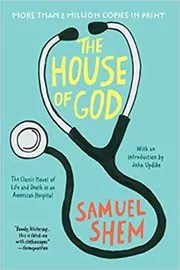
For readers interested in the culture of medical training through fiction. Its hospital satire exposes dehumanization more bluntly than the nonfiction accounts, though the crude humor, sexual material, and period attitudes can make it alienating.
What it's about
Roy Basch starts his internship at a brutal Boston teaching hospital and quickly learns that idealism is no match for sleeplessness, bureaucracy, and death. Guided by the Fat Man's dark survival rules, he tries to stay sane without losing his conscience.
Also recommended by
1 person Jordan Peterson recommended this book
Jordan Peterson
Recommended on Jordan Peterson's website.
Jordan Peterson's recommendation of this book
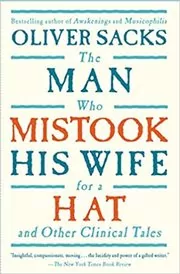
For readers curious about how neurological differences affect identity and everyday life. The case narratives emphasize individual experience more than a textbook would, though their historical framing and unusual cases offer a selective picture of neurology.
What it's about
In this collection of clinical tales, Sacks follows patients whose brains alter memory, recognition, movement, and identity. Strange symptoms become deeply human stories about how people rebuild a sense of self.
Also recommended by
1 person- Jordan Peterson recommended this book
Jordan Peterson
Recommended on Jordan Peterson's website.
Jordan Peterson's recommendation of this book

For readers interested in the uncertainty beneath medical expertise. Its essays connect clinical experience with mistakes, training, and judgment more directly than a biography, though the separate topics make it less continuous than a single patient’s story.
What it's about
Through accounts from surgical practice, Atul Gawande examines the uncertainty underlying medical decisions. He explores mistakes, difficult diagnoses, and ethical dilemmas to consider what happens when imperfect knowledge meets the urgent responsibility of caring for a patient.
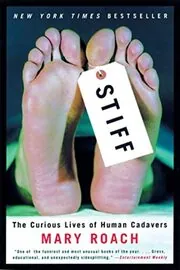
For readers curious about the physical and ethical realities of using bodies after death. Its reporting and humor make an unusual subject approachable, though graphic descriptions and a playful tone will not suit every reader.
What it's about
Roach explores what happens to human bodies after death, from medical training and crash tests to decomposition and organ research. Morbid, funny, and unexpectedly humane, it shows how cadavers have shaped science and medicine.

For readers interested in preventing avoidable mistakes within complex work. Its focus on teamwork and simple safeguards gives practical organizational questions more attention than the memoirs, though checklists address only part of the problem of medical error.
What it's about
Atul Gawande investigates how simple checklists can reduce preventable errors in complex work. Drawing on surgery and aviation, he explores why expertise alone can fall short and how structured reminders and teamwork support more reliable professional practice.
Also recommended by
9 people- Bill Gates recommended this book
Bill Gates
"A great read." - Bill Gates
Bill Gates's recommendation of this book  Jack Dorsey recommended this book
Jack Dorsey
"Success metric for my work [at Twitter]: these books disappear from my desk. (you should read it too)" - Jack Dorsey
Jack Dorsey's recommendation of this book  Tim Ferriss recommended this book
Tim Ferriss
"A great book." - Tim Ferriss
Tim Ferriss's recommendation of this book  Malcolm Gladwell recommended this book
Malcolm Gladwell
"[The author] took an extraordinary risk to his own reputation domestically in America in the medical profession by [releasing this book]." - Malcolm Gladwell
Malcolm Gladwell's recommendation of this book  Charles Poliquin recommended this book
Charles Poliquin
"A great book." - Charles Poliquin
Charles Poliquin's recommendation of this book  Keith Rabois recommended this book
Keith Rabois
Keith Rabois recommended this book on a Medium blog post.
Keith Rabois's recommendation of this book +3
More recommendations
- Ramit Sethi
"A great book." - Ramit Sethi
- Michael McCullough
"A really good book. [Shows] a checklist is profoundly helpful." - Michael McCullough
- Vinod Khosla
"Very good; definitely worth reading." - Vinod Khosla
- Ramit Sethi

Mountains Beyond Mountains
The Quest of Dr. Paul Farmer, a Man Who Would Cure the World
For readers interested in medicine’s relationship with poverty and global responsibility. Following one physician makes health inequality concrete, though the biographical focus gives less space to a systematic overview of health systems or competing approaches.
What it's about
Tracy Kidder follows physician Paul Farmer's efforts to bring modern medical care to impoverished communities. His account connects Farmer's work across several countries with questions about infectious disease, inequality, politics, and the obligations of medicine.
Also recommended by
6 people- Bill Gates recommended this book
Bill Gates
List of books Bill Gates read in 2011.
Bill Gates's recommendation of this book  Donald Knuth recommended this book
Donald Knuth
"About how Paul Farmer's local and global life combines theory and practice." - Donald Knuth
Donald Knuth's recommendation of this book  Jeff Dean recommended this book
Jeff Dean
"I really enjoyed [this book]." - Jeff Dean
Jeff Dean's recommendation of this book - Patrick O'Shaughnessy recommended this book
Patrick O'Shaughnessy
"If you care about health care, philanthropy, drive, or success, read this book." - Patrick O'Shaughnessy
Patrick O'Shaughnessy's recommendation of this book  Rainn Wilson recommended this book
Rainn Wilson
"A biography of the great doctor, teacher and humanitarian, Paul Farmer." - Rainn Wilson
Rainn Wilson's recommendation of this book  Richard Branson recommended this book
Richard Branson
Richard Branson recommended this book on his "70 must-read books" blog post.
Richard Branson's recommendation of this book
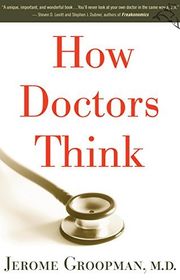
How Doctors Think
For readers interested in how clinicians reach conclusions and why judgment can fail. Its focus on reasoning complements the surgical memoirs and safety systems books, though narrative examples provide a selective view rather than a diagnostic textbook.
What it's about
Jerome Groopman examines how physicians reason about symptoms and diagnoses, and how assumptions or habits can lead them astray. Patient stories and interviews with doctors explore uncertainty, communication, and the mental processes behind clinical decisions.

The Spirit Catches You and You Fall Down
A Hmong Child, Her American Doctors, and the Collision of Two Cultures
For readers interested in culture, communication, and the limits of medical authority. Its close account of one family gives those questions more depth than a general ethics discussion, though the painful story resists simple judgments about responsibility.
What it's about
Anne Fadiman investigates the care of Lia Lee, a Hmong child with epilepsy in California. Her account explores how her family's beliefs and American medical practice collide, placing their experience within Hmong history and refugee life.
Sources
- 1
50 Books to Read if You Love Medicine
bookriot.com
- 2
7 Books Every Medical Student Should Read
oxfordscholastica.com
- 3
Medicine Reading List: Books to Read Before Medical School
theukcatpeople.co.uk
- 4
Medicine Books
goodreads.com
- 5
book recs
reddit.com
- 6
What medical related books do you recommend? (Reading for pleasure not for school related reasons)
reddit.com
- 7
11 great books hand-picked by doctors for your reading list
ama-assn.org
- 8
10 great summer reads for doctors, or anyone interested in medicine
aamc.org



Edited by
Software engineer whose passion for tracking book recommendations from podcasts inspired the creation of MRB.
Lead investor at 3one4 Capital whose startup expertise and love for books helped shape MRB and its growth.
Comments
Spotted a missing book, a wrong order or a mistake? Tell us and we'll fix this page.
We're a reading guide, not the author or publisher, so we can't send books or pass on messages.