
24 Best Strength Training Books
The best strength training books, ranked by how many expert sources recommend each, with notes for new lifters, experienced athletes, and coaches choosing a guide.
Our take
Strength training books answer different questions: how to perform a lift, how to organize practice, and how to adjust training as progress changes. Some are personal guides for the gym; others are professional textbooks or references for a particular sport. Matching the book to your equipment, experience, and goals matters more than choosing the most technical title.
Starting Strength: Basic Barbell Training concentrates on barbell mechanics, while Strength Training Anatomy offers a visual companion to common exercises. Overcoming Gravity: A Systematic Approach to Gymnastics and Bodyweight Strength takes training in a different direction, and Olympic Weightlifting: A Complete Guide for Athletes & Coaches focuses on a specialized sport. For programming, Practical Programming for Strength Training explains changing needs across training stages. Coaches may prefer the broader scope of Essentials of Strength Training and Conditioning, while readers focused on muscle growth can turn to Science and Development of Muscle Hypertrophy. Begin with the guide closest to the training you actually plan to do.
24 books · 8 sources · Last updated
As an Amazon Associate, we earn from qualifying purchases (at no extra cost to you).
How to choose from this list
Skip to the full rankingIf you're beginning barbell training: Starting Strength → Practical Programming for Strength Training
If you learn through illustrations: Strength Training Anatomy
If you prefer bodyweight strength: Overcoming Gravity
If you want the Olympic lifts: Olympic Weightlifting
If you're studying muscle growth: The Muscle and Strength Pyramid → Science and Development of Muscle Hypertrophy
If you're training later in life: The Barbell Prescription
The 24 books, ranked
Ranked by how many expert sources name each book. Ties go to the book more people recommend.

For beginners committed to learning the basic barbell lifts in detail. Its long technical explanations provide more depth than a quick workout manual, though the barbell-centered approach and dense mechanics may exceed what a general fitness reader needs.
What it's about
Mark Rippetoe explains the mechanics and execution of basic barbell lifts, including squats, presses, deadlifts, and power cleans. Anatomical analysis, illustrations, and coaching guidance accompany a beginner training program organized around progressive increases in strength and lifting proficiency.
Also recommended by
2 people Mr. Money Mustache recommended this book
Mr. Money Mustache
"A meat’n’potatoes summary of what everyone should do to make the biggest improvements in fitness and strength in minimal time." - MMM
Mr. Money Mustache's recommendation of this book  Sahil Lavingia recommended this book
Sahil Lavingia
Sahil Lavingia recommended this book on Notion.
Sahil Lavingia's recommendation of this book

Science and Development of Muscle Hypertrophy
For experienced lifters and professionals who want to understand the research behind muscle growth. Its detailed synthesis supports informed programming decisions, though scientific terminology and study discussion make it less approachable than a direct workout guide.
What it's about
Brad Schoenfeld examines the mechanisms behind muscle growth and their implications for training. This second edition connects physiological research with program design and nutrition, offering strength professionals a detailed account of the factors involved in developing muscular size.

Strength Training Anatomy
For visual learners who want to see the structures involved in common exercises. The anatomical illustrations make a useful companion to programming books, though identifying muscles and positions does not provide a complete training plan.
What it's about
Frederic Delavier illustrates the muscles and surrounding structures involved in strength exercises. Explanations and drawings show how movement and setup affect muscle recruitment, with coverage of bones, ligaments, tendons, connective tissue, and stretching.

Essentials of Strength Training and Conditioning
For strength and conditioning students or coaches who want a broad professional foundation. Its coverage joins exercise science with testing and program design, though the textbook scale and specialist terminology make it more demanding than a personal training plan.
What it's about
The NSCA presents a comprehensive reference for strength and conditioning students and professionals. This fourth edition connects exercise science with testing, nutrition, technique, program design, and facility management, addressing knowledge relevant to the Certified Strength and Conditioning Specialist examination.

For lifters and coaches focused on the snatch and clean and jerk. Detailed progressions and technical corrections give the sport sustained attention, though readers seeking general gym strength will find much of the material more specialized than necessary.
What it's about
Greg Everett teaches the snatch and clean and jerk through progressions for athletes and coaches. The guide covers foundational movement, technical corrections, supplementary exercises, training program design, mobility, nutrition, and competition preparation, connecting lifting technique with the broader demands of weightlifting.

Practical Programming for Strength Training
For lifters who want to understand how programming changes as progress slows. Its emphasis on stress, recovery, and experience complements a technique manual, though readers need some training context to make the discussion practical.
What it's about
Mark Rippetoe examines how strength-training plans should change as athletes move from novice to intermediate and advanced levels. Explanations of adaptation, recovery, and training stress support programming models designed around differing rates of progress and accumulated experience.

Science and Practice of Strength Training
For coaches and experienced trainees who want principles behind strength development rather than a fixed routine. Its connection between training variables and adaptation supports program design, though the technical treatment assumes more background than an introductory lifting book.
What it's about
Vladimir Zatsiorsky, William Kraemer, and Andrew Fry connect strength-training science with practical program design. This third edition examines intensity, timing, exercises, recovery, and athlete monitoring, emphasizing how approaches vary with individual needs, goals, and training circumstances.
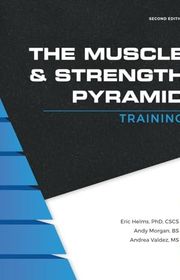
The Muscle and Strength Pyramid: Training
For lifters who want to organize training priorities before fine-tuning details. Its hierarchy connects program variables with practical choices, though readers still need to translate the principles into a routine and obtain nutrition guidance separately.
What it's about
Eric Helms, Andy Morgan, and Andrea Valdez organize resistance-training decisions into a hierarchy of priorities. The book discusses adherence, volume, intensity, frequency, progression, exercise selection, rest, and tempo, connecting those variables with strength and muscle-building programs.

For bodybuilding readers who want a large illustrated reference with historical and personal context. Its scope extends from exercises to competition preparation, though the older training culture and competitive emphasis need perspective when applied to everyday recreational lifting.
What it's about
Schwarzenegger and Bill Dobbins assemble an illustrated reference covering bodybuilding exercises, training programs, nutrition, and competitive preparation. Spanning introductory and advanced practice, the book combines technical instruction with bodybuilding history and Schwarzenegger's reflections on motivation and discipline.

For lifters who want a recognizable structure for progressing the main barbell lifts. Its repeatable training cycles make planning more concrete than a general theory book, though the many later variations can complicate deciding which version to follow.
What it's about
Jim Wendler presents a strength-training system centered on squats, bench presses, deadlifts, and military presses. The guide explains progressive programming and supplements it with assistance exercises, full-body training, nutrition, and ways to incorporate conditioning.
Also recommended by
1 person Mark Bell recommended this book
Mark Bell
"Did a great job of presenting a condensed, simplified, but effective method for getting stronger." - Mark Bell
Mark Bell's recommendation of this book

Becoming a Supple Leopard
The Ultimate Guide to Resolving Pain, Preventing Injury, and Optimizing Athletic Performance
For lifters interested in movement positions and mobility alongside their strength work. Its illustrated reference format makes specific topics easy to revisit, though the broad physical-maintenance approach is not a focused strength program or an individual assessment.
What it's about
Kelly Starrett presents a system for understanding movement, mobility, and physical maintenance. Illustrated guidance covers body positioning, common strength exercises, and techniques for addressing restrictions, helping readers examine movement habits that affect athletic performance.

For athletes and coaches who want strength work to support a larger sporting goal. Its practical discussion keeps gym performance in perspective, though the conversational mix of principles and programs is less linear than a conventional beginner manual.
What it's about
Dan John and Pavel Tsatsouline examine the role of strength training within athletic performance. Their discussion combines coaching experience with training principles, assessments, and practical programs, emphasizing how an athlete's goals should determine the work done in the gym.

For bodyweight trainees who want to design routines around progressive skills. Its systematic approach gives programming more attention than a collection of exercise demonstrations, though the volume of detail can overwhelm readers seeking a short ready-made plan.
What it's about
Steven Low explains how to build gymnastics and bodyweight strength routines around individual goals. Exercise progressions, physiology, programming, and recovery principles connect the mechanics of particular skills with the larger task of organizing training and monitoring progress.

For coaches planning training across seasons and competitions. Its treatment of cycles, workload, and peaking addresses the larger calendar beyond individual workouts, though the theoretical breadth requires more interpretation than a ready-made weekly routine.
What it's about
Tudor Bompa and Carlo Buzzichelli explain periodization as a framework for planning athletic training. They discuss annual plans, training cycles, workload, recovery, and peaking for competition, with methods addressing strength, endurance, speed, and agility.

Supertraining
For advanced coaches and readers with an exercise-science background. Its extensive theoretical treatment offers a different depth from practical manuals, though the density, organization, and older research make selective study more realistic than a quick cover-to-cover read.
What it's about
Yuri Verkhoshansky and Mel Siff examine strength training through physiology, adaptation theory, and sport-specific methods. This expanded sixth edition discusses training organization, periodization, plyometrics, testing, and recovery, connecting scientific concepts with the demands of developing athletic performance.
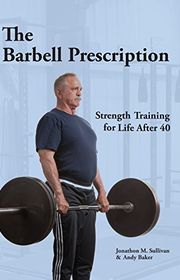
The Barbell Prescription: Strength Training for Life After 40
For older adults and coaches interested in adapting barbell training across later life. Its age-specific discussion adds context missing from general beginner manuals, though the detailed rationale and barbell emphasis may be more than a casual exerciser wants.
What it's about
Jonathon Sullivan and Andy Baker examine strength training for adults over forty, combining physiological explanations with coaching and programming guidance. The book considers how goals, recovery, and training plans may differ across ages, experience levels, and individual circumstances.

For men seeking a general introduction that combines lifting with nutrition and body-composition goals. Its accessible structure is more immediately usable than a technical textbook, though the physique focus is narrower than sport performance or competitive strength.
What it's about
Michael Matthews presents a diet and exercise approach for men seeking muscle, strength, and fat loss. The book discusses resistance training, meal planning, recovery, supplements, and common fitness beliefs, alongside guidance for organizing a training routine.

Movement
For coaches and movement professionals interested in a structured screening framework. Its shared language connects assessment with training decisions, though the technical presentation assumes professional context and is less useful as a standalone lifting program.
What it's about
Gray Cook presents a shared framework for movement screening, assessment, and corrective strategies. The book connects rehabilitation, conditioning, and fitness, drawing on developmental movement patterns to explain how professionals can evaluate limitations and plan more coherent approaches to training.

For readers who enjoy learning through coaching essays and experience. Its reflections connect lifting with habits and sporting life, though the collection is better for perspective and ideas than for following one continuous training program.
What it's about
Dan John combines strength-training guidance with reflections on coaching, learning, and everyday life. Essays and practical examples range across Olympic lifting, track and field, strongman events, and general weight training, presenting lessons drawn from his experience with athletes.

New Functional Training for Sports
For coaches who want exercise progressions connected to athletic preparation. Its practical emphasis gives movement selection a sporting context, though readers interested mainly in competitive powerlifting will find the broader approach less specific to their goals.
What it's about
Michael Boyle explains functional training through assessments, exercises, and program progressions tailored to athletic demands. This second edition uses illustrated movements and video-linked demonstrations to connect coaching concepts with the development of strength, power, and movement skills.

For powerlifters and coaches who want a framework for evaluating training decisions. Its explicit principles connect specificity, overload, and fatigue management, though it requires you to turn the framework into an appropriate plan rather than simply follow workouts.
What it's about
Mike Israetel, James Hoffmann, and Chad Wesley Smith explain seven principles underlying strength-training program design. With particular attention to powerlifting, the book connects specificity, overload, fatigue management, and other concepts with decisions about planning and organizing training.

For readers who enjoy strength history and athlete profiles alongside training ideas. Its combination of stories, physical practice, and personal philosophy gives it a distinctive voice, though it is less systematic than a modern exercise-science textbook.
What it's about
Marty Gallagher combines profiles of strength athletes with his approach to physical training and nutrition. Drawing on older lifting traditions, he explores weight training, cardiovascular work, mental preparation, and coordinated planning as components of developing strength and changing body composition.

For Olympic-weightlifting coaches and committed athletes who want a substantial reference. Its depth suits studying the sport's technical and competitive demands, though the older presentation and level of detail are less convenient than a concise introductory guide.
What it's about
Arthur Drechsler presents a detailed reference to Olympic-style weightlifting, covering technique, assistance exercises, equipment, and competition. Explanations connect the practical work of learning lifts with broader training considerations, offering athletes and coaches a guide to the sport.

For lifters preparing to compete in the squat, bench press, and deadlift. Its combination of technique and meet preparation keeps the sport's practical demands together, though the specialist focus makes it less suitable for general fitness or bodyweight goals.
What it's about
Dan Austin and Bryan Mann combine competitive experience with exercise science in a guide to powerlifting. This second edition examines lifting technique, training preparation, competition routines, nutrition, and the mental demands involved in pursuing the squat, bench press, and deadlift.
Sources
- 1
The 12 Best Strength Training Books Ever Written
rdellatraining.com
- 2
18 Best Weightlifting Books (Reviewed by a Coach)
powerliftingtechnique.com
- 3
10 Best Bodybuilding Books of 2026
fitnessvolt.com
- 4
100 Best Strength Training Books of All Time
shortform.com
- 5
Strength Training Books
goodreads.com
- 6
27 Book Recommendations for Personal Trainers (Personal, Business, Training)
reddit.com
- 7
Recommendations for Introductory Training Books for a Total Beginner
reddit.com
- 8
The 11 best strength training books
humankinetics.me







Edited by
Software engineer whose passion for tracking book recommendations from podcasts inspired the creation of MRB.
Lead investor at 3one4 Capital whose startup expertise and love for books helped shape MRB and its growth.
Comments
Did we miss something? Have feedback?
Help us improve this page by sharing your thoughts