
18 Best Blackjack Books
The best blackjack books, ranked by how many expert sources recommend each one, with notes to help beginners and experienced readers choose where to start.
Our take
Blackjack books serve quite different readers. Some teach the rules and basic strategy, some explain card counting, and others study the mathematics behind betting and risk. A few are mainly stories about casino life. Choosing the right kind matters more than choosing the most technical title: a reference full of tables is useful only when you understand what questions it answers.
Blackjack Bluebook II offers a gradual introduction, while Blackbelt in Blackjack connects counting with practical preparation. Professional Blackjack and Blackjack Attack suit readers ready for detailed study, and The Theory of Blackjack goes further into the mathematics. For history, Beat the Dealer explains the breakthrough that changed the game. Bringing Down the House is better approached as an embellished narrative than as instruction. Start with basic strategy, then decide whether you want to study the probability or simply read about the people involved.
18 books · 8 sources · Last updated
As an Amazon Associate, we earn from qualifying purchases (at no extra cost to you).
How to choose from this list
Skip to the full rankingIf you're learning basic strategy: Blackjack Bluebook II → Basic Blackjack
If you want to study card counting: Blackbelt in Blackjack → Professional Blackjack
If you want a system with less arithmetic: Knock-Out Blackjack
If you're ready for detailed mathematics: Blackjack Attack → The Theory of Blackjack
If you're interested in blackjack history: Beat the Dealer → Million Dollar Blackjack
The 18 books, ranked
Ranked by how many expert sources name each book. Ties go to the book more people recommend.

For experienced counters who want to analyze risk, betting, and system performance. It addresses practical mathematical questions more deeply than beginner guides, but it assumes a working knowledge of strategy and counting.
What it's about
Don Schlesinger explores the mathematics of blackjack for readers who already understand card counting. Analyses and simulations address optimal betting, risk, team play, camouflage, and comparisons between systems, linking strategic choices to their statistical consequences.

Blackjack for Blood
For readers specifically interested in the Omega II system and the practical side of counting. It combines method with casino conduct, but a more demanding count adds mental work compared with simpler alternatives.
What it's about
Bryce Carlson introduces the Omega II counting system alongside betting, playing decisions, and casino interactions. The book combines technical instruction with discussions of camouflage, record keeping, team play, and maintaining composure under pressure.
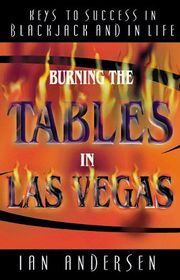
Burning the Tables in Las Vegas
For experienced counters interested in casino interactions and the cost of camouflage. It concentrates on the human side more than the mathematical references, but its high roller perspective and older setting limit its usefulness for beginners.
What it's about
Ian Andersen revisits the practical challenges of blackjack advantage play, including casino conduct, disguise, and risk. Building on his earlier work, he examines how players balance strategic decisions with the attention their behavior attracts at the tables.

Professional Blackjack
For readers ready to study Hi-Lo and detailed strategy adjustments. The extensive tables make it a stronger reference than a casual introduction, but beginners may need a simpler book before using it effectively.
What it's about
Stanford Wong explains card counting and blackjack strategy across different casino rules. The book uses extensive tables to examine playing and betting decisions, providing a reference for readers who want to study the mathematics behind the game.

The Theory of Blackjack
The Compleat Card Counter's Guide to the Casino Game of 21
For readers who want to understand the mathematics behind strategy and counting systems. It goes deeper into evaluation than the practical introductions, but it assumes comfort with probability and is a demanding first book.
What it's about
Peter Griffin examines the mathematics behind blackjack strategy and card-counting systems. The book explains how to evaluate counting accuracy, determine basic strategy for different rules and deck counts, and analyze the relationship between betting and playing decisions.

For readers curious about the origins of mathematical blackjack. It explains the breakthrough behind card counting more directly than later references, but its historical methods and casino setting make it an incomplete modern training plan.
What it's about
Edward Thorp explains blackjack through probability, basic strategy, and card counting. His guide moves from the game's rules to more advanced approaches, with charts and tables addressing playing decisions, casino countermeasures, and recognizing cheating.

For developing counters who want a readable guide that includes casino realities. It gives preparation and table conditions more attention than a chart reference, but the range of techniques still requires sustained practice.
What it's about
Arnold Snyder examines blackjack advantage play, including shuffle tracking and cooperation between card counters. The book explains these techniques alongside the surveillance practices casinos use to identify players, treating preparation and discipline as central parts of play.

For readers planning a structured study of advantage play alongside other work. It connects training with practical arrangements better than a purely mathematical text, but its broad coverage can overwhelm a complete beginner.
What it's about
Rick Blaine presents blackjack training from basic strategy and card counting to team play and shuffle tracking. The guide also considers tournaments, casino surveillance, and the practical arrangements involved in pursuing advantage play alongside a regular career.

Million Dollar Blackjack
For readers who want technical instruction mixed with stories of professional team play. Uston gives the methods a personal setting, but older casino conditions and several systems make it less direct as a first course.
What it's about
Ken Uston combines accounts of professional team play with explanations of the methods his blackjack teams used. The book presents his Advanced Point Count system and discusses the terminology and practical demands of casino advantage play.

Modern Blackjack
For experienced readers who want extensive simulations and advanced topics in one place. Its analytical breadth goes beyond introductory counting guides, but the volume of tables makes selective reference reading more useful than casual browsing.
What it's about
Norm Wattenberger examines advanced blackjack techniques in this second volume, including hole-card play, next-card play, shuffle tracking, and team play. Tables and simulations explore strategy decisions and the mathematical performance of different approaches.

Playing Blackjack as a Business
For readers interested in how early counting methods were taught. The color charts make basic strategy easier to study, but its casino context and some of its system material need updating against present rules.
What it's about
Lawrence Revere presents blackjack basic strategy and several card-counting approaches, supported by computer-derived charts. The guide compares playing decisions for different deck configurations and explains how counting information affects betting and choices at the table.

The World's Greatest Blackjack Book
For readers who want a broad older guide that includes Hi-Opt counting and casino selection. It covers more ground than a narrow system manual, but its advice about particular playing conditions has aged.
What it's about
Lance Humble and Carl Cooper explain blackjack odds, basic strategy, and the Hi-Opt I counting system. Their guide also discusses selecting casinos and dealers, identifying cheating, and managing the practical difficulties of casino play.

Bringing Down the House
The Inside Story of Six M.I.T. Students Who Took Vegas for Millions
For readers who want a fast story about the MIT blackjack team. It offers more narrative momentum than the instructional books, but its embellished storytelling makes it a poor guide to actual training or results.
What it's about
A group of MIT students turns card counting into a disciplined assault on Las Vegas, winning millions before casino security closes in. Mezrich follows the math, the swagger, and the risks that made the blackjack team famous.
Also recommended by
1 person Howard Marks recommended this book
Howard Marks
Howard Marks has this book on his shelf.
Howard Marks's recommendation of this book

Basic Blackjack
For players who already know the rules and want to understand strategy under unusual conditions. It is more useful as a rule variation reference than a simple starter guide, and some examples are dated.
What it's about
Stanford Wong explains blackjack basic strategy under common rules and less familiar variations. Tables compare playing decisions and their mathematical value, while sections on playing without counting address approaches beyond memorizing a single generic strategy.

Big Book of Blackjack
For readers interested in blackjack history, variants, and side bets as well as the standard game. It offers a wider survey than a counting manual, but that breadth gives less space to a single training method.
What it's about
Arnold Snyder surveys blackjack's history, traditional rules, unusual variants, and side bets. The guide explains approaches to games such as Spanish 21 and Blackjack Switch while recounting the people and events that shaped casino blackjack.

For newer readers who want worked examples and a gradual move beyond basic strategy. The illustrated format is easier to study than dense reference tables, but learning several increasingly involved approaches can take time.
What it's about
Fred Renzey explains blackjack basic strategy with illustrated hands and color-coded charts, then introduces increasingly involved counting systems. The book also examines common gambling myths, rule changes, and the practical limitations and fluctuations players encounter.

For readers who find true count conversion a barrier to learning. Its unbalanced system reduces one part of the arithmetic, but easier counting still requires disciplined practice and does not remove financial swings.
What it's about
Olaf Vancura and Ken Fuchs explain the unbalanced Knock-Out card-counting system, designed to reduce the arithmetic involved in blackjack play. The guide progresses from an abbreviated beginner approach to a more detailed system for experienced players.

Winning Casino Blackjack for the Non-Counter
For recreational players who want a slower introduction to basic strategy without a full counting system. Its quizzes help reinforce decisions, but the title should not be read as a promise of profit.
What it's about
Avery Cardoza presents blackjack rules and basic strategy for readers who prefer to play without card counting. Strategy charts, quizzes, and explanations of bankroll management connect playing decisions with the game's variations and financial demands.
Sources
- 1
The Best Blackjack Books of All Time
blackjackreview.com
- 2
Blackjack Book Reviews
wizardofodds.com
- 3
Blackjack Books
lasvegasadvisor.com
- 4
Book suggestions
reddit.com
- 5
Best Blackjack Books Ever Written!
countingedge.com
- 6
Best Books/Resources you have read?
reddit.com
- 7
Blackjack Books
goodreads.com
- 8
Best Blackjack Books: 12 Picks Ranked by What You Will Learn | GameBlackjack
gameblackjack.online






Edited by
Software engineer whose passion for tracking book recommendations from podcasts inspired the creation of MRB.
Lead investor at 3one4 Capital whose startup expertise and love for books helped shape MRB and its growth.
Comments
Spotted a missing book, a wrong order or a mistake? Tell us and we'll fix this page.
We're a reading guide, not the author or publisher, so we can't send books or pass on messages.