
12 Best CrossFit Books
The best CrossFit books, ranked by how many expert sources recommend each one, with notes on athlete memoirs, training manuals, and where to start.
Our take
CrossFit combines weightlifting, gymnastics, and conditioning, but its books cover much more than workouts. Some explain the movement’s gym culture and competitive history. Others describe the habits of Games champions or offer detailed instruction in a particular skill. A new member, an experienced coach, and someone following the Games will find different starting points here.
For the wider story, Learning to Breathe Fire looks beyond individual champions, while Inside the Box follows a journalist’s introduction to training. Dottir and First offer personal accounts of elite competition, and Chasing Excellence presents a coach’s view of mindset. Olympic Weightlifting and Becoming a Supple Leopard demand more practical study, with the latter focused on movement positions and mobility. These manuals work best alongside instruction that fits your experience. Start with the cultural history if you are curious about CrossFit, or choose the technical subject you want to understand more closely.
12 books · 7 sources · Last updated
As an Amazon Associate, we earn from qualifying purchases (at no extra cost to you).
How to choose from this list
Skip to the full rankingIf you’re curious about CrossFit: Learning to Breathe Fire → Inside the Box
If you want an athlete’s perspective: Dottir → First
If you want to understand competitive mindset: Chasing Excellence → Hard Work Pays Off
If you want to study lifting technique: Olympic Weightlifting
If you follow the Games: Constructing The CrossFit Games
The 12 books, ranked
Ranked by how many expert sources name each book. Ties go to the book more people recommend.

For competitors interested in responding to setbacks and rebuilding confidence. Davíðsdóttir gives mental preparation a more personal focus than the technical manuals, though the championship perspective offers less guidance for ordinary gym sessions.
What it's about
Katrín Davíðsdóttir recounts her path from gymnastics to winning consecutive CrossFit Games championships. She describes recovering from failure to qualify in 2014 and explores the training, goal setting, nutrition, and mental preparation that shaped her return to competition.

For fans who want Froning’s own account of ambition, training, and faith. Its Christian perspective distinguishes it from the other athlete memoirs, but readers seeking a practical workout manual will find limited instruction.
What it's about
Rich Froning recounts the training and competition behind his rise in CrossFit, reflecting on physical discipline, mental toughness, and Christian faith. Personal experiences accompany motivational advice and training observations, explaining the balance he sees between athletic preparation and spiritual life.

For athletes who want a coach’s account of competitive mindset. Bergeron connects daily habits with elite preparation more directly than the memoirs here, though the lessons are motivational rather than a detailed training plan.
What it's about
Ben Bergeron uses the 2016 CrossFit Games as a backdrop for his approach to developing athletes. He emphasizes character, mindset, and commitment to a process of improvement, proposing lessons that extend beyond competitive sport.
Also recommended by
1 person Danny Miranda recommended this book
Danny Miranda
"A must-read for anyone who is attempting to pursue not just competence but excellence." - Danny Miranda
Danny Miranda's recommendation of this book

Becoming a Supple Leopard
The Ultimate Guide to Resolving Pain, Preventing Injury, and Optimizing Athletic Performance
For lifters and coaches who want an illustrated movement reference. Its attention to positions and mobility is more detailed than the memoirs, but the substantial manual cannot provide an individual assessment of pain or injury.
What it's about
Kelly Starrett presents a system for understanding movement, mobility, and physical maintenance. Illustrated guidance covers body positioning, common strength exercises, and techniques for addressing restrictions, helping readers examine movement habits that affect athletic performance.

For newcomers curious about why CrossFit became a community as well as a workout. Herz offers a broader social history than the athlete memoirs, though its early portrait cannot explain the sport’s later changes.
What it's about
J. C. Herz traces CrossFit's growth from an unconventional training approach into an international fitness community. Accounts of athletes, demanding workouts, and grassroots gyms explore the physical challenges and social bonds behind the movement's appeal.
Also recommended by
1 person Stewart Brand recommended this book
Stewart Brand
"Tells the story of how CrossFit came about." - Stewart Brand
Stewart Brand's recommendation of this book
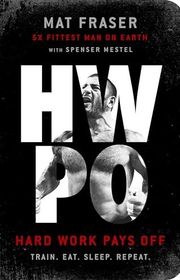
Hard Work Pays Off
For athletes who want training ideas alongside an elite competitor’s experience. Fraser combines exercises, food, and preparation more concretely than the memoirs, though the mixed format is less satisfying as a continuous personal story.
What it's about
Mat Fraser and Spenser Mestel combine lessons from Fraser’s competitive career with exercises, training observations, journal entries, and recipes. The book explores how the five-time CrossFit Games champion approached physical preparation, practice, and recovery.

Constructing The CrossFit Games
For dedicated Games fans curious about how competitive events are designed. Castro offers an organizer’s perspective missing from the athlete memoirs, though the focus on one season and planning details limits its broader appeal.
What it's about
Dave Castro chronicles the design and refinement of the events used in the 2017 CrossFit Games season. His account moves from the Open and Regional rounds to the finals in Madison, explaining the thinking behind the competition's physical tests.
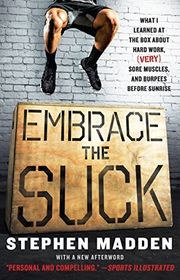
Embrace the Suck
For recreational athletes who want a humorous account of adapting to a demanding gym culture. Madden offers a more everyday perspective than the champions here, though his personal experiences are not a structured training program.
What it's about
Former Bicycling editor Stephen Madden recounts his immersion in CrossFit, from unfamiliar exercises to demanding group workouts. He considers the discomfort, routines, and camaraderie of training while examining how the experience fits into his life.
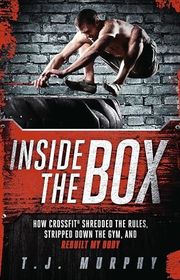
Inside the Box
For curious beginners who prefer an ordinary participant’s perspective to a champion’s memoir. Murphy connects fitness journalism with his own introduction to CrossFit, though the account reflects an early phase of the movement.
What it's about
Fitness journalist T. J. Murphy describes entering CrossFit after years of endurance training. His personal account examines workouts, coaching, and gym culture while exploring the appeal of a training community built around shared physical challenges.

For athletes preparing for the Open who want tactics rather than autobiography. Norris concentrates on workout decisions and preparation, though its analysis of earlier competitions needs adapting to changing formats and individual abilities.
What it's about
Oliver Norris analyzes previous CrossFit Open workouts to explain tactics, mental preparation, and training priorities. The guide covers skills, strength, conditioning, programming, nutrition, and lifestyle, connecting lessons from competition with his approach to improving performance in workouts.

For fans interested in Toomey’s beginnings and first championship. The early career focus gives a closer view of her initial breakthrough than general CrossFit histories, but it stops before much of her later dominance.
What it's about
Tia-Clair Toomey recounts her path from a competitive childhood to winning the 2017 CrossFit Games. The memoir describes persistence through repeated second-place finishes and the support of her partner, family, and coaches as she pursued her athletic ambitions.

For athletes and coaches who need detailed instruction in the snatch and clean and jerk. Everett offers greater lifting depth than the broader training books, though it requires patient study and does not replace coaching.
What it's about
Greg Everett teaches the snatch and clean and jerk through progressions for athletes and coaches. The guide covers foundational movement, technical corrections, supplementary exercises, training program design, mobility, nutrition, and competition preparation, connecting lifting technique with the broader demands of weightlifting.
Sources
- 1
The Best CrossFit Books for Athletes & Coaches
wodtools.com
- 2
Top 7 CrossFit Books
builtforathletes.com
- 3
8 Best CrossFit Books of All Time
sportsfoundation.org
- 4
Crossfit Books
goodreads.com
- 5
100 Best Crossfit Books of All Time
shortform.com
- 6
Hit me with some more book recs.
reddit.com
- 7
Anyone has read any of Katrin,Tia & Fraser books? Are they worth buying?
reddit.com







Edited by
Software engineer whose passion for tracking book recommendations from podcasts inspired the creation of MRB.
Lead investor at 3one4 Capital whose startup expertise and love for books helped shape MRB and its growth.
Comments
Spotted a missing book, a wrong order or a mistake? Tell us and we'll fix this page.
We're a reading guide, not the author or publisher, so we can't send books or pass on messages.