
14 Best Weightlifting Books
The best weightlifting books, ranked by how many expert sources recommend each one, with guidance for beginners, experienced lifters, and strength coaches.
Our take
Weightlifting books address several different ambitions: learning safe, consistent barbell movements, building muscle, increasing strength, or competing in the snatch and clean and jerk. A useful choice depends on the training you actually want to do and how much explanation you want before getting started. Some books provide routines, while others help you understand why those routines work.
Starting Strength concentrates on basic barbell technique, while Practical Programming for Strength Training looks at what changes as progress becomes harder. Olympic Weightlifting serves readers pursuing the competitive lifts. For bodybuilding, Bigger Leaner Stronger offers a direct training framework, and Science and Development of Muscle Hypertrophy supplies a more technical account of muscle growth. Illustrated anatomy guides suit readers who learn best by seeing movements.
Begin with a guide that matches your experience and equipment, then add a programming or science reference when you have specific questions.
14 books · 8 sources · Last updated
As an Amazon Associate, we earn from qualifying purchases (at no extra cost to you).
How to choose from this list
Skip to the full rankingIf you're new to barbells: Starting Strength → Practical Programming for Strength Training
If you want to learn the competitive lifts: Olympic Weightlifting
If you want to build muscle: Bodybuilding For Beginners → Science and Development of Muscle Hypertrophy
If you learn visually: Strength Training Anatomy → The Strength Training Anatomy Workout
If you're preparing to coach: Essentials of Strength Training and Conditioning → Science and Practice of Strength Training
The 14 books, ranked
Ranked by how many expert sources name each book. Ties go to the book more people recommend.

For beginners who want detailed explanations of basic barbell technique rather than a quick exercise checklist. Its mechanical analysis is unusually thorough, though the dense instruction and specific coaching preferences can feel demanding at first.
What it's about
Mark Rippetoe explains the mechanics and execution of basic barbell lifts, including squats, presses, deadlifts, and power cleans. Anatomical analysis, illustrations, and coaching guidance accompany a beginner training program organized around progressive increases in strength and lifting proficiency.
Also recommended by
2 people Mr. Money Mustache recommended this book
Mr. Money Mustache
"A meat’n’potatoes summary of what everyone should do to make the biggest improvements in fitness and strength in minimal time." - MMM
Mr. Money Mustache's recommendation of this book  Sahil Lavingia recommended this book
Sahil Lavingia
Sahil Lavingia recommended this book on Notion.
Sahil Lavingia's recommendation of this book

For athletes and coaches learning the snatch and clean and jerk. Its technical progressions and corrections go beyond general gym guides, though the detail is excessive if your goals involve only ordinary strength training.
What it's about
Greg Everett teaches the snatch and clean and jerk through progressions for athletes and coaches. The guide covers foundational movement, technical corrections, supplementary exercises, training program design, mobility, nutrition, and competition preparation, connecting lifting technique with the broader demands of weightlifting.

Strength Training Anatomy
For visual learners who want to understand which muscles exercises involve. Its anatomical drawings make movement easier to picture than prose alone, though it serves as a reference rather than a complete training plan.
What it's about
Frederic Delavier illustrates the muscles and surrounding structures involved in strength exercises. Explanations and drawings show how movement and setup affect muscle recruitment, with coverage of bones, ligaments, tendons, connective tissue, and stretching.

For readers drawn to traditional bodybuilding and a large exercise reference. Its breadth and competitive perspective distinguish it from compact strength programs, though the lengthy routines and older advice need judgment when applied to ordinary schedules.
What it's about
Schwarzenegger and Bill Dobbins assemble an illustrated reference covering bodybuilding exercises, training programs, nutrition, and competitive preparation. Spanning introductory and advanced practice, the book combines technical instruction with bodybuilding history and Schwarzenegger's reflections on motivation and discipline.

For lifters who prefer a repeatable framework built around four barbell movements. Its restrained progression is easier to follow than a large programming textbook, though it offers less detailed instruction for learning the lifts themselves.
What it's about
Jim Wendler presents a strength-training system centered on squats, bench presses, deadlifts, and military presses. The guide explains progressive programming and supplements it with assistance exercises, full-body training, nutrition, and ways to incorporate conditioning.
Also recommended by
1 person Mark Bell recommended this book
Mark Bell
"Did a great job of presenting a condensed, simplified, but effective method for getting stronger." - Mark Bell
Mark Bell's recommendation of this book
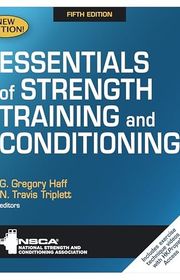
Essentials of Strength Training and Conditioning
For aspiring strength coaches who need a broad professional reference. Its coverage extends beyond lifting to testing, conditioning, and program design, though the textbook structure and exam oriented detail are substantial commitments for recreational readers.
What it's about
The NSCA reference covers exercise science, athlete assessment, resistance training technique, conditioning, and program design. Chapters connect physiological foundations with coaching practice, while addressing the wider responsibilities involved in planning and supervising strength and conditioning programs.

Practical Programming for Strength Training
For lifters whose progress has slowed and coaches planning beyond a beginner routine. It explains changing training demands more fully than Starting Strength, though it assumes familiarity with lifting and requires careful reading.
What it's about
Mark Rippetoe examines how strength-training plans should change as athletes move from novice to intermediate and advanced levels. Explanations of adaptation, recovery, and training stress support programming models designed around differing rates of progress and accumulated experience.

For men seeking a straightforward combination of lifting, diet, and physique goals. It connects gym sessions with everyday eating more directly than the technical references here, though its body transformation framing will not suit everyone.
What it's about
Michael Matthews presents a diet and exercise approach for men seeking muscle, strength, and fat loss. The book discusses resistance training, meal planning, recovery, supplements, and common fitness beliefs, alongside guidance for organizing a training routine.

Science and Development of Muscle Hypertrophy
For coaches and experienced lifters interested specifically in muscle growth. Its research focus gives more depth than general workout guides, though the technical discussion takes more effort than following a ready made training plan.
What it's about
Brad Schoenfeld examines the mechanisms behind muscle growth and their implications for training. This second edition connects physiological research with program design and nutrition, offering strength professionals a detailed account of the factors involved in developing muscular size.

Science and Practice of Strength Training
For coaches and advanced lifters who want to understand the principles behind strength programming. It goes deeper into adaptation and training variables than beginner manuals, though it is demanding and offers no simple universal routine.
What it's about
Vladimir Zatsiorsky, William Kraemer, and Andrew Fry connect strength-training science with practical program design. This third edition examines intensity, timing, exercises, recovery, and athlete monitoring, emphasizing how approaches vary with individual needs, goals, and training circumstances.

For women who want a structured introduction to heavier lifting alongside nutrition guidance. It challenges familiar fears about weights more directly than general manuals, though its gendered presentation and older framing can feel dated.
What it's about
Lou Schuler, Cassandra Forsythe, and Alwyn Cosgrove present a strength, conditioning, and nutrition program for women. The book challenges fears about heavy weights and encourages readers to rethink their approach to training and their expectations of their bodies.

The Strength Training Anatomy Workout
Starting Strength with Bodyweight Training and Minimal Equipment
For readers who want anatomical illustrations connected to practical workouts with limited equipment. It provides more programming direction than Strength Training Anatomy, though its broad selection offers less depth on advanced barbell or Olympic technique.
What it's about
Frederic Delavier and Michael Gundill connect anatomical illustrations with exercises and workout programs for home or gym use. They explain variations, progressions, and sequencing, alongside routines addressing strength, bodybuilding, and the conditioning demands of different sports.

For newcomers who want a defined bodybuilding schedule rather than designing their own routine. Its twelve week structure provides a clear starting point, though readers with established training experience will find the introductory coverage limited.
What it's about
Kyle Hunt introduces bodybuilding through a twelve week training program and illustrated exercise instructions. The guide includes lifting movements, warm ups, cool downs, nutrition principles, meal ideas, and preparation tips for readers beginning a structured routine.

For women who want strength training without making constant dieting the central goal. Its emphasis on confidence distinguishes it from physique manuals, though readers seeking dense exercise science may prefer a more technical reference.
What it's about
Nia Shanks presents an approach to exercise built around strength rather than constant dieting and dissatisfaction. The book combines practical gym guidance with discussions of nutrition, body image, and changing the mindset surrounding women's fitness.
Sources
- 1
5 Best Weightlifting Books - Nov. 2025 - BestReviews
bestreviews.com
- 2
9 Best Weightlifting Books of All Time
sportsfoundation.org
- 3
The Best Weightlifting Books for 2026 (Reviewed by a Coach)
powerliftingtechnique.com
- 4
100 Best Weightlifting Books of All Time (Updated for 2026)
shortform.com
- 5
Weightlifting Resources - Reading, Podcasts, Videos etc.
canterburystrength.com
- 6
Weightlifting Books
goodreads.com
- 7
Best Weightlifting Books: Essential Reading for Crushing the Gym
yourworkoutbook.com
- 8
Recommendations for weightlifting books ?
reddit.com







Edited by
Software engineer whose passion for tracking book recommendations from podcasts inspired the creation of MRB.
Lead investor at 3one4 Capital whose startup expertise and love for books helped shape MRB and its growth.
Comments
Spotted a missing book, a wrong order or a mistake? Tell us and we'll fix this page.
We're a reading guide, not the author or publisher, so we can't send books or pass on messages.