
25 Best Poker Books
The best poker books, ranked by how many expert sources recommend them, with choices for beginners, tournament players, live tells, math, and mental skills.
Our take
Poker books help most when they match the game you actually play. A fixed-limit hold'em manual, a single-table tournament guide, and a modern no-limit theory reference answer different questions. Before choosing, consider your betting structure, cash or tournament format, and whether your main difficulty is technical knowledge or applying it consistently.
The classics remain useful for learning how to reason about hands, but their examples reflect the opponents and strategies of their time. The Theory of Poker builds broad strategic understanding, while Harrington on Hold 'em teaches tournament decisions through worked situations. For a more mathematical approach, distinguish the accessible calculations in Essential Poker Math from the demanding analysis in The Mathematics of Poker.
Start with the area that currently confuses you most. Choose Essential Poker Math for basic calculations, Play Optimal Poker for an introduction to game theory, or The Mental Game of Poker when frustration repeatedly disrupts decisions you already understand.
25 books · 9 sources · Last updated
As an Amazon Associate, we earn from qualifying purchases (at no extra cost to you).
How to choose from this list
Skip to the full rankingIf poker calculations feel uncertain: Essential Poker Math → The Theory of Poker
If you want modern game theory: Play Optimal Poker → Applications of No-Limit Hold em → Modern Poker Theory
If you play tournaments: Harrington on Hold 'em → Every Hand Revealed → Moorman's Book of Poker
If you want to study live behavior: Caro's Book of Poker Tells → Reading Poker Tells
If tilt undermines your decisions: The Mental Game of Poker → Elements of Poker
If you want deeper mathematical study: The Mathematics of Poker
The 25 books, ranked
Ranked by how many expert sources name each book. Ties go to the book more people recommend.

The Mental Game of Poker
Proven Strategies For Improving Tilt Control, Confidence, Motivation, Coping with Variance, and More
For technically competent players who lose discipline when results turn against them. Tendler offers a structured way to investigate tilt and motivation, though progress requires honest practice rather than a quick mindset fix.
What it's about
Jared Tendler and Barry Carter examine psychological problems that can undermine poker performance. Their approach offers structured methods for understanding tilt, managing emotional reactions to variance, and addressing confidence, fear, and motivation during difficult stretches of play.

Applications of No-Limit Hold em
For intermediate no-limit players ready to think in ranges and frequencies. Janda provides a demanding theoretical foundation for balanced decisions, though the calculations and older examples reward slow study rather than casual reading.
What it's about
Matthew Janda explains how to approach no-limit hold’em through balanced hand ranges and bet sizes. The book develops theoretical foundations for decisions such as overbetting, check-raising, and defending ranges, then shows how those ideas can inform practical play.

For players who know the rules and want principles that connect different poker games. Sklansky makes deception and expected value intelligible, though many examples use formats beyond contemporary no-limit hold'em.
What it's about
David Sklansky develops strategic principles applicable across poker variants, introducing his Fundamental Theorem of Poker. Chapters examine deception, position, betting, implied odds, psychology, and game theory to explain how informed decisions differ from habitual play.

Doyle Brunson's Super System
For readers interested in poker's strategic history and several game variants. The specialist chapters explain the roots of aggressive play, though decades of changing games make it unsuitable as your only current manual.
What it's about
Doyle Brunson and fellow poker professionals present strategies for several major forms of poker, including hold’em, stud, draw, and lowball. The collection combines specialist chapters, practical decisions, and probability material with Brunson’s account of his own playing experience.

Harrington on Hold 'em
Expert Strategy for No Limit Tournaments, Vol. 1: Strategic Play
For tournament beginners who learn by working through hands. The structured explanations build decision-making habits, though its conservative examples come from an earlier era and need updating for modern opponents.
What it's about
Dan Harrington and Bill Robertie introduce strategic play in no-limit hold’em tournaments. The first volume examines styles, starting hands, position, odds, and betting decisions through worked situations that ask readers to consider a hand before reviewing the analysis.
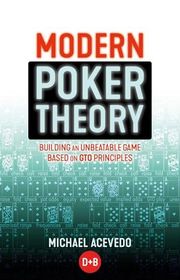
Modern Poker Theory
For experienced no-limit players ready to study game theory optimal strategy in depth. Acevedo connects mathematical concepts with detailed ranges, though its density makes it better as a study reference than a first poker book.
What it's about
Michael Acevedo develops a systematic approach to no-limit hold'em using game theory optimal principles. Explanations of poker mathematics, preflop ranges, and postflop decisions connect theoretical ideas with the analytical tools used to study the game.

Elements of Poker
For players whose biggest leaks involve focus, quitting, or emotional decisions. Angelo's short reflections connect poker habits with life away from the table, though they provide less systematic technical instruction.
What it's about
Tommy Angelo combines poker strategy with reflections on the habits and emotional demands of playing. Short discussions explore position, tilt, focus, and self-awareness, encouraging readers to examine both their decisions at the table and their overall approach to the game.

For beginners who hesitate over pot odds, equity, and expected value. Hardin breaks essential calculations into manageable steps, though readers already comfortable with those fundamentals will want a more advanced treatment.
What it's about
Alton Hardin introduces the mathematics used in no-limit hold’em decisions. A step-by-step approach covers probabilities, pot and implied odds, equity, expected value, and combinations, showing how these concepts apply to calls, folds, bets, and bluffs.

Every Hand Revealed
For tournament players who learn best from a continuous run of real decisions. Hansen exposes his reasoning as conditions change, though one successful event cannot establish that every unconventional play was sound.
What it's about
Gus Hansen analyzes the hands he played while winning the 2007 Aussie Millions tournament. His detailed account explains the thinking behind aggressive decisions, adjustments to opponents, and responses to changing circumstances over the course of the event.

For tournament players moving beyond cautious survival toward informed aggression. Its treatment of stack pressure and prize structures broadens your options, though older numerical recommendations need context before use in current games.
What it's about
Lee Nelson and his coauthors combine poker mathematics with tournament experience to examine aggressive no-limit hold’em strategies. The guide considers accumulating chips, surviving changing stack situations, and adjusting play near the prize positions in tournaments and sit-and-go events.

For newer no-limit players who want clear strategic explanations in a compact format. Gordon makes core decisions approachable, though its older rules of thumb need supplementing as you encounter tougher opposition.
What it's about
Phil Gordon shares lessons from his experience playing no-limit Texas hold’em. Conversational explanations and diagrams explore the decisions and thought processes behind the game, offering a structured way to study strategy and improve understanding at the table.
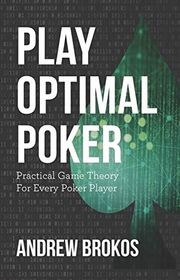
Play Optimal Poker
For players curious about game theory who find range tables intimidating. Brokos uses simplified games to build strategic intuition, though readers seeking immediate hand charts will need a more directly practical companion.
What it's about
Andrew Brokos introduces poker game theory through simplified games, questions, and worked examples. Topics including equilibrium, bluffing, and exploiting opponents build toward an understanding of how theoretical principles inform decisions at the poker table.

Super Systems 2
For readers wanting instruction across several poker variants from specialist contributors. The broader game coverage distinguishes it from a no-limit-only manual, though its strategic examples reflect an earlier professional playing environment.
What it's about
Doyle Brunson assembles another collection of specialist poker instruction, with new contributors, games, and strategies. Chapters address several poker variants alongside broader discussions of professional play and psychology, extending the scope of the original Super System.
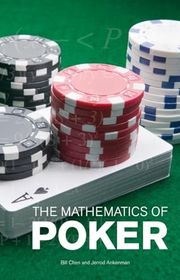
The Mathematics of Poker
For mathematically inclined players who want the reasoning beneath poker strategy. Chen and Ankenman's models develop rigorous thinking about uncertainty and equilibrium, though the abstract analysis demands substantially more effort than a practical beginner guide.
What it's about
Bill Chen and Jerrod Ankenman apply probability and game theory to poker. Their mathematical models examine decisions under uncertainty, optimal strategies, and the exploitation of opponents, using simplified games to investigate principles behind more complex play.

For experienced fixed-limit hold'em players seeking deeper tactical analysis. Its detailed discussion of deception and short-handed situations rewards careful study, though the title should not be mistaken for a modern no-limit guide.
What it's about
David Sklansky and Mason Malmuth examine advanced Texas hold ’em strategy, from starting hands to reading opponents. This expanded edition covers loose and short-handed games alongside semibluffing, inducing bluffs, drawing decisions, and the psychological dimensions of play.
Also recommended by
1 person Sam Altman recommended this book
Sam Altman
One of Sam Altman's answers to "What are some of the best books you recommend for a young startup founder?"
Sam Altman's recommendation of this book

Ace on the River
For readers considering the demands of serious poker beyond hand strategy. Greenstein combines professional habits with decision challenges, though the illustrated, personal format is less direct than a structured course.
What it's about
Barry Greenstein offers a view of professional poker that extends beyond individual hands. Alongside play-by-play challenges, he discusses psychology, money management, personal relationships, and the demands of a competitive life at the tables.

For live players beginning to study opponents' physical behavior. Caro's photographs make possible tells memorable, though individual habits and context matter more than treating any gesture as a dependable signal.
What it's about
Mike Caro examines physical reactions and deliberate behavior that may reveal information about an opponent’s cards. Photographs and hand examples illustrate tells such as eye contact, trembling hands, and exaggerated actions, with explanations of their possible meanings.

Moorman's Book of Poker
Improve your poker game with Moorman1, the most successful online poker tournament player in history
For tournament players who benefit from comparing their reasoning with a coach's. The paired hand discussions reveal missed considerations, though older online situations need translating to the opponents and structures you face.
What it's about
Chris Moorman reviews eighty tournament hands played by coauthor Byron Jacobs, comparing their decisions in a coaching format. The commentary exposes differences in their reasoning and shows how a mid-stakes player can develop a more sophisticated approach.

Jonathan Little's Excelling at No-Limit Hold'em
Leading poker experts discuss how to study, play and master NLHE
For intermediate no-limit players who want several expert perspectives in one collection. The contributors connect technical study with tournament situations and psychology, though the changing voices make the learning path less uniform.
What it's about
Jonathan Little brings together seventeen poker experts to discuss no-limit hold’em from several perspectives. The collection covers fundamentals, tournament situations, range analysis, betting, short stacks, tells, and the psychological skills involved in studying and playing the game.

For players who know a baseline strategy but struggle to adjust to particular opponents. Miller makes exploitation concrete through recognizable tendencies, though reliable adjustments still depend on observing enough meaningful hands.
What it's about
Ed Miller explains how to move beyond a fixed poker strategy by profiling opponents and responding to their habits. He examines tight, aggressive, and loose players, showing how their weaknesses can guide adjustments to betting and hand selection.

Reading Poker Tells
For live players who want to interpret behavior within a hand's context. Elwood provides a more organized observational framework than isolated tell spotting, though behavioral clues remain uncertain and secondary to sound strategy.
What it's about
Zachary Elwood presents a system for interpreting poker players’ physical and verbal behavior in context. The book covers common tells, timing, deception, and ways to avoid revealing information, with practical categories for observing opponents during different stages of a hand.

Sit 'n Go Strategy
For players concentrating on single-table tournaments rather than large fields or cash games. Moshman's stage-by-stage approach clarifies bubble and short-stack decisions, though its older examples require adjustment for current structures and opponents.
What it's about
Collin Moshman examines strategy for single-table no-limit hold’em tournaments. Topics include changing blind levels, short-stack decisions, bubble play, heads-up situations, and the Independent Chip Model, along with psychological considerations and worked hand examples.

Strategies for Beating Small Stakes Poker Tournaments
For small-stakes tournament players seeking a brief guide to exploiting common mistakes. Little keeps the advice focused on practical opponent adjustments, though the compact treatment leaves limited room for deeper mathematical study.
What it's about
Jonathan Little focuses on adapting tournament strategy to the mistakes common among small-stakes players. This concise guide explains how to assess specific opponents, move beyond habitual play, and develop a plan that responds to their weaknesses.

Winning Low-Limit Hold'em
For beginners playing low-stakes fixed-limit hold'em, especially loose games with several callers. Jones offers a practical foundation for that environment, though the betting structure differs substantially from the no-limit games many readers expect.
What it's about
Lee Jones offers an introduction to Texas hold’em strategy for lower-limit games. The guide focuses on practical play in this setting, helping readers develop a foundation for assessing hands and making decisions against the opponents found at low-stakes tables.

For tournament players who learn by comparing how several experts approach actual hands. The contrasting analyses build decision awareness, though readers seeking a single systematic framework may prefer a more structured textbook.
What it's about
Eric Lynch, Jon Turner, and Jon Van Fleet explain tournament decisions through hands drawn from actual play. The first volume compares their approaches to aggression, stack sizes, continuation bets, and bluffs while showing how they reason through changing situations.
Sources
- 1
The 10 Most Important Poker Strategy Books Ever Written
pokernews.com
- 2
The 30 Best Poker Books To Read and Learn Strategies
pokerlistings.com
- 3
Best Poker Books
pokersites.org
- 4
Best Poker Books for Cash Game Players
sharkling.io
- 5
The 10 Most Popular and Best-Selling Poker Books of All Time
upswingpoker.com
- 6
Best Poker Books To Master the Game
888poker.com
- 7
Poker Books
goodreads.com
- 8
10+1 Best Poker Books To Help You Win
mypokercoaching.com
- 9
Books? Do people still read them?
reddit.com






Edited by
Software engineer whose passion for tracking book recommendations from podcasts inspired the creation of MRB.
Lead investor at 3one4 Capital whose startup expertise and love for books helped shape MRB and its growth.
Comments
Spotted a missing book, a wrong order or a mistake? Tell us and we'll fix this page.
We're a reading guide, not the author or publisher, so we can't send books or pass on messages.