
19 Best Storytelling Books
The best storytelling books, ranked by how many expert sources recommend each one, with notes to help you choose personal stories, fiction, or business talks.
Our take
Storytelling can mean shaping a true experience for an audience, developing a fictional character, or making a business idea easier to understand. Those tasks overlap, but they need different tools. These books range from practical exercises and detailed narrative frameworks to accounts of why stories hold attention and influence what people remember.
For personal stories told aloud, Storyworthy, Long Story Short, and How to Tell a Story help turn experience into something an audience can follow. Fiction writers can work with The Anatomy of Story, Wired for Story, or Story Genius. Bird by Bird addresses the everyday difficulty of writing, while The Storytelling Animal takes a broader look at narrative’s place in human life. For presentations and organizational communication, Resonate, Made to Stick, and Stories That Stick offer more directly relevant approaches.
Start with the medium you actually want to use, then develop one short story before taking on a larger framework.
19 books · 10 sources · Last updated
As an Amazon Associate, we earn from qualifying purchases (at no extra cost to you).
How to choose from this list
Skip to the full rankingIf you want to tell personal stories aloud: Storyworthy → Long Story Short
If you want a group storytelling approach: How to Tell a Story
If you're developing fiction: Story Genius → The Anatomy of Story
If you struggle to begin writing: Bird by Bird
If you want business stories and presentations: Stories That Stick → Resonate
If you want to understand why stories work: The Storytelling Animal → The Science of Storytelling
The 19 books, ranked
Ranked by how many expert sources name each book. Ties go to the book more people recommend.

Storyworthy
Engage, Teach, Persuade, and Change Your Life through the Power of Storytelling
For beginners who want to find and shape stories from everyday life. Its repeatable exercises make personal storytelling concrete, though the focus on brief moments of change reflects a particular style of live performance.
What it's about
Matthew Dicks explains how to find stories in everyday experiences and shape them for an audience. Drawing on his storytelling practice, he offers techniques for constructing, revising, and delivering personal narratives in conversation, teaching, presentations, and public performance.
Also recommended by
1 person Ali Abdaal recommended this book
Ali Abdaal
"One of the most engaging books I’ve ever read." - Ali Abdaal
Ali Abdaal's recommendation of this book

For fiction writers and screenwriters ready to develop a story in depth. Its detailed attention to character, theme, and structure supports revision, though the extensive framework can overwhelm beginners who need a simpler first exercise.
What it's about
John Truby presents a twenty-two-step approach to developing narratives for novels, screenplays, and other forms. Examples from literature and film illustrate connections among premise, character, plot, theme, moral development, and endings within a cohesive story.

For writers who struggle with perfectionism and getting words onto the page. Its candid reflections and manageable assignments make it a supportive companion, though it is less systematic about narrative structure than the craft manuals here.
What it's about
A modern classic on writing and life, filled with practical advice on how to tackle large tasks by breaking them down into small, manageable pieces. Lamott shares stories from her own creative struggles, offering encouragement to anyone who battles perfectionism or writer's block.
Also recommended by
10 people Tim Ferriss recommended this book
Tim Ferriss
"Fantastic book." - Tim Ferriss
Tim Ferriss's recommendation of this book  Daniel Pink recommended this book
Daniel Pink
"One of the greatest things ever." - Daniel Pink
Daniel Pink's recommendation of this book  Susan Cain recommended this book
Susan Cain
"I love [this book]. Such a good book." - Susan Cain
Susan Cain's recommendation of this book  Ryan Holiday recommended this book
Ryan Holiday
"Ostensibly about the art of writing, but really it too is about life and how to tackle the problems, temptations and opportunities life throws at us." - Ryan Holiday
Ryan Holiday's recommendation of this book  Matt Mullenweg recommended this book
Matt Mullenweg
"I love reading about writers and the process of writing." - Matt Mullenweg
Matt Mullenweg's recommendation of this book  Ramit Sethi recommended this book
Ramit Sethi
Ramit Sethi mentioned this book on "The Tim Ferriss Show" podcast.
Ramit Sethi's recommendation of this book +4
More recommendations
- Brian Koppelman
"Great." - Brian Koppelman
- Mark Bittman
"A really great writing book and it’s a good read." - Mark Bittman
- Mike Birbiglia
"I really like [this book]." - Mike Birbiglia
- Matt Haig
"My go-to gift or recommendation for anyone interested in writing, though it is as much a treatise on life as it is a creative-writing primer." - Matt Haig
- Brian Koppelman

For people who need an idea to be understood and remembered. Its practical message framework transfers well to teaching and presentations, though it addresses communication more broadly than developing characters, scenes, or a complete narrative.
What it's about
Chip and Dan Heath explore why some ideas remain memorable while others disappear. Through stories and research, they identify ways to make messages more understandable and compelling, examining how communication can influence what people remember.
Also recommended by
5 people Brian Armstrong recommended this book
Brian Armstrong
"How to make your message memorable so it will spread." - Brian Armstrong
Brian Armstrong's recommendation of this book  Ev Williams recommended this book
Ev Williams
On the "books read" section of Ev Williams' GoodReads profile.
Ev Williams's recommendation of this book  Andrew Wilkinson recommended this book
Andrew Wilkinson
"Our marketing bible." - Andrew Wilkinson
Andrew Wilkinson's recommendation of this book  Changpeng Zhao recommended this book
Changpeng Zhao
"Informs a lot of our public outreach in terms of making our services more essential for our users." - Changpeng Zhao
Changpeng Zhao's recommendation of this book  Sahil Lavingia recommended this book
Sahil Lavingia
Sahil Lavingia recommended this book on Notion.
Sahil Lavingia's recommendation of this book
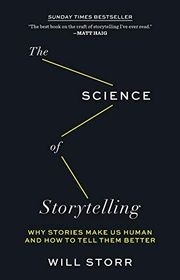
The Science of Storytelling
For writers interested in the relationship between character, perception, and narrative tension. Its mix of research and literary examples offers a useful conceptual bridge, though its psychological explanations do not remove the need for experimentation and revision.
What it's about
Will Storr connects psychological research with the craft of narrative. Examples from literature, film, and television explore perception, character flaws, change, and dramatic questions, offering writers ways to think about why an audience follows a story.

For people who want to turn their own experiences into spoken stories. Its exercises connect content, structure, and delivery in an approachable way, though the performance emphasis needs adaptation for fiction or long written narratives.
What it's about
Margot Leitman breaks personal storytelling into content, structure, emotional effect, and delivery. Anecdotes and exercises help readers identify material from their lives and shape it for speeches, wedding toasts, written narratives, or informal storytelling performances.

Wired for Story
The Writer's Guide to Using Brain Science to Hook Readers from the Very First Sentence
For writers who want to connect narrative choices with reader curiosity and emotion. Its examples focus attention on why events matter to a character, though the brain-science framing should not be mistaken for a universal creative formula.
What it's about
Lisa Cron connects storytelling techniques with her account of how readers process narrative. Examples from novels and screenplays examine curiosity, emotional engagement, and the desire to know what happens next, offering practical applications for writers.

For readers curious about why humans respond to stories at all. Its broad psychological and evolutionary perspective provides context beyond writing advice, though its explanatory theories are less useful than exercises when you need to finish a draft.
What it's about
Jonathan Gottschall examines why humans tell stories, drawing on psychology, neuroscience, and evolutionary research. He considers fiction, dreams, advertising, and conspiracy narratives to explore how storytelling shapes social understanding, beliefs, moral judgments, and people's accounts of themselves.
Also recommended by
2 people Bill Gurley recommended this book
Bill Gurley
"Nice compliment to Sapiens." - Bill Gurley
Bill Gurley's recommendation of this book  Michael Mauboussin recommended this book
Michael Mauboussin
"Great read for anyone who communicates for a living." - Michael Mauboussin
Michael Mauboussin's recommendation of this book

For presenters who need an audience-centered structure for a talk. Its visual analysis makes narrative movement concrete beyond isolated anecdotes, though the polished speech examples require adaptation for informal storytelling and ordinary workplace meetings.
What it's about
Nancy Duarte explains how storytelling can structure persuasive presentations around an audience's needs and aspirations. Drawing lessons from films and notable speeches, she explores conflict, resolution, content development, and the presenter's role in helping listeners consider a different future.
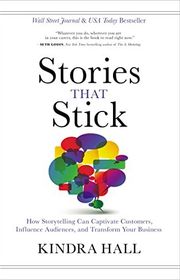
Stories That Stick
For business communicators who need usable stories about customers, purpose, and value. Its focused categories help translate experience into an organizational message, though the commercial emphasis makes it less suitable for literary or open-ended personal storytelling.
What it's about
Kindra Hall explains how businesses can find and tell stories that communicate value, purpose, and customer experience. Examples and practical guidance explore selecting material, shaping a narrative, and using stories in marketing, sales, leadership, and organizational communication.

For teachers, speakers, and parents seeking an introduction to telling stories aloud. Its attention to preparation and delivery makes it practical, though the biblical and teaching examples may feel less relevant to business or fiction writers.
What it's about
John Walsh draws on his journey from stuttering to public storytelling to explain preparing and presenting compelling narratives. The guide covers gestures, structure, and endings, with applications ranging from children's bedtime stories to teaching biblical material.

For marketers and communicators interested in why people share messages. Its research-based examples connect stories with social transmission, though it spends more time on spread and persuasion than on the craft of building a narrative.
What it's about
Jonah Berger investigates why certain products, ideas, and stories spread through word of mouth. Research and examples explain how social motives, emotions, everyday reminders, and other factors influence what people share and what others choose to pass along.
Also recommended by
1 person- Changpeng Zhao recommended this book
Changpeng Zhao
"A must-read for all product designers and marketers, and a lot of people in our team have taken the lessons in this book to heart." - Changpeng Zhao
Changpeng Zhao's recommendation of this book
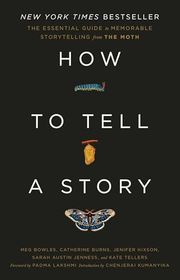
How to Tell a Story
For people preparing a true personal story for a live audience. Its collective experience and varied examples complement a single teacher’s method, though the focus on spoken performance requires adaptation for written fiction or business analysis.
What it's about
Storytelling directors from The Moth explain how to find, develop, and share true personal stories. Examples from performers and practical guidance cover choosing material, recognizing stakes, organizing a narrative, and connecting with an audience through spoken delivery.

For novelists who want character motivation to drive a draft from the beginning. Its exercises connect backstory with present choices more systematically than general inspiration books, though extensive preparation may frustrate writers who discover stories by drafting.
What it's about
Lisa Cron presents a scene-by-scene method for developing a novel around a protagonist's internal struggle. Exercises guide writers from an initial idea to a detailed blueprint, connecting events, motivations, and emotional stakes before drafting the manuscript.
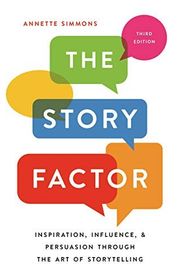
The Story Factor
For leaders and facilitators who want stories to support trust and understanding. Its examples connect storytelling with relationships rather than presentation polish alone, though the broad range of anecdotes is less structured than a writing workbook.
What it's about
Annette Simmons examines how stories can communicate identity, values, and purpose in organizations and everyday relationships. Examples from business, public life, and traditional tales illustrate ways to build trust and invite people to consider another perspective.

The Storyteller's Secret
From TED Speakers to Business Legends, Why Some Ideas Catch On and Others Don't
For business speakers seeking examples of stories used to communicate ideas. Its profiles make techniques easier to recognize in practice, though the success-focused anecdotes provide less rigorous guidance than a sustained course in narrative craft.
What it's about
Carmine Gallo explores how storytelling helps people communicate ideas and create emotional connections. Examples from entrepreneurs, business leaders, brands, and TED speakers illustrate techniques for framing experiences in ways that can inform an audience and inspire change.

For leaders who need to clarify the purpose behind their message. Its central model offers a useful starting point for organizational communication, though it is a leadership argument rather than instruction in constructing scenes or personal stories.
What it's about
Start with Why introduces the Golden Circle, Simon Sinek's simple model for leading with purpose rather than manipulation. Drawing on stories of companies and leaders, he shows how clearly communicating why you do something can inspire loyalty and lasting success.
Also recommended by
9 people Richard Branson recommended this book
Richard Branson
Richard Branson recommended this book on his "70 must-read books" blog post.
Richard Branson's recommendation of this book  Robert Rodriguez recommended this book
Robert Rodriguez
"I realized better what I was doing when I read [this book], and I gave it to people to show them how to clarify what they’re doing right and what they’re doing wrong." - Robert Rodriguez
Robert Rodriguez's recommendation of this book  Tony Hsieh recommended this book
Tony Hsieh
One of 4 books Tony Hsieh recommended in Inc.com
Tony Hsieh's recommendation of this book  Julie Rice recommended this book
Julie Rice
"So important, because people understanding why you do something, not what you are doing, is really what makes or breaks a brand." - Julie Rice
Julie Rice's recommendation of this book  Kathryn Minshew recommended this book
Kathryn Minshew
Most Recommended Books reached out to Kathryn Minshew directly.
Kathryn Minshew's recommendation of this book  Tom Bilyeu recommended this book
Tom Bilyeu
Tom Bilyeu recommended this book on his website.
Tom Bilyeu's recommendation of this book +3
More recommendations
- Jim Kwik
"Explains how great leaders and organizations use this superpower of motivation to achieve success." - Jim Kwik
- Michael Hyatt
Michael Hyatt recommended this book on his website.
- Patrick Bet-David
Patrick Bet-David recommended this book on his website.
- Jim Kwik

For speakers who want concrete examples of engaging an audience. Its presentation principles are accessible and easy to revisit, though the TED setting places different demands on a story from conversation, fiction, or a long reported piece.
What it's about
Carmine Gallo analyzes TED presentations and interviews speakers and researchers to identify nine principles of effective public speaking. He turns these observations into a practical method for communicating ideas through presentations designed to engage and persuade an audience.
Also recommended by
1 person Michael Hyatt recommended this book
Michael Hyatt
Michael Hyatt recommended this book on his website.
Michael Hyatt's recommendation of this book

For readers interested in Campbell’s life and ideas about myth. Its conversations provide personal context for his influential perspective, though it is a reflective portrait rather than the step-by-step story structure guide its title might suggest.
What it's about
Joseph Campbell reflects on his life and work in conversations with artists, thinkers, and others he inspired. Their exchanges explore the functions of myth, the artist's role, ritual, love, and Campbell's own lifelong study of mythological traditions.
Sources
- 1
Storytelling Books
chicago-storytelling.com
- 2
100 Best Storytelling Books of All Time (Updated for 2026)
shortform.com
- 3
Storytelling Books
goodreads.com
- 4
The Nieman Storyboard guide to books on storytelling
niemanstoryboard.org
- 5
18 Best Books on Storytelling [To Perfect Your Craft]
upjourney.com
- 6
Any book to improve story telling?
reddit.com
- 7
Where can I learn about storytelling?
reddit.com
- 8
10 Best Books for Learning the Art of Business Storytelling
storybistro.com
- 9
Best Books on the Art of Storytelling
penguinrandomhouse.com
- 10
Best Storytelling Books for Marketers: The Ones Actually Worth Buying
filipkonecny.com




Edited by
Software engineer whose passion for tracking book recommendations from podcasts inspired the creation of MRB.
Lead investor at 3one4 Capital whose startup expertise and love for books helped shape MRB and its growth.
Comments
Did we miss something? Have feedback?
Help us improve this page by sharing your thoughts