
22 Best Communication Books
The best communication books, ranked by how many expert sources recommend each one, with notes on who each book suits and where to start for your needs.
Our take
Communicating well involves more than finding the right words. You may need to listen without preparing a rebuttal, explain a complicated idea, ask a better question, or say no without leaving your position unclear. The right book depends on which of those situations causes trouble. Advice for a public presentation won't necessarily help when a colleague feels criticized or a family conversation becomes defensive.
The books here offer several routes. How To Win Friends and Influence People focuses on everyday relationships, while Talk examines the choices that make conversation work. Crucial Conversations and Difficult Conversations address disagreement and emotional pressure. Thanks for the Feedback turns the attention toward receiving criticism, and Resonate helps presenters structure a message around an audience. Networking, marketing, and public relations titles serve more specific professional goals. Start with Talk for ordinary exchanges, or choose Difficult Conversations if there is already a discussion you're avoiding.
22 books · 8 sources · Last updated
As an Amazon Associate, we earn from qualifying purchases (at no extra cost to you).
How to choose from this list
Skip to the full rankingIf you want better everyday conversations: Talk → Supercommunicators
If you're avoiding a difficult discussion: Difficult Conversations → Crucial Conversations
If you want to listen through conflict: Nonviolent Communication → Just Listen
If criticism is hard to hear: Thanks for the Feedback
If you're preparing a presentation: Resonate → Talk Like TED
If you need to negotiate: Never Split the Difference
The 22 books, ranked
Ranked by how many expert sources name each book. Ties go to the book more people recommend.

For readers facing disagreements where emotions and consequences are both high. Its emphasis on conversational safety provides more structure than a collection of social tips, though applying the framework naturally takes practice beyond reading the examples.
What it's about
Kerry Patterson and his coauthors offer tools for discussions where stakes are high, opinions differ, and emotions intensify. Examples explain how to create safety, listen through conflict, express disagreement, and turn difficult conversations into agreed action.
Also recommended by
3 people Max Levchin recommended this book
Max Levchin
"A now-venerable guide to having tough conversations in a way that engages the debaters." - Max Levchin
Max Levchin's recommendation of this book  Stewart Butterfield recommended this book
Stewart Butterfield
"Most useful [book] I've ever read on either leadership or management [technique]." - Stewart Butterfield
Stewart Butterfield's recommendation of this book  Patrick Bet-David recommended this book
Patrick Bet-David
Patrick Bet-David recommended this book on his website.
Patrick Bet-David's recommendation of this book

How To Win Friends and Influence People
For readers who want everyday habits for showing interest and building cooperation. Its concrete examples make it an accessible starting point, though the older anecdotes and emphasis on influence need adapting to an equal, two-way conversation.
What it's about
Carnegie presents practical guidance for building relationships, communicating effectively, and influencing others. Stories and principles explore social confidence, leadership, and cooperation, offering approaches readers can apply to interactions in their personal lives and at work.
Also recommended by
18 people Warren Buffett recommended this book
Warren Buffett
"In my office, you will not see the degree I have from the University of Nebraska, or the master’s degree I have from Columbia University, but you’ll see the certificate I got from the Dale Carnegie course." - Warren Buffett
Warren Buffett's recommendation of this book  Scott Adams recommended this book
Scott Adams
One of the books on Scott Adams' "Persuasion Reading List."
Scott Adams's recommendation of this book  Dave Ramsey recommended this book
Dave Ramsey
Recommended on Dave Ramsey's website.
Dave Ramsey's recommendation of this book  Paul Graham recommended this book
Paul Graham
"The one book we encourage startup founders to read. [...] It's critically important for anyone in business." - Paul Graham
Paul Graham's recommendation of this book  Derek Sivers recommended this book
Derek Sivers
Derek Sivers mentioned this book on "The Tim Ferriss Show" podcast.
Derek Sivers's recommendation of this book  Dustin Moskovitz recommended this book
Dustin Moskovitz
"Seek to be understood." - Dustin Moskovitz
Dustin Moskovitz's recommendation of this book +12
More recommendations
- Ken Block
"One of the first books that really helped me achieve my management style and what’s helped me really be successful." - Ken Block
- DJ Vlad
Most Recommended Books reached out to DJ Vlad directly.
- Strauss Zelnick
"Archaic references and overweening title to the side, it’s actually a great guide to leadership and salesmanship." - Strauss Zelnick
- Daymond John
"I love all the Dale Carnegie books." - Daymond John
- Shay Carl
"A staple that I have listened to three or four times." - Shay Carl
- Tim Draper
"[One of the books] that are recommended or required at Draper University." - Tim Draper
- Sahil Lavingia
Sahil Lavingia recommended this book on Notion.
- Barbara Corcoran
"A must read for anyone in business." - Barbara Corcoran
- Alex Hormozi
Alex Hormozi recommended this book on Instagram.
- Michael Hyatt
Michael Hyatt recommended this book on his website.
- Ben Greenfield
Most Recommended Books reached out to Ben Greenfield directly.
- Patrick Bet-David
Patrick Bet-David recommended this book on his website.
- Ken Block

For readers who struggle to reach someone who is angry, defensive, or withdrawn. Its emphasis on helping people feel understood offers a useful starting point, though the promise of reaching anyone is broader than real conversations allow.
What it's about
Mark Goulston explores how to reach people who resist, withdraw, or react with anger. Drawing on his psychiatric background, he offers listening and persuasion techniques that begin with making another person feel understood.

Nonviolent Communication
A Language of Life: Life-Changing Tools for Healthy Relationships
For readers who want to express needs and hear criticism without escalating a conflict. Its distinction between observations, feelings, needs, and requests provides a clear practice framework, though the wording can sound formal until adapted naturally.
What it's about
Marshall Rosenberg introduces his Nonviolent Communication approach through stories, examples, and role plays. He presents communication practices intended to replace criticism and blame with honest expression and compassionate listening in relationships and conflicts.
Also recommended by
4 people Esther Perel recommended this book
Esther Perel
"I think that this book is a classic for anyone who is thinking relationships." - Esther Perel
Esther Perel's recommendation of this book  Neil Strauss recommended this book
Neil Strauss
"The central idea is that, unbeknownst to us, there’s a lot of violence in the way we communicate with others—and with ourselves." - Neil Strauss
Neil Strauss's recommendation of this book  Satya Nadella recommended this book
Satya Nadella
"When CEO Satya Nadella took over Microsoft, he started defusing its toxic culture by handing each of his execs [this book]." - Business Insider
Satya Nadella's recommendation of this book - Dustin Moskovitz recommended this book
Dustin Moskovitz
"Seek first to understand." - Dustin Moskovitz
Dustin Moskovitz's recommendation of this book

For readers who want small techniques they can try in social situations. Its range of introductions, questions, and rapport tips is easy to sample, though treating conversation as a checklist of tricks can feel artificial.
What it's about
Leil Lowndes offers 92 techniques for navigating social and professional conversations. Her advice addresses introductions, small talk, listening, body language, and rapport, with examples intended to help readers communicate more confidently and build relationships.
Also recommended by
1 person- Derek Sivers recommended this book
Derek Sivers
"Wonderful considerate book about conversational people skills." - Derek Sivers
Derek Sivers's recommendation of this book

For readers whose main goal is building professional relationships over time. It connects generosity with maintaining a network more explicitly than the conversation guides, though the constant social activity can feel demanding or overly career-focused.
What it's about
Keith Ferrazzi and Tahl Raz outline an approach to professional relationships based on generosity and regular contact. Personal stories and practical advice cover making introductions, maintaining connections, and using digital tools to support mutually beneficial networks.
Also recommended by
1 person Ramit Sethi recommended this book
Ramit Sethi
"All about networking the right way." - Ramit Sethi
Ramit Sethi's recommendation of this book

For readers preparing to discuss a disagreement that affects their identity or relationships. It examines feelings and conflicting interpretations more deeply than social-skills manuals, though the reflective approach takes time and doesn't supply a quick script.
What it's about
Douglas Stone, Bruce Patton, and Sheila Heen offer a method for approaching emotionally charged conversations. Examples explain how to prepare, reduce defensiveness, understand differing perspectives, and keep difficult discussions constructive.

For presenters who need to organize an argument around an audience rather than a pile of slides. Its story structure offers more help with content than delivery tips alone, though adapting it to short technical updates takes judgment.
What it's about
Nancy Duarte explains how storytelling can structure persuasive presentations around an audience's needs and aspirations. Drawing lessons from films and notable speeches, she explores conflict, resolution, content development, and the presenter's role in helping listeners consider a different future.
Talk
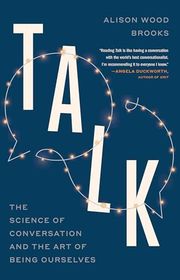
For readers who want to make ordinary conversations more engaging and responsive. Its attention to questions, topics, humor, and kindness gives everyday talk a practical framework, though improvement depends on trying the ideas with other people.
What it's about
Alison Wood Brooks examines how people choose topics, ask questions, use humor, and show kindness in conversation. Drawing on research and everyday encounters, she explains how small choices can affect connection and the quality of an exchange.

For readers who need to negotiate while keeping the other person talking. Its listening tactics and carefully framed questions are concrete, though techniques drawn from adversarial negotiations need care when used in ongoing personal relationships.
What it's about
Chris Voss shares negotiation principles developed during his career handling hostage and kidnapping cases for the FBI. With stories from that work, he explains how understanding emotions and responses can shape negotiations over salaries, purchases and personal decisions.
Also recommended by
2 people Craig Groeschel recommended this book
Craig Groeschel
"One of my favorite books I’ve read over the past couple of years." - Craig Groeschel
Craig Groeschel's recommendation of this book  Pat Flynn recommended this book
Pat Flynn
"An impactful book in my life and business." - Pat Flynn
Pat Flynn's recommendation of this book

For readers preparing a public presentation who want lessons drawn from successful talks. Its focus on stories and delivery offers more stage guidance than the listening books, though a TED-style presentation isn't appropriate for every audience.
What it's about
Carmine Gallo analyzes TED presentations and interviews speakers and researchers to identify nine principles of effective public speaking. He turns these observations into a practical method for communicating ideas through presentations designed to engage and persuade an audience.
Also recommended by
1 person Michael Hyatt recommended this book
Michael Hyatt
Michael Hyatt recommended this book on his website.
Michael Hyatt's recommendation of this book

For readers who want better business conversations by asking more useful questions. Its examples make curiosity more actionable than general advice to listen, though the sales and client-development setting narrows its relevance to other relationships.
What it's about
Andrew Sobel and Jerold Panas examine how thoughtful questions can deepen relationships and open business opportunities. Through accounts of consequential conversations, they show how inquiry can clarify problems, uncover priorities, and encourage more meaningful dialogue.
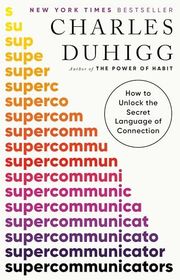
For readers who struggle to understand why a conversation misses its mark. Its distinction among practical, emotional, and identity-related exchanges offers a useful diagnostic lens, though the case-study format leaves less space for sustained exercises.
What it's about
Duhigg explores why some conversations create understanding while others fail, distinguishing practical, emotional and social exchanges. Stories from workplaces, personal relationships and negotiation illustrate how recognizing these differences can help people listen, express themselves and form stronger connections.

For readers who find criticism difficult to hear or use. Its focus on the receiver's reactions complements books about giving feedback, though it takes sustained reflection and cannot make every piece of advice fair or useful.
What it's about
Douglas Stone and Sheila Heen examine why receiving feedback can provoke resistance even when people want to learn. Practical frameworks help readers understand their reactions and make useful sense of criticism, evaluations, and unsolicited advice.

The Definitive Book of Body Language
The Hidden Meaning Behind People's Gestures and Expressions
For readers curious about posture, gestures, and their own nonverbal habits. It draws attention to signals that word-focused books overlook, though gestures depend on context and shouldn't be treated as reliable proof of another person's intentions.
What it's about
Barbara and Allan Pease present their interpretations of gestures, expressions and posture in everyday encounters. Their guide discusses handshakes, smiles, attraction and other nonverbal signals, offering techniques intended to improve communication and awareness of one's own behavior.

For readers who need to state limits and clarify what they are responsible for. It addresses saying no more directly than general rapport books, though the Christian framework is central and may not fit every reader.
What it's about
Henry Cloud and John Townsend explain personal limits through a Christian framework. They explore how to define responsibility, communicate needs, and say no in relationships with family, friends, coworkers, and oneself without abandoning care for others.
Also recommended by
2 people- Dave Ramsey recommended this book
Dave Ramsey
Recommended on Dave Ramsey's website.
Dave Ramsey's recommendation of this book  Greg McKeown recommended this book
Greg McKeown
"I really like [this book]." - Greg McKeown
Greg McKeown's recommendation of this book

All Marketers are Liars
For readers communicating a product or organization to an audience. Its focus on stories and existing beliefs offers a marketing perspective missing from interpersonal guides, though it won't teach the mechanics of a difficult personal conversation.
What it's about
Seth Godin explores how stories shape consumers' perceptions and buying decisions. He argues that effective marketing connects with an audience's existing worldview, while examining the difference between authentic storytelling and deceptive claims that undermine trust.
Also recommended by
1 person Joe Gebbia recommended this book
Joe Gebbia
"I remember something that [the author] says in there which I never forgot, which is to make something people want to talk about." - Joe Gebbia
Joe Gebbia's recommendation of this book

4 Essential Keys to Effective Communication in Love, Life, Work--Anywhere!
Including the "12-Day Communication Challenge!"
For readers who want a simple introduction with exercises they can practice regularly. Its short framework makes empathy and clear expression approachable, though it offers less depth on difficult conflicts than the larger conversation guides.
What it's about
Bento Leal presents a communication framework built around empathy, attentive listening, and clear expression. Exercises and a twelve-day challenge help readers examine habits that block understanding and practice more constructive conversations at home and work.

Bringing Out the Best in People
How to Apply the Astonishing Power of Positive Reinforcement
For managers who want to understand how their responses shape workplace behavior. Its positive-reinforcement focus distinguishes it from books about conversational wording, though it is primarily a performance-management guide rather than a general communication course.
What it's about
Aubrey Daniels explains how positive reinforcement can shape workplace behavior and improve performance. He examines recognition, rewards, training, and management practices, showing how leaders can encourage useful habits rather than rely on pressure or punishment.

For people communicating on behalf of an organization with little promotional money. Its emphasis on credibility and sustained relationships gives public relations a practical focus, though readers seeking personal conversation skills should choose something more directly relevant.
What it's about
Jennifer Farmer offers public relations strategies for organizations with limited resources. Her approach emphasizes credibility, creativity, responsiveness, and persistence, helping mission-driven groups build relationships, attract attention, and communicate their work without a large promotional budget.

Leadership Presence
For professionals who want their delivery to match what they intend to communicate. Its theater-based exercises bring expression and presence into focus, though the workplace setting and performance emphasis may feel unfamiliar outside leadership roles.
What it's about
Kathy Lubar and Belle Linda Halpern draw on theatrical training to explain leadership presence. They connect confidence, flexibility, relationships, and expressive communication, offering exercises for presenting ideas and conveying personal values in professional settings.

For readers who want to examine mismatched conversational expectations in close relationships. Its everyday examples make subtle differences in talk visible, though broad gender patterns can overlook individual, cultural, and situational variation.
What it's about
Deborah Tannen examines the different conversational expectations men and women often bring to relationships. Using everyday exchanges, she explores how patterns of talk can produce misunderstandings at home and work even when speakers have good intentions.
Sources
- 1
The Top 10 Books on Communication Skills - Matt Morris
mattmorris.com
- 2
13 Best Communication Books for Stronger Social Skills & Relationships - LifeHack
lifehack.org
- 3
The 28 Best Books on Communication Skills | UpJourney
upjourney.com
- 4
Communication Books
goodreads.com
- 5
Communication book recommendations for adults
reddit.com
- 6
Business Communication Resource Reading List
med.unc.edu
- 7
Books that improved your communication
reddit.com
- 8
The Best Books On Communication & Storytelling | Non-Obvious Book Awards
nonobvious.com


Edited by
Software engineer whose passion for tracking book recommendations from podcasts inspired the creation of MRB.
Lead investor at 3one4 Capital whose startup expertise and love for books helped shape MRB and its growth.
Comments
Spotted a missing book, a wrong order or a mistake? Tell us and we'll fix this page.
We're a reading guide, not the author or publisher, so we can't send books or pass on messages.