
15 Best Writing Books
The best writing books, ranked by how many expert sources recommend each one, with notes on who each suits, from hesitant beginners to writers revising a draft.
Our take
Writing books help with different parts of the work. Some sharpen sentences, some explain how stories create meaning, and others help you keep returning to the page. A useful choice starts with the problem in front of you: beginning a draft, understanding a scene, improving clarity, or deciding what to change during revision.
Bird by Bird and Writing Down the Bones offer ways through hesitation and self-criticism. On Writing combines a novelist’s experience with practical advice, while On Writing Well concentrates on nonfiction clarity. For fiction, Steering the Craft turns attention to language and viewpoint, and Story examines dramatic structure through a screenwriting lens. Reading Like a Writer makes published prose a source of lessons, while Self-Editing for Fiction Writers helps when you already have pages to revise. Start with Bird by Bird if getting words down is the obstacle, or On Writing Well if you want to improve prose you already write.
15 books · 8 sources · Last updated
As an Amazon Associate, we earn from qualifying purchases (at no extra cost to you).
How to choose from this list
Skip to the full rankingIf you’re struggling to begin: Bird by Bird → Writing Down the Bones
If you want clearer nonfiction: On Writing Well → The Elements of Style
If you want fiction craft exercises: Steering the Craft → The Art of Fiction
If you learn through close reading: Reading Like a Writer
If you have a draft to revise: Self-Editing for Fiction Writers → Stein on Writing
If you want a structured creativity practice: The Artist's Way
The 15 books, ranked
Ranked by how many expert sources name each book. Ties go to the book more people recommend.

For writers whose perfectionism makes it hard to begin or continue. Lamott’s candid stories turn large projects into manageable work, though the encouragement and personal reflections take precedence over a systematic treatment of technique.
What it's about
A modern classic on writing and life, filled with practical advice on how to tackle large tasks by breaking them down into small, manageable pieces. Lamott shares stories from her own creative struggles, offering encouragement to anyone who battles perfectionism or writer's block.
Also recommended by
10 people Tim Ferriss recommended this book
Tim Ferriss
"Fantastic book." - Tim Ferriss
Tim Ferriss's recommendation of this book  Daniel Pink recommended this book
Daniel Pink
"One of the greatest things ever." - Daniel Pink
Daniel Pink's recommendation of this book  Susan Cain recommended this book
Susan Cain
"I love [this book]. Such a good book." - Susan Cain
Susan Cain's recommendation of this book  Ryan Holiday recommended this book
Ryan Holiday
"Ostensibly about the art of writing, but really it too is about life and how to tackle the problems, temptations and opportunities life throws at us." - Ryan Holiday
Ryan Holiday's recommendation of this book  Matt Mullenweg recommended this book
Matt Mullenweg
"I love reading about writers and the process of writing." - Matt Mullenweg
Matt Mullenweg's recommendation of this book  Ramit Sethi recommended this book
Ramit Sethi
Ramit Sethi mentioned this book on "The Tim Ferriss Show" podcast.
Ramit Sethi's recommendation of this book +4
More recommendations
- Brian Koppelman
"Great." - Brian Koppelman
- Mark Bittman
"A really great writing book and it’s a good read." - Mark Bittman
- Mike Birbiglia
"I really like [this book]." - Mike Birbiglia
- Matt Haig
"My go-to gift or recommendation for anyone interested in writing, though it is as much a treatise on life as it is a creative-writing primer." - Matt Haig
- Brian Koppelman

For writers who want practical craft advice connected with a working novelist’s life. King makes habits and revision feel concrete, though the memoir takes substantial space and his preferences need adapting to your own genre and process.
What it's about
King combines memories of childhood, early publication, and personal setbacks with practical advice about storytelling and revision. He considers the tools and habits of a writer's work, including the role writing played in recovering from his near-fatal accident.
Also recommended by
4 people Jason Calacanis recommended this book
Jason Calacanis
"Got me jazzed up about writing and reading more." - Jason Calacanis
Jason Calacanis's recommendation of this book  Brian Koppelman recommended this book
Brian Koppelman
"Still the gold standard." - Brian Koppelman
Brian Koppelman's recommendation of this book  Edgar Wright recommended this book
Edgar Wright
Edgar Wright recommended this book on Twitter.
Edgar Wright's recommendation of this book  Russell Moore recommended this book
Russell Moore
"Really helpful." - Russell Moore
Russell Moore's recommendation of this book

The Elements of Style
For writers who want a short reference for economy, usage, and sentence choices. Its compact format makes consultation easy, though some prescriptions reflect older preferences and should not replace attention to context, voice, or current usage.
What it's about
William Strunk Jr.’s concise writing guide presents principles for clearer prose alongside rules of usage and composition. It addresses common errors, word choice, and unnecessary language, offering a compact reference for writers seeking greater precision and economy.
Also recommended by
3 people Tobi Lütke recommended this book
Tobi Lütke
"[My] most frequently gifted book is [this book] because I like good writing." - Tobi Lütke
Tobi Lütke's recommendation of this book  Kara Swisher recommended this book
Kara Swisher
"I reread it every year. It’s a great book." - Kara Swisher
Kara Swisher's recommendation of this book  Bill Nye recommended this book
Bill Nye
"This is my guide. I accept that I’ll never write anything as good as the introductory essay by [the author]. It’s brilliant." - Bill Nye
Bill Nye's recommendation of this book

The Writing Life
For writers who want an honest, literary reflection on the demands of the work. Dillard’s metaphors make uncertainty and persistence tangible, though the book offers contemplation rather than a sequence of exercises or a revision checklist.
What it's about
Annie Dillard reflects on the creative process through experiences from her own writing life. She examines inspiration, determination and the sacrifices involved in making art, using stories and metaphors to explore the demands and uncertainties of a writer's work.
Also recommended by
2 people Patrick O'Shaughnessy recommended this book
Patrick O'Shaughnessy
"My favorite book about writing." - Patrick O'Shaughnessy
Patrick O'Shaughnessy's recommendation of this book - Russell Moore recommended this book
Russell Moore
"If you're one of those people gifted to writing, this will give you motivation." - Russell Moore
Russell Moore's recommendation of this book
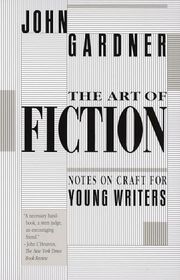
The Art of Fiction
For fiction writers who want a demanding discussion of artistic choices and technique. Its sustained attention to craft offers more depth than a motivational guide, though Gardner’s forceful judgments and dense passages can feel prescriptive.
What it's about
Gardner examines the craft of fiction through discussions of narrative, sentence construction, character, and common technical problems. Examples and exercises connect broader ideas about literary art with the decisions a writer makes while composing and revising prose.

For writers who keep postponing work despite wanting to create. Its blunt, short sections give procrastination a memorable framework, though its motivational and spiritual claims offer little help with a specific sentence or story problem.
What it's about
Pressfield names the inner enemy of creative work, Resistance, then breaks down how fear, procrastination, and self-sabotage keep people from doing what matters. It is short, blunt, and aimed at writers, artists, entrepreneurs, and anyone stuck at the starting line.
Also recommended by
16 people Joe Rogan recommended this book
Joe Rogan
"A great book about harnessing creativity." - Joe Rogan
Joe Rogan's recommendation of this book  Lex Fridman recommended this book
Lex Fridman
"Beautiful book." - Lex Fridman
Lex Fridman's recommendation of this book  Aubrey Marcus recommended this book
Aubrey Marcus
"One of the most influential books in my life." - Aubrey Marcus
Aubrey Marcus's recommendation of this book - Ryan Holiday recommended this book
Ryan Holiday
One of Ryan Holiday's 2 answers to "what book are you most likely to give out as a gift?"
Ryan Holiday's recommendation of this book  Seth Godin recommended this book
Seth Godin
Seth Godin mentioned this book on "The Tim Ferriss Show" podcast.
Seth Godin's recommendation of this book - Brian Koppelman recommended this book
Brian Koppelman
"Talks about resistance." - Brian Koppelman
Brian Koppelman's recommendation of this book +10
More recommendations
- Marie Forleo
"The essential no-bullshit guide for anyone who battles self-doubt or struggles to bring any important project to life." - Marie Forleo
- Daniel Pink
"I have [a little sign] on my desk here that says, 'Beat the resistance.' So, I’ve given [this book] out a lot too." - Daniel Pink
- Derek Sivers
"Are you a writer who doesn’t write, a painter who doesn’t paint, an entrepreneur who never starts a venture? Then you know what “Resistance” is. This book is about that. Read it." - Derek Sivers
- Soman Chainani
"Half drill sergeant, half Zen voodoo master, [the author] shot me out of my stupor and taught me the meaning of creative discipline." - Soman Chainani
- Russell Moore
"About showing up and not waiting for inspiration to hit." - Russell Moore
- Jen Sincero
"Read this thing if you want to blast past your fears and insecurities and resistance to being your biggest, badassiest self." - Jen Sincero
- Jodie Cook
"This book is a sharp reality check for every artist. It will help you become unblocked, right now and possibly forever." - Jodie Cook
- Danny Miranda
"Odds of re-reading: close to 100%." - Danny Miranda
- James Clear
"[One of] the 10 best nonfiction books of all-time." - James Clear
- Michael Hyatt
Michael Hyatt recommended this book on his website.
- Marie Forleo

For nonfiction writers who want clearer sentences and a stronger sense of purpose. Its attention to simplicity and different forms makes revision practical, though older examples and strong stylistic preferences should be read as guidance rather than universal rules.
What it's about
William Zinsser offers guidance on writing nonfiction with clarity and effective structure. He addresses common problems in style and wording, then applies his principles to interviews, travel, science, sports, criticism, and other forms of nonfiction.
Also recommended by
4 people- Tim Ferriss recommended this book
Tim Ferriss
"I have read this book more than a dozen times, more often for thinking than for writing." - Tim Ferriss
Tim Ferriss's recommendation of this book - Matt Mullenweg recommended this book
Matt Mullenweg
"I love reading about writers and the process of writing." - Matt Mullenweg
Matt Mullenweg's recommendation of this book  Derek Sivers recommended this book
Derek Sivers
"Great blunt advice about writing better non-fiction. So inspiring." - Derek Sivers
Derek Sivers's recommendation of this book  Jodie Cook recommended this book
Jodie Cook
"A fascinating exploration of writing for different genres." - Jodie Cook
Jodie Cook's recommendation of this book

For writers who want to examine dramatic structure, conflict, and meaningful choices. Its screenwriting focus provides a detailed analytical framework, though the density and film examples require translation when working in prose or less conventional forms.
What it's about
Robert McKee examines the principles underlying compelling stories for screen, stage and prose. He explores how structure, character and substance work together, offering a framework for understanding dramatic choices and developing narratives with meaningful conflict.
Also recommended by
1 person Rolf Potts recommended this book
Rolf Potts
Rolf Potts recommended this book in the "Tools of Titans" book.
Rolf Potts's recommendation of this book

For writers who want short exercises and permission to notice ordinary experience. Its practice-centered, Zen-influenced approach helps loosen self-censorship, though it offers less instruction on building and revising a finished narrative.
What it's about
Natalie Goldberg combines writing exercises with reflections informed by Zen practice. Her short chapters encourage attention to everyday experience, trust in first thoughts, and regular practice, addressing the doubts and habits that can prevent writers from getting words onto paper.
Also recommended by
1 person- Tim Ferriss recommended this book
Tim Ferriss
"A great book." - Tim Ferriss
Tim Ferriss's recommendation of this book
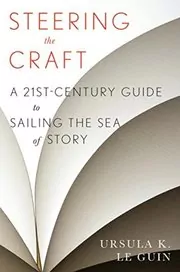
For writers ready to practice how narrative sounds and moves at sentence level. Its exercises make viewpoint, rhythm, and language choices concrete, though the greatest value comes from doing the work rather than reading straight through.
What it's about
A practical guide to fiction writing that breaks craft into usable parts, from sound and syntax to point of view, with exercises all along the way.

Stein On Writing
For writers with pages to improve who want an editor’s practical perspective. Its examples connect character, dialogue, pacing, and revision with reader interest, though its confident prescriptions reflect a particular approach to compelling prose.
What it's about
Sol Stein offers practical techniques for creating and revising fiction and nonfiction. Drawing on his experience as an editor and teacher, he examines characterization, conflict, and reader engagement, explaining how writers can diagnose flaws and strengthen their work.
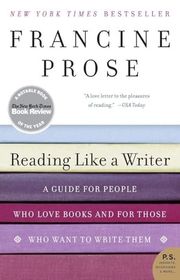
Reading Like a Writer: A Guide for People Who Love Books and for Those Who Want to Write Them
For writers who want to learn technique through close attention to published work. Its examples train you to notice words, sentences, and narrative decisions, though it asks for patient reading rather than supplying a step-by-step drafting method.
What it's about
Francine Prose shows how close reading can teach the craft of writing. Examining passages from a range of authors, she considers words, sentences, dialogue, character, and narration as choices writers can study and learn from.
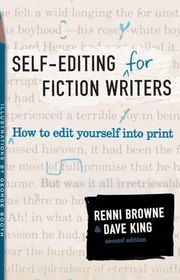
Self-Editing for Fiction Writers: How to Edit Yourself Into Print
For fiction writers revising a draft who need concrete ways to diagnose recurring problems. Its examples and exercises make editing decisions visible, though the conventional guidance needs adapting when deliberate experimentation is part of your style.
What it's about
Renni Browne and Dave King explain how writers can apply editorial techniques to their own fiction. The revised second edition addresses dialogue, exposition, point of view, interior monologue, and other craft choices through examples and exercises.

For writers who want a gentler relationship with fear, curiosity, and creative ambition. Gilbert’s personal stories make room for experimentation, though the spiritual framing and broad encouragement provide little direct instruction in prose or structure.
What it's about
Part memoir and part guide, Big Magic invites readers to treat creativity as a daily practice, not a grand performance, offering practical stories and gentle challenges for anyone who wants to make things without letting perfectionism or fear take over.

For readers who want a dedicated place for a regular private writing practice. This companion journal supports Morning Pages, though it is primarily a space to write rather than the full creative-recovery program explained in The Artist’s Way.
What it's about
Julia Cameron provides a companion journal for the Morning Pages practice introduced in The Artist's Way. An introduction and instructions guide readers in using daily private writing to explore their thoughts, fears, aspirations, and experiences.
Also recommended by
3 people- Tim Ferriss recommended this book
Tim Ferriss
"Nearly every morning, I sit down with a hot cocktail of turmeric, ginger, pu-erh tea, and green tea. Next, I crack open [this book]." - Tim Ferriss
Tim Ferriss's recommendation of this book - Brian Koppelman recommended this book
Brian Koppelman
"The closest thing to magic I’ve come across. That if you really do it every day in a real disciplined practice, something happens to your subconscious that allows you to get your most creative place." - Brian Koppelman
Brian Koppelman's recommendation of this book  Russell Brand recommended this book
Russell Brand
"I love it. A practical, spiritual, nurturing book." - Russell Brand
Russell Brand's recommendation of this book
Sources
- 1
The 40 Best Books About Writing: A Reading List for Authors
reedsy.com
- 2
The 12 Best Books on Writing I've Ever Read
jerryjenkins.com
- 3
Best Writing Books
jamesclear.com
- 4
Over 70 of the Best Books for Writers (2026)
thewritepractice.com
- 5
Best Books on Writing (805 books)
goodreads.com
- 6
Best "classic" books on writing?
reddit.com
- 7
Books that actually improved your writing
reddit.com
- 8
Essential Books for Writers
centerforfiction.org





Edited by
Software engineer whose passion for tracking book recommendations from podcasts inspired the creation of MRB.
Lead investor at 3one4 Capital whose startup expertise and love for books helped shape MRB and its growth.
Comments
Spotted a missing book, a wrong order or a mistake? Tell us and we'll fix this page.
We're a reading guide, not the author or publisher, so we can't send books or pass on messages.