
14 Best SQL Books
The best SQL books, ranked by how many expert sources recommend each one, with notes on who each suits, from first queries to analysis and performance.
Our take
SQL books help readers ask questions of relational data, but they don't all teach the same job. A first course explains tables, joins, and grouping. Analytical books connect queries with business questions, while more advanced choices explore performance, design decisions, and common mistakes.
Sams Teach Yourself uses short lessons, and Head First SQL favors a visual, activity-based style. Learning SQL and SQL Queries for Mere Mortals provide more developed learning paths. For readers motivated by datasets, Practical SQL makes analysis central. SQL Cookbook works better after the basics, when you can recognize the problems its recipes address. Practice collections serve another role: they ask you to write the query before looking at the solution. Across these choices, examples may use PostgreSQL, MySQL, or SQL Server, so some syntax and setup will differ.
Start with Learning SQL for a structured foundation, or Practical SQL if working with real data is what will keep you practicing.
14 books · 8 sources · Last updated
As an Amazon Associate, we earn from qualifying purchases (at no extra cost to you).
How to choose from this list
Skip to the full rankingIf you want a structured first course: Learning SQL → SQL Practice Problems
If you prefer visual learning: Head First SQL
If you want to analyze real datasets: Practical SQL → SQL for Data Analysis
If you're solving more complex query problems: SQL Cookbook → The Art of SQL
If you're investigating slow queries: SQL Performance Explained
If you want to avoid design mistakes: SQL Antipatterns, Volume 1
The 14 books, ranked
Ranked by how many expert sources name each book. Ties go to the book more people recommend.

For readers who want a structured course that goes beyond basic selections, Beaulieu combines explanations with exercises and examples. The steady conceptual progression supports independent study, though MySQL-oriented details need translating when working in another database.
What it's about
Alan Beaulieu teaches SQL through self-contained lessons, annotated examples, and practice exercises. The guide explains retrieving and manipulating data, creating database objects, writing subqueries, and using functions and conditional logic in database applications and reporting.

For readers motivated by real datasets and useful questions, DeBarros connects SQL with analysis and data quality. The PostgreSQL projects make concepts concrete, though readers using another database will need to adapt some syntax and setup.
What it's about
Anthony DeBarros teaches SQL through real-world datasets and the search for stories within data. Using PostgreSQL, the guide progresses from queries and database design to statistics, cleaning, geographic analysis, and automation, emphasizing careful and accurate analytical work.

For beginners who prefer short lessons and immediate query practice, Forta offers an accessible route through everyday SQL. The compact format makes steady progress manageable, though the ten-minute framing shouldn't be mistaken for the time needed to develop fluency.
What it's about
Ben Forta teaches SQL through concise lessons and practical examples across major database systems. Topics include retrieving, sorting, filtering, and summarizing data, joining tables, modifying records, and working with database objects, with tips and cautions supporting everyday query writing.

SQL QuickStart Guide
The Simplified Beginner's Guide to Managing, Analyzing, and Manipulating Data With SQL
For readers with little programming experience who want database concepts explained alongside queries, Shields provides a gentle introduction. Its accessible examples lower the initial barrier, though experienced developers may find the pace slower than a concise language guide.
What it's about
Walter Shields introduces relational databases and SQL for readers without prior coding experience. Images, examples, and practical guidance explain database structure, retrieving and understanding data, choosing queries, and applying these skills to professional and business questions.

For beginners who learn through pictures, puzzles, and varied exercises, Beighley makes relational database work approachable. The participatory style gives practice a clear role, though the playful presentation and older examples won't suit every reader.
What it's about
Lynn Beighley introduces SQL through visual explanations, puzzles, and exercises centered on working with databases. The book progresses from inserting data and writing basic queries to joins, indexes, and transactions, helping learners organize and manipulate information in relational tables.

For developers who already write basic queries and need solutions to harder patterns, Molinaro's recipe format supports targeted learning. The problem-solution discussions expose useful techniques, though it isn't a sequential first course and dialect differences require attention.
What it's about
Anthony Molinaro presents SQL problems with solutions and explanations for developers ready to move beyond basic queries. Recipes explore window functions, pivoting, running totals, aggregation, string processing, and database-specific features, showing how to perform more analytical work inside the database.
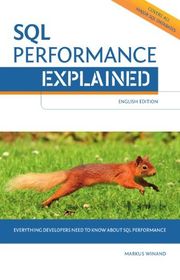
SQL Performance Explained: Everything Developers Need to Know about SQL Performance
For developers whose queries work but run slowly, Winand makes indexing and access patterns understandable without a large administration manual. The focused explanations support practical diagnosis, though database-specific optimizer behavior still requires checking on the actual system.
What it's about
Markus Winand explains how database indexes affect SQL execution, covering searches, joins, sorting, and other common operations. Illustrations and examples connect query structure with access paths, helping developers understand why seemingly similar statements can have very different performance.

For learners who want to reason carefully from a question to a query, Viescas develops the process step by step. The deliberate explanations support reliable habits, though readers wanting a quick syntax reference may find the treatment lengthy.
What it's about
John Viescas introduces SQL query writing through a practical, step-by-step approach to data manipulation. Explanations and examples build from simple queries and filtering toward more complex requests, helping readers develop reliable queries for SQL-based databases.

SQL All-in-One For Dummies
For readers who want database creation, querying, and administration gathered into one broad reference, Taylor offers convenient coverage. The minibook structure supports selective consultation, though its range makes it less focused than a dedicated query-writing course.
What it's about
Allen Taylor introduces SQL and relational database work through a broad reference for developers and administrators. Explanations and examples cover creating databases, writing queries, managing data, and maintaining systems, connecting foundational concepts with practical database development tasks.

For readers ready to use SQL for analytical questions rather than isolated syntax exercises, Malik and his coauthors provide a business-oriented progression. The range encourages applied practice, though its older toolchain and broad coverage require some independent adaptation.
What it's about
Upom Malik and his coauthors explain how to use SQL to investigate patterns and answer business questions. Exercises cover descriptive statistics, window functions, data preparation, time-series and geographic data, and query optimization, helping readers move from basic syntax into analytical practice.

SQL Practice Problems
For readers who understand examples but struggle to write queries independently, Vasilik makes practice the main activity. The graduated challenges reveal gaps effectively, though the SQL Server setup and problem-first format assume some groundwork.
What it's about
Sylvia Moestl Vasilik provides fifty-seven SQL challenges arranged from beginning to advanced difficulty. Realistic business problems, hints, and solutions encourage readers to write queries themselves, using a practice database to build skills through progressively demanding hands-on work.
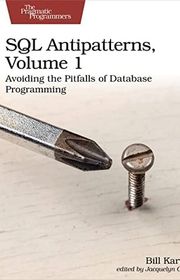
For developers who want to recognize attractive database shortcuts before they become problems, Karwin organizes lessons around recurring mistakes. The examples make tradeoffs concrete, though the pattern-based format works best after readers understand basic SQL and schema design.
What it's about
Bill Karwin examines recurring mistakes in database design, SQL queries, and application development. Each discussion explains why an approach is tempting, what problems it creates, and what alternatives can better support correctness, maintainability, and reliable relational data.
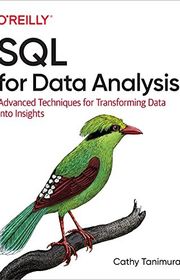
SQL for Data Analysis: Advanced Techniques for Transforming Data into Insights
For analysts who already know basic SQL and want to tackle richer questions, Tanimura organizes techniques around analytical tasks. That problem-oriented structure supports applied study, though statistics and SQL fluency help more than simply knowing a few commands.
What it's about
Cathy Tanimura uses SQL to explore time series, cohorts, text, anomalies, and experiments. Explanations and examples connect data preparation with analytical reasoning, showing how queries can produce information suited to evaluating patterns and answering practical questions.
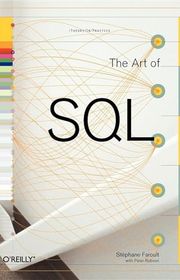
The Art of SQL
For developers who want to think more strategically about complex database work, Faroult and Robson emphasize design and query reasoning. Its broader perspective complements recipe collections, though the unusual military framing and assumed experience make it a demanding first book.
What it's about
Stéphane Faroult and Peter Robson examine how to approach SQL applications through careful design, efficient queries, and an understanding of data. Their discussion connects database choices with performance and maintainability, emphasizing reasoning over memorizing isolated commands.
Sources
- 1
Best SQL Books for Developers and Analysts (2026) | ComputingForGeeks
computingforgeeks.com
- 2
SQL Books For Both Beginners and Advanced Users | SitePoint
sitepoint.com
- 3
The 11 Best SQL Books for 2023 Based on Real User Reviews
solutionsreview.com
- 4
Sql Books
goodreads.com
- 5
The 10 Best SQL and Database Books (Beginner to Advanced) - Simplify Database
simplifydatabase.com
- 6
SQL Books - 10 Best Books for Beginners [Updated 2023]
educba.com
- 7
The Best SQL Books for 2024 | LearnSQL.com
learnsql.com
- 8
SQL hands on learning books
reddit.com






Edited by
Software engineer whose passion for tracking book recommendations from podcasts inspired the creation of MRB.
Lead investor at 3one4 Capital whose startup expertise and love for books helped shape MRB and its growth.
Comments
Did we miss something? Have feedback?
Help us improve this page by sharing your thoughts