
26 Best SQL Server Books
The best SQL Server books, ranked by how many expert sources recommend each one, with notes on who each book suits and where to start for your role.
Our take
SQL Server books address several different jobs. Writing reliable queries calls for a grounding in relational logic and Transact-SQL. Running a database adds responsibilities such as backups, permissions, maintenance, and diagnosing slowdowns. Reporting and business intelligence bring their own tools and workflows. A book that explains one of these areas well may leave the others largely untouched.
Start by matching the book to your role and the server version you use. T-SQL Fundamentals offers a route into querying, while SQL Practice Problems provides exercises once you know the basics. SQL Server Execution Plans helps with investigating queries, and the internals books explain the engine beneath them. Administrators seeking wider operational coverage can turn to SQL Server 2022 Administration Inside Out. Several other titles cover older releases, including reporting tools and features that have since changed, so use current documentation alongside them. Choose a querying introduction first if you're new to SQL, then add administration, reporting, or performance material as your work requires.
26 books · 8 sources · Last updated
As an Amazon Associate, we earn from qualifying purchases (at no extra cost to you).
How to choose from this list
Skip to the full rankingIf you're learning to query: T-SQL Fundamentals → SQL Practice Problems
If you want advanced T-SQL: T-SQL Fundamentals → T-SQL Querying
If you're administering SQL Server 2022: SQL Server 2022 Administration Inside Out
If you're investigating slow queries: SQL Server Execution Plans → High Performance SQL Server
If you need engine-level detail: Pro SQL Server Internals
The 26 books, ranked
Ranked by how many expert sources name each book. Ties go to the book more people recommend.

T-SQL Fundamentals
For readers who want to understand why T-SQL queries behave as they do. Its logical progression and exercises provide a stronger foundation than copying recipes, though the linked third edition doesn't include the newer fourth edition's coverage.
What it's about
Itzik Ben-Gan explains the logic behind querying and programming with Transact-SQL. This third edition uses hands-on exercises to develop skills for SQL Server and Azure SQL Database, covering data retrieval, modification, and an introduction to programmable objects.

For administrators who need a broad framework for investigating performance beyond rewriting one query. Its attention to waits, configuration, and architecture complements the execution-plan books, though newer server features need additional documentation.
What it's about
Benjamin Nevarez examines SQL Server performance through its architecture, configuration, and diagnostic tools. Chapters cover wait statistics, Query Store, tempdb, in-memory technologies, indexing, and storage, giving administrators a practical framework for investigating and addressing performance issues.

For developers who unexpectedly inherit a database and need to diagnose common problems. Its practical troubleshooting focus is less imposing than a full internals reference, though the covered releases are old and diagnostic details need verification.
What it's about
Jonathan Kehayias and Ted Krueger guide inexperienced administrators through common SQL Server problems. Covering versions 2005, 2008, and 2008 R2, the book examines CPU and memory usage, disk activity, indexing, blocking, deadlocks, transaction logs, and diagnostic tools.

Expert Scripting and Automation for SQL Server DBAs
For administrators who want to turn repeated maintenance work into scripts. Its combination of PowerShell, T-SQL, and scheduling is more operational than the query books, though version-specific commands need checking before use on a current installation.
What it's about
Peter Carter explains how SQL Server administrators can automate work using PowerShell, T-SQL, SQL Server Agent, and metadata. Practical guidance covers inventory databases, instance builds, centralized monitoring, routine maintenance, and automated responses to recurring operational problems.

Learn SQL Server Administration in a Month of Lunches
Covers Microsoft SQL Server 2005-2014
For occasional administrators who need a manageable sequence of practical lessons. Its short daily format gives more structure than a troubleshooting reference, though coverage stops at older releases and doesn't replace hands-on recovery practice.
What it's about
Don Jones introduces SQL Server administration through short daily lessons and hands-on practice. Topics include maintenance, backup and recovery, security, indexing, performance monitoring, automation, and availability, focusing on the operational tasks needed to manage a database environment.

Microsoft SQL Server 2012 Internals
For experienced administrators and developers who want to connect engine behavior with design decisions. Its storage and query-processing detail goes deeper than a beginner guide, though it assumes technical confidence and predates many later features.
What it's about
Kalen Delaney and her coauthors examine the architecture and internal operations of SQL Server 2012. Topics include storage, logging, recovery, indexes, query execution, optimization, plan caching, transactions, and concurrency, connecting engine behavior with practical development and administration decisions.

For administrators investigating database permissions, encryption, and the surrounding security controls. Its dedicated security focus goes beyond a general tutorial, though this edition's SQL Server 2014 coverage requires substantial checking against current platform guidance.
What it's about
Denny Cherry examines threats to SQL Server databases and the controls used to address them. This third edition covers SQL Server 2014, discussing permissions, encryption, key management, service accounts, and related operating-system and network security considerations.
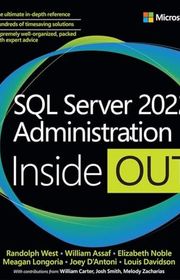
SQL Server 2022 Administration Inside Out
For administrators who want a broad reference covering SQL Server 2022 and Azure SQL. Its operational scope is wider than the query and internals books, though its size and release-specific tooling make selective reading essential.
What it's about
This administration reference covers planning, deployment, configuration, maintenance, security, and performance for SQL Server 2022. It also examines Azure SQL Database and Managed Instance, helping administrators work across local, cloud, and hybrid environments.

SQL Server Execution Plans
For practitioners who need to read execution plans rather than guess why a query is slow. Its focused explanations give plans more attention than a broad tuning book, though applying them still requires representative measurements and workload knowledge.
What it's about
Grant Fritchey explains how to capture, read, and interpret SQL Server execution plans. This third edition connects query operations, indexes, joins, and other plan details with performance investigation, while examining Query Store, hints, and plan guides.
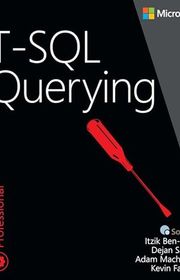
T-SQL Querying
For developers ready to move beyond fundamental queries into set-based techniques and tuning. Its detailed explanations make it a natural follow-up to T-SQL Fundamentals, though it demands concentration and reflects an older SQL Server generation.
What it's about
Itzik Ben-Gan and coauthors examine advanced Transact-SQL querying, logical processing, window functions, and query tuning. Worked examples connect relational ideas with practical solutions, helping developers understand both how a query works and how to improve it.

For readers building a SQL Server 2016 business-intelligence solution across several components. It connects integration, modeling, and reporting more broadly than a report-authoring book, though the breadth and older tooling make it a substantial undertaking.
What it's about
Brian Larson explains how to build and distribute business intelligence using SQL Server 2016 and Power BI. The guide covers data marts, integration, tabular and multidimensional models, MDX and DAX, reports, dashboards, and techniques for bringing analytics into business applications.

Microsoft SQL Server 2012 T-SQL Fundamentals
For learners using SQL Server 2012 who want querying explained through relational logic and exercises. It builds firmer foundations than a recipe collection, though readers on later releases should consider the newer T-SQL Fundamentals editions.
What it's about
Itzik Ben-Gan introduces Transact-SQL through explanations of its underlying logic and exercises for SQL Server 2012. Topics include joins, subqueries, table expressions, data modification, and programmable objects, connecting database theory with practical querying and programming techniques.

For readers who need a broad introduction to a SQL Server 2019 environment. It connects querying with administration more than a language-only tutorial, though its wide scope leaves less depth for specialist performance or security work.
What it's about
Dusan Petkovic introduces SQL Server 2019 through relational database concepts, examples, and exercises. The guide covers Transact-SQL queries, administration, backups, security, reporting, and business intelligence, alongside features for machine learning, spatial data, XML, and full-text search.

Pro SQL Server Internals
For practitioners who need to understand how SQL Server internals influence application behavior. It connects architecture with practical design more directly than a feature survey, though the linked edition extends only through SQL Server 2016.
What it's about
Dmitri Korotkevitch explains how SQL Server's internal components affect database design and performance. This second edition extends through SQL Server 2016, examining indexing, transactions, query execution, and newer features such as Query Store and In-Memory OLTP.

Professional SQL Server 2012 Internals and Troubleshooting
For experienced administrators investigating difficult performance problems across SQL Server and Windows. Its emphasis on interpreting diagnostic output distinguishes it from introductory guides, though the version-specific tools and examples require checking on newer systems.
What it's about
Christian Bolton and his coauthors connect SQL Server and Windows internals with practical performance troubleshooting. The guide explains monitoring tools and the interpretation of their output, helping experienced administrators investigate problems and recognize conditions that can undermine reliability.

SQL Server 2016 Reporting Services Cookbook
For developers maintaining SQL Server 2016 reports who want solutions organized around tasks. The recipe format is convenient for specific reporting problems, though mobile reporting and integration features need checking against today's product offerings.
What it's about
Dinesh Priyankara and Robert Cain present practical recipes for configuring and developing SQL Server 2016 reporting solutions. Topics include report authoring, business intelligence architecture, mobile reporting, Power BI integration, and techniques for improving performance, scalability, and security.

For experienced SQL Server readers investigating memory-optimized tables and their transaction model. Its narrow architectural focus gives more depth than general administration guides, though it isn't a beginner introduction or a complete tuning handbook.
What it's about
Kalen Delaney explains how SQL Server’s in-memory OLTP engine stores and manipulates data. The account explores memory-optimized tables, indexes, compiled procedures, and transaction behavior, helping readers understand how this architecture differs from traditional disk-based database processing.

Applied Microsoft SQL Server 2008 Reporting Services
For teams maintaining reports built on SQL Server 2008 Reporting Services. Its end-to-end treatment of report development and delivery is useful for that environment, though newer reporting platforms and interfaces require different guidance.
What it's about
Teo Lachev explains how to build and deliver reports with SQL Server 2008 Reporting Services. Hands-on lessons cover standard and ad hoc report design, installing and managing the environment, extending the platform, and integrating reports with applications and other Microsoft tools.

Expert Performance Indexing for SQL Server 2012
For practitioners who know SQL and want to understand index design and maintenance. Its focused treatment is more useful than a general introduction for that task, though SQL Server 2012 coverage misses later indexing and optimizer changes.
What it's about
Jason Strate and Ted Krueger examine how SQL Server indexes affect database performance. Beginning with storage and statistics, the guide develops practical approaches to index design, maintenance, query strategies, and analysis through examples of real-world performance problems.

Introducing Microsoft SQL Server 2014
For readers evaluating or maintaining an installation specifically on SQL Server 2014. Its high-level survey is easier to navigate than a large administration reference, though it is an orientation to that release rather than a current learning path.
What it's about
Ross Mistry and Stacia Misner introduce SQL Server 2014’s features and capabilities through a high-level technical overview. The guide covers engine and performance enhancements, hybrid cloud scenarios, business intelligence, information management, and big data, supporting early evaluation and deployment planning.

For beginners who prefer small lessons they can work through between other tasks. Its focused format makes querying approachable more quickly than an internals reference, though short chapters cannot fully explore design or performance tradeoffs.
What it's about
Ben Forta introduces SQL Server’s Transact-SQL through short, focused lessons. Examples progress from retrieving and filtering data to joins, subqueries, stored procedures, triggers, transactions, security, and working with XML and JSON, providing a practical tutorial for beginning and intermediate users.

For developers who can already write basic queries and want worked solutions to more demanding tasks. Its problem-based format is easier to consult selectively than a tutorial, though differences among database systems need careful attention.
What it's about
Anthony Molinaro presents SQL problems with solutions and explanations for developers ready to move beyond basic queries. Recipes explore window functions, pivoting, running totals, aggregation, string processing, and database-specific features, showing how to perform more analytical work inside the database.

SQL Practice Problems
For learners who improve by attempting queries before reading the answer. Its graded challenges supply more deliberate practice than a reference book, though readers still need an explanation of the underlying SQL concepts elsewhere.
What it's about
Sylvia Moestl Vasilik provides fifty-seven SQL challenges arranged from beginning to advanced difficulty. Realistic business problems, hints, and solutions encourage readers to write queries themselves, using a practice database to build skills through progressively demanding hands-on work.

SQL QuickStart Guide
The Simplified Beginner's Guide to Managing, Analyzing, and Manipulating Data With SQL
For readers who want an approachable introduction to databases and everyday querying. Its business-oriented explanations ask for less prior knowledge than the specialist books, though it doesn't provide a complete SQL Server administration course.
What it's about
Walter Shields introduces relational databases and SQL for readers without prior coding experience. Images, examples, and practical guidance explain database structure, retrieving and understanding data, choosing queries, and applying these skills to professional and business questions.

SQL Server 2008 Administration in Action
For administrators maintaining SQL Server 2008 who want practical operational recommendations. Its focus on dependable procedures complements a conceptual internals guide, though its platform assumptions and configuration advice need revision for current releases.
What it's about
Rod Colledge presents more than one hundred practical recommendations for administering SQL Server 2008. The book concentrates on tested procedures and operational decisions, helping database administrators maintain security, integrity, and dependable performance in everyday production environments.

Murach's SQL Server 2019 for Developers
For application developers working with SQL Server 2019 who prefer lessons followed by practice. It connects queries with database programming more directly than the administration books, though it won't cover features introduced in later server releases.
What it's about
Bryan Syverson and Joel Murach introduce SQL Server 2019 from an application developer's perspective. Lessons progress from retrieving and updating data to database design, stored procedures, functions, triggers, transactions, and security, connecting SQL skills with building database applications.
Sources
- 1
Top SQL Server Books
sqlshack.com
- 2
Top 15 Microsoft SQL Server Books
whatpixel.com
- 3
7 Best SQL Server Books for 2026: T-SQL, DBA and 2025 | ComputingForGeeks
computingforgeeks.com
- 4
Books | Darling Data
erikdarling.com
- 5
Sql Server Books
goodreads.com
- 6
Best Books on Sql sever for DBA?
reddit.com
- 7
Most Recommended SQL Server DBA Books - Dot Net Tutorials
dotnettutorials.net
- 8
SQL Server Books | SQLskills.com
sqlskills.com





Edited by
Software engineer whose passion for tracking book recommendations from podcasts inspired the creation of MRB.
Lead investor at 3one4 Capital whose startup expertise and love for books helped shape MRB and its growth.
Comments
Did we miss something? Have feedback?
Help us improve this page by sharing your thoughts