
16 Best Spark Books
The best Spark books, ranked by how many expert sources recommend each one, with notes for beginners, Python and R users, and engineers tuning data pipelines.
Our take
Apache Spark books can help you learn distributed data processing, build analytical pipelines or understand why a job slows down as data grows. The right starting point depends on your programming language and your task. An analyst building models needs different examples from an engineer managing clusters, while streaming and graph analysis introduce their own concepts. Many useful titles cover earlier Spark releases, so check examples and dependencies against the environment you actually use.
Learning Spark offers a broad introduction to DataFrames, SQL and the architecture behind them. Data Analysis with Python and PySpark adds an exercise-led route for Python users, while Spark in Action emphasizes application development and integration. Once you have working jobs, High Performance Spark helps you reason about execution costs. Mastering Spark with R serves an R-centered workflow, and Advanced Analytics with Spark moves toward modeling projects. For continuous data, pair the concepts in Streaming Systems with the Spark-specific treatment in Stream Processing with Apache Spark. Start with the introductory book that matches your language before choosing a specialization.
16 books · 8 sources · Last updated
As an Amazon Associate, we earn from qualifying purchases (at no extra cost to you).
How to choose from this list
Skip to the full rankingIf you're learning Spark fundamentals: Learning Spark
If you want Python practice: Data Analysis with Python and PySpark → Data Analytics with Spark Using Python
If you want application development examples: Spark in Action
If you need faster jobs: High Performance Spark
If you work mainly in R: Mastering Spark with R
If you want to build streaming applications: Streaming Systems → Stream Processing with Apache Spark
The 16 books, ranked
Ranked by how many expert sources name each book. Ties go to the book more people recommend.

For programmers who want a broad introduction centered on DataFrames and SQL. The second edition connects everyday analytics with Spark's architecture, though its Spark 3 examples still need checking against the runtime you plan to use.
What it's about
Jules Damji and his coauthors introduce modern Spark programming and distributed analytics. They explain architecture, DataFrames, SQL, performance tuning, streaming, data lakes, and machine learning through examples for developing efficient applications on large datasets.

For developers whose Spark jobs already run but need to run better. Its focus on execution, partitioning and memory helps explain performance choices, though the linked first edition contains implementation details that require checking against newer runtimes.
What it's about
Holden Karau and Rachel Warren examine how Spark applications execute and where performance problems arise. They explain partitioning, memory use, transformations, joins, and testing, offering practical approaches to scaling analytics and improving distributed workloads.

For developers who want a substantial reference spanning Spark's core interfaces and analytical libraries. Its breadth makes it useful after an introduction, though the Spark 2 setting means you should verify syntax and behavior against your environment.
What it's about
Bill Chambers and Matei Zaharia explain Apache Spark from its architecture and programming foundations to advanced analytics. The guide covers DataFrames, SQL, distributed datasets, streaming, and machine learning, with examples for building applications that process data at scale.

For analysts who learn best by building models on realistic datasets. Its classification, recommendation and anomaly-detection projects give analytical techniques more context than an API reference, though readers benefit from prior statistics and some Scala familiarity.
What it's about
Sandy Ryza and his coauthors demonstrate statistical analysis and machine learning with Spark through realistic datasets. Examples include classification, clustering, recommendations, and anomaly detection, showing how analytical techniques can be applied to distributed data.

Apache Spark in 24 Hours, Sams Teach Yourself
For beginners who prefer a lesson-by-lesson survey before specializing. Its short units span setup, programming and operations, though the older examples need updating and the title's 24-hour structure should not be mistaken for a promise of mastery.
What it's about
Jeffrey Aven introduces Apache Spark through 24 lessons covering installation, programming interfaces, and cluster operation. Readers work with SQL, streaming, machine learning, and graph processing while learning to connect data sources and improve application performance.

For developers who want to build data pipelines through worked applications, particularly in Java. Perrin emphasizes ingestion and integration more than statistical modeling, though the Spark 3 examples need adjustment when dependencies or runtime behavior have changed.
What it's about
Jean-Georges Perrin teaches Spark 3 through practical data engineering examples using Java, Python, and Scala. Readers build pipelines that ingest files, databases, and streams, transform data with SQL, and connect Spark to external systems.
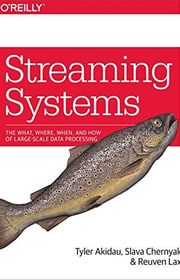
Streaming Systems
For readers who need to understand streaming behavior before choosing implementation details. Its treatment of event time, windows and watermarks gives later Spark decisions a stronger foundation, though it is broader than a guide to Spark APIs.
What it's about
Tyler Akidau, Slava Chernyak and Reuven Lax explain the foundations of large-scale streaming data processing. The book examines event time, windows, watermarks and correctness, showing how systems handle continuously arriving data and produce meaningful results despite delays and disorder.
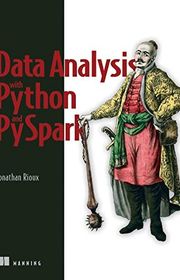
Data Analysis with Python and PySpark
For Python programmers who want practice rather than only explanations. Frequent exercises make the progression from data manipulation to pipelines easier to apply, though the Python focus offers little guidance for teams working mainly in Scala or Java.
What it's about
Jonathan Rioux teaches distributed data analysis with PySpark through examples and exercises. Readers work with DataFrames, SQL, custom functions and data pipelines, developing the skills to ingest, transform and analyze datasets while using their existing Python knowledge.

For R users who want distributed analysis without abandoning familiar workflows. Its sparklyr approach connects manipulation, visualization and modeling, though it assumes R knowledge and offers less help to readers whose production work is mainly Python or Java.
What it's about
Javier Luraschi and his coauthors show R users how to analyze large datasets with Spark through sparklyr. They cover data manipulation, visualization, modeling, distributed computation, and production workflows, extending familiar R practices to cluster computing.

Spark Cookbook
For developers who prefer looking up a concrete task to reading a course from start to finish. The recipe format offers quick entry points across Spark libraries, though older APIs and dependencies make adaptation part of the work.
What it's about
Rishi Yadav presents practical recipes for configuring Spark and developing applications with its major libraries. Examples cover SQL, streaming, machine learning, graph processing, and recommendations, giving developers reusable approaches to common distributed data tasks.

For developers building continuous data applications who need more depth on event time, state and fault tolerance. Covering both streaming interfaces helps with existing systems, though readers should distinguish Structured Streaming guidance from the older Spark Streaming material.
What it's about
Gerard Maas and Francois Garillot explain stream processing using Structured Streaming and Spark Streaming. They cover event time, state, fault tolerance, data sources, and application architecture, helping developers design reliable systems for continuous data analysis.

Data Analytics with Spark Using Python
For Python users who want one broad tour from distributed datasets to streaming and predictive modeling. Aven connects several parts of the ecosystem, though the older examples make it less direct than a newer, exercise-led PySpark introduction.
What it's about
Jeffrey Aven teaches data processing and analytics with PySpark, from distributed datasets and cluster execution to SQL and external data stores. Practical examples extend into streaming with Kafka and predictive modeling with Spark’s machine learning tools.

For readers who specifically need graph analysis rather than another general Spark course. Its parallel Spark and Neo4j examples clarify algorithm choices, though working across two systems adds material that a Spark-only project may not need.
What it's about
Mark Needham and Amy Hodler explain graph algorithms through practical examples in Apache Spark and Neo4j. They explore paths, centrality, and community detection, then show how graph features can support machine learning and link prediction.

Mastering Apache Spark
Gain Expertise in Processing and Storing Data by Using Advanced Techniques with Apache Spark
For Scala developers exploring how Spark connects with storage systems and other infrastructure. Its integration examples broaden the focus beyond transformations, though the early Spark setting makes it most useful when you can translate older tools and APIs.
What it's about
Mike Frampton explores advanced Apache Spark applications using Scala and its analytics libraries. Practical examples cover SQL, streaming, machine learning, and graph processing, alongside integration with external storage systems and deployment in cloud environments.

For developers maintaining applications built around DStreams and the older Spark Streaming model. Nabi provides application-level context for that ecosystem, though new streaming projects should begin with Structured Streaming material because DStream-based Spark Streaming is now legacy.
What it's about
Zubair Nabi explores real-time analytics with Spark Streaming through practical application examples. The book covers data ingestion, transformations, parallel processing, machine learning, and deployment, connecting streaming concepts with the demands of operating analytics systems.

For engineers responsible for running clusters rather than only writing transformations. Its attention to sizing, resources, security and monitoring fills an operational gap, though the older deployment assumptions need careful comparison with today's managed or self-hosted infrastructure.
What it's about
Ilya Ganelin and his coauthors explain how to plan, deploy, and manage Apache Spark in production. They address hardware sizing, cluster resources, security, and performance while examining practical uses of SQL, streaming, and machine learning.
Sources
- 1
Best Apache Kafka and Spark Books for 2026
computingforgeeks.com
- 2
Books
brickster.ai
- 3
The 16 Best Apache Spark Books on Our Reading List for 2023
solutionsreview.com
- 4
Spark books
educba.com
- 5
Data Engineering Books
goodreads.com
- 6
Good book for spark learning
reddit.com
- 7
What book after Fundamentals of Data Engineering?
reddit.com
- 8
Best Apache Spark Books : For Beginners & Experienced
techvidvan.com




Edited by
Software engineer whose passion for tracking book recommendations from podcasts inspired the creation of MRB.
Lead investor at 3one4 Capital whose startup expertise and love for books helped shape MRB and its growth.
Comments
Spotted a missing book, a wrong order or a mistake? Tell us and we'll fix this page.
We're a reading guide, not the author or publisher, so we can't send books or pass on messages.