
14 Best Apache Spark Books
The best Apache Spark books, ranked by how many expert sources recommend each, with notes on skill level, practical focus, and where to start learning.
Our take
Apache Spark books teach different parts of working with distributed data. An introductory guide explains how programs are organized and how to use DataFrames and SQL. A performance book asks why a working job is slow. Analytics and graph books assume a different goal again: applying particular methods to datasets that need distributed processing.
Learning Spark offers a broad starting point, while Spark: The Definitive Guide suits readers who want a larger reference beside their practical work. Spark in Action emphasizes data engineering examples. After that foundation, High Performance Spark focuses on execution and tuning, Advanced Analytics with Spark develops analytical use cases, and Spark GraphX in Action concentrates on graphs. Many linked editions were written for earlier Spark releases, so compare their language, dependencies, and APIs with your own environment. Start with one general introduction and run its examples before choosing a specialist book.
14 books · 7 sources · Last updated
As an Amazon Associate, we earn from qualifying purchases (at no extra cost to you).
How to choose from this list
Skip to the full rankingIf you're new to Spark programming: Learning Spark → Spark: The Definitive Guide
If you learn through data pipelines: Spark in Action
If you already have jobs to optimize: High Performance Spark
If you want analytical applications: Advanced Analytics with Spark
If you want graph processing: Spark GraphX in Action
If you're studying Spark 3 streaming and SQL: Beginning Apache Spark 3
The 14 books, ranked
Ranked by how many expert sources name each book. Ties go to the book more people recommend.

For developers who know Spark basics and want to apply statistical and machine learning methods. Its worked analytical examples give more context than an API reference, though the linked edition's code needs checking against your environment.
What it's about
Sandy Ryza and his coauthors demonstrate statistical analysis and machine learning with Spark through realistic datasets. Examples include classification, clustering, recommendations, and anomaly detection, showing how analytical techniques can be applied to distributed data.

For developers with working Spark applications who want to understand execution and performance tradeoffs. Its focused treatment goes beyond introductory tutorials, though the linked older edition requires care when applying advice to a newer runtime.
What it's about
Holden Karau and Rachel Warren examine how Spark applications execute and where performance problems arise. They explain partitioning, memory use, transformations, joins, and testing, offering practical approaches to scaling analytics and improving distributed workloads.

For programmers beginning Spark who want architecture connected to DataFrames, SQL, and practical applications. Its broad teaching sequence makes a useful foundation, though the linked edition covers Spark 3 rather than every feature of newer releases.
What it's about
Jules Damji and his coauthors introduce modern Spark programming and distributed analytics. They explain architecture, DataFrames, SQL, performance tuning, streaming, data lakes, and machine learning through examples for developing efficient applications on large datasets.

Mastering Apache Spark
Gain Expertise in Processing and Storing Data by Using Advanced Techniques with Apache Spark
For Scala users exploring how Spark connects to analytics libraries and storage systems. Its integration examples extend beyond a basic introduction, though the linked edition uses an older ecosystem and needs substantial version checks.
What it's about
Mike Frampton explores advanced Apache Spark applications using Scala and its analytics libraries. Practical examples cover SQL, streaming, machine learning, and graph processing, alongside integration with external storage systems and deployment in cloud environments.

For readers who want a broad reference after learning the basics. Its coverage connects structured processing with lower-level concepts and analytics, though the older release context means some examples and operational guidance need updating.
What it's about
Bill Chambers and Matei Zaharia explain Apache Spark from its architecture and programming foundations to advanced analytics. The guide covers DataFrames, SQL, distributed datasets, streaming, and machine learning, with examples for building applications that process data at scale.

Spark Cookbook
For developers who prefer task-based examples to a continuous textbook. The recipe format makes selected techniques easy to locate, though the linked edition's dependencies and interfaces require checking before adapting its code.
What it's about
Rishi Yadav presents practical recipes for configuring Spark and developing applications with its major libraries. Examples cover SQL, streaming, machine learning, graph processing, and recommendations, giving developers reusable approaches to common distributed data tasks.
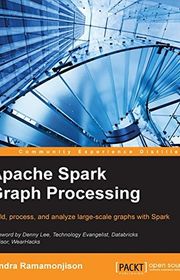
Apache Spark Graph Processing
For developers seeking a compact introduction to graph processing with Spark. Its focused progression from graph construction to algorithms complements broader textbooks, though the short length and older code limit its usefulness as a current production reference.
What it's about
Rindra Ramamonjison introduces Spark's GraphX tools for constructing, processing, and analyzing large graphs. Examples develop graph algorithms and analytical tasks, showing how connected data can be organized into distributed workflows and used to solve practical problems.

Apache Spark in 24 Hours, Sams Teach Yourself
For beginners who prefer short lessons and a defined study sequence. Its tour from setup to major libraries offers manageable entry points, though the title's timetable should not be mistaken for enough time to gain production experience.
What it's about
Jeffrey Aven introduces Apache Spark through 24 lessons covering installation, programming interfaces, and cluster operation. Readers work with SQL, streaming, machine learning, and graph processing while learning to connect data sources and improve application performance.
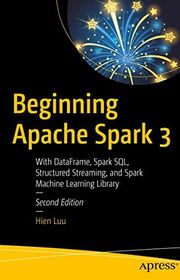
Beginning Apache Spark 3
For programmers who want a teaching sequence centered on Spark 3's SQL, streaming, and machine learning tools. Its practical progression bridges several use cases, though readers using newer major releases must check compatibility and changed behavior.
What it's about
Hien Luu introduces Spark 3 architecture and programming before developing work with DataFrames, SQL, Structured Streaming, and machine learning. Examples connect batch and streaming processing with optimization and the management of a machine learning workflow.

Big Data Analytics with Spark
A Practitioner's Guide to Using Spark for Large Scale Data Analysis
For programmers who want Scala foundations alongside a broad Spark introduction. Its combination of language and analytics concepts reduces the need to switch books early, though the linked edition predates current Spark releases.
What it's about
Mohammed Guller introduces Apache Spark for large-scale data analysis through practical examples. The guide explains functional programming in Scala and Spark's core concepts, then explores tools for SQL queries, streaming, graph processing, and machine learning.

Spark GraphX in Action
For developers whose main problem involves relationships and graph algorithms. Its dedicated GraphX treatment gives more depth than the graph chapters in general books, though the focus is narrow and the examples target an older Spark environment.
What it's about
Michael Malak and Robin East introduce graph processing with Spark and GraphX through practical examples. Readers build graphs from ordinary data, implement algorithms, and organize processing pipelines, with further discussion of machine learning, visualization, performance, and monitoring for large graph applications.

For engineers maintaining older Spark Streaming applications who want a dedicated treatment. Its streaming focus offers more depth than a general survey, though readers building new Structured Streaming workloads need a resource aimed at that API.
What it's about
Zubair Nabi explores real-time analytics with Spark Streaming through practical application examples. The book covers data ingestion, transformations, parallel processing, machine learning, and deployment, connecting streaming concepts with the demands of operating analytics systems.

For engineers interested in the operational questions around deploying Spark. Its attention to resources, monitoring, and security complements programming manuals, though the older deployment context needs comparison with the platform you actually run.
What it's about
Ilya Ganelin and his coauthors explain how to plan, deploy, and manage Apache Spark in production. They address hardware sizing, cluster resources, security, and performance while examining practical uses of SQL, streaming, and machine learning.

For programmers who want to learn Spark through practical data engineering work. Its pipeline examples connect ingestion with transformation and integration, though the Spark 3 focus means newer runtime behavior needs separate checking.
What it's about
Jean-Georges Perrin teaches Spark 3 through practical data engineering examples using Java, Python, and Scala. Readers build pipelines that ingest files, databases, and streams, transform data with SQL, and connect Spark to external systems.
Sources
- 1
Documentation | Apache Spark
spark.apache.org
- 2
10 Best Apache Spark Books - Whizlabs Blog
whizlabs.com
- 3
Best Apache Spark Books : For Beginners & Experienced
techvidvan.com
- 4
Top Apache Spark Books in 2027: Ignite Your Data Skills!
simplilearn.com
- 5
Best resources to learn Apache Spark in depth
reddit.com
- 6
Suggestions on a PySpark Book
reddit.com
- 7
Best books for beginners?
reddit.com


Edited by
Software engineer whose passion for tracking book recommendations from podcasts inspired the creation of MRB.
Lead investor at 3one4 Capital whose startup expertise and love for books helped shape MRB and its growth.
Comments
Spotted a missing book, a wrong order or a mistake? Tell us and we'll fix this page.
We're a reading guide, not the author or publisher, so we can't send books or pass on messages.