
28 Best Socialism Books
The best socialism books, ranked by how many expert sources recommend each one, with notes on who they suit and where beginners can start reading.
Our take
Socialism includes competing ideas about ownership, equality, democracy, and the organization of work. These books help readers separate those questions rather than treat the tradition as a single program. Some argue for socialist institutions, while others challenge their feasibility or explore the history of movements that claimed the name. Fiction and personal testimony offer another way into questions of power, but they serve a different purpose from economic theory.
For a short philosophical introduction, Why Not Socialism? asks what makes cooperation appealing. The Communist Manifesto offers a compact historical statement, while Das Kapital requires much more sustained study. Democracy at Work and Envisioning Real Utopias turn toward institutional possibilities. Readers interested in criticism can begin with The Road to Serfdom. For history and lived experience, try Homage to Catalonia or Women, Race, & Class. Start with the question you want answered before choosing the longest theoretical work.
28 books · 7 sources · Last updated
As an Amazon Associate, we earn from qualifying purchases (at no extra cost to you).
How to choose from this list
Skip to the full rankingIf you're new to the moral argument: Why Not Socialism? → The Communist Manifesto
If you want to study Marx's economics: The Communist Manifesto → Das Kapital
If you want institutional alternatives: Democracy at Work → Envisioning Real Utopias
If you want to examine criticism: The Road to Serfdom → The Case Against Socialism
If you want anarchist perspectives: The Conquest of Bread → Anarcho-Syndicalism
If you want gender and class history: Women, Race, & Class → Caliban and the Witch
The 28 books, ranked
Ranked by how many expert sources name each book. Ties go to the book more people recommend.

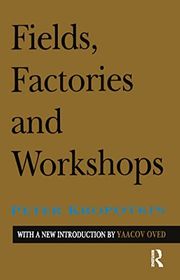
For readers exploring cooperation within the anarchist tradition. Kropotkin connects social arguments with examples from nature and history, though its historical scientific framework should not be mistaken for an up-to-date account of evolutionary biology.
What it's about
Peter Kropotkin argues that cooperation is a major force in evolution and social survival. Drawing examples from animals and human communities across history, he challenges accounts that treat competition as the defining principle of collective life.

For readers prepared to study a sustained economic critique of socialism. Mises develops the calculation argument more extensively than shorter political polemics, though the dense treatment and historical context make this a demanding introduction.
What it's about
Ludwig von Mises critiques socialist planning through an economic and sociological examination of society. He contrasts planning with market capitalism and argues that market prices are essential to the calculations needed for economic coordination.

For readers seeking a democratic socialist account that connects historical experience with future possibilities. Harrington offers a broader political overview than workplace studies, though this remains an argument from within the tradition rather than a neutral survey.
What it's about
Harrington surveys socialist ideas and political experiments, distinguishing his vision of democratic socialism from authoritarian systems. Discussions of Marx, Keynes and different national experiences lead into questions about poverty, technology, environmental problems and socialism's future.

The Communist Manifesto
For readers who want a short encounter with Marx and Engels before tackling longer works. Its forceful political language makes the argument memorable, though a manifesto compresses ideas that need fuller explanation elsewhere.
What it's about
Marx and Engels present a political manifesto about class conflict, capitalism, and the communist movement. Written in 1848, it describes the historical role of the bourgeoisie and calls for workers to organize across national boundaries.

A People's History of the United States
For readers interested in American history through workers, marginalized groups, and dissent. Its change of viewpoint complements theoretical books, though its openly interpretive account works best alongside histories that approach the same events differently.
What it's about
Howard Zinn recounts United States history from the perspectives of people often excluded from conventional national narratives. He emphasizes Indigenous peoples, enslaved people, workers, women, and dissenters, tracing conflicts over power, exploitation, resistance, and social change.
Also recommended by
4 people Alex Honnold recommended this book
Alex Honnold
"Totally changed the way I look at politics." - Alex Honnold
Alex Honnold's recommendation of this book  Lisa Ling recommended this book
Lisa Ling
"I credit this book with propelling me to dig deeper, and to not always believe the narrative." - Lisa Ling
Lisa Ling's recommendation of this book  Howard Stern recommended this book
Howard Stern
"Something I should have read in college." - Howard Stern
Howard Stern's recommendation of this book  John Leguizamo recommended this book
John Leguizamo
"Every Latinx should read!" - John Leguizamo
John Leguizamo's recommendation of this book
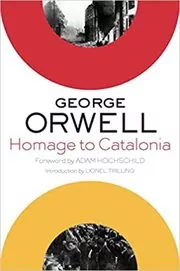
Homage to Catalonia
For readers wanting personal experience of socialist divisions during the Spanish Civil War. Orwell offers an unusually immediate account of factional conflict, though his limited experience cannot provide a comprehensive history of the war.
What it's about
Orwell's personal account of fighting with a militia in the Spanish Civil War, blending front line detail, political argument, and growing disillusion with party politics. It is both war memoir and a sharp study of propaganda and betrayal.
Also recommended by
4 people Ben Shapiro recommended this book
Ben Shapiro
"A lot of people have read Orwell's 1984, he actually wrote a book that's better. It's [this book]." - Ben Shapiro
Ben Shapiro's recommendation of this book  Christopher Hitchens recommended this book
Christopher Hitchens
"I was fairly soon immersed in [this book]." - Christopher Hitchens
Christopher Hitchens's recommendation of this book  Marc Andreessen recommended this book
Marc Andreessen
Marc Andreessen recommended this book on Twitter.
Marc Andreessen's recommendation of this book  Brad Delong recommended this book
Brad Delong
Brad Delong recommended this book in his website.
Brad Delong's recommendation of this book

For readers asking how markets became embedded in political and social change. Polanyi gives historical depth missing from introductory arguments, though the demanding account centers heavily on European experience rather than surveying every economic tradition.
What it's about
Karl Polanyi examines capitalism's emergence and the social changes accompanying the Industrial Revolution. He argues that market relations displaced earlier communal arrangements, and considers the dangers of treating economic exchange as independent of broader social obligations.
Also recommended by
3 people Satya Nadella recommended this book
Satya Nadella
"My father recommended this book long ago." - Satya Nadella
Satya Nadella's recommendation of this book  Noam Chomsky recommended this book
Noam Chomsky
On the "Top 100 Books Referenced by Noam Chomsky" list.
Noam Chomsky's recommendation of this book - Brad Delong recommended this book
Brad Delong
Brad Delong recommended this book in his website.
Brad Delong's recommendation of this book

The Case Against Socialism
For readers seeking a contemporary American political case against socialism. Its direct argumentative style is more accessible than Mises's extended analysis, though its adversarial framing offers less exploration of disagreements among socialist thinkers.
What it's about
Rand Paul presents an argument against socialism through historical examples and comparisons of political and economic systems. He examines state power, individual liberty, and contemporary policy proposals, challenging claims made by advocates of greater government intervention.
Also recommended by
2 people Donald Trump recommended this book
Donald Trump
"Highly recommended – as America was founded on LIBERTY & INDEPENDENCE – not government coercion, domination & control. " - Donald Trump
Donald Trump's recommendation of this book  Lou Dobbs recommended this book
Lou Dobbs
"A great book." - Lou Dobbs
Lou Dobbs's recommendation of this book

Anarcho-Syndicalism
For readers exploring socialism organized through workers' associations rather than state administration. Rocker supplies a focused account of anarcho-syndicalist ideas and practice, though its historical circumstances require care when applying the argument to today's workplaces.
What it's about
Rudolf Rocker explains the theory and practice of anarcho-syndicalism, emphasizing workers' organization and direct action. Written during the Spanish Civil War, the book sets out the ideas behind a movement seeking social transformation through organized labor.
Also recommended by
1 person- Noam Chomsky recommended this book
Noam Chomsky
On the "Top 100 Books Referenced by Noam Chomsky" list.
Noam Chomsky's recommendation of this book

For readers seeking a substantial intellectual history after introductory reading. Its breadth helps distinguish thinkers often grouped together as Marxists, but the critical perspective and considerable length require more commitment than a short overview.
What it's about
Leszek Kolakowski traces Marxism's philosophical origins, major thinkers, and twentieth century developments. This single volume gathers his three part critical history, examining the tradition's founders, its influential schools, and the political and intellectual forces behind its breakdown.
Also recommended by
1 person- Christopher Hitchens recommended this book
Christopher Hitchens
"Astonishing trilogy." - Christopher Hitchens
Christopher Hitchens's recommendation of this book

For readers connecting feminist history with arguments about capitalism's development. Federici places reproductive labor and the body at the center of analysis, though her historical interpretation should be read as an argument rather than settled consensus.
What it's about
Federici examines Europe's transition from feudalism to capitalism through women's history. She argues that witch-hunts, control of reproduction and changes in labor were connected processes, placing the body at the center of capitalist development.

For readers interested in worker control as a practical direction for socialist thought. Its workplace focus is more concrete than broad philosophical critiques, though the proposal does not substitute for a detailed cooperative management handbook.
What it's about
Wolff argues that economic democracy should begin with workers managing their own workplaces. Examining capitalism's crises and inequality, he presents worker-directed enterprises as an alternative organizational model and connects workplace decisions with wider political democracy.

Envisioning Real Utopias
For readers asking what institutions could put egalitarian ideals into practice. Wright connects socialist aims with concrete alternatives more directly than short moral arguments, though the substantial analytical treatment takes patience and does not settle every design question.
What it's about
Wright examines institutions that could support a more equal and democratic society. He considers alternatives within and beyond capitalism, connecting socialist aspirations with questions of feasibility, social power, and strategies for changing existing economic arrangements.

For readers interested in how consumption and everyday culture can absorb political opposition. Marcuse offers a different angle from economic planning debates, though his abstract language and sweeping critique make this better after introductory reading.
What it's about
Marcuse critiques advanced industrial society, arguing that consumption and manufactured needs help absorb opposition into the established order. He examines social control, thought and freedom, questioning how apparent prosperity can coexist with repression and diminished alternatives.

Pedagogy of the Oppressed
For teachers and readers asking how education relates to power and liberation. Its emphasis on dialogue brings political ideas into learning relationships, though it is neither a classroom recipe book nor a general introduction to socialist economics.
What it's about
Freire examines education's role in maintaining or challenging oppression. Contrasting the banking model of instruction with dialogue and problem-posing learning, he proposes a relationship in which teachers and students investigate their world together through reflection and action.

Selections from the Prison Notebooks
For readers ready to examine political leadership, culture, and civil society in depth. Gramsci supplies concepts that extend beyond economic ownership, though the selected prison writings are fragmentary and benefit from background reading.
What it's about
Written during Gramsci's imprisonment, these selections examine intellectuals, education, Italian history, the state and civil society. Essays on politics, philosophy, Marxism and American industrial organization develop his reflections on power and the formation of social leadership.

Seventeen Contradictions and the End of Capitalism
For readers seeking a structured Marxian account of tensions within capitalism. Harvey connects economic mechanisms with broader crises, though his framework represents a particular interpretation rather than a neutral forecast of capitalism's future.
What it's about
Harvey examines tensions within the circulation and accumulation of capital, connecting them with economic crises. His analysis asks how capitalism's engine operates, why it becomes unstable and what alternatives might replace its dominant structures.

For newcomers who prefer humor and direct language to theoretical formality. Katch makes an affirmative socialist argument approachable, though readers looking for a balanced history will need other books alongside this explicitly partisan introduction.
What it's about
Katch combines political argument with humor to introduce socialist ideas about democracy, economics and human freedom. He explores workers' power, revolution and debates within the tradition while asking what a society beyond capitalism might look like.

Society of the Spectacle
For readers exploring commodities, representation, and alienation beyond conventional economic debate. Its compressed theses offer a distinctive cultural critique, though the conceptual language makes this a difficult first encounter with Marxist ideas.
What it's about
Guy Debord develops a Marxist critique of a society increasingly organized around commodities and images. He argues that representation transforms communication and everyday life, examining the forms of alienation and power produced by modern capitalism.

The Conquest of Bread
For readers wanting a sustained vision of anarchist communism. Kropotkin makes collective provision central in a way state-focused books do not, though the historical argument is not a costed blueprint for running a modern economy.
What it's about
Peter Kropotkin outlines his vision of an anarchist communist society and the revolution needed to create it. He argues for common ownership and meeting everyone's material needs, examining work, production, distribution, and the organization of everyday life.

For readers interested in the experiences preceding Guevara's revolutionary career. The travel journal offers a personal entry point into encounters with inequality, though it provides neither a mature political theory nor a full biography.
What it's about
Before becoming a revolutionary, young medical student Ernesto Guevara travels through South America with his friend Alberto Granado. These journals record their adventures and hardships alongside encounters with poverty and inequality that begin to reshape Guevara's understanding of the continent.

The Wretched of the Earth
For readers connecting liberation politics with colonial domination and psychological injury. Fanon gives colonial experience a central place absent from many European theories, though the difficult argument needs attention to its specific historical setting.
What it's about
Fanon examines colonial domination, psychological injury and the struggle for liberation. His analysis considers revolutionary violence, national culture and the dangers of postindependence elites, asking how formerly colonized societies can avoid reproducing structures of oppression.

Why Not Socialism?
For beginners who want to examine socialism's moral appeal before its institutions. Cohen's camping example makes equality and cooperation accessible, though the short philosophical argument leaves many questions about implementation open.
What it's about
Using a camping trip as a starting point, Cohen explores the appeal of equality and communal cooperation. He makes a moral case for socialism and considers whether its values can extend beyond small groups to society.

1984
For readers approaching political power through fiction. Its portrayal of surveillance and manipulated language makes authoritarian control vivid, but a novel cannot explain the differences between socialist traditions or replace their economic arguments.
What it's about
In a future dictatorship where Big Brother watches everyone, Winston Smith rewrites history for the Party but quietly begins to doubt the system. His search for truth and love becomes a struggle against torture, surveillance, and the erasure of reality.
Also recommended by
14 people Tristan Harris recommended this book
Tristan Harris
"[The author]'s dark vision." - Tristan Harris
Tristan Harris's recommendation of this book  Jordan Peterson recommended this book
Jordan Peterson
Recommended on Jordan Peterson's website.
Jordan Peterson's recommendation of this book  J. Cole recommended this book
J. Cole
J. Cole mentioned reading this book on The Fayetteville Observer.
J. Cole's recommendation of this book  Emma Watson recommended this book
Emma Watson
On the "books read" section of Emma Watson's GoodReads profile.
Emma Watson's recommendation of this book - Noam Chomsky recommended this book
Noam Chomsky
On the "Top 100 Books Referenced by Noam Chomsky" list.
Noam Chomsky's recommendation of this book  Richard Branson recommended this book
Richard Branson
Richard Branson recommended this book on his "70 must-read books" blog post.
Richard Branson's recommendation of this book +8
More recommendations
- Matt Mullenweg
Matt Mullenweg mentioned this book on "The Tim Ferriss Show" podcast.
- Christopher Hitchens
"We were all expected to read Animal Farm and [this book], which had been placed on the syllabus as part of the curriculum of the Cold War." - Christopher Hitchens
- Sahil Lavingia
Sahil Lavingia recommended this book on Notion.
- Jenn Im
"Highly recommend." - Jenn Im
- Winston Churchill
One of Winston Churchill's favorite books.
- Diane Rehm
"Examines the consequences of totalitarianism, mass surveillance and government repression." - Diane Rehm
- Anna Akana
Anna Akana recommended this book on Twitter.
- Brad Delong
Brad Delong recommended this book in his website.
- Matt Mullenweg

The Road to Serfdom
For readers examining the argument that comprehensive economic planning threatens individual liberty. Hayek provides a focused challenge to centralized power, though its wartime context matters and its claims require comparison with specific institutional arrangements.
What it's about
Hayek argues that comprehensive economic planning threatens political freedom by concentrating decisions in government hands. Written during World War II, the book examines socialism, coercion, the rule of law, and the relationship between markets and liberty.
Also recommended by
4 people Charles Koch recommended this book
Charles Koch
Charles Koch recommended this book on his website.
Charles Koch's recommendation of this book  Rand Paul recommended this book
Rand Paul
On Rand Paul's website's "reading suggestions for students" section.
Rand Paul's recommendation of this book - Brad Delong recommended this book
Brad Delong
Brad Delong recommended this book in his website.
Brad Delong's recommendation of this book  Patrick Bet-David recommended this book
Patrick Bet-David
Patrick Bet-David recommended this book on his website.
Patrick Bet-David's recommendation of this book

For readers ready to study Marx's economic arguments at length. Its detailed analysis rewards close reading more than a short manifesto does, but the terminology and extended reasoning make it a demanding starting point.
What it's about
Karl Marx examines capitalist production and the economic relations that structure bourgeois society. His critique investigates how capitalism operates, developing an analysis of labor, exchange, and the organization of economic power.
Also recommended by
2 people Elon Musk recommended this book
Elon Musk
"Read [this book] when I was 14." - Elon Musk
Elon Musk's recommendation of this book - Noam Chomsky recommended this book
Noam Chomsky
On the "Top 100 Books Referenced by Noam Chomsky" list.
Noam Chomsky's recommendation of this book
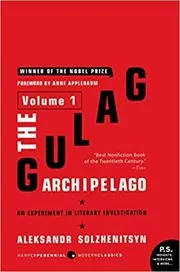
An Experiment in Literary Investigation, Volume 1
The Gulag Archipelago 1918-1956, Book 1
For readers examining Soviet repression through testimony and literary investigation. This first volume gives human detail beyond abstract political debate, though its disturbing material and place within a larger work require sustained attention.
What it's about
The first volume of Solzhenitsyn’s Gulag chronicle opens with arrest and interrogation, tracing how ordinary people are swept into the prison system. Drawing on his own experience and many testimonies, he shows how fear, lies, and small choices feed a vast machinery of repression.

Women, Race, & Class
For readers connecting feminism with American histories of race and labor. Davis brings overlapping struggles into view more directly than general economic texts, though its American focus cannot stand for women's experiences everywhere.
What it's about
Angela Davis examines American struggles for women’s rights alongside histories of slavery, abolition, labor, and racial inequality. She argues that feminism’s development must be understood through the interconnected experiences of race, class, and gender rather than gender alone.
Sources
- 1
100 Best Socialism Books of All Time
shortform.com
- 2
The 100 Best Anarchist, Communist, & Socialist Books of All Time
listmuse.com
- 3
Any book recommendations for someone new to socialism and communism?
reddit.com
- 4
The 43 Best Books on Socialism
fee.org
- 5
Reading List for Democratic Socialists
d3n8a8pro7vhmx.cloudfront.net
- 6
Socialism Books
goodreads.com
- 7
The Eight Best Philosophy Books on Utopia
thedailyidea.org








Edited by
Software engineer whose passion for tracking book recommendations from podcasts inspired the creation of MRB.
Lead investor at 3one4 Capital whose startup expertise and love for books helped shape MRB and its growth.
Comments
Spotted a missing book, a wrong order or a mistake? Tell us and we'll fix this page.
We're a reading guide, not the author or publisher, so we can't send books or pass on messages.