
14 Best Hadoop Books
The best Hadoop books, ranked by how many expert sources recommend each one, with notes to help developers and administrators choose introductions and deeper guides.
Our take
Hadoop books cover several different jobs: understanding distributed storage, writing data-processing programs, querying datasets, and operating clusters. Some introduce the whole ecosystem, while others concentrate on MapReduce algorithms, administration, or security. The established books here mostly describe earlier software releases. Their concepts can help readers understand existing systems, but installation instructions, APIs, and configuration examples need checking against the versions in use.
For a broad foundation, Tom White's Hadoop: The Definitive Guide connects storage and processing with the surrounding tools. Hadoop in 24 Hours provides a more structured lesson format. Developers ready for practical tasks can move to Hadoop in Practice or MapReduce Design Patterns, while operations staff can focus on Hadoop Operations and Expert Hadoop Administration. Programming Hive takes a query-oriented route, and Hadoop Security concentrates on protecting the platform. Start with the broad guide, then choose a specialist book that matches the system and responsibilities you're working with.
14 books · 7 sources · Last updated
As an Amazon Associate, we earn from qualifying purchases (at no extra cost to you).
How to choose from this list
Skip to the full rankingIf you need a broad introduction: Hadoop → Hadoop in Practice
If you prefer a sequence of lessons: Hadoop in 24 Hours
If you design MapReduce algorithms: MapReduce Design Patterns → Hadoop MapReduce v2 Cookbook
If you operate Hadoop clusters: Hadoop Operations → Expert Hadoop Administration
If you work through SQL-like queries: Programming Hive
If you focus on platform security: Hadoop Security
The 14 books, ranked
Ranked by how many expert sources name each book. Ties go to the book more people recommend.

For developers and administrators who want a broad foundation before specializing. Its combination of distributed storage, processing, and operations gives the ecosystem context, though the examples reflect older Hadoop releases and need comparison with current documentation.
What it's about
Tom White explains how to build and operate distributed systems for large datasets with Hadoop. The guide combines HDFS and MapReduce fundamentals with programming examples, cluster administration, and related tools, helping developers and administrators apply Hadoop in practice.

Hadoop in Action
For programmers who want a gradual introduction through MapReduce examples. The progression helps make the processing model concrete, though its early-Hadoop setting leaves substantial gaps for readers working with later deployment and resource-management systems.
What it's about
Chuck Lam introduces Hadoop programming through examples that progress from simple MapReduce tasks to more complex data analysis. The book discusses programming patterns, best practices, the Streaming API, and related tools such as Pig and Hive.

For developers who understand the basics and need techniques for concrete processing tasks. Its recipe-like approach is easier to consult selectively than a sequential introduction, though the examples assume background knowledge and older software environments.
What it's about
Alex Holmes presents practical Hadoop techniques for moving data, analyzing streams, managing clusters, and performing machine learning. Examples cover MapReduce and YARN alongside integration with tools such as Spark, Kafka, Impala, Flume, and Sqoop.

For engineers responsible for running clusters rather than only writing jobs. Its operational perspective adds planning and troubleshooting detail to a programming introduction, though deployment assumptions and configuration examples come from an earlier Hadoop generation.
What it's about
Eric Sammer explains how to plan, deploy, and maintain Hadoop in production. The guide covers hardware and network choices, configuration, resource sharing, monitoring, troubleshooting, backups, and recovery, with practical examples drawn from operational experience.

For data scientists who want distributed computing connected with analytical workflows. The mix of tools and examples provides more application context than an administration book, though readers must reconcile the older APIs with their installed environment.
What it's about
Benjamin Bengfort and Jenny Kim show data scientists how to analyze large datasets with the Hadoop ecosystem. The guide combines distributed computing concepts with Python, MapReduce, Spark, Hive, and HBase, covering data workflows, warehousing, and machine learning.

Hadoop MapReduce v2 Cookbook
For developers looking for task-oriented examples specifically around MapReduce v2. The recipe format supports targeted experimentation more directly than a broad survey, though readers need enough Hadoop context to adapt older code and configuration.
What it's about
Thilina Gunarathne presents recipes for working with Hadoop MapReduce v2 and its ecosystem. The cookbook helps readers explore distributed data processing and gain insights from large datasets through practical tasks and examples.
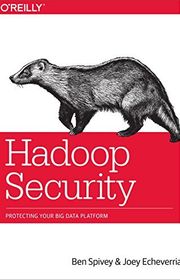
Hadoop Security
For administrators and architects who need security treated as a connected discipline. The dedicated focus gives authentication, authorization, and auditing more attention than general Hadoop guides, though specific integrations and setup procedures reflect the publication era.
What it's about
Ben Spivey and Joey Echeverria examine security across the Hadoop platform, organizing features around authentication, authorization, auditing, and related controls. The book connects these concepts with deployment choices and the work of protecting distributed data systems.

Pro Hadoop
For developers interested in the mechanics of early Hadoop jobs and troubleshooting. Its low-level programming focus supplies detail beyond a conceptual overview, though the age of the framework examples makes it a demanding choice for a first introduction.
What it's about
Jason Venner guides developers through writing, running, debugging, and tuning Hadoop MapReduce jobs. The book also explains cluster setup, distributed storage, and administration, using practical examples to help readers avoid common mistakes in Hadoop systems.

Professional Hadoop Solutions
For developers and architects combining several Hadoop components into a solution. The integrated workflow perspective goes beyond learning isolated commands, though the Java-heavy examples and older ecosystem choices make it a substantial technical commitment.
What it's about
This guide shows developers and enterprise architects how to combine Hadoop components into working data solutions. Java and XML examples cover HDFS, HBase, MapReduce, Oozie, security, and cloud deployment, connecting individual tools with broader processing workflows.
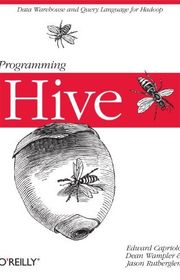
Programming Hive
For readers who want to approach Hadoop data through a SQL-like query language. Its focused treatment goes deeper into Hive than broad ecosystem surveys, though the early Hive version means syntax and operational details need current verification.
What it's about
Edward Capriolo, Dean Wampler, and Jason Rutherglen introduce Hive as a way to query data stored in Hadoop. The guide covers data organization, HiveQL, query execution, and practical workflows for readers bringing database experience to distributed processing.

For beginners who prefer a sequence of bounded lessons and exercises. The structure makes a broad ecosystem less overwhelming than a large reference, though the title's timetable should not be mistaken for the time needed to gain operational experience.
What it's about
Jeffrey Aven introduces Hadoop in 24 lessons combining concepts with practical exercises. Topics include distributed storage, MapReduce programming, Hive, Pig, cluster management, security, and troubleshooting, providing a foundation for building and operating big data systems.

MapReduce Design Patterns
Building Effective Algorithms and Analytics for Hadoop and Other Systems
For programmers who understand MapReduce syntax but need help designing algorithms within its constraints. Reusable patterns offer more design guidance than command recipes, though this narrow processing model is only one part of the wider ecosystem.
What it's about
Donald Miner and Adam Shook explain reusable patterns for designing MapReduce algorithms. The book helps programmers recognize suitable problems, fit solutions into the map-and-reduce framework, and consider performance and resource constraints when processing large datasets.

For administrators who already know Hadoop fundamentals and need deeper operational coverage. The emphasis on tuning, security, and availability is more specialized than the introductory guides, though version-specific procedures require checking against the actual cluster.
What it's about
Sam Alapati guides administrators through building, configuring, securing, and optimizing production Hadoop clusters. Practical examples explain cluster behavior and address high availability, encryption, performance, and the management of Spark, YARN, and HDFS.

Hadoop For Dummies
For readers who want an accessible first map of Hadoop's purposes and components. The broad explanations reduce the initial terminology barrier, though the older technical examples make it better for orientation than a current installation walkthrough.
What it's about
Dirk deRoos introduces Hadoop through its business uses, architecture, and tools. The guide explains distributed storage, MapReduce programming, structured data processing, and cluster administration, helping readers understand the ecosystem and begin building large-scale data applications.
Sources
- 1
Books - HADOOP2 - Apache Software Foundation
cwiki.apache.org
- 2
Apache Hive : Books about Hive
hive.apache.org
- 3
GitHub - youngwookim/awesome-hadoop
github.com
- 4
Best Books for Hadoop | Top 10 Books to Learn Hadoop | Edureka
edureka.co
- 5
20 Best Hadoop Books To Go From Beginner To Expert
whatpixel.com
- 6
Hadoop Books
goodreads.com
- 7
Best books for beginners?
reddit.com






Edited by
Software engineer whose passion for tracking book recommendations from podcasts inspired the creation of MRB.
Lead investor at 3one4 Capital whose startup expertise and love for books helped shape MRB and its growth.
Comments
Spotted a missing book, a wrong order or a mistake? Tell us and we'll fix this page.
We're a reading guide, not the author or publisher, so we can't send books or pass on messages.