
21 Best Silicon Valley Books
The best Silicon Valley books, ranked by how many expert sources recommend each one, with notes on founders, computing history, workplace culture and power.
Our take
Silicon Valley's story includes research laboratories, public funding, technical communities and investors as well as famous founders. These books offer different ways into that history: biographies, company investigations, employee memoirs and wider accounts of the institutions behind technological change. Some explain how particular products were built; others ask who gained power, who was excluded and what happened when ambitious claims escaped scrutiny.
The Code provides a broad historical frame, while Troublemakers follows interconnected careers during an earlier period of regional growth. Dealers of Lightning and Creative Selection bring invention closer through a laboratory and an engineer's experience. For company conflicts, Bad Blood, Super Pumped and Hatching Twitter offer sharply different cases. Uncanny Valley and Small Fry turn toward personal experience, and Brotopia examines access and gender. Older biographies and technology forecasts capture the moment in which they were written. Start with The Code for context or Bad Blood for a focused investigative narrative.
21 books · 7 sources · Last updated
As an Amazon Associate, we earn from qualifying purchases (at no extra cost to you).
How to choose from this list
Skip to the full rankingIf you want the broader history: The Code → Troublemakers
If you want to understand computing's early communities: Hackers → The Dream Machine → Dealers of Lightning
If you're interested in Apple's product work: Revolution in The Valley → Creative Selection
If you want investigations of company power: Bad Blood → Super Pumped → Hatching Twitter
If you want personal and workplace perspectives: Uncanny Valley → Brotopia → Small Fry
If you want a founder biography: Steve Jobs → Elon Musk
The 21 books, ranked
Ranked by how many expert sources name each book. Ties go to the book more people recommend.

For readers who want an investigative account of how secrecy and prestige can conceal failure. The employee and whistleblower perspectives make the institutional breakdown clear, though the medical-testing fraud offers a concentrated cautionary case rather than a balanced regional history.
What it's about
John Carreyrou investigates Theranos and Elizabeth Holmes’s claims about revolutionary blood-testing technology. Through reporting and accounts from employees and whistleblowers, he traces how secrecy, ambition, and pressure concealed serious problems within a celebrated Silicon Valley company.
Also recommended by
4 people Bill Gates recommended this book
Bill Gates
"I couldn’t put down this thriller with a tragic ending." - Bill Gates
Bill Gates's recommendation of this book  Andrew Wilkinson recommended this book
Andrew Wilkinson
"Soooo good." - Andrew Wilkinson
Andrew Wilkinson's recommendation of this book  Bill Gurley recommended this book
Bill Gurley
"An incredible book that should be read by each and every player in the startup/Silicon Valley ecosystem." - Bill Gurley
Bill Gurley's recommendation of this book  Michael Mauboussin recommended this book
Michael Mauboussin
"Amazing [book] about human nature." - Michael Mauboussin
Michael Mauboussin's recommendation of this book
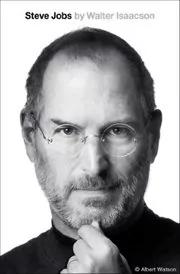
Steve Jobs
For readers who want a detailed portrait of a founder's ambitions, working habits and difficult relationships. Isaacson's extensive interviews offer breadth beyond a single product story, though the biographical focus can overshadow the institutions and collaborators around Jobs.
What it's about
Built from years of interviews with Jobs and the people around him, this is a close look at a brilliant and difficult builder. It follows the intensity, control, and imagination that reshaped several industries.
Also recommended by
9 people Elon Musk recommended this book
Elon Musk
"Quite interesting." - Elon Musk
Elon Musk's recommendation of this book  Scott Adams recommended this book
Scott Adams
"I’m fascinated by the discussion of how Jobs developed what became known as the Reality Distortion Field. Apparently Jobs had a lifelong battle with reality and won." - Scott Adams
Scott Adams's recommendation of this book  Ray Dalio recommended this book
Ray Dalio
"I noticed a number of similarities between [Steve Jobs and I], especially when [the author] quoted Jobs’s own words. [...] but to be clear, I didn’t think that Bridgewater or I held a candle to Apple and Jobs." - Ray Dalio
Ray Dalio's recommendation of this book - Bill Gates recommended this book
Bill Gates
List of books Bill Gates read in 2012.
Bill Gates's recommendation of this book  Gary Vaynerchuk recommended this book
Gary Vaynerchuk
"I've read 3 business books in my life. If you call [this book] a business book." - Gary Vaynerchuk
Gary Vaynerchuk's recommendation of this book  George Raveling recommended this book
George Raveling
"[When I read this book] I was so blown away. I had underlined about three-quarters of the book." - George Raveling
George Raveling's recommendation of this book +3
More recommendations
- Chris Fussell
"Really did a good job of capturing the way that an innovation leader’s mind works." - Chris Fussell
- Scott Belsky
Scott Belsky mentioned this book on "The Tim Ferriss Show" podcast.
- Ed Zschau
Ed Zschau mentioned this book on "The Tim Ferriss Show" podcast.
- Chris Fussell

For readers who want to understand the values and personalities behind early computing communities. Levy follows the hacker ethic across several settings, though the narrative largely concerns an earlier technological world rather than today's platform businesses.
What it's about
Steven Levy profiles the people behind the early computer revolution, including figures at MIT and pioneers of personal computing. He examines their experiments, motivations, and shared hacker ethic, exploring the culture that emerged around a new technological frontier.
Also recommended by
5 people Donald Knuth recommended this book
Donald Knuth
"Incredibly well written tale of our times." - Donald Knuth
Donald Knuth's recommendation of this book  Ev Williams recommended this book
Ev Williams
On the "books read" section of Ev Williams' GoodReads profile.
Ev Williams's recommendation of this book  Zooko Wilcox recommended this book
Zooko Wilcox
"This book changed my life when it came out. [...] It made me want to be a hacker. But not a criminal — a hero of the computer revolution." - Zooko Wilcox
Zooko Wilcox's recommendation of this book  Austen Allred recommended this book
Austen Allred
"[One of] my favorite books for understanding the history of Silicon Valley." - Austen Allred
Austen Allred's recommendation of this book  John Carmack recommended this book
John Carmack
"A really formative book for me as a teenager." - John Carmack
John Carmack's recommendation of this book
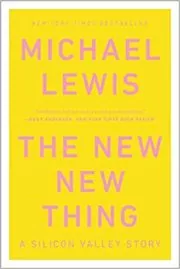
For readers who want the atmosphere of the 1990s internet boom through one restless entrepreneur. Lewis makes Jim Clark's ambitions a window into speculative capitalism, though the character-driven approach is narrower than a systematic history of the industry.
What it's about
Follows Silicon Valley billionaire Jim Clark across startups, sailing adventures, and the 1990s internet boom, using his restless drive to show how venture capital, code, and hype combined to create a new, wildly speculative kind of capitalism.
Also recommended by
4 people Ryan Holiday recommended this book
Ryan Holiday
Ryan Holiday recommended this book on his blog.
Ryan Holiday's recommendation of this book  Keith Rabois recommended this book
Keith Rabois
"[One of three] classic books to read, albeit perhaps with less immediate/practical relevance today." - Keith Rabois
Keith Rabois's recommendation of this book - Austen Allred recommended this book
Austen Allred
"[One of] my favorite books for understanding the history of Silicon Valley." - Austen Allred
Austen Allred's recommendation of this book  Kevin Systrom recommended this book
Kevin Systrom
"I read [this book] and I said to myself this feels like an area of the world I can come to and be myself.'" - Kevin Systrom
Kevin Systrom's recommendation of this book

For readers who enjoy engineers' recollections and specific stories about making a product. Hertzfeld brings the original Macintosh team's decisions close to the reader, though the anecdotal structure provides less analytical distance than an independent company history.
What it's about
Macintosh team member Andy Hertzfeld recounts the development of the original Mac from its early experiments to its 1984 launch. Personal anecdotes and archival material reveal the engineers, software decisions, creative conflicts, and personalities behind the computer.
Also recommended by
1 person- Keith Rabois recommended this book
Keith Rabois
Keith Rabois recommended this book on a Medium blog post.
Keith Rabois's recommendation of this book

For readers interested in an earlier account of US-China competition over artificial intelligence. Lee connects commercial ecosystems with questions about work and responsibility, though the book predates the generative-AI boom and should be read in that historical context.
What it's about
Kai-Fu Lee examines the competition between China and the United States in artificial intelligence. He considers how the technology could transform economies and employment, alongside the social responsibilities involved in responding to widespread changes in work.
Also recommended by
9 people Yuval Noah Harari recommended this book
Yuval Noah Harari
"A superb and very timely survey of the impact of AI on the geopolitical system, the job market and human society." - Yuval Noah Harari
Yuval Noah Harari's recommendation of this book  Arianna Huffington recommended this book
Arianna Huffington
"One of those books you begin reading and instantly feel that everybody should know about it." - Arianna Huffington
Arianna Huffington's recommendation of this book  Chris Anderson recommended this book
Chris Anderson
"Truly one of the wisest and most surprising takes on AI." - Chris Anderson
Chris Anderson's recommendation of this book  Marc Benioff recommended this book
Marc Benioff
"[The author] applies his superpowers to predicting the disruptive shifts that will define the AI-powered future." - Marc Benioff
Marc Benioff's recommendation of this book  Peter Diamandis recommended this book
Peter Diamandis
"A must read for anyone serious about understanding the future of our species." - Peter Diamandis
Peter Diamandis's recommendation of this book  Satya Nadella recommended this book
Satya Nadella
"Clear-eyed and a must-read." - Satya Nadella
Satya Nadella's recommendation of this book +3
More recommendations
- Tim O’Reilly
"If you care about the future being brought to us by AI, this is the one indispensable book of 2018." - Tim O’Reilly
- Balaji Srinivasan
"A history of the Chinese tech ecosystem." - Balaji Srinivasan
- Ryan Shea
Ryan Shea recommended this book on his website.
- Tim O’Reilly

For readers interested in who gains access to Silicon Valley's opportunities and who gets excluded. Chang's reporting puts gender and workplace power at the center, though the focus on discrimination is more concentrated than a general industry history.
What it's about
Emily Chang investigates how Silicon Valley developed a culture that excludes women despite its claims of meritocracy. Drawing on accounts from industry insiders, she examines venture capital, workplace discrimination, and the women challenging entrenched patterns of power.
Also recommended by
6 people- Arianna Huffington recommended this book
Arianna Huffington
"A must must must read!!" - Arianna Huffington
Arianna Huffington's recommendation of this book  Tom Peters recommended this book
Tom Peters
"A stomach turner." - Tom Peters
Tom Peters's recommendation of this book  Aaron Levie recommended this book
Aaron Levie
Aaron Levie mentioned this book on Twitter.
Aaron Levie's recommendation of this book - Bill Gurley recommended this book
Bill Gurley
"Historically important book that will hopefully stand as a critical catalyst to change in our industry." - Bill Gurley
Bill Gurley's recommendation of this book  Melinda Gates recommended this book
Melinda Gates
"For decades, powerful men have responded to sexism in tech by saying, 'It’s always been this way.'" - Melinda Gates
Melinda Gates's recommendation of this book  Michael Bloomberg recommended this book
Michael Bloomberg
"Important new book about gender equality in Silicon Valley." - Michael Bloomberg
Michael Bloomberg's recommendation of this book

For readers interested in Musk's earlier entrepreneurial career across software, cars and spaceflight. Vance connects ambitions with operational struggles, though the 2015 biography captures an earlier phase and cannot explain the full course of his later public life.
What it's about
Ashlee Vance traces Elon Musk's life from childhood in South Africa to his entrepreneurial work in the United States. The biography examines the ambitions and challenges behind his involvement with PayPal, Tesla, SpaceX, and SolarCity.
Also recommended by
6 people Anthony Pompliano recommended this book
Anthony Pompliano
"Found it even better than I anticipated." - Anthony Pompliano
Anthony Pompliano's recommendation of this book - Austen Allred recommended this book
Austen Allred
"Was written in 2015 and already feels like you could have another full book as an update." - Austen Allred
Austen Allred's recommendation of this book  Mr. Money Mustache recommended this book
Mr. Money Mustache
"I’m a big fan [of this book]." - MMM
Mr. Money Mustache's recommendation of this book  Tim Urban recommended this book
Tim Urban
"A great biography on Musk." - Tim Urban
Tim Urban's recommendation of this book  Casey Neistat recommended this book
Casey Neistat
"One of the people that I find most interesting. I'm fascinated by Elon Musk." - Casey Neistat
Casey Neistat's recommendation of this book  John Collison recommended this book
John Collison
"A good read." - John Collison
John Collison's recommendation of this book

For readers curious about how research laboratories produce inventions that companies struggle to commercialize. Xerox PARC supplies a detailed institutional case, though the concentration on one organization offers less breadth than a general history of Silicon Valley.
What it's about
Michael A. Hiltzik chronicles the scientists and engineers at Xerox PARC and their contributions to personal computing. Interviews illuminate inventions such as laser printing and graphical interfaces, alongside the corporate decisions that complicated the commercialization of their work.
Also recommended by
4 people Patrick Collison recommended this book
Patrick Collison
Patrick Collison labeled this book "substantially above average."
Patrick Collison's recommendation of this book  Sam Altman recommended this book
Sam Altman
One of Sam Altman's answers to "What are some of the best books you recommend for a young startup founder?"
Sam Altman's recommendation of this book - Austen Allred recommended this book
Austen Allred
"[One of] my favorite books for understanding the history of Silicon Valley." - Austen Allred
Austen Allred's recommendation of this book  Ryan Shea recommended this book
Ryan Shea
Ryan Shea recommended this book on his website.
Ryan Shea's recommendation of this book

For readers who want a fast-moving company history about growth, governance and internal conflict. Isaac traces Uber's ambitions through its leadership crisis, though the narrative concentrates on a turbulent earlier period rather than the company's subsequent development.
What it's about
Mike Isaac investigates Uber’s rapid rise and the internal battles surrounding its leadership. His account follows aggressive expansion, workplace controversies, and clashes among executives and investors, placing the company’s struggles within Silicon Valley’s culture of ambition and disruption.
Also recommended by
3 people Alexis Ohanian recommended this book
Alexis Ohanian
"Good read." - Alexis Ohanian
Alexis Ohanian's recommendation of this book  Kara Swisher recommended this book
Kara Swisher
"Great book [on Uber]." - Kara Swisher
Kara Swisher's recommendation of this book  Changpeng Zhao recommended this book
Changpeng Zhao
"Regardless of how you view Uber, this book is a great read." - Changpeng Zhao
Changpeng Zhao's recommendation of this book

For readers who want a regional history told through interconnected careers rather than one famous founder. Berlin links several industries and institutions, though the concentrated period leaves later internet and platform developments for other books.
What it's about
Leslie Berlin follows seven pioneers who helped shape Silicon Valley in the 1970s and early 1980s. Their intertwined careers connect personal computing, video games, biotechnology, semiconductors, and venture capital with the institutions that supported technological change.
Also recommended by
3 people- Keith Rabois recommended this book
Keith Rabois
Keith Rabois recommended this book on a Medium blog post.
Keith Rabois's recommendation of this book  Vinod Khosla recommended this book
Vinod Khosla
"Tells the story of the world I have always lived, loved and believed in, despite the recent techlash." - Vinod Khosla
Vinod Khosla's recommendation of this book - Austen Allred recommended this book
Austen Allred
"[One of] my favorite books for understanding the history of Silicon Valley." - Austen Allred
Austen Allred's recommendation of this book

For readers who want a provocative insider's view of startups and Facebook advertising. The personal account exposes incentives and workplace maneuvering with unusual directness, though the abrasive voice and selective viewpoint require more critical distance than detached reporting.
What it's about
Antonio García Martínez recounts leaving Wall Street for Silicon Valley, running a startup and joining Facebook's advertising team. His memoir examines technological disruption, ambition and company politics alongside the excesses and personal costs of life in the technology industry.
Also recommended by
2 people Patrick O'Shaughnessy recommended this book
Patrick O'Shaughnessy
"A look inside startup culture, filled with hijinks." - Patrick O'Shaughnessy
Patrick O'Shaughnessy's recommendation of this book  Raoul Pal recommended this book
Raoul Pal
Raoul Pal recommended this book on Twitter.
Raoul Pal's recommendation of this book

For readers interested in the everyday craft behind Apple's products. Kocienda's engineering perspective makes experiments and demonstrations concrete, though his personal experience covers a particular team and period rather than the company's whole design history.
What it's about
Apple software engineer Ken Kocienda describes the work behind Safari, the iPhone and the iPad. His account follows experiments, demonstrations and repeated revisions to show how collaboration, technical craft and attention to users shaped product design.
Also recommended by
2 people- Keith Rabois recommended this book
Keith Rabois
"[One of] two indispensable books of 2018." - Keith Rabois
Keith Rabois's recommendation of this book  Chris Dixon recommended this book
Chris Dixon
"A really interesting inside look at, well, Apple’s design process under Steve Jobs." - Chris Dixon
Chris Dixon's recommendation of this book

For readers who enjoy origin stories driven by rivalries and contested credit. Bilton reconstructs Twitter's early power struggles with strong narrative momentum, though the focus on its founders and beginnings leaves later changes outside the book's scope.
What it's about
Nick Bilton traces Twitter's beginnings through the relationships among Ev Williams, Jack Dorsey, Biz Stone, and Noah Glass. His account follows rapid growth, broken friendships, and struggles for control within the young company.
Also recommended by
2 people- Casey Neistat recommended this book
Casey Neistat
"It was reading [this book] that literally motivated me, inspired me, and gave me the confidence to start my own technology company." - Casey Neistat
Casey Neistat's recommendation of this book - Alexis Ohanian recommended this book
Alexis Ohanian
"Fantastic book [...] Far more relatable than I knew or expected." - Alexis Ohanian
Alexis Ohanian's recommendation of this book
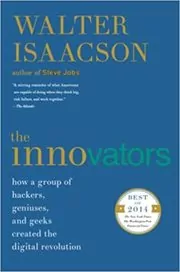
The Innovators
How a Group of Hackers, Geniuses, and Geeks Created the Digital Revolution
For readers who want a broad history of computing centered on collaboration. Isaacson links contributions across generations and disciplines, though the wide chronological sweep gives individual episodes less depth than the books devoted to one laboratory or product.
What it's about
Isaacson tells the story of the people who created the computer and the internet, from Ada Lovelace onward. The through line is collaboration, showing how teams, not just lone geniuses, built the digital age.
Also recommended by
2 people Chris Fussell recommended this book
Chris Fussell
"The history of how great ideas evolve." - Chris Fussell
Chris Fussell's recommendation of this book  Sheryl Sandberg recommended this book
Sheryl Sandberg
"A fascinating history of the digital revolution, including the critical but often forgotten role women played from the beginning." - Sheryl Sandberg
Sheryl Sandberg's recommendation of this book

For readers who want to experience the startup boom through an employee's ambivalence rather than a founder's triumph. Wiener's literary memoir makes social atmosphere vivid, though its selective personal perspective offers less technical or corporate detail than investigative histories.
What it's about
Anna Wiener leaves a stalled publishing job in New York for startup life in San Francisco, then watches the tech boom from the inside. It is a funny, uneasy memoir about ambition, gender, money, and the costs of Silicon Valley optimism.
Also recommended by
2 people- Ankur Warikoo recommended this book
Ankur Warikoo
"[One of] my best 3 books of 2022." - Ankur Warikoo
Ankur Warikoo's recommendation of this book  Jia Tolentino recommended this book
Jia Tolentino
"EVERYONE BUY IT." - Jia Tolentino
Jia Tolentino's recommendation of this book

Accidental Empires
For readers who enjoy a sharp, personality-driven account of the early personal-computer business. Cringely turns competitive behavior into a lively narrative, though the period-bound jokes and anecdotal emphasis require reading alongside more systematic histories.
What it's about
Robert X. Cringely recounts the rise of the personal computer industry through its influential personalities and hacker culture. Anecdotes about figures including Steve Jobs, Steve Wozniak, Mitch Kapor, and Bill Gates connect individual behavior with the industry's development.
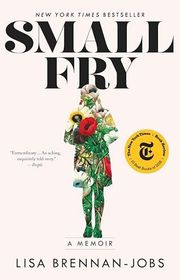
Small Fry
For readers who want to see Silicon Valley's mythology from inside a family. Brennan-Jobs's memoir gives emotional consequences priority over products and business victories, though its intimate perspective offers little of a conventional technology or company history.
What it's about
Lisa Brennan-Jobs recounts growing up between the contrasting worlds of her mother, Chrisann Brennan, and her father, Steve Jobs. Her memoir explores belonging, money, parental attention and the complicated family relationships surrounding a prominent technology figure.

For readers who want to understand Silicon Valley's connections with government, universities and national power. O'Mara supplies institutional context missing from founder biographies, though the wide historical scope involves more names and political detail than a single-company narrative.
What it's about
Margaret O'Mara traces Silicon Valley's development through entrepreneurs, universities, and government institutions. Drawing on years of research, she examines the connections between technology and federal power, showing how the region helped reshape America's economy and political life.

The Dream Machine
For patient readers interested in the institutions and ideas behind interactive, networked computing. Licklider's story connects researchers, funding and technical visions, though the extensive detail and broader geography make it a demanding introduction to Silicon Valley itself.
What it's about
M. Mitchell Waldrop traces the computing revolution through J.C.R. Licklider’s vision of interactive, connected computers. His history follows researchers, institutions, and technological experiments that helped move computing beyond calculation toward communication, personal use, and collaboration.
Also recommended by
3 people- Patrick Collison recommended this book
Patrick Collison
"Particularly great." - Patrick Collison
Patrick Collison's recommendation of this book  Stewart Butterfield recommended this book
Stewart Butterfield
"I recommended it to [Patrick Collison] as 'something I thought he'd be really interested in.'" - Stewart Butterfield
Stewart Butterfield's recommendation of this book  Tobi Lütke recommended this book
Tobi Lütke
"I really love tech history books like this." - Tobi Lütke
Tobi Lütke's recommendation of this book

For readers who want to connect a platform's internal decisions with its cultural influence. Frier combines company reporting with the pressures of growth and ownership, though the historical account is not a guide to Instagram's current features or strategy.
What it's about
Sarah Frier traces Instagram's development from a small photo-sharing app to a platform owned by Facebook. Interviews with founders, employees and influencers reveal conflicts over growth and independence alongside the app's influence on culture, celebrity and everyday life.
Also recommended by
2 people- Casey Neistat recommended this book
Casey Neistat
"Awesome story about how ig came to be and its impact broadly on human interaction." - Casey Neistat
Casey Neistat's recommendation of this book  Saagar Enjeti recommended this book
Saagar Enjeti
"I respect the hell out of Mark Zuckerberg. That’s probably not the takeaway for most people after reading this book." - Saagar Enjeti
Saagar Enjeti's recommendation of this book
Sources
- 1
The 7 best books about Silicon Valley
malwarwickonbooks.com
- 2
10 Must-Read Books About Silicon Valley
bookglow.net
- 3
100 Best Silicon Valley Books of All Time (Updated for 2026)
shortform.com
- 4
Silicon Valley Books
goodreads.com
- 5
Looking for books (preferably non-fiction) that are critical/skeptical of Silicon Valley and the modern tech industry
reddit.com
- 6
11 Best Technology Books 2020
nymag.com
- 7
Books about the history of SV / Computers / Technology Companies
reddit.com




Edited by
Software engineer whose passion for tracking book recommendations from podcasts inspired the creation of MRB.
Lead investor at 3one4 Capital whose startup expertise and love for books helped shape MRB and its growth.
Comments
Spotted a missing book, a wrong order or a mistake? Tell us and we'll fix this page.
We're a reading guide, not the author or publisher, so we can't send books or pass on messages.