
27 Best Biography Books
The best biography books, ranked by how many expert sources recommend each one, with notes on who each life story suits, its approach and where to start.
Our take
Biography turns an individual life into a way of understanding a wider world. The books here explore political authority, creative work, scientific discovery and private experience, with different balances of narrative pace and detail. The selection also includes memoirs and autobiographies, where the subject shapes the account directly, as well as works reconstructed through interviews, documents and observation.
Long biographies such as Alexander Hamilton, Washington: A Life and The Power Broker ask for time but show how a life intersects with institutions and historical change. The Immortal Life of Henrietta Lacks and Mountains Beyond Mountains connect individual experience with medicine and inequality. Frida and Leonardo da Vinci place creative work close to the center, while Born a Crime and Black Boy offer selective accounts of childhood rather than complete public careers. Think about whether you want a whole life, a particular period or a distinctive voice. Start with The Immortal Life of Henrietta Lacks for reported biography or Born a Crime for memoir.
27 books · 5 sources · Last updated
As an Amazon Associate, we earn from qualifying purchases (at no extra cost to you).
How to choose from this list
Skip to the full rankingIf you want an accessible reported life: The Immortal Life of Henrietta Lacks → Mountains Beyond Mountains
If you want political lives and institutions: Alexander Hamilton → The Power Broker
If you want art and creative practice: Frida → Leonardo da Vinci
If you want childhood in the subject’s voice: Born a Crime → Black Boy
If you want science and an individual mind: Surely You're Joking, Mr. Feynman! → A Beautiful Mind
If you want medicine and mortality: When Breath Becomes Air
The 27 books, ranked
Ranked by how many expert sources name each book. Ties go to the book more people recommend.
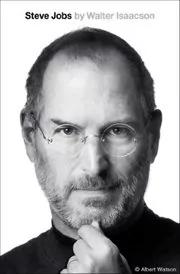
Steve Jobs
For readers interested in the personalities behind products and creative organizations. Its interviews expose the friction between Jobs’s standards and his relationships more directly than a business history, though the subject’s intensity can dominate the wider industry context.
What it's about
Built from years of interviews with Jobs and the people around him, this is a close look at a brilliant and difficult builder. It follows the intensity, control, and imagination that reshaped several industries.
Also recommended by
9 people Elon Musk recommended this book
Elon Musk
"Quite interesting." - Elon Musk
Elon Musk's recommendation of this book  Scott Adams recommended this book
Scott Adams
"I’m fascinated by the discussion of how Jobs developed what became known as the Reality Distortion Field. Apparently Jobs had a lifelong battle with reality and won." - Scott Adams
Scott Adams's recommendation of this book  Ray Dalio recommended this book
Ray Dalio
"I noticed a number of similarities between [Steve Jobs and I], especially when [the author] quoted Jobs’s own words. [...] but to be clear, I didn’t think that Bridgewater or I held a candle to Apple and Jobs." - Ray Dalio
Ray Dalio's recommendation of this book  Bill Gates recommended this book
Bill Gates
List of books Bill Gates read in 2012.
Bill Gates's recommendation of this book  Gary Vaynerchuk recommended this book
Gary Vaynerchuk
"I've read 3 business books in my life. If you call [this book] a business book." - Gary Vaynerchuk
Gary Vaynerchuk's recommendation of this book  George Raveling recommended this book
George Raveling
"[When I read this book] I was so blown away. I had underlined about three-quarters of the book." - George Raveling
George Raveling's recommendation of this book +3
More recommendations
- Chris Fussell
"Really did a good job of capturing the way that an innovation leader’s mind works." - Chris Fussell
- Scott Belsky
Scott Belsky mentioned this book on "The Tim Ferriss Show" podcast.
- Ed Zschau
Ed Zschau mentioned this book on "The Tim Ferriss Show" podcast.
- Chris Fussell

Alexander Hamilton
For readers who want the founding of the United States through an ambitious outsider’s life. Its financial and political detail gives Hamilton’s achievements context, though the long narrative and sympathetic emphasis call for patience and critical distance.
What it's about
This biography follows Alexander Hamilton from his Caribbean childhood to his role as George Washington's aide, leading architect of the Constitution, and first treasury secretary. Chernow explores Hamilton's ambition, political battles, and complicated personal life up to the duel that ended his career.
Also recommended by
1 person Travis Kalanick recommended this book
Travis Kalanick
"[Travis Kalanick changed his Twitter] avatar to Alexander Hamilton after having read [this book]." - Adam Lashinsky
Travis Kalanick's recommendation of this book

For readers who want leadership understood through relationships among political opponents. Its multiple portraits explain how Lincoln’s cabinet functioned beyond one man’s decisions, though the broad cast and emphasis on political skill make it a long, selective account.
What it's about
Goodwin tells the story of Abraham Lincoln and the powerful men who once ran against him, then joined his cabinet. It is both a Civil War history and a sharp look at how Lincoln turned rivalry into effective leadership.
Also recommended by
7 people Alexandria Ocasio-Cortez recommended this book
Alexandria Ocasio-Cortez
Alexandria Ocasio-Cortez recommended this book on Twitter.
Alexandria Ocasio-Cortez's recommendation of this book  J.K. Rowling recommended this book
J.K. Rowling
"I lived in it the way that you do with truly great books; putting it down with glazed eyes and feeling disconcerted to find yourself in the 21st century." - J.K. Rowling
J.K. Rowling's recommendation of this book - Bill Gates recommended this book
Bill Gates
"I loved [this book]." - Bill Gates
Bill Gates's recommendation of this book  Scott Belsky recommended this book
Scott Belsky
Scott Belsky mentioned this book on "The Tim Ferriss Show" podcast.
Scott Belsky's recommendation of this book  Stewart Butterfield recommended this book
Stewart Butterfield
"Among the best historical books I've ever read (take that, Herodotus)." - Stewart Butterfield
Stewart Butterfield's recommendation of this book  Jamie Dimon recommended this book
Jamie Dimon
On Jamie Dimon's list of favorite books.
Jamie Dimon's recommendation of this book +1
More recommendations
- Sunny Hostin
"A terrific book!" - Sunny Hostin
- Sunny Hostin

The Immortal Life of Henrietta Lacks
For readers who want science connected to one family’s experience of power and consent. Its reporting joins personal history with the consequences of medical research, though the shifting focus makes it less conventional than a cradle to grave biography.
What it's about
Rebecca Skloot investigates the life of Henrietta Lacks, whose cells were taken without her knowledge and became important tools in medical research. Her reporting connects scientific advances with the experiences of Lacks's family and questions of consent, race, and justice.
Also recommended by
1 person A.J. Jacobs recommended this book
A.J. Jacobs
"Great writer." - A.J. Jacobs
A.J. Jacobs's recommendation of this book

Mountains Beyond Mountains
The Quest of Dr. Paul Farmer, a Man Who Would Cure the World
For readers who want an active working life connected to questions of inequality. Its close observation of Paul Farmer makes medical commitments concrete, though admiration for the subject can leave less distance than a more critical institutional history.
What it's about
Tracy Kidder follows physician Paul Farmer's efforts to bring modern medical care to impoverished communities. His account connects Farmer's work across several countries with questions about infectious disease, inequality, politics, and the obligations of medicine.

For readers who want a strongly directed narrative of endurance and its aftermath. Its vivid reconstruction makes the wartime experience immediate, though the violence and later trauma are severe and the redemptive arc shapes the presentation.
What it's about
Laura Hillenbrand follows Olympic runner Louis Zamperini from a rough California boyhood to a plane crash, 47 days adrift in the Pacific, and brutal POW camps. It is a tense, deeply human survival story about endurance, trauma, and forgiveness.

For readers who want curiosity and intellectual play in a scientist’s own stories. Its informal anecdotes make the personality unusually accessible, though the selective, sometimes dated self-presentation offers neither a complete life nor a systematic account of physics.
What it's about
Richard Feynman recounts adventures drawn from conversations with Ralph Leighton. Stories of science, safecracking, practical jokes, art, and other pursuits reveal the physicist's curiosity, skepticism, and willingness to explore unfamiliar subjects.
Also recommended by
11 people Peter Attia recommended this book
Peter Attia
"The book I’ve recommended most." - Peter Attia
Peter Attia's recommendation of this book  Naval Ravikant recommended this book
Naval Ravikant
"Learn about the inner mindset and external state of someone who was absolutely brilliant." - Naval Ravikant
Naval Ravikant's recommendation of this book  Tim Ferriss recommended this book
Tim Ferriss
"One of my favorite books." - Tim Ferriss
Tim Ferriss's recommendation of this book  Mark Zuckerberg recommended this book
Mark Zuckerberg
On the "books read" section of Mark Zuckerberg's Facebook profile.
Mark Zuckerberg's recommendation of this book  Larry Page recommended this book
Larry Page
Larry Page mentioned this book in an Entrepreneur.com article.
Larry Page's recommendation of this book  Ev Williams recommended this book
Ev Williams
On the "books read" section of Ev Williams' GoodReads profile.
Ev Williams's recommendation of this book +5
More recommendations
- Sergey Brin
"I remember really enjoying [this author]'s books." - Sergey Brin
- Brian Armstrong
"A way to have a happy life. Remain curious and enjoy the journey." - Brian Armstrong
- Noah Kagan
Noah Kagan recommended this book in the "Tools of Titans" book.
- Sahil Lavingia
Sahil Lavingia recommended this book on Notion.
- James Clear
"[One of] the 10 best nonfiction books of all-time." - James Clear
- Sergey Brin

When Breath Becomes Air
For readers who want a brief reflection on vocation and mortality from someone who became both doctor and patient. Its close personal perspective gives the questions immediacy, though terminal illness and bereavement make it emotionally demanding.
What it's about
Near the end of his neurosurgery training, Paul Kalanithi is diagnosed with terminal lung cancer and begins asking what makes a life meaningful. His memoir is clear-eyed, intimate, and deeply humane.
Also recommended by
8 people- Bill Gates recommended this book
Bill Gates
"This book left me in tears." - Bill Gates
Bill Gates's recommendation of this book  Melinda Gates recommended this book
Melinda Gates
Melinda Gates recommended this book on Likewise.com.
Melinda Gates's recommendation of this book  Anthony Pompliano recommended this book
Anthony Pompliano
"[One of the] best books I read in 2017." - Anthony Pompliano
Anthony Pompliano's recommendation of this book  Patrick O'Shaughnessy recommended this book
Patrick O'Shaughnessy
"The memoir of a successful neurosurgeon who is diagnosed with lung cancer." - Patrick O'Shaughnessy
Patrick O'Shaughnessy's recommendation of this book  Tim Cook recommended this book
Tim Cook
"Best book on re-examining life and values." - Tim Cook
Tim Cook's recommendation of this book  Peter King recommended this book
Peter King
"One of the best books I've read in years." - Peter King
Peter King's recommendation of this book +2
More recommendations
- Shauna Niequist
Shauna Niequist recommended this book on Twitter.
- James Clear
"[One of] the 10 best nonfiction books of all-time." - James Clear
- Shauna Niequist

For readers interested in the tension between business power, private belief and philanthropy. Its use of family and business records gives Rockefeller more complexity than a simple success story, though the financial detail and length demand sustained attention.
What it's about
Chernow's portrait of John D. Rockefeller Sr. tracks the oil magnate from a troubled family and early business ventures through the rise and breakup of Standard Oil. It also traces his massive philanthropy and the ways his fortune reshaped modern charity.
Also recommended by
7 people Charlie Munger recommended this book
Charlie Munger
"One of the best business biographies I have ever read." - Charlie Munger
Charlie Munger's recommendation of this book  Ryan Holiday recommended this book
Ryan Holiday
"I found Rockefeller to be strangely stoic, incredibly resilient, and, despite his reputation as a robber baron, humble and compassionate." - Ryan Holiday
Ryan Holiday's recommendation of this book - Anthony Pompliano recommended this book
Anthony Pompliano
"[One of the] best books I read in 2017." - Anthony Pompliano
Anthony Pompliano's recommendation of this book  Austen Allred recommended this book
Austen Allred
"The mindset required to do well in businesses when everything is in flux, competition is intense and setbacks are frequent." - Austen Allred
Austen Allred's recommendation of this book  David Friedberg recommended this book
David Friedberg
"Just hearing the story of the railroads and standard oil and what took place in this country, it's incredible." - David Friedberg
David Friedberg's recommendation of this book  Jason Calacanis recommended this book
Jason Calacanis
"I got about 500 pages in. It is detailed." - Jason Calacanis
Jason Calacanis's recommendation of this book +1
More recommendations
- Ray Dalio
"Fabolous." - Ray Dalio
- Ray Dalio
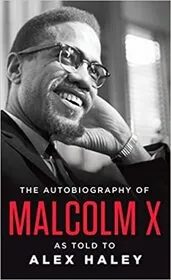
For readers interested in political and personal reinvention told in the subject’s own voice. Its changing convictions give the life an unusual forward momentum, though the collaboration and retrospective narration require reading it as a shaped self-portrait.
What it's about
Told to Alex Haley, this autobiography follows Malcolm X from Omaha and Lansing to prison, the Nation of Islam, Mecca, and beyond. It is both a personal story of reinvention and a sharp record of race in America.
Also recommended by
6 people Casey Neistat recommended this book
Casey Neistat
"I’ve read [this book] more times than I can count. I cried at the end of [this book]." - Casey Neistat
Casey Neistat's recommendation of this book - Jason Calacanis recommended this book
Jason Calacanis
Jason Calacanis recommended this book on his blog.
Jason Calacanis's recommendation of this book - Ryan Holiday recommended this book
Ryan Holiday
"[One] of the most inspiring men of the last 150 years." - Ryan Holiday
Ryan Holiday's recommendation of this book  Jerrod Carmichael recommended this book
Jerrod Carmichael
Jerrod Carmichael mentioned this book on "The Tim Ferriss Show" podcast.
Jerrod Carmichael's recommendation of this book  Steve Aoki recommended this book
Steve Aoki
"[I] was blown away by the determination and commitment that Malcolm X had to his people and to fight against a system that was not designed to support or help him or his people." - Steve Aoki
Steve Aoki's recommendation of this book  Brian Koppelman recommended this book
Brian Koppelman
"[One of the autobiographies] I have read the most often." - Brian Koppelman
Brian Koppelman's recommendation of this book

For readers who want a participant’s account of a disaster and the decisions surrounding it. Its immediate perspective makes pressure and uncertainty palpable, though the author’s involvement means this is one contested viewpoint rather than a complete record.
What it's about
Krakauer's firsthand account of the 1996 Mount Everest disaster follows a commercial expedition caught in a deadly storm. It examines the climbers' decisions, the brutal effects of altitude, and the guilt carried by those who survived.
Also recommended by
2 people Richard Branson recommended this book
Richard Branson
Richard Branson recommended this book on his "70 must-read books" blog post.
Richard Branson's recommendation of this book  James Clear recommended this book
James Clear
"[One of] the 10 best nonfiction books of all-time." - James Clear
James Clear's recommendation of this book

Into the Wild
For readers drawn to a short investigation of idealism, risk and self-reliance. Krakauer’s reconstruction makes the biographer’s search part of the story, though gaps in the evidence leave room for interpretation rather than a settled portrait.
What it's about
Jon Krakauer retraces the path of Christopher McCandless, who gave up his savings, adopted the name Alexander Supertramp, and headed west. It follows his search for freedom, the people he met, and the choices that took him into Alaska's backcountry.
Also recommended by
1 person Gretchen Rubin recommended this book
Gretchen Rubin
Gretchen Rubin mentioned this book on "The Tim Ferriss Show" podcast.
Gretchen Rubin's recommendation of this book

For readers who want a comprehensive portrait behind a familiar public monument. Its combination of military, political and private life gives Washington human texture, though the scale and extensive Revolutionary era detail make it a lengthy undertaking.
What it's about
An intimate one volume biography of George Washington that follows him from ambitious young surveyor to revolutionary commander and first president. The book emphasizes Washington's inner doubts, political skill, and evolving views on slavery as he helped shape the new republic.
Also recommended by
1 person Barack Obama recommended this book
Barack Obama
Barack Obama's "2016 Summer Reading List."
Barack Obama's recommendation of this book

For readers who want intellectual achievement placed alongside illness and relationships. Its attention to Nash’s mathematical world gives the life more context than an inspirational portrait, though technical passages and painful personal material require patient reading.
What it's about
Sylvia Nasar traces mathematician John Nash's intellectual achievements and long experience of schizophrenia. The biography examines his work in game theory, his relationships, and the support of his family and mathematical community through decades of illness.

For readers who want an entrepreneur’s account of uncertainty before a company became established. Its emphasis on cash shortages and relationships makes the early struggle tangible, though it remains the founder’s perspective rather than an independent corporate history.
What it's about
Phil Knight recounts Nike's beginnings as a business importing running shoes from Japan. His memoir follows the company's growth from early sales out of a car, describing the risks, setbacks, relationships, and decisions behind its development.
Also recommended by
16 people Alexis Ohanian recommended this book
Alexis Ohanian
"A great one -- had no idea Nike had such a long history." - Alexis Ohanian
Alexis Ohanian's recommendation of this book - Anthony Pompliano recommended this book
Anthony Pompliano
"[One of the] best books I read in 2017." - Anthony Pompliano
Anthony Pompliano's recommendation of this book - Austen Allred recommended this book
Austen Allred
"Loved [this book]." - Austen Allred
Austen Allred's recommendation of this book - Bill Gates recommended this book
Bill Gates
"A refreshingly honest reminder of what the path to business success really looks like." - Bill Gates
Bill Gates's recommendation of this book  Bill Gurley recommended this book
Bill Gurley
"All entrepreneurs should read." - Bill Gurley
Bill Gurley's recommendation of this book  Brian Armstrong recommended this book
Brian Armstrong
"Memoir by the Nike founder and CEO." - Brian Armstrong
Brian Armstrong's recommendation of this book +10
More recommendations
- Jason Calacanis
"Great inspirational [book]." - Jason Calacanis
- Kathryn Minshew
Most Recommended Books reached out to Kathryn Minshew directly.
- Tobi Lütke
"An autobiographical account of one of the world’s most recognizable brands." - Tobi Lütke
- Vlad Tenev
Vlad Tenev's response to Bloomberg's "The Best Books of 2017" survey.
- Warren Buffett
"The best book I read [in 2015]." - Warren Buffett
- Patrick O'Shaughnessy
"A perfect business book & memoir hybrid." - Patrick O'Shaughnessy
- Tim Cook
"Best business book of the century." - Tim Cook
- Ryan Shea
Ryan Shea recommended this book on his website.
- Trung Phan
"About the Footwear industry." - Trung Phan
- Blake Randall
"" - Blake Randall
- Jason Calacanis

For readers who want to understand how power works beyond elected office. Its detailed connections between personal ambition, institutions and urban consequences reach further than a leadership portrait, though the length and procedural detail demand a major commitment.
What it's about
Robert Moses transforms New York through bridges, parks, highways, and urban redevelopment while accumulating extraordinary political influence. Caro’s biography investigates how an unelected official acquired power, maintained it, and reshaped the lives of the city’s residents.
Also recommended by
4 people- Ryan Holiday recommended this book
Ryan Holiday
"One of the most magnificent books I’ve ever read." - Ryan Holiday
Ryan Holiday's recommendation of this book  Sam Hinkie recommended this book
Sam Hinkie
"My favorite writer." - Sam Hinkie
Sam Hinkie's recommendation of this book  Shane Parrish recommended this book
Shane Parrish
"It’s amazing. But it’s not a light read." - Shane Parrish
Shane Parrish's recommendation of this book  Trung Phan recommended this book
Trung Phan
"About the Urban Planning industry." - Trung Phan
Trung Phan's recommendation of this book
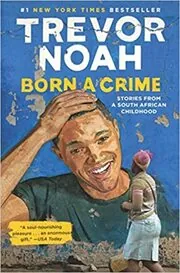
For readers who prefer episodes of childhood and family life to a complete public career. Its humor makes language and racial classification concrete, though the memoir’s selective structure leaves Noah’s later professional life largely outside the frame.
What it's about
Trevor Noah recalls growing up with a Black mother and white father in apartheid South Africa, where their relationship was illegal. Humorous and painful childhood stories explore race, language, poverty, belonging, and his mother’s determination to protect his future.
Also recommended by
3 people- Bill Gates recommended this book
Bill Gates
"Trevor Noah’s funny and moving account of growing up in South Africa." - Bill Gates
Bill Gates's recommendation of this book - Melinda Gates recommended this book
Melinda Gates
Melinda Gates recommended this book on Likewise.com.
Melinda Gates's recommendation of this book  Hannah Hart recommended this book
Hannah Hart
"Everyone should read this book for a strong dose of reality served with a side of laughter." - Hannah Hart
Hannah Hart's recommendation of this book
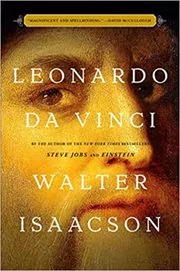
Leonardo da Vinci
For readers who want creative practice illuminated through notebooks and close observation. Its links between artistic and scientific curiosity give a broad picture of Leonardo’s working mind, though the many projects and unfinished ideas can make the narrative episodic.
What it's about
Drawing on Leonardo's notebooks, Isaacson follows the artist, engineer, and obsessive observer through his art, experiments, and inventions. It is as much a portrait of curiosity as it is a life story.
Also recommended by
3 people Mukesh Ambani recommended this book
Mukesh Ambani
"I am reading this great book [...]. He is my favorite author." - Mukesh Ambani
Mukesh Ambani's recommendation of this book - Bill Gates recommended this book
Bill Gates
"Sheds light on every facet of [Leonardo da Vinci]’s life." - Bill Gates
Bill Gates's recommendation of this book - Austen Allred recommended this book
Austen Allred
"What genius is really made up of, and how to recreate some semblance of it." - Austen Allred
Austen Allred's recommendation of this book

For readers seeking a forcefully critical account of Mao’s rise and rule. Its emphasis on coercion and personal power differs from more institution centered histories, though the prosecutorial tone makes comparison with other interpretations especially useful.
What it's about
Drawing on years of research and interviews, Jung Chang and Jon Halliday present a fiercely critical life of Mao Zedong. The book follows his rise, his rule, and the enormous human cost of the system he built.
Also recommended by
1 person- Richard Branson recommended this book
Richard Branson
Richard Branson recommended this book on his "70 must-read books" blog post.
Richard Branson's recommendation of this book

For readers who want Turing’s ideas connected to his private life and historical circumstances. Its mathematical and social detail gives a fuller portrait than a codebreaking story alone, though the technical explanations can slow readers without that background.
What it's about
Andrew Hodges explores Alan Turing's life through mathematics, wartime codebreaking, and the beginnings of computing. The biography connects his scientific ideas with his personal experience, including the criminalization of his homosexuality and the treatment imposed on him.
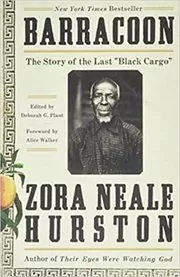
For readers who want a life preserved through oral testimony rather than a sweeping historical narrative. Hurston’s interviews keep the speaker’s voice central, though the recorded dialect and devastating memories ask for careful, attentive reading.
What it's about
Based on Hurston's interviews with Cudjo Lewis, this book preserves a firsthand account of capture in Africa, the Middle Passage, slavery, and life after emancipation. It is intimate, painful, and historically invaluable.

For readers who want to understand Kahlo’s paintings through her life and relationships. Its sustained attention to artistic imagery gives more interpretive depth than a general cultural profile, though familiarity with the works helps you follow the analysis.
What it's about
Hayden Herrera examines Mexican painter Frida Kahlo's life and the experiences that shaped her art. The biography explores her marriage to Diego Rivera, other relationships, political involvement, and engagement with Mexican folklore and culture.

For readers who want an intimate visual portrait of Prince through a collaborator’s access. Its photographs reveal settings and moments beyond public performance, though captions and memories provide less independent context than a full narrative biography.
What it's about
Photographer Afshin Shahidi presents images of Prince alongside stories from their long collaboration. The collection offers views of the musician on and off stage, including photographs from private gatherings, with captions describing their working relationship and shared experiences.

For readers interested in a family’s treatment of disability and the consequences of secrecy. Its focus on Rosemary redirects attention from the better known Kennedys, though the painful institutional history and limited surviving perspective make it difficult reading.
What it's about
Kate Clifford Larson draws on family correspondence, diaries, and interviews to tell Rosemary Kennedy's story. She examines the family's response to her intellectual disability, the decision to subject her to a lobotomy, and the secrecy surrounding her later life.

For readers interested in a tightly examined transfer of presidential power. Its concentration on a few consequential years reveals political maneuvering in unusual detail, though it is one volume of a larger life rather than a complete biography.
What it's about
Lyndon Johnson moves from commanding the Senate to an unhappy vice presidency, then abruptly becomes president after Kennedy’s assassination. Caro traces the years 1958–1964, examining rivalry, political calculation, and the first exercise of presidential authority.

For readers interested in childhood, teaching and the experience of being understood. Its brief school memories make educational values tangible through daily life, though the affectionate retrospective viewpoint offers less institutional context than a conventional biography.
What it's about
Tetsuko Kuroyanagi recalls attending an unusual Tokyo school during World War II, where classrooms occupied railway cars. Her childhood memoir portrays an educator's approach to encouraging curiosity and individuality, showing how freedom and enjoyment shaped her learning.
Also recommended by
1 person- Ryan Holiday recommended this book
Ryan Holiday
"Has sold something like 5 million copies in Japan alone (an insane number). Totto-Chan is a special figure in modern Japanese culture—she is a celebrity on par with Oprah or Ellen." - Ryan Holiday
Ryan Holiday's recommendation of this book

Black Boy
For readers who want a literary account of growing up under racism and poverty. Its attention to hunger, language and intellectual independence makes the inward experience vivid, though the autobiographical shaping differs from an externally documented life.
What it's about
Wright's memoir follows his childhood in the Jim Crow South and his early move north, tracing a fierce hunger for books, independence, and a life of the mind. It is personal, unsparing, and deeply readable.
Sources




Edited by
Software engineer whose passion for tracking book recommendations from podcasts inspired the creation of MRB.
Lead investor at 3one4 Capital whose startup expertise and love for books helped shape MRB and its growth.
Comments
Spotted a missing book, a wrong order or a mistake? Tell us and we'll fix this page.
We're a reading guide, not the author or publisher, so we can't send books or pass on messages.