
20 Best Technology Books
The best technology books, ranked by how many expert sources recommend each one, with notes on computing history, biographies, and social analysis.
Our take
Technology books can explain how a computer works, follow the people building a company, or examine what happens when an invention changes everyday life. This selection is mainly for curious general readers, with a few books that go deeper into technical ideas or business decisions. Choosing a subject first is more useful than treating every account of a famous founder as a general introduction.
The Innovators offers a broad history of digital invention, while Code builds an understanding of computer hardware from simple concepts. The Soul of A New Machine puts you alongside an engineering team, and Chip War connects manufacturing with international power. Company accounts such as In the Plex describe internal cultures; Bad Blood examines the consequences of claims that outstrip evidence. For questions about data and power, consider The Age of Surveillance Capitalism. Start with The Innovators for historical context, or Code if your main question is how the machines actually work.
20 books · 8 sources · Last updated
As an Amazon Associate, we earn from qualifying purchases (at no extra cost to you).
How to choose from this list
Skip to the full rankingIf you're new to computing history: The Innovators → The Soul of A New Machine
If you want to understand the machinery: Code → Chip War
If you want the ideas behind digital communication: The Information
If you're interested in company decisions: In the Plex → Bad Blood
If you want to examine technology and power: The Age of Surveillance Capitalism → Empire of AI
The 20 books, ranked
Ranked by how many expert sources name each book. Ties go to the book more people recommend.

The Soul of A New Machine
For readers who want to understand engineering work through the people doing it. Its close observation of a hardware team gives technical ambition human texture, though the particular machines and workplace assumptions belong to an earlier era.
What it's about
Tracy Kidder follows a company's effort to develop and market a new computer. The narrative examines the people behind technological innovation, their intense working culture, and the pressures of competition in the computer industry.
Also recommended by
3 people Paul Graham recommended this book
Paul Graham
One of Paul Graham's answers to "do you know of any good books about startups?"
Paul Graham's recommendation of this book  Fred Wilson recommended this book
Fred Wilson
"I love [this book]. First it is a story. Second it captures the passion of engineers who are driven to ship a revolutionary product." - Fred Wilson
Fred Wilson's recommendation of this book  Bill Gurley recommended this book
Bill Gurley
"A really old book, but it's a famous book." - Bill Gurley
Bill Gurley's recommendation of this book
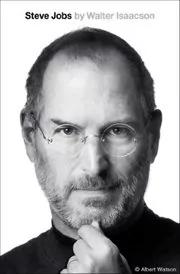
Steve Jobs
For readers interested in product judgment, design, and the difficult personality behind a technology company. Its extensive interviews offer a close character study, though the focus on one leader leaves less space for wider industry forces.
What it's about
Built from years of interviews with Jobs and the people around him, this is a close look at a brilliant and difficult builder. It follows the intensity, control, and imagination that reshaped several industries.
Also recommended by
9 people Elon Musk recommended this book
Elon Musk
"Quite interesting." - Elon Musk
Elon Musk's recommendation of this book  Scott Adams recommended this book
Scott Adams
"I’m fascinated by the discussion of how Jobs developed what became known as the Reality Distortion Field. Apparently Jobs had a lifelong battle with reality and won." - Scott Adams
Scott Adams's recommendation of this book  Ray Dalio recommended this book
Ray Dalio
"I noticed a number of similarities between [Steve Jobs and I], especially when [the author] quoted Jobs’s own words. [...] but to be clear, I didn’t think that Bridgewater or I held a candle to Apple and Jobs." - Ray Dalio
Ray Dalio's recommendation of this book  Bill Gates recommended this book
Bill Gates
List of books Bill Gates read in 2012.
Bill Gates's recommendation of this book  Gary Vaynerchuk recommended this book
Gary Vaynerchuk
"I've read 3 business books in my life. If you call [this book] a business book." - Gary Vaynerchuk
Gary Vaynerchuk's recommendation of this book  George Raveling recommended this book
George Raveling
"[When I read this book] I was so blown away. I had underlined about three-quarters of the book." - George Raveling
George Raveling's recommendation of this book +3
More recommendations
- Chris Fussell
"Really did a good job of capturing the way that an innovation leader’s mind works." - Chris Fussell
- Scott Belsky
Scott Belsky mentioned this book on "The Tim Ferriss Show" podcast.
- Ed Zschau
Ed Zschau mentioned this book on "The Tim Ferriss Show" podcast.
- Chris Fussell

For readers curious about how an engineering culture becomes a powerful business. Levy's access helps explain Google's early decisions and internal habits, though the account predates many later products, disputes, and changes in leadership.
What it's about
Steven Levy explores Google's development and working culture through reporting inside the company. He examines its engineering mindset, search and advertising businesses, willingness to experiment, and the tensions created by its expanding ambitions and influence.
Also recommended by
2 people Charlie Munger recommended this book
Charlie Munger
"I hate to admit this because I've ignored high tech all my life, but I actually read [this book]. And I found it a very interesting book." - Charlie Munger
Charlie Munger's recommendation of this book  John Doerr recommended this book
John Doerr
John Doerr recommended this book at the end of "Measure What Matters."
John Doerr's recommendation of this book

For readers interested in the early ambitions and operating style behind Tesla and SpaceX. Vance offers useful reporting on the formative businesses, though this 2015 biography stops well before many later developments and controversies.
What it's about
Ashlee Vance traces Elon Musk's life from childhood in South Africa to his entrepreneurial work in the United States. The biography examines the ambitions and challenges behind his involvement with PayPal, Tesla, SpaceX, and SolarCity.
Also recommended by
6 people Anthony Pompliano recommended this book
Anthony Pompliano
"Found it even better than I anticipated." - Anthony Pompliano
Anthony Pompliano's recommendation of this book  Austen Allred recommended this book
Austen Allred
"Was written in 2015 and already feels like you could have another full book as an update." - Austen Allred
Austen Allred's recommendation of this book  Mr. Money Mustache recommended this book
Mr. Money Mustache
"I’m a big fan [of this book]." - MMM
Mr. Money Mustache's recommendation of this book  Tim Urban recommended this book
Tim Urban
"A great biography on Musk." - Tim Urban
Tim Urban's recommendation of this book  Casey Neistat recommended this book
Casey Neistat
"One of the people that I find most interesting. I'm fascinated by Elon Musk." - Casey Neistat
Casey Neistat's recommendation of this book  John Collison recommended this book
John Collison
"A good read." - John Collison
John Collison's recommendation of this book

For readers interested in the gap between technological claims and demonstrated results. Its investigation makes failed verification concrete through one company, though it concentrates on fraud and institutional failure rather than offering a general history of medical technology.
What it's about
John Carreyrou investigates Theranos and Elizabeth Holmes’s claims about revolutionary blood-testing technology. Through reporting and accounts from employees and whistleblowers, he traces how secrecy, ambition, and pressure concealed serious problems within a celebrated Silicon Valley company.
Also recommended by
4 people- Bill Gates recommended this book
Bill Gates
"I couldn’t put down this thriller with a tragic ending." - Bill Gates
Bill Gates's recommendation of this book  Andrew Wilkinson recommended this book
Andrew Wilkinson
"Soooo good." - Andrew Wilkinson
Andrew Wilkinson's recommendation of this book - Bill Gurley recommended this book
Bill Gurley
"An incredible book that should be read by each and every player in the startup/Silicon Valley ecosystem." - Bill Gurley
Bill Gurley's recommendation of this book  Michael Mauboussin recommended this book
Michael Mauboussin
"Amazing [book] about human nature." - Michael Mauboussin
Michael Mauboussin's recommendation of this book
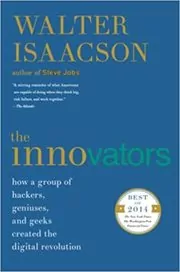
The Innovators
How a Group of Hackers, Geniuses, and Geeks Created the Digital Revolution
For readers who want a broad human history of computing before choosing a narrower subject. Its attention to collaboration counters the lone-founder story, though the large cast and long timespan sometimes limit technical depth.
What it's about
Isaacson tells the story of the people who created the computer and the internet, from Ada Lovelace onward. The through line is collaboration, showing how teams, not just lone geniuses, built the digital age.
Also recommended by
2 people Chris Fussell recommended this book
Chris Fussell
"The history of how great ideas evolve." - Chris Fussell
Chris Fussell's recommendation of this book  Sheryl Sandberg recommended this book
Sheryl Sandberg
"A fascinating history of the digital revolution, including the critical but often forgotten role women played from the beginning." - Sheryl Sandberg
Sheryl Sandberg's recommendation of this book

For readers who want the ideas beneath communication technologies rather than another company biography. Its historical links between language, signals, and computation give the subject depth, though the conceptual passages demand more attention than a narrative exposé.
What it's about
James Gleick traces the history of communication and the development of information theory, from talking drums and alphabets to electronic codes. Profiles of innovators connect changing technologies with the growing abundance of information in everyday life.
Also recommended by
1 person Mark Zuckerberg recommended this book
Mark Zuckerberg
On the "books read" section of Mark Zuckerberg's Facebook profile.
Mark Zuckerberg's recommendation of this book
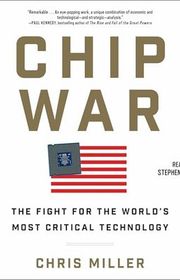
Chip War
For readers who want to connect everyday devices with manufacturing, supply chains, and international power. Its semiconductor focus provides more industrial detail than broad technology histories, though the geopolitical account can be dense with companies and names.
What it's about
Chris Miller traces the development of the semiconductor industry and the struggle to control advanced chip design and manufacturing. The book connects technical breakthroughs, specialized supply chains, corporate competition, and the geopolitical importance of computing power.

The Age of Surveillance Capitalism
The Fight for a Human Future at the New Frontier of Power
For readers who want a sustained critique of businesses built around behavioral data. Its economic framework goes beyond individual privacy scandals, though the length, repeated concepts, and forceful argument make it demanding and invite critical reading.
What it's about
Shoshana Zuboff examines corporate efforts to predict and influence human behavior through digital surveillance. She argues that this emerging form of capitalism threatens individual autonomy and democratic institutions, and considers the need for public accountability.
Also recommended by
2 people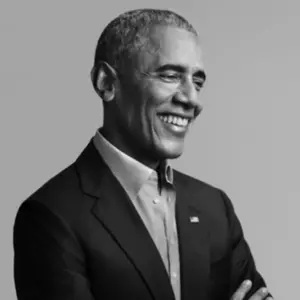 Barack Obama recommended this book
Barack Obama
Barack Obama's favorite books of 2019 list.
Barack Obama's recommendation of this book  Vinod Khosla recommended this book
Vinod Khosla
"Dives into the largest act of capitalist colonisation ever attempted - the colonisation of our minds, our behaviour, our free will, our very selves." - Vinod Khosla
Vinod Khosla's recommendation of this book
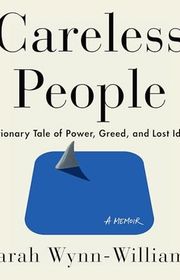
Careless People
For readers interested in an employee's view of policy work inside a global social platform. Its personal account adds workplace experience to institutional reporting, though it represents one participant's perspective and should be read alongside broader investigations.
What it's about
Former Facebook policy executive Sarah Wynn-Williams recounts her years at the company as it expanded its global influence. Her memoir describes workplace experiences, leadership encounters, and policy decisions while presenting her account of tensions between ideals and power.

For beginners who want to understand how simple signals become working computers. Its gradual construction of concepts offers more technical grounding than the industry histories, though the later circuits require patience and careful reading of diagrams.
What it's about
Charles Petzold explains how computers work by building from familiar communication systems, including Morse code and Braille. Everyday examples lead into bits, bytes, and hardware, tracing how simple mechanisms combine to support complex information processing.
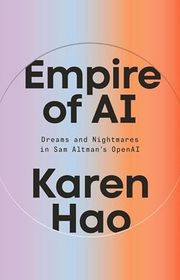
Empire of AI
For readers who want reporting on the institutions and resources behind the AI boom. Its attention to company decisions and wider costs complements technical introductions, though the critical framing and central company focus provide a particular perspective.
What it's about
Karen Hao investigates the rise of OpenAI and the ambitions of leaders building advanced artificial intelligence. The account connects organizational conflict and business strategy with the labor, data, and physical resources supporting the industry's expansion.

The Exponential Age
How Accelerating Technology is Transforming Business, Politics and Society
For readers who want a framework for why institutions struggle to keep pace with technological change. Its broad economic and political view connects separate innovations, though the overarching argument simplifies differences between technologies and regions.
What it's about
Azhar argues that rapidly accelerating technologies are outpacing the institutions built to govern them. Examining artificial intelligence, automation and other innovations, he connects this gap with inequality and corporate power, then proposes ways society could respond.

For readers drawn to founding teams, competing claims of credit, and struggles for control. Its interpersonal focus makes a useful contrast to product-centered biographies, though it covers Twitter's early years rather than its subsequent transformations.
What it's about
Nick Bilton traces Twitter's beginnings through the relationships among Ev Williams, Jack Dorsey, Biz Stone, and Noah Glass. His account follows rapid growth, broken friendships, and struggles for control within the young company.
Also recommended by
2 people- Casey Neistat recommended this book
Casey Neistat
"It was reading [this book] that literally motivated me, inspired me, and gave me the confidence to start my own technology company." - Casey Neistat
Casey Neistat's recommendation of this book  Alexis Ohanian recommended this book
Alexis Ohanian
"Fantastic book [...] Far more relatable than I knew or expected." - Alexis Ohanian
Alexis Ohanian's recommendation of this book

For readers who find imagined situations easier to engage with than abstract forecasts. The combination of fiction and explanation explores AI's possible consequences, though the scenarios are speculative and should not be read as reliable predictions.
What it's about
Kai-Fu Lee and Chen Qiufan combine speculative stories with analysis to imagine how artificial intelligence might shape life in 2041. Ten scenarios explore emerging technologies and their possible effects on work, relationships, security, and social opportunity.

For readers interested in how growth targets and leadership choices shape a social platform's public consequences. Its reporting offers an institutional counterpoint to founder biographies, though it concentrates on failures rather than the technology's construction.
What it's about
Frenkel and Cecilia Kang investigate Facebook's pursuit of growth and power, drawing on reporting about decisions inside the company. They examine privacy failures, disinformation and political propaganda, arguing that these problems were rooted in leadership choices.

For readers wondering how to maintain agency at work as automation expands. Its practical focus on human strengths is more personal than the industry histories, though its broad rules can't resolve the details of every occupation.
What it's about
Kevin Roose proposes nine rules for navigating a world increasingly shaped by artificial intelligence and automation. His guide considers work and everyday life, arguing that cultivating distinctly human qualities can help people retain agency and adapt to technological change.

For readers interested in how AI may affect judgment, institutions, and international politics. Its broad strategic questions offer an alternative to company histories, though the discussion is conceptual and predates recent developments in generative AI.
What it's about
Henry Kissinger, Eric Schmidt, and Daniel Huttenlocher examine how artificial intelligence could reshape knowledge, politics, and society. They explore systems whose decisions exceed familiar human reasoning and consider the consequences for international relations and collective judgment.

For readers who want to understand Amazon's expansion beyond its original retail identity. Its reporting connects new ventures with leadership and corporate power, though the company-centered detail is more useful for business history than technical explanation.
What it's about
Brad Stone examines Amazon's expansion into a global business empire and the changing ambitions of Jeff Bezos. His reporting follows new products and industries while exploring the company's culture, its growing influence, and the founder's public and private life.

For readers who want a cautionary account of startup valuation, charismatic leadership, and investor belief. Its focus on business incentives complements the engineering stories, though WeWork's property operations offer less direct insight into how technology works.
What it's about
Reeves Wiedeman investigates Adam Neumann's rise and the unraveling of WeWork's plans to become a publicly traded company. The account examines leadership, company culture, investor enthusiasm, and the gap between a transformative vision and its business foundations.
Sources
- 1
30 Best Tech Books to Gift in 2026: Biographies, Startup Histories, Exposés
wired.com
- 2
100 Best Technology Books of All Time
shortform.com
- 3
Top Tech Books To Read in 2022
apcinc.com
- 4
Technology Books
goodreads.com
- 5
What are your favourite technical books?
reddit.com
- 6
Top 10 tech books to add to your 2022 reading list
electronicspecifier.com
- 7
Chip war is good?
reddit.com
- 8
ITPro's recommended reading for 2026
itpro.com


Edited by
Software engineer whose passion for tracking book recommendations from podcasts inspired the creation of MRB.
Lead investor at 3one4 Capital whose startup expertise and love for books helped shape MRB and its growth.
Comments
Did we miss something? Have feedback?
Help us improve this page by sharing your thoughts