
41 Best Nonfiction Books
The best nonfiction books, ranked by how many expert sources recommend each one, with notes to help you choose memoirs, history, science, and reported stories.
Our take
Nonfiction offers many ways to understand the world: following one life, investigating an institution, explaining a scientific idea, or questioning an accepted story. These books vary just as much in form. Some build a sustained argument, some follow events with a novelist’s attention to detail, and others work through essays or personal memories. The best starting point depends on both your curiosity and the kind of reading you enjoy.
For a strong narrative, try Into Thin Air or The Immortal Life of Henrietta Lacks. A Short History of Nearly Everything provides a conversational route into science, while The Warmth of Other Suns connects individual lives with social history. Educated and When Breath Becomes Air approach identity through different kinds of upheaval. Essays such as Notes of a Native Son reward slower reading and reflection. Start with a subject that already interests you, then move between personal accounts and broader arguments to see how different forms of evidence change the perspective.
41 books · 7 sources · Last updated
As an Amazon Associate, we earn from qualifying purchases (at no extra cost to you).
How to choose from this list
Skip to the full rankingIf you want a gripping reported story: Into Thin Air → All the President's Men
If you want an accessible science introduction: A Short History of Nearly Everything → A Brief History of Time
If you want science with human consequences: The Immortal Life of Henrietta Lacks → The Emperor of All Maladies
If you want memoirs about changing identity: Educated → When Breath Becomes Air
If you want personal lives within history: Wild Swans → The Warmth of Other Suns
If you want to explore social criticism: Notes of a Native Son → The Souls of Black Folk → The New Jim Crow
The 41 books, ranked
Ranked by how many expert sources name each book. Ties go to the book more people recommend.

The Immortal Life of Henrietta Lacks
For readers who want scientific history examined alongside consent and family experience. Skloot follows both the research and the people affected, though the shifting timelines and ethical tensions make it more demanding than a straightforward biography.
What it's about
Rebecca Skloot investigates the life of Henrietta Lacks, whose cells were taken without her knowledge and became important tools in medical research. Her reporting connects scientific advances with the experiences of Lacks's family and questions of consent, race, and justice.
Also recommended by
1 person A.J. Jacobs recommended this book
A.J. Jacobs
"Great writer." - A.J. Jacobs
A.J. Jacobs's recommendation of this book
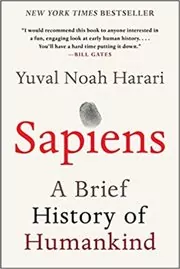
For readers who want a broad framework for thinking about human history. Harari connects distant periods through shared ideas and institutions, though the sweeping argument compresses disagreement and is best treated as a provocative synthesis rather than settled consensus.
What it's about
Harari condenses 70,000 years of human history into a single narrative, tracing how Homo sapiens rose from apes on the savannah to planet-shaping forces. He focuses on shared myths, empires, money, religion and science, and asks whether all this progress made us happier.
Also recommended by
32 people Joe Rogan recommended this book
Joe Rogan
"It really puts in perspective how bizarre human beings are. It’s an awesome overview of our species." - Joe Rogan
Joe Rogan's recommendation of this book  Bill Gates recommended this book
Bill Gates
"I would recommend this book to anyone interested in a fun, engaging look at early human history." - Bill Gates
Bill Gates's recommendation of this book  Naval Ravikant recommended this book
Naval Ravikant
"Best book I've read in [2015]." - Naval Ravikant
Naval Ravikant's recommendation of this book  Lex Fridman recommended this book
Lex Fridman
"Basically one of the things we've created here is we've imagined ideas that we all share." - Lex Fridman
Lex Fridman's recommendation of this book  Mark Zuckerberg recommended this book
Mark Zuckerberg
"A big history narrative of human civilization." - Mark Zuckerberg
Mark Zuckerberg's recommendation of this book  Peter Attia recommended this book
Peter Attia
One of Peter Attia's answers to "any books you feel would make your reading list?"
Peter Attia's recommendation of this book +26
More recommendations
- Ashton Kutcher
"The brainy book I seem to be sharing or talking about the most lately." - Ashton Kutcher
- Whitney Cummings
"A great book about [how] we’ve evolved and why we have anxiety." - Whitney Cummings
- Richard Branson
"I just love the style of his writing." - Richard Branson
- Ray Dalio
Ray Dalio mentioned this book on "The Tim Ferriss Show" podcast.
- Vinod Khosla
"A previous favorite." - Vinod Khosla
- James Cameron
"It explains human behavior and why we are the way we are in human civilization from soup to nuts. And I’ve read it now a couple of times. It’s a pretty astonishing book." - James Cameron
- Demis Hassabis
"There's not many times where I read a book and come out with 20 new ideas I hadn't thought about before, and [this book] made me think like that." - Demis Hassabis
- Keith Rabois
Keith Rabois recommended this book on a Medium blog post.
- Daniel Ek
"Both sobering and conservatively optimistic in equal measure." - Daniel Ek
- Reid Hoffman
"A grand theory of humanity." - Reid Hoffman
- Sam Kass
Sam Kass recommended this book in the "Tools of Titans" book.
- Sebastian Junger
"I’m going to give [this book] over and over again to everyone I know." - Sebastian Junger
- Kishore Biyani
"Fascinating because of its multi-disciplinary approach towards understanding human society, our behaviour and our future." - Kishore Biyani
- Ryan Shea
One of Ryan Shea's 4 answers to "what is the book (or books) you’ve given most as a gift?"
- Melinda Gates
Melinda Gates recommended this book on Likewise.com.
- Bill Gurley
"I really enjoyed [this book]." - Bill Gurley
- Karlie Kloss
"An amazing book on the beginning of humanity." - Karlie Kloss
- Anthony Pompliano
"[One of the] best books I read in 2017." - Anthony Pompliano
- Changpeng Zhao
"Gives me a greater perspective about how humans emerged and why we behave the way we do." - Changpeng Zhao
- PewDiePie
"Tells the major revolutions of human history." - PewDiePie
- Patrick O'Shaughnessy
"Provides a concise history of humankind and outlines why we have the psychology we do today." - Patrick O'Shaughnessy
- Chris Evans
"Truly mind-blowing. It’s changed the way I look at almost everything. I can’t endorse it enough." - Chris Evans
- Simon Mayo
"Love this book still." - Simon Mayo
- Penn Jillette
Penn Jillette mentioned this book in a New York Times interview.
- Mark Manson
Mark Manson recommended this book on his website.
- James Clear
"[One of] the 10 best nonfiction books of all-time." - James Clear
- Ashton Kutcher

When Breath Becomes Air
For readers interested in how professional identity changes when a doctor becomes a patient. The combination of medical experience and questions about meaning gives the memoir unusual tension, though its focus on terminal illness makes it emotionally difficult.
What it's about
Near the end of his neurosurgery training, Paul Kalanithi is diagnosed with terminal lung cancer and begins asking what makes a life meaningful. His memoir is clear-eyed, intimate, and deeply humane.
Also recommended by
8 people- Bill Gates recommended this book
Bill Gates
"This book left me in tears." - Bill Gates
Bill Gates's recommendation of this book  Melinda Gates recommended this book
Melinda Gates
Melinda Gates recommended this book on Likewise.com.
Melinda Gates's recommendation of this book  Anthony Pompliano recommended this book
Anthony Pompliano
"[One of the] best books I read in 2017." - Anthony Pompliano
Anthony Pompliano's recommendation of this book  Patrick O'Shaughnessy recommended this book
Patrick O'Shaughnessy
"The memoir of a successful neurosurgeon who is diagnosed with lung cancer." - Patrick O'Shaughnessy
Patrick O'Shaughnessy's recommendation of this book  Tim Cook recommended this book
Tim Cook
"Best book on re-examining life and values." - Tim Cook
Tim Cook's recommendation of this book  Peter King recommended this book
Peter King
"One of the best books I've read in years." - Peter King
Peter King's recommendation of this book +2
More recommendations
- Shauna Niequist
Shauna Niequist recommended this book on Twitter.
- James Clear
"[One of] the 10 best nonfiction books of all-time." - James Clear
- Shauna Niequist
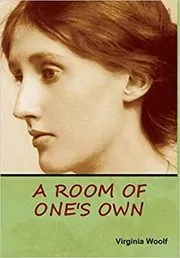
A Room of One's Own
For readers interested in the material conditions behind literary opportunity. Woolf makes money and private space concrete parts of the argument, though the allusions and historical frame call for some familiarity with literary culture.
What it's about
Based on lectures about women and fiction, this extended essay asks what material conditions a woman needs in order to write. Its argument about money, privacy, and literary history still lands with force.

Between the World and Me
For readers who want a personal argument about race addressed to the next generation. The letter form gives political reflection an intimate focus, though the concentrated perspective offers less institutional detail than a broad historical study.
What it's about
Written as a letter to his adolescent son, this searching nonfiction book confronts the realities of race, history, and bodily vulnerability in America. Coates draws on his Baltimore childhood, Howard years, travel, and reporting.
Also recommended by
10 people Jack Dorsey recommended this book
Jack Dorsey
One of Jack Dorsey's answers to "what are the books that had a major influence on you?"
Jack Dorsey's recommendation of this book  Bob Iger recommended this book
Bob Iger
Bob Iger told Variety this book was on his Reading List.
Bob Iger's recommendation of this book  Barack Obama recommended this book
Barack Obama
Barack Obama's "2016 Summer Reading List."
Barack Obama's recommendation of this book  Jon Stewart recommended this book
Jon Stewart
"A wonderful, challenging read." - Jon Stewart
Jon Stewart's recommendation of this book  Cal Fussman recommended this book
Cal Fussman
"It’s a letter to his son about being a black male in America. I think it is required reading." - Cal Fussman
Cal Fussman's recommendation of this book  Sunny Hostin recommended this book
Sunny Hostin
Sunny Hostin recommended this book on Twitter.
Sunny Hostin's recommendation of this book +4
More recommendations
- Jay-Z
"America. Please. read." - Jay-Z
- Mark Manson
"A love letter, not just to [the author's] son, but to black people and even the United States, in the truest sense of the genre." - Mark Manson
- DeRay Mckesson
"A must-read." - DeRay Mckesson
- Linda Sarsour
"A MUST READ." - Linda Sarsour
- Jay-Z

A People's History of the United States
For readers who want American history organized around conflict and people excluded from dominant accounts. Zinn’s explicit viewpoint makes questions of power central, though that interpretive commitment calls for comparison with other histories rather than treating it as comprehensive.
What it's about
Howard Zinn recounts United States history from the perspectives of people often excluded from conventional national narratives. He emphasizes Indigenous peoples, enslaved people, workers, women, and dissenters, tracing conflicts over power, exploitation, resistance, and social change.
Also recommended by
4 people Alex Honnold recommended this book
Alex Honnold
"Totally changed the way I look at politics." - Alex Honnold
Alex Honnold's recommendation of this book  Lisa Ling recommended this book
Lisa Ling
"I credit this book with propelling me to dig deeper, and to not always believe the narrative." - Lisa Ling
Lisa Ling's recommendation of this book  Howard Stern recommended this book
Howard Stern
"Something I should have read in college." - Howard Stern
Howard Stern's recommendation of this book  John Leguizamo recommended this book
John Leguizamo
"Every Latinx should read!" - John Leguizamo
John Leguizamo's recommendation of this book

For readers interested in how legal institutions can reproduce racial inequality. Alexander builds a sustained argument linking incarceration with lasting civic exclusion, though the strong thesis and US focus leave room for other explanations and later developments.
What it's about
Michelle Alexander argues that mass incarceration and the War on Drugs perpetuate racial caste in America. Her analysis examines how a formally colorblind criminal justice system targets Black communities and creates lasting barriers after conviction.
Also recommended by
4 people J. Cole recommended this book
J. Cole
J. Cole mentioned reading this book on The Fayetteville Observer.
J. Cole's recommendation of this book - Mark Zuckerberg recommended this book
Mark Zuckerberg
"I've been interested in learning about criminal justice reform for a while, and this book was highly recommended by several people I trust." - Mark Zuckerberg
Mark Zuckerberg's recommendation of this book - Bill Gates recommended this book
Bill Gates
"Offers an eye-opening look into how the criminal justice system unfairly targets communities of color, and especially Black communities." - Bill Gates
Bill Gates's recommendation of this book - Sunny Hostin recommended this book
Sunny Hostin
Sunny Hostin recommended this book on Twitter.
Sunny Hostin's recommendation of this book
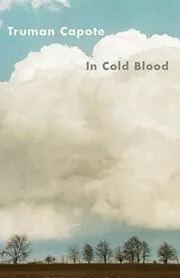
In Cold Blood
For readers who want reporting with the sustained atmosphere of a novel. Capote’s attention to character and place gives the crime a wider human setting, though the violence and questions about reconstructed details make it a challenging read.
What it's about
Capote’s nonfiction novel reconstructs the 1959 murder of the Clutter family in rural Kansas, following the investigation and the lives of killers Perry Smith and Dick Hickock. Combining immersive reporting with novelistic detail, it helped define the modern true crime book.
Also recommended by
3 people Ben Shapiro recommended this book
Ben Shapiro
"Truman Capote's best book. It's a really, really good book." - Ben Shapiro
Ben Shapiro's recommendation of this book  Sam Harris recommended this book
Sam Harris
"If you just want to forget about the future and lose yourself in the book that forever changed how narrative nonfiction is written, read [this book]." - Sam Harris
Sam Harris's recommendation of this book  Tim Draper recommended this book
Tim Draper
"My [mother] recommended [this book]." - Tim Draper
Tim Draper's recommendation of this book

For readers who want an expedition account that examines judgment under extreme pressure. The firsthand perspective gives events immediacy, though it also makes this one participant’s interpretation of a disaster rather than a neutral account from outside.
What it's about
Krakauer's firsthand account of the 1996 Mount Everest disaster follows a commercial expedition caught in a deadly storm. It examines the climbers' decisions, the brutal effects of altitude, and the guilt carried by those who survived.
Also recommended by
2 people Richard Branson recommended this book
Richard Branson
Richard Branson recommended this book on his "70 must-read books" blog post.
Richard Branson's recommendation of this book  James Clear recommended this book
James Clear
"[One of] the 10 best nonfiction books of all-time." - James Clear
James Clear's recommendation of this book

For readers interested in education as a change in identity rather than simply academic achievement. Westover examines the tension between family loyalty and independence, though the abuse and conflicting memories make this a difficult family story rather than a reassuring success narrative.
What it's about
Tara Westover recounts growing up in an isolated survivalist family in Idaho without formal schooling. Her pursuit of education takes her to Cambridge, forcing her to confront family loyalties, violence, and the possibilities of a different life.
Also recommended by
1 person Olivia Wilde recommended this book
Olivia Wilde
"Sat down in my plane seat, didn't feel take-off, 6 hours of flying, or landing. Unreal." - Olivia Wilde
Olivia Wilde's recommendation of this book

The Souls of Black Folk
For readers who want social criticism that moves between analysis and personal reflection. Du Bois’s varied essay forms give questions of race and citizenship intellectual range, though the historical references and changing registers reward contextual reading.
What it's about
W. E. B. Du Bois combines history, sociology, and personal reflection in essays about Black life in America. He examines racial injustice, education, and cultural identity, exploring the experiences and aspirations of African Americans at the turn of the twentieth century.
Also recommended by
1 person Jesse Williams recommended this book
Jesse Williams
"A seminal work in American and African-American literature." - Jesse Williams
Jesse Williams's recommendation of this book
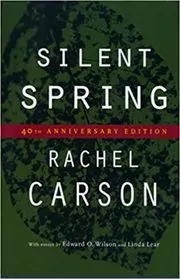
Silent Spring
For readers interested in how scientific evidence can support a public argument. Carson connects ecological effects with everyday practices more directly than a broad nature survey, though the examples belong to a specific historical struggle over pesticides.
What it's about
Carson examines what widespread pesticide use, especially DDT, was doing to birds, waterways, and human health. It is a clear, unsettling case against chemical shortcuts and a turning point in environmental writing.

A Short History of Nearly Everything
For readers who want a conversational introduction to scientific discovery across several fields. The stories about people and difficult questions make the range approachable, though the breadth and publication date mean it works better as orientation than a current reference.
What it's about
An ambitious and accessible guide to the history of science. Bryson travels the world to interview archaeologists, geologists, and physicists, explaining how we went from the Big Bang to the rise of civilization in plain English.
Also recommended by
6 people Warren Buffett recommended this book
Warren Buffett
"It’s very impressive [to] read about people pondering how to figure out the weight of the Earth or something in the 18th century." - Warren Buffett
Warren Buffett's recommendation of this book  Shah Rukh Khan recommended this book
Shah Rukh Khan
"I do a read [this book] often." - Shah Rukh Khan
Shah Rukh Khan's recommendation of this book  Stewart Brand recommended this book
Stewart Brand
Stewart Brand recommended this book on his "Selected Books for the Manual for Civilization" blog post.
Stewart Brand's recommendation of this book  Amanda Palmer recommended this book
Amanda Palmer
Amanda Palmer mentioned this book in the "Tools of Titans" book.
Amanda Palmer's recommendation of this book  Jamie Dimon recommended this book
Jamie Dimon
On Jamie Dimon's list of favorite books.
Jamie Dimon's recommendation of this book  Dominic D'Agostino recommended this book
Dominic D'Agostino
"Information-dense and manages to be humorous and super entertaining." - Dominic D'Agostino
Dominic D'Agostino's recommendation of this book

The Elements of Style
For writers who want a compact reference on clarity and economical prose. The short rules make revision easier to approach, though some prescriptions are matters of style rather than universal grammar and need judgment rather than mechanical obedience.
What it's about
William Strunk Jr.’s concise writing guide presents principles for clearer prose alongside rules of usage and composition. It addresses common errors, word choice, and unnecessary language, offering a compact reference for writers seeking greater precision and economy.
Also recommended by
3 people Tobi Lütke recommended this book
Tobi Lütke
"[My] most frequently gifted book is [this book] because I like good writing." - Tobi Lütke
Tobi Lütke's recommendation of this book  Kara Swisher recommended this book
Kara Swisher
"I reread it every year. It’s a great book." - Kara Swisher
Kara Swisher's recommendation of this book  Bill Nye recommended this book
Bill Nye
"This is my guide. I accept that I’ll never write anything as good as the introductory essay by [the author]. It’s brilliant." - Bill Nye
Bill Nye's recommendation of this book

For readers who want twentieth-century Chinese history approached through women in one family. The generational structure connects political change with private consequences, though the family viewpoint and extensive suffering make it both selective and emotionally demanding.
What it's about
Part family memoir and part twentieth-century history, Wild Swans follows Jung Chang, her mother, and her grandmother through war, revolution, and the Cultural Revolution. It turns private lives into a vivid portrait of modern China.
Also recommended by
3 people Hillary Clinton recommended this book
Hillary Clinton
"An inspiring tale of women who survived every kind of hardship, deprivation and political upheaval with their humanity intact." - Hillary Clinton
Hillary Clinton's recommendation of this book  Andrew Chen recommended this book
Andrew Chen
"It was incredibly important and formative. Must read." - Andrew Chen
Andrew Chen's recommendation of this book - Richard Branson recommended this book
Richard Branson
Richard Branson recommended this book on his "70 must-read books" blog post.
Richard Branson's recommendation of this book

A Brief History of Time
For readers who want the central questions of cosmology explained without a mathematics textbook. Hawking connects time, gravity, and the universe’s origins in a compact account, though the abstract ideas still require slow reading and reflect its scientific period.
What it's about
Stephen Hawking introduces questions about the universe's beginning, its possible fate, and the nature of time. He explains black holes, relativity, and quantum ideas for general readers, connecting familiar physical concepts with the puzzles of cosmology.
Also recommended by
2 people- Richard Branson recommended this book
Richard Branson
Richard Branson recommended this book on his "70 must-read books" blog post.
Richard Branson's recommendation of this book - James Clear recommended this book
James Clear
"[One of] the 10 best nonfiction books of all-time." - James Clear
James Clear's recommendation of this book
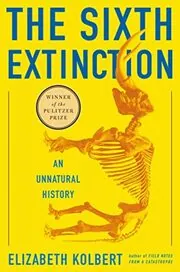
For readers who want biodiversity loss explained through field reporting and natural history. The encounters with researchers connect large changes with particular organisms, though the accumulating losses make this a sobering introduction rather than a comprehensive biology course.
What it's about
Kolbert travels with researchers to reefs, rain forests, and fossil sites to argue that humans are driving a new mass extinction. The book blends natural history, field reporting, and urgent questions about what disappears with each lost species.
Also recommended by
2 people- Barack Obama recommended this book
Barack Obama
Barack Obama's "2016 Summer Reading List."
Barack Obama's recommendation of this book - Bill Gates recommended this book
Bill Gates
"Makes a compelling case that all this [human] activity is leading to the sixth mass extinction in the Earth’s history." - Bill Gates
Bill Gates's recommendation of this book

Alexander Hamilton
For readers who want a detailed political biography with room for institutions and private life. Chernow makes Hamilton’s financial and constitutional work central to the portrait, though the length and concentration on an influential individual limit its breadth as national history.
What it's about
This biography follows Alexander Hamilton from his Caribbean childhood to his role as George Washington's aide, leading architect of the Constitution, and first treasury secretary. Chernow explores Hamilton's ambition, political battles, and complicated personal life up to the duel that ended his career.
Also recommended by
1 person Travis Kalanick recommended this book
Travis Kalanick
"[Travis Kalanick changed his Twitter] avatar to Alexander Hamilton after having read [this book]." - Adam Lashinsky
Travis Kalanick's recommendation of this book
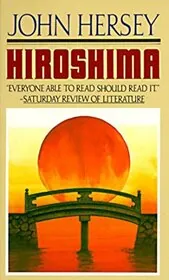
Hiroshima
For readers who want a human-scale account of a historical catastrophe. The close attention to six survivors gives the reporting focus and restraint, though its narrow lens supplies less military and political context than a broader history of the bombing.
What it's about
Hersey tells the story of the atomic bombing through six survivors, starting on the morning the bomb falls and following the aftermath. The book's calm, close focus makes the scale of the disaster feel personal and unforgettable.
Also recommended by
1 person Alex Blumberg recommended this book
Alex Blumberg
"I had always been interested in this kind of [...] long form narrative nonfiction." - Alex Blumberg
Alex Blumberg's recommendation of this book
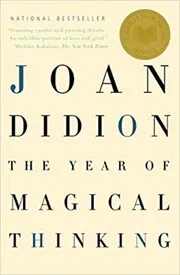
The Year of Magical Thinking
For readers interested in how grief changes ordinary thought. Didion’s precise attention to repeated memories makes mourning tangible, though the circling structure offers little of the reassurance or orderly progression found in a practical grief guide.
What it's about
A memoir of the year after John Gregory Dunne's sudden death, written while their daughter Quintana lay gravely ill, this book follows Didion's looping, irrational magical thoughts as she tries to understand loss and keep an ordinary life going.
Also recommended by
1 person Harry Styles recommended this book
Harry Styles
Harry Styles was seen purchasing this book.
Harry Styles's recommendation of this book

Black Boy
For readers who want autobiography centered on intellectual hunger and resistance to constraint. Wright connects personal development with racial and economic pressures, though the unsparing voice and repeated violence make it a demanding account of coming of age.
What it's about
Wright's memoir follows his childhood in the Jim Crow South and his early move north, tracing a fierce hunger for books, independence, and a life of the mind. It is personal, unsparing, and deeply readable.
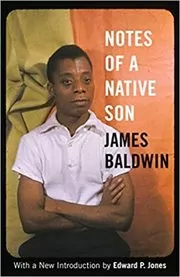
Notes of a Native Son
For readers who want personal experience connected with cultural criticism. Baldwin’s movement between family memory, America, and Europe gives the essays range, though the dense arguments and historical references make them more rewarding when read slowly.
What it's about
This landmark essay collection blends memoir and criticism, including Baldwin's account of his father's death and the 1943 Harlem riot. Across ten pieces he examines race, religion, and colonialism in the United States and Europe.
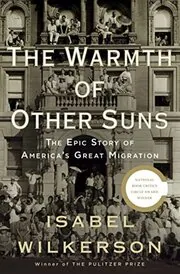
For readers who want a large social transformation made tangible through individual lives. Wilkerson links migration with the choices people faced over decades, though the substantial length and recurring historical pressures call for sustained attention.
What it's about
Isabel Wilkerson traces the Great Migration through three Black Americans who leave the segregated South for Chicago, Harlem, and California. Their experiences illuminate the dangers, hopes, and lasting consequences of a movement that transformed the country.

For readers drawn to extensively reported accounts of endurance and its aftermath. Hillenbrand’s narrative connects athletic ambition, war, and recovery across a whole life, though the prolonged suffering and captivity make it an emotionally demanding choice.
What it's about
Laura Hillenbrand follows Olympic runner Louis Zamperini from a rough California boyhood to a plane crash, 47 days adrift in the Pacific, and brutal POW camps. It is a tense, deeply human survival story about endurance, trauma, and forgiveness.

How To Win Friends and Influence People
For readers who want practical prompts for improving everyday relationships. The memorable principles make it easy to revisit before a difficult conversation, though the anecdotes and business assumptions reflect an earlier period and need adapting to your circumstances.
What it's about
Carnegie presents practical guidance for building relationships, communicating effectively, and influencing others. Stories and principles explore social confidence, leadership, and cooperation, offering approaches readers can apply to interactions in their personal lives and at work.
Also recommended by
18 people- Warren Buffett recommended this book
Warren Buffett
"In my office, you will not see the degree I have from the University of Nebraska, or the master’s degree I have from Columbia University, but you’ll see the certificate I got from the Dale Carnegie course." - Warren Buffett
Warren Buffett's recommendation of this book  Scott Adams recommended this book
Scott Adams
One of the books on Scott Adams' "Persuasion Reading List."
Scott Adams's recommendation of this book  Dave Ramsey recommended this book
Dave Ramsey
Recommended on Dave Ramsey's website.
Dave Ramsey's recommendation of this book  Paul Graham recommended this book
Paul Graham
"The one book we encourage startup founders to read. [...] It's critically important for anyone in business." - Paul Graham
Paul Graham's recommendation of this book  Derek Sivers recommended this book
Derek Sivers
Derek Sivers mentioned this book on "The Tim Ferriss Show" podcast.
Derek Sivers's recommendation of this book  Dustin Moskovitz recommended this book
Dustin Moskovitz
"Seek to be understood." - Dustin Moskovitz
Dustin Moskovitz's recommendation of this book +12
More recommendations
- Ken Block
"One of the first books that really helped me achieve my management style and what’s helped me really be successful." - Ken Block
- DJ Vlad
Most Recommended Books reached out to DJ Vlad directly.
- Strauss Zelnick
"Archaic references and overweening title to the side, it’s actually a great guide to leadership and salesmanship." - Strauss Zelnick
- Daymond John
"I love all the Dale Carnegie books." - Daymond John
- Shay Carl
"A staple that I have listened to three or four times." - Shay Carl
- Tim Draper
"[One of the books] that are recommended or required at Draper University." - Tim Draper
- Sahil Lavingia
Sahil Lavingia recommended this book on Notion.
- Barbara Corcoran
"A must read for anyone in business." - Barbara Corcoran
- Alex Hormozi
Alex Hormozi recommended this book on Instagram.
- Michael Hyatt
Michael Hyatt recommended this book on his website.
- Ben Greenfield
Most Recommended Books reached out to Ben Greenfield directly.
- Patrick Bet-David
Patrick Bet-David recommended this book on his website.
- Ken Block

For readers who want medical history connected with patients and scientific investigation. The long view of cancer research gives individual experiences a wider setting, though the technical passages and substantial length require more commitment than a brief health narrative.
What it's about
Siddhartha Mukherjee recounts the history of cancer through patients, researchers, and changing ideas about the disease. Combining medical history with clinical experiences, he traces efforts to understand and treat cancer alongside the human consequences of that struggle.
Also recommended by
4 people- Peter Attia recommended this book
Peter Attia
One of Peter Attia's answers to "any books you feel would make your reading list?"
Peter Attia's recommendation of this book - Bill Gates recommended this book
Bill Gates
"I loved [this] brilliant book about cancer." - Bill Gates
Bill Gates's recommendation of this book  Laura R Walker recommended this book
Laura R Walker
"For friends who have faced or are facing cancer, I often give them [this book]." - Laura R Walker
Laura R Walker's recommendation of this book  Cathie Wood recommended this book
Cathie Wood
"Fantastic book...a must read!" - Cathie Wood
Cathie Wood's recommendation of this book
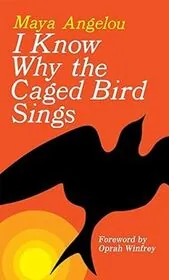
For readers who want a childhood memoir shaped by attention to language and selfhood. Angelou connects individual experience with the pressures of racism, though the sexual violence and other trauma make this a difficult choice for readers seeking lighter autobiography.
What it's about
Angelou's landmark first memoir follows her childhood in Stamps, Arkansas, and California as she faces racism, trauma, and silence. Books, language, and stubborn selfhood slowly help her find her voice.
Also recommended by
3 people- Richard Branson recommended this book
Richard Branson
Richard Branson recommended this book on his "70 must-read books" blog post.
Richard Branson's recommendation of this book  Jennifer Lopez recommended this book
Jennifer Lopez
Jennifer Lopez recommended this book on Twitter.
Jennifer Lopez's recommendation of this book  Jay Shetty recommended this book
Jay Shetty
Jay Shetty recommended this book on Twitter.
Jay Shetty's recommendation of this book
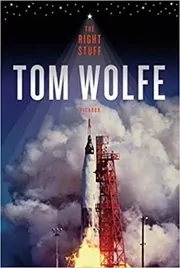
The Right Stuff
For readers interested in the culture behind early American spaceflight. Wolfe’s stylized reporting brings status, competition, and public myth into focus, though his energetic voice gives it a different emphasis from a technical mission history.
What it's about
Wolfe tells the intertwined stories of postwar test pilots and NASA’s original Mercury Seven astronauts, digging into the danger, ego, and family strain behind the space race. It asks what unseen “right stuff” makes people volunteer for such perilous missions.
Also recommended by
3 people- Richard Branson recommended this book
Richard Branson
Richard Branson recommended this book on his "70 must-read books" blog post.
Richard Branson's recommendation of this book - Patrick O'Shaughnessy recommended this book
Patrick O'Shaughnessy
"If you like American History and/or stories of pushing the limits of human capability and endurance, this book is for you." - Patrick O'Shaughnessy
Patrick O'Shaughnessy's recommendation of this book - Ben Shapiro recommended this book
Ben Shapiro
"FAR better than the movie, which is still good." - Ben Shapiro
Ben Shapiro's recommendation of this book
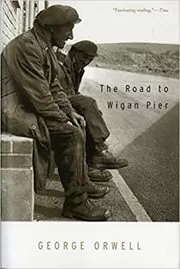
The Road to Wigan Pier
For readers interested in the connection between observed working conditions and political argument. Orwell exposes his own assumptions as well as social hardship, though the shift from reportage to polemic can feel like two different reading experiences.
What it's about
Part travelogue, part social investigation, this book follows Orwell through boarding houses, mines, and streets in northern England. He describes working class life in vivid detail and wrestles openly with his own politics and the meaning of socialism.
Also recommended by
3 people Jordan Peterson recommended this book
Jordan Peterson
Recommended on Jordan Peterson's website.
Jordan Peterson's recommendation of this book  David Heinemeier Hansson recommended this book
David Heinemeier Hansson
"It’s amazing how much of the abusive ideology revealed in his account of the miners is still present in today’s gig economy." - DHH
David Heinemeier Hansson's recommendation of this book  Brad Delong recommended this book
Brad Delong
Brad Delong recommended this book in his website.
Brad Delong's recommendation of this book

The Second Sex
For readers ready for an extended philosophical examination of women’s social position. Beauvoir combines cultural and historical analysis on a large scale, though the length, terminology, and period assumptions require patient engagement rather than a quick introduction.
What it's about
Simone de Beauvoir examines women's position through history, biology, psychology, literature and everyday experience. She investigates how social institutions and cultural expectations define women in relation to men and considers the possibilities for greater freedom and independence.
Also recommended by
2 people- Laura R Walker recommended this book
Laura R Walker
"For young women, I get [this book], which I read when I was studying in Paris." - Laura R Walker
Laura R Walker's recommendation of this book - Brad Delong recommended this book
Brad Delong
Brad Delong recommended this book in his website.
Brad Delong's recommendation of this book

H Is for Hawk
For readers who enjoy memoir that joins grief with close observation of another creature. The interplay of falconry and literary reflection gives the loss a distinctive form, though the digressions make it less direct than a chronological personal account.
What it's about
After her father's sudden death, Helen Macdonald turns to training a goshawk named Mabel. Her memoir intertwines grief, falconry, and reflections on T. H. White, exploring the desire to retreat into wildness and the difficulty of returning.
Also recommended by
1 person- Barack Obama recommended this book
Barack Obama
Barack Obama's "2016 Summer Reading List."
Barack Obama's recommendation of this book

Narrative of the Life of Frederick Douglass
For readers who want firsthand testimony joined to a clear argument against slavery. Douglass makes literacy and personal independence central to his account, though this first autobiography is brief and covers only part of his life.
What it's about
Frederick Douglass recounts his childhood in Maryland, the brutality of enslavement and his pursuit of literacy and freedom. This first autobiography uses firsthand experience to expose slavery's violence and support the abolitionist movement's case against the institution.
Also recommended by
1 person Dave Chappelle recommended this book
Dave Chappelle
"My favorite book of all time." - Dave Chappelle
Dave Chappelle's recommendation of this book
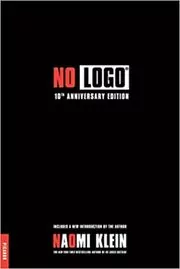
For readers interested in the relationship between branding, labor, and corporate power. Klein connects consumer culture with conditions behind products, though the cases capture a particular era of globalization and need supplementing for later business models.
What it's about
Klein's breakthrough book examines the rise of branding, corporate power, sweatshop labor, and anti-corporate resistance. It connects advertising and consumer culture to the hidden labor and politics behind global brands.
Also recommended by
1 person Richa Chadha recommended this book
Richa Chadha
"Made me reassess consumerism and greed." - Richa Chadha
Richa Chadha's recommendation of this book

The Feminine Mystique
For readers studying the challenge to restrictive domestic expectations in postwar America. Friedan turns private dissatisfaction into a public question, though the focus on a particular group of women leaves major differences of race and class underexamined.
What it's about
Betty Friedan examines the frustrations of American women whose ambitions were constrained by expectations of marriage and domestic fulfillment. Drawing on interviews and cultural analysis, she challenges the assumption that homemaking alone should satisfy women’s aspirations.
Also recommended by
1 person Patrick Collison recommended this book
Patrick Collison
Patrick Collison labeled this book "substantially above average."
Patrick Collison's recommendation of this book

All the President's Men
For readers who want to follow investigative journalism as a process. The attention to sources, verification, and incremental discoveries makes the reporting itself compelling, though the many names and procedural details require more concentration than a broad Watergate overview.
What it's about
Bob Woodward and Carl Bernstein recount their investigation of the Watergate break-in for The Washington Post. Following sources and evidence through successive revelations, they describe the reporting behind the exposure of a widening political conspiracy.

For readers interested in identity and family before Obama’s presidential career. The search for connections across countries gives the memoir a personal focus, though readers seeking an account of governing or later political decisions need a different book.
What it's about
Barack Obama explores race, family and identity through memories of his upbringing and a journey to learn about his Kenyan father's life. The memoir connects experiences in America with relatives and family history in Kenya.
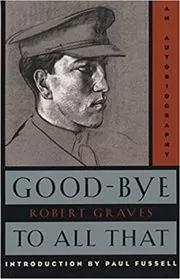
For readers who want a personal account of military life and disillusionment in the First World War. Graves connects battlefield experience with the institutions that formed him, though the retrospective and sometimes selective voice deserves critical reading.
What it's about
Robert Graves recounts his upbringing, military service, and disillusionment during the First World War. Experiences in the trenches and encounters with English institutions shape an autobiography written as he prepares to leave his country and former life.

How to Cook a Wolf
For readers who enjoy food writing that treats resourcefulness as part of living well. Fisher combines practical ideas with reflections on dignity and pleasure, though its wartime setting makes it more useful as an essay collection than a current recipe manual.
What it's about
Written amid wartime shortages, M.F.K. Fisher's essays combine practical cooking guidance with reflections on nourishment and resilience. She explores making meals with limited resources while preserving pleasure, dignity, and a sense of hospitality under difficult circumstances.
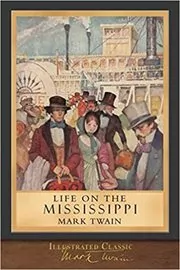
Life on the Mississippi
For readers who enjoy a memoir that also explores a place and its changing culture. Twain’s experience as a pilot gives the river writing authority and humor, though the episodic structure and period attitudes require an unhurried, critical reading.
What it's about
Part memoir, part travel book, Twain returns to the Mississippi River that shaped him as a steamboat pilot. He blends history, river lore, and sharp observations about people and places along the banks, past and present.

Pilgrim at Tinker Creek
For readers who want nature writing that turns close observation into larger questions. Dillard’s attention to beauty and violence gives familiar surroundings philosophical depth, though the reflective structure offers less practical natural history than a field guide.
What it's about
Annie Dillard records a year's exploration of the natural world around Tinker Creek in Virginia. Encounters with animals, insects, water and changing seasons become occasions for examining the beauty, violence and mystery she finds in her surroundings.

For readers who want westward expansion examined through dispossession and broken agreements. Brown’s historical narrative shifts attention toward Native communities, though its broad synthesis needs supplementing with histories and perspectives from particular Indigenous nations.
What it's about
Dee Brown recounts the displacement and violence experienced by Native American peoples during nineteenth-century expansion in the American West. Drawing on historical records and Indigenous accounts, he examines broken agreements, military campaigns, and struggles to preserve land and communities.
Sources
- 1
The 50 Best Nonfiction Books of the Last 100 Years | Book Riot
bookriot.com
- 2
The Best Nonfiction Books of All Time | Penguin Random House
penguinrandomhouse.com
- 3
50 Best Nonfiction Books of All-Time - College Transitions
collegetransitions.com
- 4
Nonfiction Books
goodreads.com
- 5
Non-fiction book that blew your mind : r/suggestmeabook
reddit.com
- 6
Best Nonfiction Books: The 10 Best Nonfiction Books of All-Time
jamesclear.com
- 7
The 100 best nonfiction books of all time: the full list | Books | The Guardian
theguardian.com




Edited by
Software engineer whose passion for tracking book recommendations from podcasts inspired the creation of MRB.
Lead investor at 3one4 Capital whose startup expertise and love for books helped shape MRB and its growth.
Comments
Spotted a missing book, a wrong order or a mistake? Tell us and we'll fix this page.
We're a reading guide, not the author or publisher, so we can't send books or pass on messages.