
12 Best Richard Dawkins Books
The best Richard Dawkins books, ranked by how many expert sources recommend each one, with notes for science newcomers, biology readers, and those exploring atheism.
Our take
Richard Dawkins writes about evolution, scientific explanation, and religious belief. His biology books often begin with something that appears difficult to explain, then work through how natural selection can produce it. His books on religion take a more openly argumentative approach, so your starting point depends on which subject interests you.
River Out of Eden offers a brief introduction to his evolutionary thinking. The Selfish Gene develops the gene’s eye perspective in more detail, while The Extended Phenotype pushes the argument further for readers comfortable with technical reasoning. The Greatest Show on Earth concentrates on evidence, and The Ancestor’s Tale explores the relationships among living things over a much longer journey.
For broader scientific curiosity, try The Magic of Reality or Unweaving the Rainbow. Outgrowing God introduces his arguments about religion more briefly than The God Delusion. Start with the subject and level you want, then follow the questions that remain.
12 books · 9 sources · Last updated
As an Amazon Associate, we earn from qualifying purchases (at no extra cost to you).
Reading Richard Dawkins in order? See all Richard Dawkins books in order
How to choose from this list
Skip to the full rankingIf you are new to evolution: River Out of Eden → The Greatest Show on Earth
If you want the gene centered argument: The Selfish Gene → The Extended Phenotype
If you want a broad evolutionary journey: The Ancestor's Tale
If you want science for younger readers: The Magic of Reality
If you want science and wonder: Unweaving the Rainbow
If you are exploring atheism: Outgrowing God → The God Delusion
The 12 books, ranked
Ranked by how many expert sources name each book. Ties go to the book more people recommend.
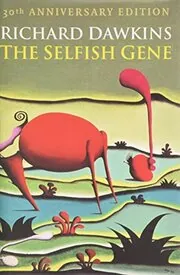
The Selfish Gene
For readers ready to examine evolution from the perspective of genes. Its central argument gives later Dawkins books a useful foundation, though the metaphor of selfishness needs careful reading and is not a moral recommendation.
What it's about
This landmark book shifts focus from organisms to genes, arguing that natural selection largely favours gene variants that promote their own replication. Along the way Dawkins introduces ideas like "selfish" and "altruistic" behaviour in evolutionary terms and coins the now-famous concept of the meme.
Also recommended by
12 people Charlie Munger recommended this book
Charlie Munger
"I had to read [this book] twice before I fully understood it." - Charlie Munger
Charlie Munger's recommendation of this book  Matt Ridley recommended this book
Matt Ridley
"Turned evolutionary biology on its head and was written like a great detective story." - Matt Ridley
Matt Ridley's recommendation of this book  Brian Armstrong recommended this book
Brian Armstrong
"Famous book about how our bodies are vehicles to replicate our genes (even though we occasionally defy them)." - Brian Armstrong
Brian Armstrong's recommendation of this book  Ev Williams recommended this book
Ev Williams
On the "books read" section of Ev Williams' GoodReads profile.
Ev Williams's recommendation of this book  Nick Szabo recommended this book
Nick Szabo
"Explains more about life (including human behavior and myself) than anything else I’ve read. " - Nick Szabo
Nick Szabo's recommendation of this book  Phil Libin recommended this book
Phil Libin
"Had a profound influence on me pretty early on." - Phil Libin
Phil Libin's recommendation of this book +6
More recommendations
- Mr. Money Mustache
"An explanation of evolution since the beginning of life that explains things from the perspective of individual genes." - MMM
- Bob Metcalfe
"It just seemed to explain everything." - Bob Metcalfe
- David Deutsch
"Influenced my books." - David Deutsch
- Tai Lopez
"Mind blowing book. [...] But warning you, it’s too true for most people to handle..." - Tai Lopez
- Elon Musk
"Most people don't realize that the origin of the word 'meme' is [this book]." - Elon Musk
- Mark Manson
Mark Manson recommended this book on his website.
- Mr. Money Mustache
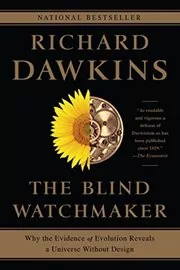
The Blind Watchmaker
Why the Evidence of Evolution Reveals a Universe without Design
For readers puzzled by how complexity can arise without a designer. Its cumulative explanations and examples make the mechanism more vivid than a simple evidence survey, though some scientific examples and computer demonstrations show their age.
What it's about
Dawkins uses the metaphor of a "blind watchmaker" to show how natural selection, not conscious design, builds complex living structures. Through case studies from animal senses to computer simulations, he argues that small, cumulative changes can generate the appearance of purposeful design.
Also recommended by
4 people- Charlie Munger recommended this book
Charlie Munger
"Marvelous." - Charlie Munger
Charlie Munger's recommendation of this book  Steven Pinker recommended this book
Steven Pinker
"Perhaps the best display of expository scientific prose of the twentieth century." - Steven Pinker
Steven Pinker's recommendation of this book  Jeff Bezos recommended this book
Jeff Bezos
"Extraordinary." - Jeff Bezos
Jeff Bezos's recommendation of this book  David Deutsch recommended this book
David Deutsch
"Everyone should read [this book]." - David Deutsch
David Deutsch's recommendation of this book
The God Delusion
For readers who want Dawkins’s sustained argument against religious belief. Its direct style makes the position easy to follow, though the confrontational tone and broad treatment of theology will not satisfy every philosophical reader.
What it's about
Dawkins argues that a personal, supernatural God is extremely unlikely, dismantling classic arguments for God's existence and examining religion's social effects. He explores how morality, meaning and awe can flourish without faith, making a forceful case for outspoken atheism.
Also recommended by
2 people Joe Rogan recommended this book
Joe Rogan
"I read The God Delusion in preparation for [the Dawkins interview]. I'm a huge fan of [his] work." - Joe Rogan
Joe Rogan's recommendation of this book - Brian Armstrong recommended this book
Brian Armstrong
"Many people believe simply based on how they grew up, without ever questioning." - Brian Armstrong
Brian Armstrong's recommendation of this book
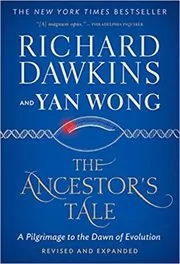
For readers who want an expansive journey through the relationships among living things. Its backward structure creates connections across many branches of life, though the long, detailed detours make it a substantial commitment.
What it's about
Structured as a backwards pilgrimage through time, this ambitious book traces human ancestry to the origin of life. Each "rendezvous" with another species becomes a tale about fossils, genetics or behaviour, building a panoramic picture of evolution across billions of years.
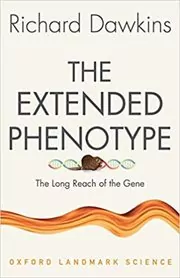
For readers comfortable with The Selfish Gene who want a more technical argument. It extends the focus beyond an organism’s body to effects in the wider environment, though the dense reasoning assumes more biological background.
What it's about
Written for biologists but influential far beyond, this book argues that a gene's effects extend outside the bodies it builds, shaping nests, parasites' hosts and even social systems. Dawkins develops the "extended phenotype" as a way to think about adaptation and natural selection more precisely.
Also recommended by
1 person- David Deutsch recommended this book
David Deutsch
"I suggest reading [this book]." - David Deutsch
David Deutsch's recommendation of this book
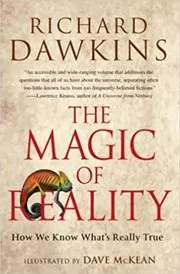
The Magic of Reality
For younger readers and adults who want an accessible introduction to scientific explanation. Its broad questions make it easier to enter than the gene focused books, though the introductory treatment leaves specialist questions for further reading.
What it's about
Written for curious younger readers, this book tackles big questions about the world by setting traditional myths alongside clear scientific explanations. Dawkins explains rainbows, earthquakes, evolution and more, showing how evidence-based stories make reality feel every bit as magical.
Also recommended by
1 person Bill Gates recommended this book
Bill Gates
"An engaging, well-illustrated science textbook offering compelling answers to big questions, from how the universe formed to what causes earthquakes." - Bill Gates
Bill Gates's recommendation of this book
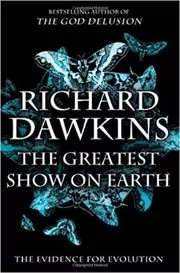
For readers who understand the basic idea of evolution but want to examine the evidence. Its range connects several independent lines of inquiry, though arguments against creationism sometimes interrupt the scientific tour.
What it's about
Here Dawkins lays out the evidence that evolution by natural selection is a fact, not just a theory in the everyday sense. Fossils, genetics, domestication experiments and observations in real time all feature in a tour of how we know common descent is true.
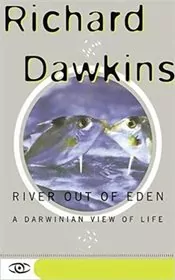
For readers who want a brief entry into Dawkins’s evolutionary thinking. The information metaphor compresses several recurring ideas into a manageable book, though the short treatment leaves less space for qualifications and detailed examples.
What it's about
This brief popular account presents life as a branching river of digital information flowing through deep time. Dawkins explains gene lineages, common ancestry, natural selection and apparent design, offering a distilled version of themes from his earlier evolutionary writings.
Also recommended by
1 person Ray Dalio recommended this book
Ray Dalio
"Another very short book on evolution. It just really puts things in perspective." - Ray Dalio
Ray Dalio's recommendation of this book
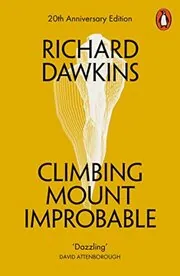
Climbing Mount Improbable
For readers who want concrete examples of how adaptations develop gradually. Its extended mountain metaphor makes apparent design easier to think through, though the central argument overlaps substantially with The Blind Watchmaker.
What it's about
Using the image of a steep mountain scaled by a long, gentle slope, Dawkins explores how intricate adaptations such as spider webs, eyes and wings can evolve step by step. The book expands on ideas from his Christmas lectures, stressing cumulative selection over chance.
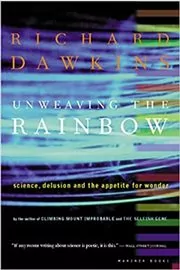
Unweaving the Rainbow
For readers who worry that scientific explanations diminish beauty or wonder. Its links between observation, imagination, and evidence offer a broader reflection than the evolution books, though the criticism of pseudoscience can become combative.
What it's about
This blend of science and reflection counters the claim that explaining nature destroys its beauty. Using examples from evolution, probability, superstition and pseudoscience, Dawkins shows how understanding rainbows, stars and living things deepens rather than diminishes a sense of wonder.
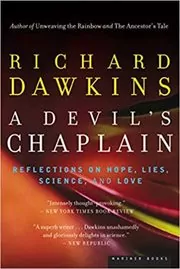
For readers who prefer essays and want to see Dawkins beyond a single extended argument. Its variety includes scientific reflection and personal tributes, though the shifting subjects and occasions make it less coherent than his full length books.
What it's about
This collection gathers decades of Dawkins's essays, lectures and reviews on evolution, religion, education and public life. From affectionate pieces about colleagues to sharp critiques of pseudoscience and terrorism, it offers a wide-ranging snapshot of his thinking outside full-length books.
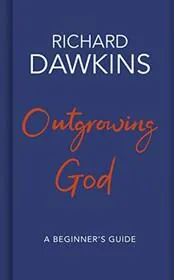
For readers seeking a shorter introduction to Dawkins’s case against religious belief. Its explanations assume less background than The God Delusion, though the accessible format necessarily compresses philosophical and theological disagreements.
What it's about
Written for teenagers and young adults, this book asks whether belief in God still makes sense in light of modern science and history. Dawkins re-examines Bible stories, miracles and morality, inviting readers to think critically and decide their views for themselves.
Sources
- 1
Books by Richard Dawkins
fivebooks.com
- 2
SS > book reviews > Richard Dawkins
www-users.york.ac.uk
- 3
5 Best Richard Dawkins Books (2025)
ereads.com
- 4
18 Highly Recommended Books by Richard Dawkins
word-power.co.uk
- 5
Richard Dawkins
goodreads.com
- 6
Richard Dawkins books you like the most
reddit.com
- 7
I loved The Selfish Gene by Richard Dawkins. What other books would you recommend?
reddit.com
- 8
Best Books on Evolution...
goodreads.com
- 9
Richard Dawkins
kirkusreviews.com




Edited by
Software engineer whose passion for tracking book recommendations from podcasts inspired the creation of MRB.
Lead investor at 3one4 Capital whose startup expertise and love for books helped shape MRB and its growth.
Comments
Spotted a missing book, a wrong order or a mistake? Tell us and we'll fix this page.
We're a reading guide, not the author or publisher, so we can't send books or pass on messages.