
17 Best Genetics Books
The best genetics books, ranked by how many expert sources recommend each one, with notes on who each book suits, its biology prerequisites and where to start.
Our take
Genetics explores how biological information is inherited, used and changed. It connects the patterns seen in families and populations with the molecular work of DNA, RNA and proteins. The books here approach that subject through history, evolution, medical applications and structured study, so a curious reader and a biology student will need different starting points.
The Gene provides a narrative history, while A Brief History of Everyone Who Ever Lived concentrates on human ancestry and the limits of genetic interpretation. The Selfish Gene develops an evolutionary perspective, and The Code Breaker follows the people behind gene editing. For coursework, Concepts of Genetics and Genetics: Analysis and Principles provide explanations and problems; the medical texts connect inheritance with patient care. Discovery stories such as Gene Machine offer a narrower view of research in practice. Next is a speculative novel rather than a source of scientific instruction. Start with The Gene for general reading or Concepts of Genetics for systematic study.
17 books · 7 sources · Last updated
As an Amazon Associate, we earn from qualifying purchases (at no extra cost to you).
How to choose from this list
Skip to the full rankingIf you want a narrative introduction: The Gene → The Violinist's Thumb
If you want a first university course: Concepts of Genetics → Genetics: Analysis and Principles
If you want ancestry and human history: A Brief History of Everyone Who Ever Lived
If you want genes and evolution: The Selfish Gene → The Making of the Fittest
If you want discovery from different perspectives: The Double Helix → Rosalind Franklin
If you want gene regulation: The Epigenetics Revolution
The 17 books, ranked
Ranked by how many expert sources name each book. Ties go to the book more people recommend.
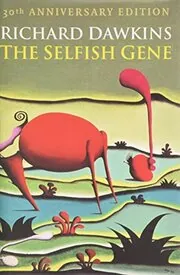
The Selfish Gene
For readers interested in evolution from a gene centered perspective. Its explanatory models make selection and altruism easier to reason about, though the metaphor of selfishness needs careful interpretation and the book is not a general genetics textbook.
What it's about
This landmark book shifts focus from organisms to genes, arguing that natural selection largely favours gene variants that promote their own replication. Along the way Dawkins introduces ideas like "selfish" and "altruistic" behaviour in evolutionary terms and coins the now-famous concept of the meme.
Also recommended by
12 people Charlie Munger recommended this book
Charlie Munger
"I had to read [this book] twice before I fully understood it." - Charlie Munger
Charlie Munger's recommendation of this book  Matt Ridley recommended this book
Matt Ridley
"Turned evolutionary biology on its head and was written like a great detective story." - Matt Ridley
Matt Ridley's recommendation of this book  Brian Armstrong recommended this book
Brian Armstrong
"Famous book about how our bodies are vehicles to replicate our genes (even though we occasionally defy them)." - Brian Armstrong
Brian Armstrong's recommendation of this book  Ev Williams recommended this book
Ev Williams
On the "books read" section of Ev Williams' GoodReads profile.
Ev Williams's recommendation of this book  Nick Szabo recommended this book
Nick Szabo
"Explains more about life (including human behavior and myself) than anything else I’ve read. " - Nick Szabo
Nick Szabo's recommendation of this book  Phil Libin recommended this book
Phil Libin
"Had a profound influence on me pretty early on." - Phil Libin
Phil Libin's recommendation of this book +6
More recommendations
- Mr. Money Mustache
"An explanation of evolution since the beginning of life that explains things from the perspective of individual genes." - MMM
- Bob Metcalfe
"It just seemed to explain everything." - Bob Metcalfe
- David Deutsch
"Influenced my books." - David Deutsch
- Tai Lopez
"Mind blowing book. [...] But warning you, it’s too true for most people to handle..." - Tai Lopez
- Elon Musk
"Most people don't realize that the origin of the word 'meme' is [this book]." - Elon Musk
- Mark Manson
Mark Manson recommended this book on his website.
- Mr. Money Mustache

For readers who want discoveries about heredity connected to family experience and ethical choices. Its historical narrative gives scientific ideas a human frame, though the breadth and personal threads make it less direct than a course text.
What it's about
Siddhartha Mukherjee traces the history of genetics while weaving in his family’s experiences of mental illness. The account examines discoveries about heredity, the misuse of genetic ideas, and ethical questions raised by growing power to understand and alter genes.
Also recommended by
4 people Bill Gates recommended this book
Bill Gates
"Mukherjee once again shows his gift for making hard science easily accessible." - Bill Gates
Bill Gates's recommendation of this book  John Legend recommended this book
John Legend
"So interesting and well written." - John Legend
John Legend's recommendation of this book  Bryan Johnson recommended this book
Bryan Johnson
"A great book." - Bryan Johnson
Bryan Johnson's recommendation of this book  Reid Hoffman recommended this book
Reid Hoffman
Reid Hoffman told McKinsey he was reading this book.
Reid Hoffman's recommendation of this book

For readers who want a broad popular introduction organized around human chromosomes. Its thematic chapters connect genetic ideas to varied human questions, though the science reflects an earlier stage of genomics and should be read with that historical context.
What it's about
Matt Ridley tells the story of human biology through genes associated with each of the 23 chromosomes. His account connects genetic discoveries with evolution, disease, consciousness, and questions about what makes people human.
Also recommended by
4 people Naval Ravikant recommended this book
Naval Ravikant
"Everything by [this author] is worth reading." - Naval Ravikant
Naval Ravikant's recommendation of this book  Mark Zuckerberg recommended this book
Mark Zuckerberg
"Aims to tell a history of humanity from the perspective of genetics rather than sociology." - Mark Zuckerberg
Mark Zuckerberg's recommendation of this book - Charlie Munger recommended this book
Charlie Munger
Charlie Munger recommended this book in the "Poor Charlie's Almanack" book.
Charlie Munger's recommendation of this book - Nick Szabo recommended this book
Nick Szabo
"I think three or four of my top 20 books of all time are all [this author's]." - Nick Szabo
Nick Szabo's recommendation of this book

A Brief History of Everyone Who Ever Lived
The Human Story Retold Through Our Genes
For readers curious about ancestry and the limits of what DNA can tell us. Its attention to interpretation challenges simple genetic origin stories, though the conversational structure and changing examples offer less systematic coverage than a textbook.
What it's about
Adam Rutherford explores how DNA reveals the history of humanity, from ancestry and migration to disease and reproduction. He explains the discoveries and limits of genomics, showing how genetic evidence can reshape familiar accounts of our shared past.
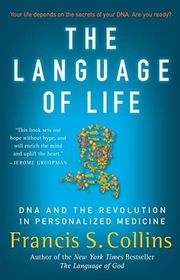
The Language of Life
For readers interested in how genomic research entered medicine and public debate. Its accessible examples connect DNA with potential health applications, though the early personalized medicine outlook and practical details require historical context rather than current clinical reliance.
What it's about
Francis Collins explains how knowledge of DNA could change the understanding, prevention and treatment of disease. Drawing on genomic research and examples of genetic variation, the book examines the promise of personalized medicine and questions surrounding its use.

For readers who want a participant’s view of a major scientific race. Its candid focus on ambition and rivalry makes discovery immediate, though the selective account and treatment of colleagues need comparison with other histories.
What it's about
James Watson recounts his collaboration with Francis Crick in discovering DNA’s structure. This personal account describes scientific competition, ambitious researchers, and the working relationships behind the discovery, presenting events through Watson’s own perspective and recollections.
Also recommended by
3 people Peter Attia recommended this book
Peter Attia
"[One of the] biographies of people who have 'built skyscrapers' (my term)." - Peter Attia
Peter Attia's recommendation of this book  Paul Graham recommended this book
Paul Graham
"The most impressive feature of [this book] is how much [the author] admits he didn't know. He's constantly talking about papers he couldn't understand and important concepts he didn't grasp." - Paul Graham
Paul Graham's recommendation of this book - Matt Ridley recommended this book
Matt Ridley
"An astonishing literary achievement, and it was about the greatest scientific discovery of the 20th century." - Matt Ridley
Matt Ridley's recommendation of this book

For students who prefer learning principles through experiments and evidence. Its research centered approach shows how conclusions are reached rather than only presenting results, though the textbook density and exercises make it a course commitment rather than casual reading.
What it's about
Robert Brooker introduces genetics through an experimental approach, weaving studies into explanations of genetic principles. Designed for an introductory course, the textbook connects scientific methods with the discoveries they produced, using questions and learning activities to develop understanding.
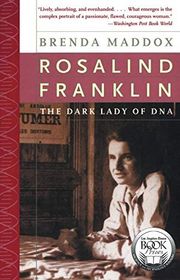
Rosalind Franklin: The Dark Lady of DNA
For readers who want DNA’s discovery examined through a scientist often overshadowed in popular accounts. Its biographical context broadens the picture beyond one famous result, though it follows a life rather than teaching genetics systematically.
What it's about
Brenda Maddox follows Rosalind Franklin’s scientific career and private life, including her work using X-ray methods to study DNA. The biography places her contribution to understanding its structure within the relationships and institutions that shaped her opportunities and recognition.
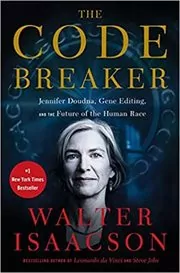
The Code Breaker
Jennifer Doudna, Gene Editing, and the Future of the Human Race
For readers interested in gene editing through the people and institutions behind it. Its biography driven account makes the research competition accessible, though the focus on leading personalities gives less space to a systematic explanation of genetics.
What it's about
This biography of Jennifer Doudna follows the race to develop CRISPR gene editing and the science behind it. Isaacson pairs lab drama with the huge ethical questions that come with rewriting the code of life.

The Epigenetics Revolution
How Modern Biology Is Rewriting Our Understanding of Genetics, Disease, and Inheritance
For readers ready to look beyond DNA sequence toward the regulation of gene activity. Its examples make cell differences and development more accessible, though the field has moved since publication and some broader possibilities remain unsettled.
What it's about
Nessa Carey introduces epigenetics and explains why DNA sequences alone cannot account for an organism's development and behavior. She traces the field's history and examines gene regulation, inheritance, aging, disease, and the interaction between genes and environment.
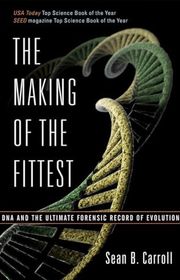
The Making of the Fittest
For readers who want molecular evidence for evolution explained through concrete cases. Its comparison of DNA records makes evolutionary arguments tangible beyond a gene centered metaphor, though it concentrates on adaptation rather than covering all of genetics.
What it's about
Sean B. Carroll examines how DNA preserves evidence of evolutionary change. Examples involving genes, traits and species explain how genetic records can reveal natural selection and shared history, connecting molecular discoveries with the observable diversity of living organisms.

The Violinist's Thumb
And Other Lost Tales of Love, War, and Genius, as Written by Our Genetic Code
For readers who enjoy learning science through unusual historical stories. Its wide range of anecdotes makes genetic ideas approachable, though the episodic structure favors memorable cases over the orderly development of a course text.
What it's about
Sam Kean examines DNA through stories connecting genetics with human history and individual lives. Scientific discoveries and unusual biological puzzles explain how genes work, what they can reveal, and how researchers learned to read their information.

Concepts of Genetics
For students who want a conventional first genetics course with substantial problem solving. Its structured progression connects inheritance with molecular mechanisms more systematically than the narrative books, though mastering the material requires working exercises and prior introductory biology.
What it's about
William Klug and his collaborators introduce the core principles of genetics alongside techniques and applications of genetic analysis. The textbook develops concepts of inheritance and gene expression through explanations, illustrations, and problems intended for introductory courses in the biological sciences.

Emery's Elements of Medical Genetics
For medical students who want inheritance and molecular mechanisms connected to clinical questions. Its disease oriented structure makes the applications clearer than a general biology text, though it assumes scientific background and requires checking edition-specific clinical information.
What it's about
Peter Turnpenny and Sian Ellard connect the scientific foundations of human genetics with medicine and clinical practice. The textbook covers inheritance, genetic disease, testing, counseling, and ethical issues, using illustrations and summaries to help students relate principles to clinical situations.

For readers who want an insider’s account of how molecular discovery happens. Its treatment of competition and collaboration gives ribosome research a personal dimension, though the narrow subject and structural detail make it less useful as a broad genetics introduction.
What it's about
Venki Ramakrishnan recounts the scientific race to uncover the structure of the ribosome, the cell's protein-making machinery. His memoir combines the story of his research career with competition, collaboration, and uncertainty, offering an insider's account of how major discoveries happen.

Medical Genetics
For medical students who learn through patient examples and clinical applications. Its vignettes connect genetic principles to diagnosis and counseling more directly than a general course book, though the medical emphasis limits broader evolutionary and organismal coverage.
What it's about
Lynn Jorde and his collaborators connect genetic science with clinical practice through disease examples, illustrations, and patient vignettes. The textbook covers inheritance, variation, genetic testing, cancer, and counseling, showing medical students how foundational concepts apply to questions encountered in patient care.

Next
For readers who want fiction exploring the commercial and legal anxieties around genetics. Its satirical thriller format makes competing interests vivid, though the speculative scenarios and dramatic compression should not be treated as a scientific explanation.
What it's about
A man discovers his cells have been sold to a biotech company, sparking lawsuits, bounty hunters, and a messy fight over who “owns” DNA. Along the way, transgenic animals and researchers collide in a darkly comic look at genetic capitalism.
Sources
- 1
The 9 best books about genetics
idtdna.com
- 2
10 Great Books on Genetics
sciencebookaday.com
- 3
Genetics - Five Books Expert Recommendations
fivebooks.com
- 4
Best Popular Genetics Books on Goodreads
goodreads.com
- 5
15 Books about Genetics for National DNA Day
nypl.org
- 6
Recommendations on books about genetics?
reddit.com
- 7
Top 12 Best Genetics Textbooks
bioexplorer.net









Edited by
Software engineer whose passion for tracking book recommendations from podcasts inspired the creation of MRB.
Lead investor at 3one4 Capital whose startup expertise and love for books helped shape MRB and its growth.
Comments
Spotted a missing book, a wrong order or a mistake? Tell us and we'll fix this page.
We're a reading guide, not the author or publisher, so we can't send books or pass on messages.