
Richard Dawkins Books in Order
See Richard Dawkins's books in order, with concise summaries, background on his science and atheism writing, and simple guidance on where readers should begin.
Last updated:
As an Amazon Associate, we earn from qualifying purchases (at no extra cost to you).
Richard Dawkins books in publication order
30 books
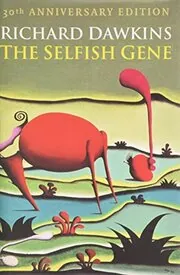
The Selfish Gene
by Richard Dawkins
1976
This landmark book shifts focus from organisms to genes, arguing that natural selection largely favours gene variants that promote their own replication. Along the way Dawkins introduces ideas like "selfish" and "altruistic" behaviour in evolutionary terms and coins the now-famous concept of the meme.
Recommended by
12 people Charlie Munger recommended this book
Charlie Munger
"I had to read [this book] twice before I fully understood it." - Charlie Munger
Charlie Munger's recommendation of this book  Matt Ridley recommended this book
Matt Ridley
"Turned evolutionary biology on its head and was written like a great detective story." - Matt Ridley
Matt Ridley's recommendation of this book  Brian Armstrong recommended this book
Brian Armstrong
"Famous book about how our bodies are vehicles to replicate our genes (even though we occasionally defy them)." - Brian Armstrong
Brian Armstrong's recommendation of this book  Ev Williams recommended this book
Ev Williams
On the "books read" section of Ev Williams' GoodReads profile.
Ev Williams's recommendation of this book  Nick Szabo recommended this book
Nick Szabo
"Explains more about life (including human behavior and myself) than anything else I’ve read. " - Nick Szabo
Nick Szabo's recommendation of this book  Phil Libin recommended this book
Phil Libin
"Had a profound influence on me pretty early on." - Phil Libin
Phil Libin's recommendation of this book +6
More recommendations
- Mr. Money Mustache
"An explanation of evolution since the beginning of life that explains things from the perspective of individual genes." - MMM
- Bob Metcalfe
"It just seemed to explain everything." - Bob Metcalfe
- David Deutsch
"Influenced my books." - David Deutsch
- Tai Lopez
"Mind blowing book. [...] But warning you, it’s too true for most people to handle..." - Tai Lopez
- Elon Musk
"Most people don't realize that the origin of the word 'meme' is [this book]." - Elon Musk
- Mark Manson
Mark Manson recommended this book on his website.
- Mr. Money Mustache
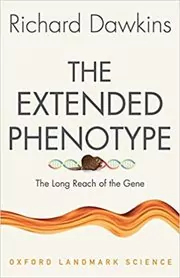
The Extended Phenotype
by Richard Dawkins
1982
Written for biologists but influential far beyond, this book argues that a gene's effects extend outside the bodies it builds, shaping nests, parasites' hosts and even social systems. Dawkins develops the "extended phenotype" as a way to think about adaptation and natural selection more precisely.
Recommended by
1 person David Deutsch recommended this book
David Deutsch
"I suggest reading [this book]." - David Deutsch
David Deutsch's recommendation of this book
Oxford Surveys In Evolutionary Biology
by Richard Dawkins
1984
This volume from an academic series collects in-depth review articles on current questions in evolutionary biology. Co-edited for several years by Dawkins, the series helps researchers and advanced students keep up with theory and data across fields from molecular evolution to ecology.
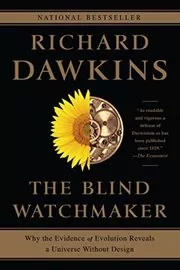
The Blind Watchmaker
by Richard Dawkins
1986
Dawkins uses the metaphor of a "blind watchmaker" to show how natural selection, not conscious design, builds complex living structures. Through case studies from animal senses to computer simulations, he argues that small, cumulative changes can generate the appearance of purposeful design.
Recommended by
4 people- Charlie Munger recommended this book
Charlie Munger
"Marvelous." - Charlie Munger
Charlie Munger's recommendation of this book  Steven Pinker recommended this book
Steven Pinker
"Perhaps the best display of expository scientific prose of the twentieth century." - Steven Pinker
Steven Pinker's recommendation of this book  Jeff Bezos recommended this book
Jeff Bezos
"Extraordinary." - Jeff Bezos
Jeff Bezos's recommendation of this book - David Deutsch recommended this book
David Deutsch
"Everyone should read [this book]." - David Deutsch
David Deutsch's recommendation of this book
God's Utility Function
by Richard Dawkins
1995
Expanding on a famous chapter from River Out of Eden, this essay asks what "purpose" life seems built to serve. Dawkins argues that natural selection maximizes genetic survival rather than kindness or justice, using stark examples from nature to challenge comforting ideas about a benevolent designer.
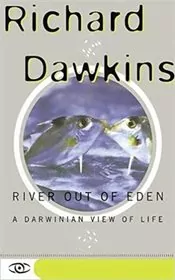
River Out of Eden
by Richard Dawkins
1995
This brief popular account presents life as a branching river of digital information flowing through deep time. Dawkins explains gene lineages, common ancestry, natural selection and apparent design, offering a distilled version of themes from his earlier evolutionary writings.
Recommended by
1 person Ray Dalio recommended this book
Ray Dalio
"Another very short book on evolution. It just really puts things in perspective." - Ray Dalio
Ray Dalio's recommendation of this book
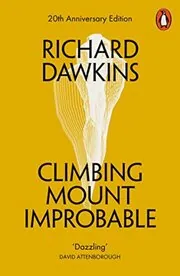
Climbing Mount Improbable
by Richard Dawkins
1996
Using the image of a steep mountain scaled by a long, gentle slope, Dawkins explores how intricate adaptations such as spider webs, eyes and wings can evolve step by step. The book expands on ideas from his Christmas lectures, stressing cumulative selection over chance.
The Pocket Watchmaker
by Richard Dawkins
1996
Part of a pocket-sized series, this booklet condenses key chapters from The Blind Watchmaker. It offers a quick, vivid introduction to how cumulative natural selection can mimic the work of a designer, ideal for readers wanting a short taste of Dawkins's evolution writing.
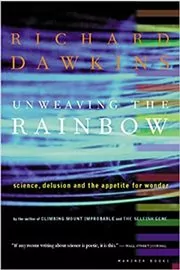
Unweaving the Rainbow
by Richard Dawkins
2000
This blend of science and reflection counters the claim that explaining nature destroys its beauty. Using examples from evolution, probability, superstition and pseudoscience, Dawkins shows how understanding rainbows, stars and living things deepens rather than diminishes a sense of wonder.
Oxford Illustrated Science Encyclopedia
by Richard Dawkins
2001
An illustrated reference for younger readers, this encyclopedia surveys physics, chemistry, biology, Earth science and space in accessible entries. Updated to reflect new discoveries, it explains key concepts, major experiments and scientific figures, with diagrams and timelines to help complex ideas stick.
A Devil's Chaplain
by Richard Dawkins
2003
This collection gathers decades of Dawkins's essays, lectures and reviews on evolution, religion, education and public life. From affectionate pieces about colleagues to sharp critiques of pseudoscience and terrorism, it offers a wide-ranging snapshot of his thinking outside full-length books.
The Best American Science and Nature Writing 2003
by Richard Dawkins
2003
As guest editor for this annual anthology, Dawkins selects standout science and nature essays from American magazines and newspapers. The collection ranges from cosmology to conservation and includes a combative introduction defending clear, evidence-based writing in an era of public confusion about science.
Growing Up in the Universe
by Richard Dawkins
2004
Based on his Royal Institution Christmas Lectures, this work introduces evolution, perception and scientific thinking to a general audience. Dawkins uses vivid demonstrations and thought experiments to show how life, minds and cultures "grow up" from simple beginnings into the complexity we see today.
The Ancestor's Tale
by Richard Dawkins
2004
Structured as a backwards pilgrimage through time, this ambitious book traces human ancestry to the origin of life. Each "rendezvous" with another species becomes a tale about fossils, genetics or behaviour, building a panoramic picture of evolution across billions of years.
The View from Mount Improbable
by Richard Dawkins
2005
This pocket-sized volume extracts and reworks a section of Climbing Mount Improbable focused on the evolution of eyes. Dawkins walks readers through a plausible sequence from simple light-sensitive cells to complex camera-like eyes, countering claims that such organs could not evolve gradually.

Not One More Death
by Richard Dawkins
2006
This slim volume brings together essays by writers and artists, including Dawkins, on the invasion of Iraq. The contributors question the war's justifications, examine civilian suffering, and ask what responsibility public figures and citizens bear during military interventions.
The God Delusion
by Richard Dawkins
2006
Dawkins argues that a personal, supernatural God is extremely unlikely, dismantling classic arguments for God's existence and examining religion's social effects. He explores how morality, meaning and awe can flourish without faith, making a forceful case for outspoken atheism.
Recommended by
2 people Joe Rogan recommended this book
Joe Rogan
"I read The God Delusion in preparation for [the Dawkins interview]. I'm a huge fan of [his] work." - Joe Rogan
Joe Rogan's recommendation of this book - Brian Armstrong recommended this book
Brian Armstrong
"Many people believe simply based on how they grew up, without ever questioning." - Brian Armstrong
Brian Armstrong's recommendation of this book
On the Origin of Species
by Richard Dawkins
2008
This edition presents Charles Darwin's On the Origin of Species in a concise form shaped by Dawkins. It preserves Darwin's central arguments for evolution by natural selection while offering a modern scientist's framing of why the book still matters.
The Oxford Book of Modern Science Writing
by Richard Dawkins
2008
Edited and introduced by Dawkins, this anthology samples modern science writing from more than eighty authors. Short, self-contained pieces on physics, biology, cosmology and more show how scientists think, tell stories and argue, making it a rich gateway into twentieth-century science.
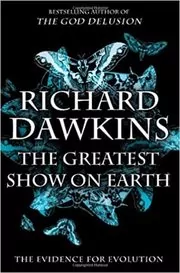
The Greatest Show on Earth
by Richard Dawkins
2009
Here Dawkins lays out the evidence that evolution by natural selection is a fact, not just a theory in the everyday sense. Fossils, genetics, domestication experiments and observations in real time all feature in a tour of how we know common descent is true.
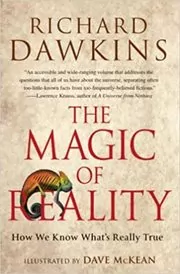
The Magic of Reality
by Richard Dawkins
2011
Written for curious younger readers, this book tackles big questions about the world by setting traditional myths alongside clear scientific explanations. Dawkins explains rainbows, earthquakes, evolution and more, showing how evidence-based stories make reality feel every bit as magical.
Recommended by
1 person Bill Gates recommended this book
Bill Gates
"An engaging, well-illustrated science textbook offering compelling answers to big questions, from how the universe formed to what causes earthquakes." - Bill Gates
Bill Gates's recommendation of this book
The "Alabama Insert"
by Richard Dawkins
2013
Based on a speech first delivered in Alabama, this short work responds to a state-mandated disclaimer pasted into biology textbooks questioning evolution. Dawkins explains what scientists mean by "theory", clarifies common misunderstandings and defends evolutionary biology as the core of modern life science.
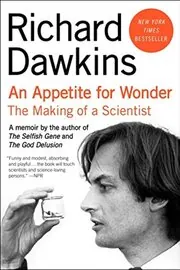
An Appetite for Wonder
by Richard Dawkins
2014
Subtitled "The Making of a Scientist", this first memoir follows Dawkins from childhood in colonial Kenya through school, Oxford training under Nikolaas Tinbergen and the early research that led to The Selfish Gene. It is a personal look at how a scientist's worldview forms.
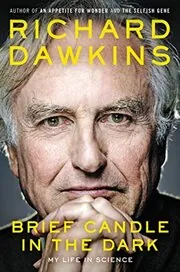
Brief Candle in the Dark
by Richard Dawkins
2015
In this second volume of memoir, Dawkins recounts his life from the publication of The Selfish Gene onward. He reflects on research, friendships, public debates, TV work and travel, offering behind-the-scenes stories from a career spent explaining science in public.
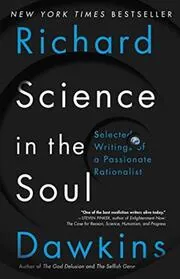
Science in the Soul
by Richard Dawkins
2017
Science in the Soul collects more than forty of Dawkins's talks, articles and open letters about science, education and rational thinking. The pieces range from celebrations of Darwin to blunt responses on climate change, creationism and the role of evidence in public life.
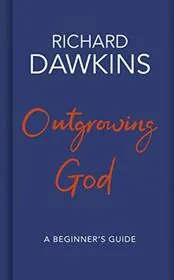
Outgrowing God
by Richard Dawkins
2019
Written for teenagers and young adults, this book asks whether belief in God still makes sense in light of modern science and history. Dawkins re-examines Bible stories, miracles and morality, inviting readers to think critically and decide their views for themselves.

The Four Horsemen
by Richard Dawkins
2019
This short book reproduces the transcript of a 2007 conversation between Dawkins, Christopher Hitchens, Sam Harris and Daniel Dennett, later dubbed the "four horsemen" of New Atheism. New essays frame their wide-ranging discussion of religion, doubt, ethics and how to argue in public.
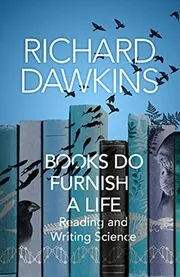
Books Do Furnish a Life
by Richard Dawkins
2021
Here Dawkins turns his attention to other people's books, collecting his forewords, reviews, talks and interviews about science writing. The pieces celebrate authors from Carl Sagan to Steven Pinker and trace how ideas in biology, physics and cosmology cross into everyday life.

Flights of Fancy: Defying Gravity by Design and Evolution
by Richard Dawkins
2021
Mixing biology, physics and history, this illustrated book explores how animals and humans have learned to fly. Dawkins moves from insects and birds to gliders, planes and rockets, explaining the mechanics of lift and evolution's many attempts to slip the bonds of gravity.

The Genetic Book of the Dead
by Richard Dawkins
2024
In this late-career meditation, Dawkins revisits his gene-centred view of evolution, proposing that organisms can be "read" as records of ancient environments. Case studies of camouflage, parasitism and behaviour show how DNA preserves traces of past selection pressures like pages in a deep-time archive.
Where to start with Richard Dawkins
If you want a clear path into evolution: The Selfish Gene → The Blind Watchmaker → The Greatest Show on Earth.
If you're ready for more technical biology: The Extended Phenotype → River Out of Eden → The Ancestor's Tale → The Genetic Book of the Dead.
If you're reading with teens or young adults: The Magic of Reality → Outgrowing God → Flights of Fancy: Defying Gravity by Design and Evolution.
If you're mainly interested in religion and atheism: The God Delusion → The Four Horsemen → Science in the Soul.
If you prefer biography and essays: An Appetite for Wonder → Brief Candle in the Dark → A Devil's Chaplain → Books Do Furnish a Life.
Richard Dawkins collections, short stories, and related book types
Non-Fiction Books
Standalone Richard Dawkins books

by Richard Dawkins
1986Why the Evidence of Evolution Reveals a Universe without Design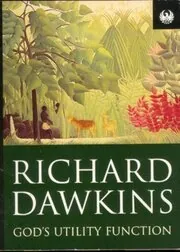


Author bio
Richard Dawkins was born in Nairobi in 1941, the child of British parents posted to colonial East Africa. He spent his early years fascinated by insects, farms and the equatorial sky before the family returned to England when he was eight.
Growing up in rural Oxfordshire, he drifted toward the natural sciences partly because of the way his parents answered questions. When he asked why the moon changed shape or why animals behaved as they did, the replies were patient and skeptical rather than mystical. At school and then at Balliol College, Oxford, he followed that curiosity into zoology, eventually completing a doctorate under the ethologist Nikolaas Tinbergen, studying how young chicks learn what to peck.
After a stint teaching at the University of California, Berkeley, during the turbulent late 1960s, Dawkins returned to Oxford, where he remained for most of his academic career. In lectures and tutorials he encouraged students to think in terms of genes, behaviour and natural selection, and he began to refine the metaphors and thought experiments that would later turn up in his books.
In 1976 he published The Selfish Gene, a slim volume that reframed natural selection in terms of replicating genes rather than species or groups. The book introduced many readers to ideas like kin selection, game theory in nature and the notion of the meme as a cultural replicator, and it quickly became a touchstone for how evolution is explained to non-specialists.
That mix of rigorous argument and vivid metaphor made him a rare thing, a working scientist whose research training fed directly into bestselling popular books.
Follow-up works such as The Extended Phenotype, The Blind Watchmaker, River Out of Eden and Climbing Mount Improbable dug deeper into how complex structures and behaviours can arise from cumulative small changes. Later books including Unweaving the Rainbow, The Ancestor's Tale and The Greatest Show on Earth broadened the canvas to connect evolution with art, storytelling and the full weight of the fossil and genetic evidence.
In 1995 Dawkins became the first Simonyi Professor for the Public Understanding of Science at Oxford, a role that let him focus on writing, broadcasting and public lectures. Projects like his Royal Institution Christmas Lectures, Growing Up in the Universe, showed him at ease explaining big ideas to children as well as adults. At the same time, books such as The God Delusion, Outgrowing God and the conversational volume The Four Horsemen made him one of the most prominent contemporary critics of religion, and he helped launch the Richard Dawkins Foundation for Reason and Science to promote secular, evidence-based thinking.
He relishes argument, but he also spends many pages simply describing the beauty of a fossil tooth, a mathematical pattern or a bird in flight.
Recent decades have brought memoirs An Appetite for Wonder and Brief Candle in the Dark, essay collections A Devil's Chaplain, Science in the Soul and Books Do Furnish a Life, and popular works for younger or general readers including The Magic of Reality, Flights of Fancy and The Genetic Book of the Dead. Dawkins is now an emeritus fellow of New College, Oxford, has received numerous scientific and literary awards, and after a minor stroke in 2016 he reduced his travel but continued to write and appear in conversation events. He lives in Oxford and has worked closely with illustrators such as Jana Lenzová to turn dense evolutionary ideas into images and stories that non-specialists can enjoy.
%20-%20Michel%20Faber.jpg)













Edited by
Software engineer whose passion for tracking book recommendations from podcasts inspired the creation of MRB.
Lead investor at 3one4 Capital whose startup expertise and love for books helped shape MRB and its growth.
Comments
Did we miss something? Have feedback?
Help us improve this page by sharing your thoughts