
24 Best Religion Books
The best religion books, ranked by how many expert sources recommend each one, with notes for readers exploring sacred texts, history, belief, and comparison.
Our take
Books on religion can introduce traditions, present sacred teachings, trace historical change, or argue about belief itself. These are different kinds of reading. A scripture speaks from within a tradition; a comparative survey tries to orient an unfamiliar reader; an argument for or against faith asks you to assess a position. Translation, commentary, and the selection of texts also affect what a particular edition offers.
The World's Religions provides a broad introduction before closer study. A History of God follows changing ideas within Judaism, Christianity, and Islam, while The Varieties of Religious Experience concentrates on individual experience. Mere Christianity and The God Delusion make contrasting arguments rather than neutral surveys. For direct engagement, consider The Bhagavad Gita, The Qur'an, or The Dhammapada, using introductions to understand their settings. Some entries are selected or partial editions: the Sikh commentary covers an opening portion, and the listed Mahabharata condenses a much larger epic. Start with an overview or one tradition that interests you, then read more closely within it.
24 books · 6 sources · Last updated
As an Amazon Associate, we earn from qualifying purchases (at no extra cost to you).
How to choose from this list
Skip to the full rankingIf you want a broad introduction: The World's Religions
If you want a history of ideas about God: A History of God → The Evolution of God
If you want to examine religious experience: The Varieties of Religious Experience → Confessions
If you want contrasting arguments about belief: Mere Christianity → The God Delusion
If you want to study early Christian texts: The Gnostic Gospels → Misquoting Jesus
If you want short Asian religious texts: The Bhagavad Gita → The Dhammapada → Tao Te Ching
The 24 books, ranked
Ranked by how many expert sources name each book. Ties go to the book more people recommend.

For readers who want to encounter Islamic scripture directly in English. Its recurring themes support reflective reading, but an English translation conveys an interpretation of the Arabic, and historical context helps with passages that assume earlier knowledge.
What it's about
The Qur’an is Islam’s sacred scripture, understood by Muslims as revelation from God to the Prophet Muhammad. Its chapters address faith, worship, moral conduct, community life, and stories of earlier prophets, forming a central source of Islamic teaching.
Also recommended by
4 people Sam Harris recommended this book
Sam Harris
"Read it in a weekend and you will be informed about the central doctrines of Islam in a way that you may not be and it’s good to be informed, given how much influence these ideas have currently in our world." - Sam Harris
Sam Harris's recommendation of this book  Kevin Kelly recommended this book
Kevin Kelly
"Read it through. It’s an amazing book." - Kevin Kelly
Kevin Kelly's recommendation of this book  Ayaan Hirsi Ali recommended this book
Ayaan Hirsi Ali
"Supposed to be the words of God." - Ayaan Hirsi Ali
Ayaan Hirsi Ali's recommendation of this book  Tim Draper recommended this book
Tim Draper
Most Recommended Books reached out to Tim Draper directly.
Tim Draper's recommendation of this book

The World's Religions
For readers seeking a sympathetic introduction across several religious traditions. The emphasis on central teachings makes comparison approachable, but its search for spiritual depth gives less space to internal disputes, institutions, and changes in lived practice.
What it's about
Smith introduces major religious traditions through their teachings, practices, and inner spiritual concerns. Covering Hinduism, Buddhism, Chinese traditions, Judaism, Christianity, Islam, and indigenous religions, he offers sympathetic accounts of how these faiths shape their adherents' experience.
Also recommended by
1 person Jordan Peterson recommended this book
Jordan Peterson
Recommended on Jordan Peterson's website.
Jordan Peterson's recommendation of this book

For readers who want direct engagement with Christian scripture and its literary influence. The King James language offers historical resonance, but unfamiliar vocabulary and the many different genres make contextual notes useful for a first reading.
What it's about
This King James Version presents the Old and New Testaments in English. The collection brings together biblical narratives, religious teachings, laws, poetry, prophecy, and letters that form the scriptures of the Christian tradition.
Also recommended by
19 people Neil deGrasse Tyson recommended this book
Neil deGrasse Tyson
"To learn that it's easier to be told by others what to think and believe than it is to think for yourself." - Neil deGrasse Tyson
Neil deGrasse Tyson's recommendation of this book  Peter Thiel recommended this book
Peter Thiel
Peter Thiel says The New Testament has influenced him more than The Old Testament.
Peter Thiel's recommendation of this book  Barack Obama recommended this book
Barack Obama
On the "favorite books" section of Barack Obama's Facebook profile.
Barack Obama's recommendation of this book  Wim Hof recommended this book
Wim Hof
Wim Hof's answer to "What do you give to people as gifts?"
Wim Hof's recommendation of this book  Laird Hamilton recommended this book
Laird Hamilton
"The first book that I found a lot of truth in it, and then I was able to share that with people." - Laird Hamilton
Laird Hamilton's recommendation of this book  Walter Isaacson recommended this book
Walter Isaacson
"Everybody, of course, should be familiar with [this book], which is a way of being taught through both parables and tales of people and their values." - Walter Isaacson
Walter Isaacson's recommendation of this book +13
More recommendations
- A.J. Jacobs
"One thing that really has stuck with me is that [this book] talks about that you should be grateful all the time." - A.J. Jacobs
- Hillary Clinton
"Was and remains the biggest influence on my thinking." - Hillary Clinton
- Kevin Kelly
"Probably the most amazing thing you haven’t read yet." - Kevin Kelly
- Caterina Fake
Caterina Fake mentioned this book on "The Tim Ferriss Show" podcast.
- Ricardo Semler
"A very interesting book to keep going back to to get a glimpse of humanity." - Ricardo Semler
- Ryan Flaherty
"A big one." - Ryan Flaherty
- Tim Draper
Most Recommended Books reached out to Tim Draper directly.
- Christopher Hitchens
"[The best document] in human history that [is] the product of a committee." - Christopher Hitchens
- Cathie Wood
"I go back to it all the time." - Cathie Wood
- Kanye West
"Better than Pinterest." - Kanye West
- Maya Angelou
"I was influenced forever by the New Testament. I love the Beatitudes, informing us that the meek shall inherit the earth." - Maya Angelou
- Russell Moore
Russell Moore recommended this book on Twitter.
- Winston Churchill
One of Winston Churchill's favorite books.
- A.J. Jacobs

For readers who want a focused Hindu scripture exploring action, duty, and spiritual understanding. Its dialogue gives philosophical questions a dramatic setting, but translation and commentary strongly shape the experience, and it is not a survey of Hindu traditions.
What it's about
On the eve of battle, Prince Arjuna turns to Krishna for guidance about action and his own nature. Their dialogue explores spiritual understanding and moral responsibility within the larger story of the Mahabharata.
Also recommended by
5 people Alexandria Ocasio-Cortez recommended this book
Alexandria Ocasio-Cortez
Alexandria Ocasio-Cortez recommended this book on Twitter.
Alexandria Ocasio-Cortez's recommendation of this book - Wim Hof recommended this book
Wim Hof
Wim Hof's answer to "What do you give to people as gifts?"
Wim Hof's recommendation of this book  Naval Ravikant recommended this book
Naval Ravikant
Naval Ravikant tweeted about this book.
Naval Ravikant's recommendation of this book 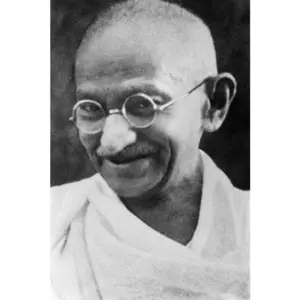 Mahatma Gandhi recommended this book
Mahatma Gandhi
"[This book] became an infallible guide of conduct. It became my dictionary of daily reference." - Mahatma Gandhi
Mahatma Gandhi's recommendation of this book  Paulo Coelho recommended this book
Paulo Coelho
"A book that everybody should read." - Paulo Coelho
Paulo Coelho's recommendation of this book

The Dhammapada
For readers who want a concise encounter with Buddhist ethical teachings. The verse form supports slow, reflective reading, but this is one text within a much larger tradition, and the translator’s introduction adds a particular interpretive perspective.
What it's about
Eknath Easwaran translates a collection of Buddhist teachings traditionally attributed to the Buddha. His introduction and chapter commentary place the verses in context and explore their guidance on conduct, mental discipline, and spiritual life.
Also recommended by
2 people Dr. Gabor Maté recommended this book
Dr. Gabor Maté
"The Buddhist collection of sayings. And it begins with, basically, the idea that we create the world with our minds." - Dr. Gabor Maté
Dr. Gabor Maté's recommendation of this book  Steve Jobs recommended this book
Steve Jobs
Daniel Kottke said he and Steve Jobs definitely read this book prior to the India trip.
Steve Jobs's recommendation of this book
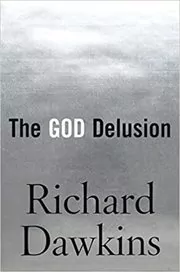
The God Delusion
For readers who want a forceful atheist argument against belief in God. Its direct style makes the position easy to identify, but the polemical tone and broad treatment of religion offer less nuance than a comparative historical survey.
What it's about
Dawkins argues that a personal, supernatural God is extremely unlikely, dismantling classic arguments for God's existence and examining religion's social effects. He explores how morality, meaning and awe can flourish without faith, making a forceful case for outspoken atheism.
Also recommended by
2 people Joe Rogan recommended this book
Joe Rogan
"I read The God Delusion in preparation for [the Dawkins interview]. I'm a huge fan of [his] work." - Joe Rogan
Joe Rogan's recommendation of this book  Brian Armstrong recommended this book
Brian Armstrong
"Many people believe simply based on how they grew up, without ever questioning." - Brian Armstrong
Brian Armstrong's recommendation of this book
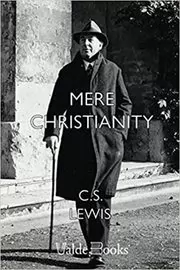
Mere Christianity
For readers who want an accessible Christian argument written for a general audience. Its focus on shared doctrines avoids many denominational details, but the historical examples and assumptions about belief are open to challenge rather than neutral description.
What it's about
Based on Lewis’s wartime BBC talks, this book lays out a plainspoken case for historic Christian belief. He moves from moral law and the existence of God to Christian doctrine and ethics, inviting readers to examine faith with both reason and imagination.
Also recommended by
1 person Russell Moore recommended this book
Russell Moore
Russell Moore recommended this book on Twitter.
Russell Moore's recommendation of this book

The Varieties of Religious Experience
For readers interested in what religious experience feels like and how it can be studied. The first-person accounts make abstract questions concrete, but the historical examples and emphasis on individual experience leave institutional religion less fully explored.
What it's about
William James examines religion through individual experiences rather than institutional doctrines. Developed from his Gifford Lectures, the work brings psychological inquiry to religious life and explores the significance of personal belief and experience within human nature.
Also recommended by
1 person Mark Zuckerberg recommended this book
Mark Zuckerberg
"When I read 'Sapiens':, I found the chapter on the evolution of the role of religion in human life most interesting and something I wanted to go deeper on." - Mark Zuckerberg
Mark Zuckerberg's recommendation of this book

For readers who want a historical account of changing ideas about God across three traditions. Its broad narrative draws connections across periods, but that scale compresses differences and leaves less space for everyday religious practice.
What it's about
Karen Armstrong traces changing ideas of God across Judaism, Christianity, and Islam. Spanning ancient beginnings, philosophy, mysticism, and religious reform, she examines how these traditions influenced one another and adapted belief to different social and political circumstances.
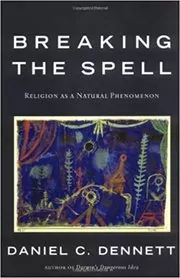
For readers interested in studying religion as a natural human phenomenon. The evolutionary questions widen the discussion beyond whether beliefs are true, but the speculative explanations and argumentative style require careful distinction between proposals and established findings.
What it's about
Daniel Dennett argues that religion should be examined as a natural phenomenon open to scientific inquiry. Drawing on biology, history, and psychology, he explores how beliefs develop, persist, and shape behavior, challenging resistance to studying their origins and effects.

Tao Te Ching
For readers who want a short primary text inviting repeated reflection on action and restraint. Its compressed sayings leave room for interpretation, but translations vary substantially, and the work does not provide a complete overview of Taoist religion.
What it's about
Traditionally attributed to Lao Tzu, this classic presents reflections on the Tao, or Way, and living in harmony with it. Its teachings connect humility, simplicity, and balanced conduct with personal life and leadership.
Also recommended by
10 people Rick Rubin recommended this book
Rick Rubin
"Always what you need to read at that particular period of time. It’s a magic book, in that way, in that it always fits." - Rick Rubin
Rick Rubin's recommendation of this book - Naval Ravikant recommended this book
Naval Ravikant
Naval Ravikant tweeted about this book.
Naval Ravikant's recommendation of this book  Michael Gervais recommended this book
Michael Gervais
"[The author's] depth of teachings are complicated to decode and provide foundations for wisdom." - Michael Gervais
Michael Gervais's recommendation of this book  Josh Waitzkin recommended this book
Josh Waitzkin
"Inspired my study of softness and receptivity as a counterpoint to my mad passions." - Josh Waitzkin
Josh Waitzkin's recommendation of this book  Brian MacKenzie recommended this book
Brian MacKenzie
"Once you get to a certain level, it’s like, wow." - Brian MacKenzie
Brian MacKenzie's recommendation of this book  Stewart Brand recommended this book
Stewart Brand
Stewart Brand recommended this book on his "Selected Books for the Manual for Civilization" blog post.
Stewart Brand's recommendation of this book +4
More recommendations
- Jason Nemer
"Oftentimes before meditation, I’ll just open [this book] randomly to a page and read about something and then just have that be what I steep in as I sit." - Jason Nemer
- Soman Chainani
"I remember reading it and being like okay, this makes no sense. But you just keep reading it again and again and slowly, I started to get the point of it." - Soman Chainani
- Jack Dorsey
One of Jack Dorsey's answers to "what are the books that had a major influence on you?"
- Jack Ma
Jack Ma always carries a copy of this book.
- Jason Nemer

For readers interested in how moral intuitions connect religion, politics, and group identity. Its psychological framework offers a different entry point from theology, but the emphasis on political disagreement and selected research makes it a partial account.
What it's about
Jonathan Haidt investigates the intuitive foundations of moral judgment and the sources of political and religious disagreement. Drawing on moral psychology, he explores how differing values can bind communities together while creating persistent divisions between them.
Also recommended by
4 people A.J. Jacobs recommended this book
A.J. Jacobs
"All about trying to figure out the gap between the red and blue states – Republican and Democrat – and it’s really interesting." - A.J. Jacobs
A.J. Jacobs's recommendation of this book  Ann Miura-Ko recommended this book
Ann Miura-Ko
"I love this book because it clarified for me a lot of things that I’ve been feeling for so long around." - Ann Miura-Ko
Ann Miura-Ko's recommendation of this book  Derren Brown recommended this book
Derren Brown
"Tremendous & was part of forming Sacrifice (on Netflix)." - Derren Brown
Derren Brown's recommendation of this book - Russell Moore recommended this book
Russell Moore
"The most important book in years." - Russell Moore
Russell Moore's recommendation of this book

For readers who want an accessible narrative about Islam’s beginnings and historical development. Its storytelling links religious ideas with social change, but the interpretation advances a particular account of the tradition rather than surveying every scholarly position.
What it's about
Reza Aslan traces Islam from Muhammad's early community through centuries of religious and political change. He examines diverse traditions within the faith and argues for understanding contemporary struggles over authority against the background of this history.
Also recommended by
1 person Jon Stewart recommended this book
Jon Stewart
"A fascinating book." - Jon Stewart
Jon Stewart's recommendation of this book
Confessions
For readers who want a historical Christian account of conversion and self-examination. The direct address to God gives the reflection intimacy, but philosophical passages and late antique assumptions can make it slower reading than a modern memoir.
What it's about
Augustine recounts his earlier life and conversion to Christianity in a sustained address to God. The work moves from memories of childhood, study and relationships into reflections on desire, memory, time and the interpretation of creation.
For readers curious about how New Testament manuscripts were copied and studied. Concrete textual examples introduce the discipline, but the focus on variation and change can overshadow the wider religious and literary contexts of the texts.
What it's about
Introduces general readers to New Testament textual criticism by explaining how copying errors, intentional edits, and lost originals affect what modern Bibles say, and by showing why those differences matter for understanding early Christian beliefs about Jesus.
The Evolution of God
For readers who want a large-scale explanation of changing religious ideas. Connections between social circumstances and belief give the narrative momentum, but its broad evolutionary argument simplifies contested histories and should be read as a thesis.
What it's about
Wright traces changing ideas of divinity from early religious practices through Judaism, Christianity, and Islam. He draws on history and social explanation to argue that relationships between groups influence how people imagine gods, moral obligations, and religious belonging.
The Gnostic Gospels
For readers interested in diversity and conflict within early Christianity. Its focus on disputed texts makes questions of authority concrete, but it advances an interpretation of selected evidence rather than a complete account of Christian origins.
What it's about
Pagels examines early Christian writings associated with the Nag Hammadi discoveries and the communities that valued them. The book explores disagreements over authority, spiritual knowledge, gender, and religious practice, asking how some perspectives became orthodox while others were rejected.

For readers who want Christian responses to common objections about faith. The use of literature and everyday questions makes the argument approachable, but it defends a particular religious position rather than providing a detached overview of competing beliefs.
What it's about
Timothy Keller addresses common objections to Christian belief and makes a case for its rational foundations. Drawing on literature, philosophy, and conversations with skeptics, he explores questions that trouble believers as well as people who doubt religion.

For readers who want to focus on the five books foundational to Jewish scripture. The narrower scope supports sustained attention to narrative and law, but it omits the Prophets and Writings included in the complete Tanakh.
What it's about
This English translation collects Genesis, Exodus, Leviticus, Numbers and Deuteronomy. Narratives of creation, the patriarchs and Israel's departure from Egypt accompany laws and covenant teachings central to Jewish religious life and the Hebrew Bible.
The Upanishads
For readers interested in Hindu reflections on consciousness, self, and ultimate reality. The dialogues and images reward close attention, but this edition presents selections in a particular translation and cannot represent every Upanishad or interpretive tradition.
What it's about
These ancient Indian texts explore the self, consciousness, knowledge, and ultimate reality through dialogues and teaching stories. Their reflections on spiritual understanding and liberation became important foundations for later Hindu philosophical traditions and interpretations.

For readers who want Jewish scripture in a modern English translation shaped by Jewish scholarship. Its traditional organization provides a different reading context from a Christian Bible, but interpretation and historical background still require further study.
What it's about
This contemporary English translation presents the Jewish scriptures according to the traditional Masoretic Hebrew text. Produced by a committee of Jewish scholars, it draws on ancient and modern interpretation to make the sacred writings accessible for reading and study.

For readers who want a broad encounter with Hindu epic, family conflict, and questions of duty. The selected English version makes the vast narrative more approachable, but its condensed form cannot convey the full scale of the Sanskrit work.
What it's about
This Hindu epic unfolds in a world of warfare, magic, and competing obligations. Its stories explore duty, purpose, and pleasure through the struggles of related royal families, combining dramatic conflicts with reflection on how people should act.

For Hindi readers who want Tulsidas’s devotional retelling of Rama’s story with explanatory meanings. Its poetic and religious perspective differs from a general survey, but this edition requires Hindi and should not be mistaken for Valmiki’s Sanskrit epic.
What it's about
Tulsidas retells the story of Rama in the devotional poem Ramcharitmanas, presented here with Hindi meaning. Rama, Sita, and Hanuman's story brings questions of duty, virtue, and devotion into a narrative traditionally read for spiritual reflection and recitation.

The Guru Granth Sahib
For readers who want Punjabi and English explanation of an opening portion of Sikh scripture. The commentary supports close study, but this first volume covers only part of the text and is not a complete Guru Granth Sahib.
What it's about
Bhag Bhullar presents Punjabi and English explanation of the opening portion of the Guru Granth Sahib. This first volume covers pages 1 through 150 of the Sikh scripture, making its spiritual meanings accessible to readers studying the text.
Sources
- 1
33 Best Books on Religion: From World Religions to Interfaith Wisdom
uef.org
- 2
100 Best Religion Books of All Time
shortform.com
- 3
Religion Books
goodreads.com
- 4
Top 10 Best Religious Books
thetoptens.com
- 5
Favorite Books about Religion
reddit.com
- 6
What sources should I start with to learn about religion?
reddit.com






Edited by
Software engineer whose passion for tracking book recommendations from podcasts inspired the creation of MRB.
Lead investor at 3one4 Capital whose startup expertise and love for books helped shape MRB and its growth.
Comments
Spotted a missing book, a wrong order or a mistake? Tell us and we'll fix this page.
We're a reading guide, not the author or publisher, so we can't send books or pass on messages.