
17 Best Biology Books
The best biology books, ranked by how many expert sources recommend each one, with notes on who each suits, from curious beginners to university students.
Our take
Biology asks how living things work, where their differences come from, and how they depend on one another. These books approach those questions at different scales, from the chemistry inside a cell to the survival of species in fragmented habitats. Curious newcomers can follow discoveries through fossils, animals, or scientific lives, while students can turn to more detailed explanations of molecular mechanisms.
Your Inner Fish makes evolutionary history concrete through the human body. The Selfish Gene develops a more concentrated argument about natural selection, while The Vital Question asks readers to engage with energy and cellular complexity. I Contain Multitudes shifts attention to microbial partnerships, and The Song of the Dodo connects evolution with ecology. Molecular Biology of the Cell serves sustained study rather than casual reading. Start with Your Inner Fish for an inviting narrative, or Why Evolution Is True for a focused introduction to evolutionary evidence.
17 books · 9 sources · Last updated
As an Amazon Associate, we earn from qualifying purchases (at no extra cost to you).
How to choose from this list
Skip to the full rankingIf you’re new to evolution: Your Inner Fish → Why Evolution Is True
If you want to understand cellular energy: Life Ascending → The Vital Question → Transformer
If you’re studying cells: Molecular Biology of the Cell
If you want ecology and living relationships: I Contain Multitudes → The Song of the Dodo
If you’re interested in genetics and its consequences: The Gene → A Crack In Creation
The 17 books, ranked
Ranked by how many expert sources name each book. Ties go to the book more people recommend.

For readers who want to understand biology through relationships between animals and microbes. Its examples broaden the subject beyond human health, though it explains discoveries through stories rather than providing a microbiology course.
What it's about
Ed Yong explores the microbes living within humans and other animals, presenting organisms as interconnected ecosystems. His account follows microbial partnerships and the scientists studying them, examining their roles in health, development, behavior, and the wider natural world.
Also recommended by
1 person Bill Gates recommended this book
Bill Gates
"Helped me see microorganisms in a whole new light." - Bill Gates
Bill Gates's recommendation of this book
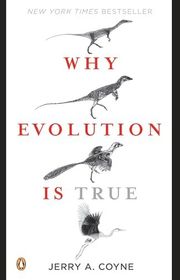
Why Evolution Is True
For beginners who want a focused explanation of the evidence for evolution. Its clear organization brings fossils, genetics, and anatomy together, though its engagement with objections to evolution gives parts of it an argumentative tone.
What it's about
Jerry Coyne explains how evidence from fossils, genetics, anatomy, and other fields supports evolution. He addresses common misunderstandings while showing how scientists reconstruct the history of life and test explanations for the diversity of species.

For readers curious about competition and personality in scientific discovery. Its candid, personal voice makes laboratory history immediate, though Watson’s perspective and treatment of colleagues call for critical reading alongside other accounts.
What it's about
James Watson recounts his collaboration with Francis Crick in discovering DNA’s structure. This personal account describes scientific competition, ambitious researchers, and the working relationships behind the discovery, presenting events through Watson’s own perspective and recollections.
Also recommended by
3 people Peter Attia recommended this book
Peter Attia
"[One of the] biographies of people who have 'built skyscrapers' (my term)." - Peter Attia
Peter Attia's recommendation of this book  Paul Graham recommended this book
Paul Graham
"The most impressive feature of [this book] is how much [the author] admits he didn't know. He's constantly talking about papers he couldn't understand and important concepts he didn't grasp." - Paul Graham
Paul Graham's recommendation of this book  Matt Ridley recommended this book
Matt Ridley
"An astonishing literary achievement, and it was about the greatest scientific discovery of the 20th century." - Matt Ridley
Matt Ridley's recommendation of this book

For readers drawn to ecology, fieldwork, and the consequences of habitat fragmentation. Its travel and scientific history make island biogeography tangible, though the long narrative asks for more patience than a concise introductory overview.
What it's about
David Quammen explores island biogeography through travel, scientific history, and encounters with researchers. Examining evolution and extinction in isolated habitats, he connects the vulnerability of island species with the wider consequences of breaking ecosystems into fragments.
Also recommended by
1 person Patrick O'Shaughnessy recommended this book
Patrick O'Shaughnessy
"If you are interested in evolution this is an amazing read." - Patrick O'Shaughnessy
Patrick O'Shaughnessy's recommendation of this book
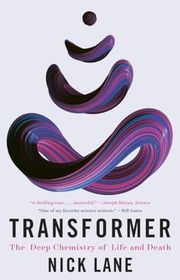
Transformer: The Deep Chemistry of Life and Death
For readers ready to work through the chemistry behind cellular life. Its sustained focus on metabolism complements broader evolutionary books, though the biochemical detail and arguments about life’s origins require patient, critical reading.
What it's about
Nick Lane examines the Krebs cycle and its reverse as central processes in living cells. He connects metabolism with questions about life’s origins, energy, aging, and death, showing why biochemical pathways matter beyond a textbook diagram.

For newcomers who learn best through concrete examples and discovery stories. Its connections between fossils and familiar body parts make evolutionary history accessible, though its human-anatomy focus leaves much of biology for other books.
What it's about
Neil Shubin traces the evolutionary history of the human body through fossils, anatomy, and DNA. His account connects scientific expeditions and the discovery of Tiktaalik with the ancient origins of structures and biological processes still present in humans.
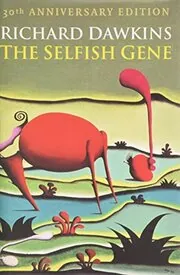
The Selfish Gene
For readers comfortable following an argument about how natural selection works. Its gene-centered perspective gives evolution a clear explanatory framework, though the metaphor of selfishness needs careful reading and does not describe conscious intentions.
What it's about
This landmark book shifts focus from organisms to genes, arguing that natural selection largely favours gene variants that promote their own replication. Along the way Dawkins introduces ideas like "selfish" and "altruistic" behaviour in evolutionary terms and coins the now-famous concept of the meme.
Also recommended by
12 people Charlie Munger recommended this book
Charlie Munger
"I had to read [this book] twice before I fully understood it." - Charlie Munger
Charlie Munger's recommendation of this book - Matt Ridley recommended this book
Matt Ridley
"Turned evolutionary biology on its head and was written like a great detective story." - Matt Ridley
Matt Ridley's recommendation of this book  Brian Armstrong recommended this book
Brian Armstrong
"Famous book about how our bodies are vehicles to replicate our genes (even though we occasionally defy them)." - Brian Armstrong
Brian Armstrong's recommendation of this book  Ev Williams recommended this book
Ev Williams
On the "books read" section of Ev Williams' GoodReads profile.
Ev Williams's recommendation of this book  Nick Szabo recommended this book
Nick Szabo
"Explains more about life (including human behavior and myself) than anything else I’ve read. " - Nick Szabo
Nick Szabo's recommendation of this book  Phil Libin recommended this book
Phil Libin
"Had a profound influence on me pretty early on." - Phil Libin
Phil Libin's recommendation of this book +6
More recommendations
- Mr. Money Mustache
"An explanation of evolution since the beginning of life that explains things from the perspective of individual genes." - MMM
- Bob Metcalfe
"It just seemed to explain everything." - Bob Metcalfe
- David Deutsch
"Influenced my books." - David Deutsch
- Tai Lopez
"Mind blowing book. [...] But warning you, it’s too true for most people to handle..." - Tai Lopez
- Elon Musk
"Most people don't realize that the origin of the word 'meme' is [this book]." - Elon Musk
- Mark Manson
Mark Manson recommended this book on his website.
- Mr. Money Mustache

For readers who prefer genetics through scientific history and personal experience. Its narrative links discoveries about heredity with their human consequences, though the length and historical emphasis make it less useful for quick technical reference.
What it's about
Siddhartha Mukherjee traces the history of genetics while weaving in his family’s experiences of mental illness. The account examines discoveries about heredity, the misuse of genetic ideas, and ethical questions raised by growing power to understand and alter genes.
Also recommended by
4 people- Bill Gates recommended this book
Bill Gates
"Mukherjee once again shows his gift for making hard science easily accessible." - Bill Gates
Bill Gates's recommendation of this book  John Legend recommended this book
John Legend
"So interesting and well written." - John Legend
John Legend's recommendation of this book  Bryan Johnson recommended this book
Bryan Johnson
"A great book." - Bryan Johnson
Bryan Johnson's recommendation of this book  Reid Hoffman recommended this book
Reid Hoffman
Reid Hoffman told McKinsey he was reading this book.
Reid Hoffman's recommendation of this book

For readers who want a demanding explanation of why complex cells arose. Its focus on energy connects biochemistry with evolution, though the origin-of-life argument includes hypotheses rather than a settled account of every step.
What it's about
Nick Lane investigates why complex life emerged and acquired features such as sex and aging. He argues that energy and the workings of cells provide a framework for understanding these puzzles in evolutionary history.
Also recommended by
4 people- Bill Gates recommended this book
Bill Gates
"One of those original thinkers who makes you say: More people should know about this guy’s work." - Bill Gates
Bill Gates's recommendation of this book - Matt Ridley recommended this book
Matt Ridley
"A brilliant new analysis of the origin of life, by the man who has himself done more than anybody to crack the problem." - Matt Ridley
Matt Ridley's recommendation of this book  Chamath Palihapitiya recommended this book
Chamath Palihapitiya
"Incredible." - Chamath Palihapitiya
Chamath Palihapitiya's recommendation of this book  David Friedberg recommended this book
David Friedberg
"A really good read." - David Friedberg
David Friedberg's recommendation of this book

For readers seeking a broad evolutionary tour organized around major innovations. Its range connects molecular processes with larger biological questions, though some chemistry is demanding and individual topics receive less depth than in specialist books.
What it's about
Nick Lane explores ten evolutionary innovations that transformed life on Earth. He follows developments from life's origins to human consciousness, explaining how scientific discoveries help reconstruct the steps that made complex organisms possible.
Also recommended by
2 people Brian Cox recommended this book
Brian Cox
"A great book for many reasons." - Brian Cox
Brian Cox's recommendation of this book - Chamath Palihapitiya recommended this book
Chamath Palihapitiya
"Must read if you don't want to be a luddite." - Chamath Palihapitiya
Chamath Palihapitiya's recommendation of this book

Molecular Biology of the Cell
For students who need sustained explanations of cellular mechanisms and detailed illustrations. Its textbook structure supports systematic study, though it demands more background and time than the narrative books here; check which edition your course requires.
What it's about
Bruce Alberts and his coauthors explain cells through their molecular components and coordinated processes. The textbook connects proteins, genes, membranes, signaling, and cell division with the organization of tissues and the biological mechanisms underlying cellular life.
Also recommended by
2 people Sam Altman recommended this book
Sam Altman
One of Sam Altman's answers to "What are some of the best books you recommend for a young startup founder?"
Sam Altman's recommendation of this book  Alan Kay recommended this book
Alan Kay
"For many years it has been the best single volume narrative of 'life from scratch.'" - Alan Kay
Alan Kay's recommendation of this book

For readers interested in what gene editing lets scientists do and what responsibilities follow. Its firsthand perspective connects discovery with ethics, though developments since publication require a separate update.
What it's about
Jennifer Doudna and Samuel Sternberg recount the development of CRISPR gene editing and examine the responsibilities that accompany it. Their account connects scientific discovery with questions about potential applications, heritable changes, and the ethical consequences of altering genetic code.

Are We Smart Enough to Know How Smart Animals Are?
For readers who want to question how animal intelligence gets measured. Its comparisons across species expose the limits of human-centered tests, though it concentrates on cognition rather than providing a general introduction to animal biology.
What it's about
Frans de Waal explores animal cognition across species, questioning the human assumptions used to measure intelligence. Research and stories about primates, birds, marine animals, and others reveal varied abilities and challenge the ways people have underestimated nonhuman minds.
Silent Spring
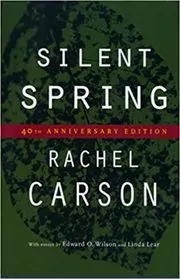
For readers interested in ecology’s connection to public policy and environmental responsibility. Its account of pesticide harms shows how biological evidence can challenge accepted practices, though specific regulations and scientific details need a contemporary companion.
What it's about
Carson examines what widespread pesticide use, especially DDT, was doing to birds, waterways, and human health. It is a clear, unsettling case against chemical shortcuts and a turning point in environmental writing.

For readers interested in how evolution helps explain the human body’s strengths and vulnerabilities. Its focus on mismatches with modern environments connects biology to daily life, though it should not substitute for individualized medical advice.
What it's about
Daniel Lieberman traces the evolution of the human body through changes in movement, diet, and culture. He examines how adaptations inherited from our ancestors interact with modern environments, using this history to explore questions about health and chronic disease.
Also recommended by
1 person Tai Lopez recommended this book
Tai Lopez
"Fascinating that it takes on average 12,000,000 calories for a human to go from birth to maturity." - Tai Lopez
Tai Lopez's recommendation of this book
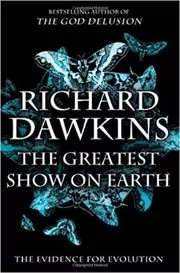
For readers seeking a substantial explanation of the evidence for evolution. Its examples bring together several scientific disciplines, though its argumentative response to creationism may feel less inviting than a quieter introductory treatment.
What it's about
Here Dawkins lays out the evidence that evolution by natural selection is a fact, not just a theory in the everyday sense. Fossils, genetics, domestication experiments and observations in real time all feature in a tour of how we know common descent is true.

For beginners who enjoy an informal voice and want an approachable case for evolution. Nye connects the subject with familiar questions, though readers seeking technical depth or a systematic course will need a more detailed book.
What it's about
Bill Nye explains evolution and the evidence that supports it as a framework for understanding life. His exploration ranges from the emergence of species to genetic modification and the search for life beyond Earth, connecting scientific history with questions about our origins.
Sources
- 1
100 Best Biology Books of All Time (Updated for 2026)
shortform.com
- 2
Biology (163 books)
goodreads.com
- 3
Biology Year 1 Reading List, 2024
some.ox.ac.uk
- 4
Book Recommendations
reddit.com
- 5
The Best 33 Biology Books
blinkist.com
- 6
Biology Reading List | Oxford, Cambridge & Imperial | Koios Education
koioseducation.com
- 7
7 Essential Books Biologists Should Read
bitesizebio.com
- 8
The Best Biology Books
fivebooks.com
- 9
Does anyone have good -preferably modern- books or works in general about Origin of Life?
reddit.com




Edited by
Software engineer whose passion for tracking book recommendations from podcasts inspired the creation of MRB.
Lead investor at 3one4 Capital whose startup expertise and love for books helped shape MRB and its growth.
Comments
Spotted a missing book, a wrong order or a mistake? Tell us and we'll fix this page.
We're a reading guide, not the author or publisher, so we can't send books or pass on messages.