
16 Best Rhetoric Books
The best rhetoric books, ranked by how many expert sources recommend each one, with notes to help beginners, writers, and students choose a starting point.
Our take
Rhetoric asks how language persuades: how speakers establish trust, how arguments meet an audience’s expectations, and how a sentence directs attention. These books help writers, speakers, and students recognize those choices and make more deliberate ones themselves. Some teach practical techniques; others examine the history and theory behind them or provide terms for close analysis.
Thank You for Arguing and You Talkin' To Me? offer accessible ways into the subject. The Elements of Eloquence and Farnsworth's Classical English Rhetoric concentrate on verbal patterns, while Classical Rhetoric for the Modern Student supports more structured practice. Aristotle’s The Art of Rhetoric leads toward primary texts, and A Rhetoric of Motives and The New Rhetoric suit readers ready for theory. Reference works and literary studies serve more specific needs. Start with a conversational introduction, then choose between improving your own arguments and studying how other people’s language works.
16 books · 8 sources · Last updated
As an Amazon Associate, we earn from qualifying purchases (at no extra cost to you).
How to choose from this list
Skip to the full rankingIf you're new to rhetoric: You Talkin' To Me? → Thank You for Arguing
If you want to improve sentence style: The Elements of Eloquence → Farnsworth's Classical English Rhetoric
If you want structured writing practice: Classical Rhetoric for the Modern Student
If you want to study rhetorical theory: The Art of Rhetoric → A Rhetoric of Motives → The New Rhetoric
If you want to analyze literature: Shakespeare's Use of the Arts of Language → The Rhetoric of Fiction
The 16 books, ranked
Ranked by how many expert sources name each book. Ties go to the book more people recommend.
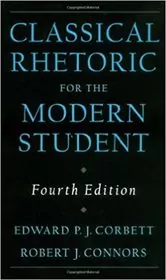
Classical Rhetoric for the Modern Student
For students who want structured practice in argument, arrangement, and style. The exercises connect classical principles with composition more directly than a reference dictionary, though the textbook format calls for sustained study rather than casual browsing.
What it's about
Edward Corbett and Robert Connors explain classical rhetoric through argument, arrangement, and style. Analyses of historical and contemporary writing, composition exercises, and a survey of rhetorical history show how these principles can inform modern essays and speeches.
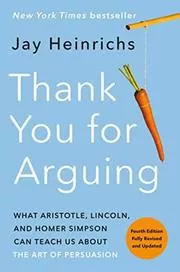
Thank You for Arguing
What Aristotle, Lincoln, and Homer Simpson Can Teach Us About the Art of Persuasion
For beginners who want to apply rhetorical ideas in everyday disagreements. Familiar examples and exercises make persuasion approachable, though the emphasis on usable tactics provides less historical depth than the primary texts and scholarly surveys.
What it's about
Jay Heinrichs explains persuasion through historical speeches, popular culture, and everyday arguments. Practical techniques focus on adapting to an audience, establishing credibility, framing choices, and recognizing manipulative language, with exercises for developing rhetorical skills.
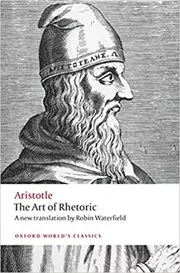
The Art of Rhetoric
For readers who want to examine the foundations of persuasive speaking. Aristotle connects reasoning, character, and emotion in a systematic account, though the compressed arguments and ancient civic setting benefit from a translation with helpful notes.
What it's about
Aristotle investigates the principles that make public speaking persuasive. He develops methods of informal reasoning and examines prose style, the speaker’s character, and the audience’s emotions within the civic settings of assemblies and courts.
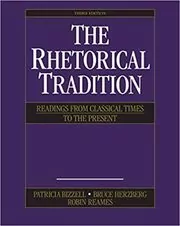
For students who want to compare rhetorical thinkers in their own words. The primary readings and editorial framing reveal changes across periods, though the scale and difficulty make selective reading easier than an uninterrupted first pass.
What it's about
This anthology assembles primary writings on rhetorical theory from classical antiquity through the modern period. Editorial introductions and commentary place the selections in historical context, supporting study of the changing approaches to persuasive language.
A Handlist of Rhetorical Terms
For students and writers who need to identify a figure or check its meaning. The alphabetical entries and cross-references make this a useful desk companion, though it works better for consultation than as a first course.
What it's about
Richard Lanham defines rhetorical terms from classical antiquity through modern scholarship. Organized through alphabetical entries, cross-references, and lists by type, the handbook supplies examples and explanations for readers studying persuasive language or developing their own writing.
A Rhetoric of Motives
For readers ready to move beyond techniques toward a theory of persuasion. Burke makes identification central to understanding symbolic action, though his terminology and layered arguments demand more patience than the practical introductions here.
What it's about
Kenneth Burke develops his account of rhetoric through persuasion and identification. Treating human activity as symbolic action, he examines how language shapes motives and relationships across politics, advertising, education, social status, and religious experience.
Encyclopedia of Rhetoric
For researchers and advanced students who need background on concepts, traditions, and debates. Its scholarly articles offer breadth beyond a handbook of figures, though the reference format makes it less suitable for learning through a continuous course.
What it's about
This encyclopedia brings together scholarly articles on rhetorical concepts, traditions, genres, and methods. It covers persuasion and public communication alongside rhetoric’s use in interpreting literature, art, culture, non-Western traditions, and newer forms of communication.
Rhetorica ad Herennium
For readers who want an ancient handbook that treats rhetoric as a practical discipline. Its detailed treatment includes memory and delivery alongside argument and style, though the historical categories need translating into present-day writing and speaking situations.
What it's about
This ancient Latin handbook explains the preparation and presentation of persuasive speeches. Its practical treatment covers kinds of oratory, argument, arrangement, memory, delivery, and figures of style, with examples illustrating the rules.
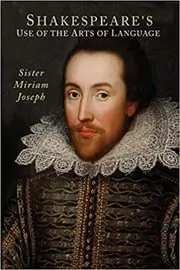
Shakespeare's Use of the Arts of Language
For readers studying Shakespeare who want a vocabulary for his verbal effects. The connection between Renaissance education and specific figures gives literary analysis historical grounding, though its specialized focus makes it a demanding general introduction.
What it's about
Sister Miriam Joseph examines the theories of composition taught in Shakespeare’s England. She explains figures of speech through examples from his plays and poems, connecting their verbal invention with Renaissance education in grammar, logic, and rhetoric.
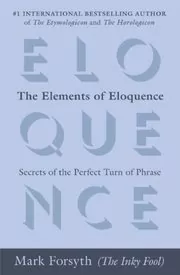
For readers who want an entertaining introduction to figures of speech. Forsyth makes the names and effects memorable through familiar phrases, though this concentration on verbal style gives less attention to evidence, audience, and argument structure.
What it's about
Mark Forsyth explores the rhetorical techniques that make phrases memorable, drawing examples from literature, speeches, and popular culture. His humorous explanations show how patterns of language create eloquence and offer readers ways to sharpen their own expression.
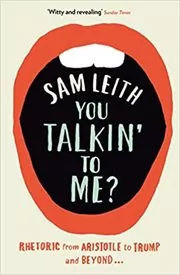
For beginners who want rhetorical ideas explained through speeches and public life. The conversational historical tour makes the terminology less intimidating, though readers seeking a sequence of writing exercises will need a more practical companion.
What it's about
Sam Leith traces rhetorical techniques from ancient Greece to modern politics and everyday life. Analyses of speeches and other persuasive language explain ethos, pathos, logos, and verbal figures through examples including Cicero, Nixon, and Trump.
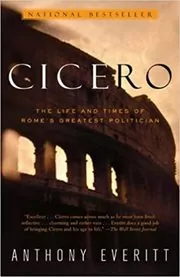
For readers who want to understand an orator within the political world that shaped his choices. The biographical approach supplies context for studying Cicero, though it offers fewer direct lessons in rhetorical technique than a speech anthology.
What it's about
Anthony Everitt reconstructs Cicero’s public and private life against the turmoil of the late Roman Republic. Speeches and letters illuminate his legal career, political maneuvering, friendships, ideals, and confrontations with figures including Caesar and Mark Antony.
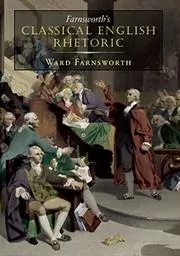
Farnsworth's Classical English Rhetoric
For writers who learn sentence patterns by studying examples. The grouped passages let you hear how rhetorical figures work in English, though the concentration on style leaves argument building and audience analysis largely to other books.
What it's about
Ward Farnsworth explains rhetorical figures through examples from writers and speakers such as Lincoln, Churchill, Dickens, and Burke. Repetition, unexpected word order, omission, and other patterns illustrate how sentences can create emphasis, shape expectations, and become more memorable.
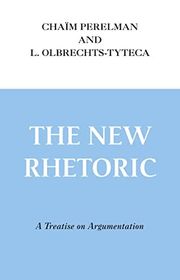
The New Rhetoric: A Treatise on Argumentation
For advanced readers interested in how arguments earn an audience’s agreement. Its detailed account extends rhetoric beyond formal proof, though the conceptual distinctions make it a slower theoretical study rather than a handbook of speaking techniques.
What it's about
Chaïm Perelman and Lucie Olbrechts-Tyteca examine argumentation directed toward audiences rather than formal demonstration. They analyze starting points, values, and techniques of persuasion, developing a framework for understanding reasoning in law, philosophy, and public debate.
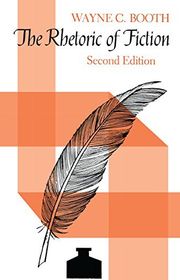
The Rhetoric of Fiction
For literature students who want to examine how narrative choices guide readers. Booth gives rhetorical analysis a sustained application to fiction, though the detailed literary examples and critical debates are less useful for preparing speeches or everyday arguments.
What it's about
Wayne C. Booth studies how fiction shapes readers’ judgments through narration, authorial presence, and relationships between writer, narrator, and audience. His discussions of reliability and the implied author connect literary technique with the effects stories seek to produce.
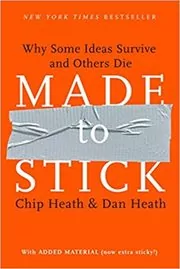
For writers and presenters whose main problem is making an idea memorable. The organizing principles turn message design into manageable questions, though the focus on retention covers only part of rhetoric and offers little historical theory.
What it's about
Chip and Dan Heath explore why some ideas remain memorable while others disappear. Through stories and research, they identify ways to make messages more understandable and compelling, examining how communication can influence what people remember.
Also recommended by
5 people Brian Armstrong recommended this book
Brian Armstrong
"How to make your message memorable so it will spread." - Brian Armstrong
Brian Armstrong's recommendation of this book  Ev Williams recommended this book
Ev Williams
On the "books read" section of Ev Williams' GoodReads profile.
Ev Williams's recommendation of this book  Andrew Wilkinson recommended this book
Andrew Wilkinson
"Our marketing bible." - Andrew Wilkinson
Andrew Wilkinson's recommendation of this book  Changpeng Zhao recommended this book
Changpeng Zhao
"Informs a lot of our public outreach in terms of making our services more essential for our users." - Changpeng Zhao
Changpeng Zhao's recommendation of this book  Sahil Lavingia recommended this book
Sahil Lavingia
Sahil Lavingia recommended this book on Notion.
Sahil Lavingia's recommendation of this book
Sources
- 1
Further Reading & Resources on Rhetoric | TeachingWriting
teachingwriting.stanford.edu
- 2
Recommended Readings in Rhetoric
rhetoric.byu.edu
- 3
100 Best Rhetoric Books of All Time (Updated for 2026)
shortform.com
- 4
Rhetoric Books
goodreads.com
- 5
The Best Books on Rhetoric - Figures of Speech
inpraiseofargument.squarespace.com
- 6
Best books on rhetoric by Guy Doza – Canbury Press
canburypress.com
- 7
Must read list of Rhetoric Books : r/Rhetoric
reddit.com
- 8
Readings and Resources – Mutual Persuasion
mutualpersuasion.org
Edited by
Software engineer whose passion for tracking book recommendations from podcasts inspired the creation of MRB.
Lead investor at 3one4 Capital whose startup expertise and love for books helped shape MRB and its growth.
Comments
Spotted a missing book, a wrong order or a mistake? Tell us and we'll fix this page.
We're a reading guide, not the author or publisher, so we can't send books or pass on messages.