
17 Best Fundraising Books
The best fundraising books, ranked by how many expert sources recommend each one, with notes to help nonprofit staff choose guides to gifts, donors, and messages.
Our take
Nonprofit fundraising involves more than making an appeal. It includes understanding supporters, explaining a cause, asking for gifts, and maintaining relationships after money arrives. These books address different parts of that work, from major gifts and planned giving to donor communications and the management of small development teams. A few step back to examine persuasion, organizational change, or the wider purpose of social investment.
For a broad relationship philosophy, Relationship Fundraising is a useful starting point. Asking concentrates on the gift conversation, while It's Not Just About the Money explains a more sustained major-donor program. Teams concerned about losing supporters can turn to Building Donor Loyalty or Retention Fundraising. For appeals, The Fundraiser's Guide to Irresistible Communications offers direct writing guidance, with Made to Stick providing a wider communication framework. Start with the book closest to your current responsibility, then connect that task with the donor's longer experience of your organization.
17 books · 10 sources · Last updated
As an Amazon Associate, we earn from qualifying purchases (at no extra cost to you).
How to choose from this list
Skip to the full rankingIf you're building a relationship-based approach: Relationship Fundraising → Building Donor Loyalty
If you're preparing to ask for major gifts: Asking → It's Not Just About the Money
If you need stronger fundraising messages: The Fundraiser's Guide to Irresistible Communications → Made to Stick
If donors aren't coming back: Donor-Centered Fundraising → Retention Fundraising → Keep Your Donors
If you're developing planned-gift communications: Donor-Centered Planned Gift Marketing
If you manage a small development team: The War for Fundraising Talent
The 17 books, ranked
Ranked by how many expert sources name each book. Ties go to the book more people recommend.

For readers who want a research-based vocabulary for persuasion. The recurring principles help explain responses to requests more broadly than an appeal-writing manual, though ethical fundraising still requires judgment beyond recognizing what can influence people.
What it's about
Cialdini explores why people agree to requests and how recurring principles influence their decisions. Research and examples explain persuasion in everyday settings, alongside ways to recognize these mechanisms and resist attempts to exploit them.
Also recommended by
18 people Tobi Lütke recommended this book
Tobi Lütke
"The most mind-bending book you can imagine, because it essentially taught you always humans are flawed and influential." - Tobi Lütke
Tobi Lütke's recommendation of this book  Scott Adams recommended this book
Scott Adams
"100 percent of effective people seem to have read [this book]. In fact, it’s one of those things that when I meet somebody and they’re operating at a pretty high level, if you mention [this book], they’ve all read it." - Scott Adams
Scott Adams's recommendation of this book  Naval Ravikant recommended this book
Naval Ravikant
"Fundamental and had a lot to teach." - Naval Ravikant
Naval Ravikant's recommendation of this book  Charlie Munger recommended this book
Charlie Munger
Charlie Munger recommended this book in the "Poor Charlie's Almanack" book.
Charlie Munger's recommendation of this book  Adam Robinson recommended this book
Adam Robinson
Adam Robinson mentioned this book on "The Tim Ferriss Show" podcast.
Adam Robinson's recommendation of this book  Ramit Sethi recommended this book
Ramit Sethi
Ramit Sethi mentioned this book on "The Tim Ferriss Show" podcast.
Ramit Sethi's recommendation of this book +12
More recommendations
- Alexis Ohanian
"[Helps you] navigate the world with heightened awareness for how we're always being influenced/manipulated." - Alexis Ohanian
- Guy Kawasaki
"The guiding light for how I conduct business—and in many ways how I live my life." - Guy Kawasaki
- Max Levchin
One of Max Levchin's answers to "what's your favourite business book you'd advise to young entrepreneurs?"
- Noah Kagan
"People can be influenced in their behaviors by many different tactics." - Noah Kagan
- Samy Kamkar
"I love it because it was a very systematic and analytical approach to the most common ways that human being have been known to be influenced and persuaded to do something." - Samy Kamkar
- Andrew Wilkinson
"[One of] my most recommended business books." - Andrew Wilkinson
- Neil Strauss
"Understanding these [principles] make all the difference in making the leap from interest to attraction." - Neil Strauss
- Patrick O'Shaughnessy
Patrick O'Shaughnessy recommended this book on a blog post.
- Mark Manson
Mark Manson recommended this book on his website.
- Alex Hormozi
Alex Hormozi recommended this book on Instagram.
- James Clear
"[One of] the 10 best nonfiction books of all-time." - James Clear
- Michael Hyatt
Michael Hyatt recommended this book on his website.
- Alexis Ohanian
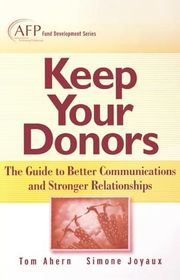
Keep Your Donors
For teams that want donor communications connected with organizational practice. Its combined attention to messages and relationships bridges two areas often treated separately, though its breadth demands coordinated work across staff rather than a single revised appeal.
What it's about
Tom Ahern and Simone Joyaux examine how nonprofit organizations communicate with donors and sustain their relationships. The book links practical writing and stewardship with organizational decisions, helping fundraisers consider how the whole donor experience affects continued support.

For readers who want a foundational philosophy for long-term donor relationships. The emphasis on treating supporters as people connects everyday communications with sustained commitment, though it is less procedural than a major-gifts program manual.
What it's about
Ken Burnett presents fundraising as the cultivation of long-term relationships with donors. The guide explores effective communication and a donor-centered approach to raising money, encouraging organizations to understand supporters and build enduring commitment to their work.
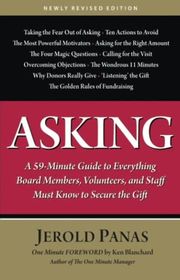
Asking
For board members, volunteers, and staff anxious about asking for a gift. Its short, direct format makes the conversation feel manageable, though it provides less depth on prospect research or building an entire fundraising program.
What it's about
Jerold Panas offers a short guide to asking for charitable gifts, with advice for board members, volunteers, and fundraising staff. The book discusses preparing for meetings, listening to prospective donors, and approaching the solicitation conversation with confidence.

For fundraisers who need to understand why donors stay or leave. The research and retention tools make loyalty more measurable than a general relationship philosophy, though applying them requires usable donor records and sustained follow-up.
What it's about
Adrian Sargeant and Elaine Jay examine why donors remain committed to nonprofit organizations. Research, case studies, and practical tools help fundraisers assess retention, strengthen communication and service, and plan relationships that sustain support and increase donor value over time.
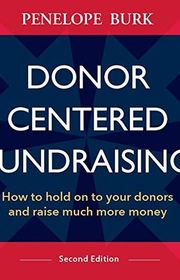
Donor-Centered Fundraising
For fundraisers who want donors' reported experiences to shape their practice. Its research on acknowledgment and communication makes stewardship priorities concrete, though the donor-centered emphasis needs balancing with an organization's mission and community responsibilities.
What it's about
Penelope Burk examines donor research to understand why people continue or stop supporting charities. The book explores acknowledgment, communication, and evidence of results, connecting everyday fundraising practices with donors' expectations and their willingness to give again.

For major-gift fundraisers building a structured relationship program. Its emphasis on individual donors makes the work more concrete than broad nonprofit strategy, though it assumes time for qualification, planning, and consistent personal contact.
What it's about
Richard Perry and Jeff Schreifels explain how to identify major donors and build a major-gift fundraising program around authentic relationships. Practical strategies address creating, managing, and sustaining a program that connects donors with an organization’s mission.

The Fundraiser's Guide to Irresistible Communications
Real-World, Field-tested Strategies for Raising More Money
For fundraisers responsible for appeals and donor messages. The practical focus on writing and design translates more directly into campaign drafts than general persuasion books, though teams must still test messages with their own audiences.
What it's about
Jeff Brooks explains how fundraising messages can motivate donors through purposeful writing and design. Drawing on practical campaign experience, he examines communication strategies and common mistakes, helping nonprofit fundraisers create appeals that engage supporters and encourage giving.

How To Win Friends and Influence People
For fundraisers who want to improve listening and everyday relationship skills. Its simple interpersonal principles are easier to practice immediately than a full development strategy, though the dated examples offer little nonprofit-specific guidance.
What it's about
Carnegie presents practical guidance for building relationships, communicating effectively, and influencing others. Stories and principles explore social confidence, leadership, and cooperation, offering approaches readers can apply to interactions in their personal lives and at work.
Also recommended by
18 people Warren Buffett recommended this book
Warren Buffett
"In my office, you will not see the degree I have from the University of Nebraska, or the master’s degree I have from Columbia University, but you’ll see the certificate I got from the Dale Carnegie course." - Warren Buffett
Warren Buffett's recommendation of this book - Scott Adams recommended this book
Scott Adams
One of the books on Scott Adams' "Persuasion Reading List."
Scott Adams's recommendation of this book  Dave Ramsey recommended this book
Dave Ramsey
Recommended on Dave Ramsey's website.
Dave Ramsey's recommendation of this book  Paul Graham recommended this book
Paul Graham
"The one book we encourage startup founders to read. [...] It's critically important for anyone in business." - Paul Graham
Paul Graham's recommendation of this book  Derek Sivers recommended this book
Derek Sivers
Derek Sivers mentioned this book on "The Tim Ferriss Show" podcast.
Derek Sivers's recommendation of this book  Dustin Moskovitz recommended this book
Dustin Moskovitz
"Seek to be understood." - Dustin Moskovitz
Dustin Moskovitz's recommendation of this book +12
More recommendations
- Ken Block
"One of the first books that really helped me achieve my management style and what’s helped me really be successful." - Ken Block
- DJ Vlad
Most Recommended Books reached out to DJ Vlad directly.
- Strauss Zelnick
"Archaic references and overweening title to the side, it’s actually a great guide to leadership and salesmanship." - Strauss Zelnick
- Daymond John
"I love all the Dale Carnegie books." - Daymond John
- Shay Carl
"A staple that I have listened to three or four times." - Shay Carl
- Tim Draper
"[One of the books] that are recommended or required at Draper University." - Tim Draper
- Sahil Lavingia
Sahil Lavingia recommended this book on Notion.
- Barbara Corcoran
"A must read for anyone in business." - Barbara Corcoran
- Alex Hormozi
Alex Hormozi recommended this book on Instagram.
- Michael Hyatt
Michael Hyatt recommended this book on his website.
- Ben Greenfield
Most Recommended Books reached out to Ben Greenfield directly.
- Patrick Bet-David
Patrick Bet-David recommended this book on his website.
- Ken Block

For fundraisers whose messages are accurate but quickly forgotten. The focus on concrete, memorable ideas helps sharpen a case for support, though the examples come from many fields and need adapting to nonprofit audiences.
What it's about
Chip and Dan Heath explore why some ideas remain memorable while others disappear. Through stories and research, they identify ways to make messages more understandable and compelling, examining how communication can influence what people remember.
Also recommended by
5 people Brian Armstrong recommended this book
Brian Armstrong
"How to make your message memorable so it will spread." - Brian Armstrong
Brian Armstrong's recommendation of this book  Ev Williams recommended this book
Ev Williams
On the "books read" section of Ev Williams' GoodReads profile.
Ev Williams's recommendation of this book  Andrew Wilkinson recommended this book
Andrew Wilkinson
"Our marketing bible." - Andrew Wilkinson
Andrew Wilkinson's recommendation of this book  Changpeng Zhao recommended this book
Changpeng Zhao
"Informs a lot of our public outreach in terms of making our services more essential for our users." - Changpeng Zhao
Changpeng Zhao's recommendation of this book  Sahil Lavingia recommended this book
Sahil Lavingia
Sahil Lavingia recommended this book on Notion.
Sahil Lavingia's recommendation of this book
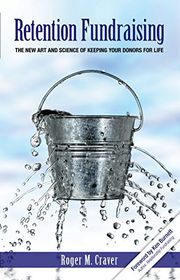
Retention Fundraising
For development teams that acquire donors but struggle to keep them. The emphasis on diagnosing attrition offers a more operational approach than general relationship advice, though better retention requires measurement and ongoing changes across the organization.
What it's about
Roger Craver investigates why donors leave nonprofit organizations and what can strengthen their commitment. The book connects research on donor satisfaction and behavior with practical approaches to communication, service, measurement, and the management of ongoing supporter relationships.

For fundraising leaders trying to change team behavior or working routines. Its balance of motivation and environment provides a useful organizational lens, though it addresses change generally rather than donor cultivation or campaign design.
What it's about
Chip and Dan Heath examine why lasting change is difficult, focusing on tension between rational intentions and emotional habits. Stories from workplaces, communities, and everyday life illustrate approaches for aligning motivation and creating conditions for change.
Also recommended by
3 people Adam Grant recommended this book
Adam Grant
"My all-time favorite book on change." - Adam Grant
Adam Grant's recommendation of this book - Andrew Wilkinson recommended this book
Andrew Wilkinson
"Such a great book." - Andrew Wilkinson
Andrew Wilkinson's recommendation of this book  Michael Hyatt recommended this book
Michael Hyatt
Michael Hyatt recommended this book on his website.
Michael Hyatt's recommendation of this book

For readers who want a wider view of the social change fundraising supports. The profiles offer motivation and strategic context across causes, though they provide fewer practical tools for asking, donor stewardship, or managing a development office.
What it's about
David Bornstein profiles social entrepreneurs tackling problems in communities around the world. Their stories illustrate how individuals develop and spread new approaches to issues such as poverty, education, and healthcare, while examining the qualities and strategies behind their work.

For readers exploring impact investment alongside charitable giving. The attention to power and community participation challenges simple assumptions about financial solutions, though its investment focus is less directly useful for managing a donation campaign.
What it's about
Morgan Simon explores impact investing at the intersection of finance and social justice. Drawing on her work as an investor and activist, she examines its risks and possibilities and offers strategies for investors, entrepreneurs, and community leaders seeking lasting change.

Donor-Centered Planned Gift Marketing
For fundraisers developing communications around planned gifts. The focus on donor motivations makes it more specific than a general relationship guide, though legal arrangements and tax details require current, jurisdiction-specific expertise beyond the marketing framework.
What it's about
Michael Rosen explains how nonprofit organizations can market planned giving by focusing on donors' interests and motivations. He covers identifying prospects, securing organizational support, developing a marketing plan, and evaluating results, with examples and tools for building or expanding a program.

For nonprofit teams building a coordinated digital fundraising approach. The attention to websites, email, and mobile channels broadens campaign planning, though the older platform examples need checking against current tools and audience habits.
What it's about
Heather Mansfield presents a guide to planning and maintaining mobile and social-media fundraising for nonprofits. Topics include websites, email, choosing tools for donor audiences and budgets, and tracking campaign results, with steps for building an adaptable digital strategy.

For leaders of small fundraising teams struggling with turnover. The focus on working conditions and professional development addresses a problem donor-facing books often overlook, though it asks organizations to change management practices rather than adopt quick recruitment fixes.
What it's about
Jason Lewis challenges common assumptions about nonprofit fundraising, especially in small organizations facing staff turnover and donor attrition. He argues that developing and retaining fundraising talent requires a workplace where professionals can build mastery and find meaning in their work.
Sources
- 1
Best Fundraising and Grant Writing Books for Nonprofits
thirdsectorconsulting.com
- 2
The Books That Changed My Practice (And Will Change Yours Too)
pamelagrow.com
- 3
The (almost) complete reading list for fundraisers
sofii.org
- 4
10 Must-Read Books for Fundraisers
advancementform.com
- 5
Fundraising Books
goodreads.com
- 6
Resource Reading List
cfre.org
- 7
Donor Relations Book recommendations
reddit.com
- 8
Book recommendations for a MG fundraiser
reddit.com
- 9
5 Fundraising Books Everybody Should Read
humanrightscareers.com
- 10
10 Books to Read to Become a Better Fundraiser
fundraisingip.com


Edited by
Software engineer whose passion for tracking book recommendations from podcasts inspired the creation of MRB.
Lead investor at 3one4 Capital whose startup expertise and love for books helped shape MRB and its growth.
Comments
Spotted a missing book, a wrong order or a mistake? Tell us and we'll fix this page.
We're a reading guide, not the author or publisher, so we can't send books or pass on messages.