
7 Best Presentation Books
The best presentation books, ranked by expert source recommendation counts, with notes to help readers choose guides to stories, slides, charts, and delivery.
Our take
A presentation can struggle because the message is unclear, the structure loses its audience, the slides obscure the evidence, or the delivery feels uncertain. These books address different parts of that process. Choosing the right one begins with identifying where your current presentations become hardest to follow, rather than trying to improve every element at once.
Resonate helps organize a persuasive story around the audience, while Made to Stick examines what makes the central idea memorable. Presentation Zen connects planning with visual simplicity, and slide:ology gives more sustained attention to visual thinking and slide design. When charts carry the argument, Storytelling with Data focuses on making the evidence clear.
For speaking itself, Confessions of a Public Speaker offers experience grounded in real audiences and unexpected problems. TED Talks considers how to build and deliver a focused talk around an idea. Start with the book that addresses your weakest stage, then use a real presentation to practice what you learn.
7 books · 10 sources · Last updated
As an Amazon Associate, we earn from qualifying purchases (at no extra cost to you).
How to choose from this list
Skip to the full rankingIf you need a clearer central message: Made to Stick
If you need a persuasive narrative structure: Resonate
If your slides feel cluttered: Presentation Zen
If charts carry your argument: Storytelling with Data
If you want practical delivery advice: Confessions of a Public Speaker
If you're building a focused talk around an idea: TED Talks
The 7 books, ranked
Ranked by how many expert sources name each book. Ties go to the book more people recommend.
For presenters who have information but need a persuasive structure centered on the audience. Duarte makes the movement between a problem and a possible future visible, though the emphasis on change and inspiration may need adapting for routine technical updates.
What it's about
Nancy Duarte explains how storytelling can structure persuasive presentations around an audience's needs and aspirations. Drawing lessons from films and notable speeches, she explores conflict, resolution, content development, and the presenter's role in helping listeners consider a different future.
For presenters who want to translate ideas into a coherent visual language. Duarte gives composition, diagrams, and visual choices more sustained attention than a speaking guide, though creating polished results requires practice and time beyond reading the examples.
What it's about
Nancy Duarte introduces visual thinking and design principles for creating presentation slides. Through examples and case studies, she explains how to develop ideas, sketch diagrams, translate information into graphics, and arrange visuals so an audience can understand the message.
Also recommended by
1 person Michael Hyatt recommended this book
Michael Hyatt
Michael Hyatt recommended this book on his website.
Michael Hyatt's recommendation of this book
Confessions of a Public Speaker
For speakers who want practical advice grounded in the mistakes and surprises of performing before an audience. Berkun’s candid stories make the work approachable, though the emphasis on live speaking provides less detail on slide construction or data display.
What it's about
Scott Berkun shares the successes, embarrassments, and practical lessons of professional speaking. His stories address nervousness, difficult audiences, clear explanations, and unexpected disasters, offering techniques for communicating ideas and holding people’s attention.
For presenters whose slides feel cluttered or disconnected from their message. Reynolds connects visual simplicity with preparation and delivery, though the preference for spare presentation slides needs adjustment when a deck must also serve as a detailed standalone document.
What it's about
Garr Reynolds combines presentation design with ideas of Zen simplicity. He follows the process from planning and shaping a story through creating clear visuals and delivering it, emphasizing audience connection, engagement, and the removal of distracting clutter.
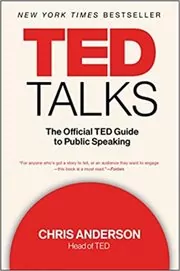
For speakers developing a focused talk around an idea they want an audience to understand. Anderson connects content, explanation, and delivery through presentation examples, though the curated conference setting differs from many ordinary workplace meetings and discussions.
What it's about
TED curator Chris Anderson explains how speakers can develop and communicate ideas that engage an audience. Drawing on experiences with TED presentations, the guide explores preparation, structure, storytelling, and delivery while emphasizing an approach suited to each speaker’s message.
Also recommended by
2 people Tim Urban recommended this book
Tim Urban
"[I read this book] while prepping for my TED Talk and found it HUGELY helpful." - Tim Urban
Tim Urban's recommendation of this book  David Deutsch recommended this book
David Deutsch
"In [this book], [the author] describes the role The Fabric of Reality played in TED." - David Deutsch
David Deutsch's recommendation of this book
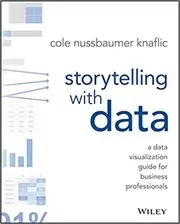
Storytelling with Data
A Data Visualization Guide for Business Professionals
For presenters who need charts to support a clear business message. Knaflic connects visual choices with context, emphasis, and audience understanding, though the focus on explanatory communication provides less coverage of exploratory analysis or advanced statistical methods.
What it's about
Cole Nussbaumer Knaflic explains how to turn business data into clear visual communication. Examples guide readers through choosing charts, applying design principles, directing attention with color and annotations, and connecting individual graphs with a coherent story.
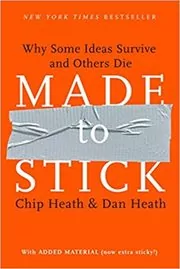
For presenters who want the central message remembered after the meeting ends. The Heaths organize memorable communication into a clear framework with varied examples, though the broad communication focus offers little direct instruction on slides or speaking technique.
What it's about
Chip and Dan Heath explore why some ideas remain memorable while others disappear. Through stories and research, they identify ways to make messages more understandable and compelling, examining how communication can influence what people remember.
Also recommended by
5 people Brian Armstrong recommended this book
Brian Armstrong
"How to make your message memorable so it will spread." - Brian Armstrong
Brian Armstrong's recommendation of this book  Ev Williams recommended this book
Ev Williams
On the "books read" section of Ev Williams' GoodReads profile.
Ev Williams's recommendation of this book  Andrew Wilkinson recommended this book
Andrew Wilkinson
"Our marketing bible." - Andrew Wilkinson
Andrew Wilkinson's recommendation of this book  Changpeng Zhao recommended this book
Changpeng Zhao
"Informs a lot of our public outreach in terms of making our services more essential for our users." - Changpeng Zhao
Changpeng Zhao's recommendation of this book  Sahil Lavingia recommended this book
Sahil Lavingia
Sahil Lavingia recommended this book on Notion.
Sahil Lavingia's recommendation of this book
Sources
- 1
5 Books to Make You a Better Presenter and Public Speaker
linkedin.com
- 2
Five Must-Read Presentation Skills Books
sennhauser.com
- 3
What Are The Must-Read Essential Presentation Books?
thepresentationdesigner.co.uk
- 4
Award-Winning Speech and Presentation skill books
chrisfenning.com
- 5
Presentation Skills Resources – Gregory Heller
gregoryheller.com
- 6
100 Best Presentation Books of All Time (Updated for 2026)
shortform.com
- 7
Presentation Books
goodreads.com
- 8
Book Recommendations - Presentation Guild
presentationguild.org
- 9
PowerPoint Mastery - recommended courses, references, tools & books : r/consulting
reddit.com
- 10
Best Books on Business Presentations
umbrex.com
Edited by
Software engineer whose passion for tracking book recommendations from podcasts inspired the creation of MRB.
Lead investor at 3one4 Capital whose startup expertise and love for books helped shape MRB and its growth.
Comments
Spotted a missing book, a wrong order or a mistake? Tell us and we'll fix this page.
We're a reading guide, not the author or publisher, so we can't send books or pass on messages.