
9 Best Public Speaking Books
The best public speaking books, ranked by expert source recommendations, with notes on who each suits, from nervous beginners to speakers refining a presentation.
Our take
Public speaking involves choosing an idea, shaping it for an audience, and delivering it clearly when people are listening. These books address different obstacles along the way. Beginners may want help with nerves and practice; experienced presenters may need a stronger structure, better stories, or a more memorable message. A book becomes most useful when you apply one technique to a real talk and notice what changes.
Speak With No Fear concentrates on approaching anxiety, while Confessions of a Public Speaker gives a candid view of what happens in front of an audience. TED Talks and Talk Like TED study prepared presentations from different perspectives. For developing the material itself, Resonate emphasizes narrative and audience needs, and Made to Stick examines memorable ideas. Do You Talk Funny? adds lessons from comedy. Start with the obstacle that most often interrupts your speaking, then pair the reading with a short presentation you can rehearse.
9 books · 9 sources · Last updated
As an Amazon Associate, we earn from qualifying purchases (at no extra cost to you).
How to choose from this list
Skip to the full rankingIf nerves are your main obstacle: Speak With No Fear → Confessions of a Public Speaker
If you need to plan a complete talk: TED Talks → Talk Like TED
If your presentation needs a clearer story: Resonate
If you want your message remembered: Made to Stick
If you want to use humor: Do You Talk Funny?
If you prefer structured beginner practice: The Quick and Easy Way to Effective Speaking
The 9 books, ranked
Ranked by how many expert sources name each book. Ties go to the book more people recommend.
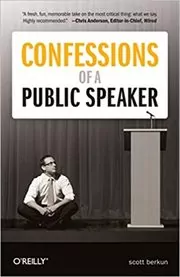
Confessions of a Public Speaker
For speakers who want an honest account of nerves, mistakes, and difficult audiences. Berkun's professional stories make practical problems feel recognizable, though the informal structure offers less of a sequential course than a textbook.
What it's about
Scott Berkun shares the successes, embarrassments, and practical lessons of professional speaking. His stories address nervousness, difficult audiences, clear explanations, and unexpected disasters, offering techniques for communicating ideas and holding people’s attention.
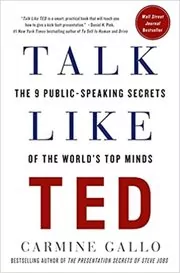
For speakers who learn by studying successful presentations. Gallo turns examples into memorable principles more directly than a personal memoir, though the emphasis on polished TED-style talks may need adapting to routine workplace updates.
What it's about
Carmine Gallo analyzes TED presentations and interviews speakers and researchers to identify nine principles of effective public speaking. He turns these observations into a practical method for communicating ideas through presentations designed to engage and persuade an audience.
Also recommended by
1 person Michael Hyatt recommended this book
Michael Hyatt
Michael Hyatt recommended this book on his website.
Michael Hyatt's recommendation of this book
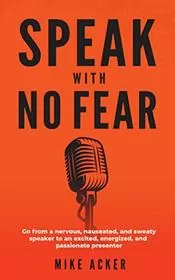
Speak With No Fear
Go From a Nervous, Nauseated, and Sweaty Speaker to an Excited, Energized, and Passionate Presenter
For nervous beginners who need a manageable place to start practicing. Acker keeps the focus on confidence more firmly than the presentation-design books, though the encouraging anecdotes provide less depth on speech structure and audience analysis.
What it's about
Mike Acker offers seven strategies for approaching the fear of public speaking. Through anecdotes and practical exercises, the guide addresses nervousness and confidence for situations such as workplace presentations, school speeches, and wedding toasts without prescribing a single approach for everyone.
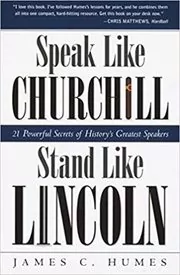
Speak Like Churchill, Stand Like Lincoln
21 Powerful Secrets of History's Greatest Speakers
For readers who enjoy learning techniques through historical examples. Humes makes pauses, openings, and delivery choices easy to notice, though the focus on prominent political orators can feel distant from conversational workplace speaking.
What it's about
James Humes draws public-speaking lessons from leaders such as Churchill, Lincoln, and Reagan. Historical examples illustrate techniques involving openings, pauses, humor, gestures, and props, with advice intended to help readers hold attention and communicate persuasively.
Also recommended by
1 person Cal Fussman recommended this book
Cal Fussman
"For anyone who wants to speak, [...] it’s a great book because there’s all kinds of tips on everything about speaking." - Cal Fussman
Cal Fussman's recommendation of this book
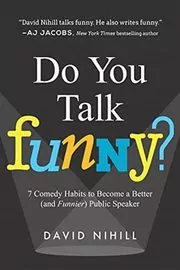
For speakers who want humor without turning a presentation into a comedy routine. Nihill connects performance habits with storytelling more explicitly than the general guides, though the techniques need testing against your audience and subject.
What it's about
David Nihill draws on a year of performing stand-up comedy to explain techniques for public speaking. His seven comedy habits connect storytelling, humor, and delivery with presentations, helping readers shape material audiences will want to hear.
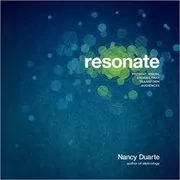
For presenters whose slides and facts need a stronger narrative. Duarte concentrates on audience needs and story structure more deeply than the confidence guides, though its visual examples reward careful study rather than a quick skim.
What it's about
Nancy Duarte explains how storytelling can structure persuasive presentations around an audience's needs and aspirations. Drawing lessons from films and notable speeches, she explores conflict, resolution, content development, and the presenter's role in helping listeners consider a different future.
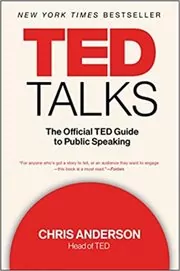
For speakers with an idea to develop into a coherent talk. Anderson's experience coaching presenters makes preparation and audience connection concrete, though the TED setting is narrower than the full range of everyday speaking situations.
What it's about
TED curator Chris Anderson explains how speakers can develop and communicate ideas that engage an audience. Drawing on experiences with TED presentations, the guide explores preparation, structure, storytelling, and delivery while emphasizing an approach suited to each speaker’s message.
Also recommended by
2 people Tim Urban recommended this book
Tim Urban
"[I read this book] while prepping for my TED Talk and found it HUGELY helpful." - Tim Urban
Tim Urban's recommendation of this book  David Deutsch recommended this book
David Deutsch
"In [this book], [the author] describes the role The Fabric of Reality played in TED." - David Deutsch
David Deutsch's recommendation of this book
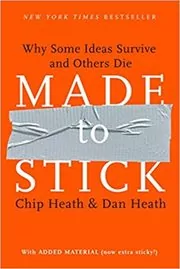
For speakers whose main challenge is making a message memorable. The Heaths offer a framework for shaping ideas that complements delivery practice, though the examples span communication broadly and give limited instruction in stage technique.
What it's about
Chip and Dan Heath explore why some ideas remain memorable while others disappear. Through stories and research, they identify ways to make messages more understandable and compelling, examining how communication can influence what people remember.
Also recommended by
5 people Brian Armstrong recommended this book
Brian Armstrong
"How to make your message memorable so it will spread." - Brian Armstrong
Brian Armstrong's recommendation of this book  Ev Williams recommended this book
Ev Williams
On the "books read" section of Ev Williams' GoodReads profile.
Ev Williams's recommendation of this book  Andrew Wilkinson recommended this book
Andrew Wilkinson
"Our marketing bible." - Andrew Wilkinson
Andrew Wilkinson's recommendation of this book  Changpeng Zhao recommended this book
Changpeng Zhao
"Informs a lot of our public outreach in terms of making our services more essential for our users." - Changpeng Zhao
Changpeng Zhao's recommendation of this book  Sahil Lavingia recommended this book
Sahil Lavingia
Sahil Lavingia recommended this book on Notion.
Sahil Lavingia's recommendation of this book
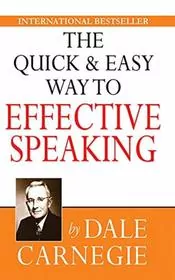
The Quick and Easy Way to Effective Speaking
For beginners seeking structured practice in speaking clearly and confidently. The stepwise lessons offer more direct exercises than an observational book, though the examples and tone reflect an earlier era of professional and social speaking.
What it's about
This guide presents step-by-step approaches to developing public-speaking skills and communicating ideas clearly. Drawing on Carnegie's teaching, it addresses confidence, courage, enthusiasm, and persuasion in professional meetings, social settings, and other situations that require speaking to others.
Sources
- 1
How to Improve Your Public Speaking Skills (Tips and Books)
virtualspeech.com
- 2
The Ten Best Public Speaking Books
speakerhub.com
- 3
6 Books Every Public Speaking Guru Has Read
get.goreact.com
- 4
7 Public Speaking Books Actually Worth Your Time
janicetomich.com
- 5
Career Collection Spotlight: Public Speaking and Communication
library.cmu.edu
- 6
100 Best Public Speaking Books of All Time (Updated for 2026)
shortform.com
- 7
Public Speaking Books
goodreads.com
- 8
Best books on public speaking
reddit.com
- 9
Books to learn public speaking (My country doesn't have speech classes,any adice please.)
reddit.com
Edited by
Software engineer whose passion for tracking book recommendations from podcasts inspired the creation of MRB.
Lead investor at 3one4 Capital whose startup expertise and love for books helped shape MRB and its growth.
Comments
Spotted a missing book, a wrong order or a mistake? Tell us and we'll fix this page.
We're a reading guide, not the author or publisher, so we can't send books or pass on messages.