
10 Best Portfolio Management Books
The best portfolio management books, ranked by how many expert sources recommend each one, with guidance for individual investors, students, and professionals.
Our take
Portfolio management connects investment choices with risk, objectives, and the work of maintaining a coherent strategy over time. It includes decisions about asset allocation, security selection, rebalancing, performance evaluation, and the organizations responsible for other people’s money. The right book depends on whether you manage your own savings, study finance, or work with institutional portfolios.
All About Asset Allocation and The Intelligent Asset Allocator provide routes into diversification for individual investors. The Four Pillars of Investing adds history, psychology, and industry context. At a more technical level, Active Portfolio Management and Quantitative Equity Portfolio Management examine forecasts, risk models, and implementation. Expected Returns broadens that analysis across assets and strategies. Pioneering Portfolio Management approaches investing from an endowment’s perspective, where governance and manager selection matter alongside the portfolio itself.
Start with allocation principles if the terminology is unfamiliar, then move toward quantitative or institutional material when it matches the decisions you need to understand.
10 books · 7 sources · Last updated
As an Amazon Associate, we earn from qualifying purchases (at no extra cost to you).
How to choose from this list
Skip to the full rankingIf you manage your own investments: All About Asset Allocation → The Intelligent Asset Allocator
If you want wider investing context: The Four Pillars of Investing
If you're studying finance systematically: Investment Analysis and Portfolio Management → Active Portfolio Management
If you want to build quantitative equity portfolios: Quantitative Equity Portfolio Management → Active Portfolio Management
If you want to compare return drivers: Expected Returns
If you oversee an investment organization: Pioneering Portfolio Management → Investment Leadership and Portfolio Management
The 10 books, ranked
Ranked by how many expert sources name each book. Ties go to the book more people recommend.

Active Portfolio Management
A Quantitative Approach for Producing Superior Returns and Controlling Risk
For investment professionals who want a quantitative framework linking forecasts, risk, and portfolio construction. Its integrated treatment goes beyond general allocation advice, though the mathematical demands and active management assumptions make it unsuitable as a first investing book.
What it's about
Richard Grinold and Ronald Kahn explain how investment forecasts become actively managed portfolios. Their quantitative framework connects benchmarks, risk, manager skill, portfolio construction, transaction costs, and performance analysis, drawing on economics, statistics, and financial theory.

Pioneering Portfolio Management
An Unconventional Approach to Institutional Investment
For readers interested in institutional investing, manager selection, and governance. Its endowment perspective connects portfolio decisions with organizational discipline, though access to illiquid assets and specialist managers limits direct application to an individual investor’s account.
What it's about
David Swensen draws on his experience managing Yale's endowment to explain institutional investing. He examines asset allocation, active management, investment advisers, market inefficiencies, and the organizational decisions involved in building and overseeing a long-term portfolio.
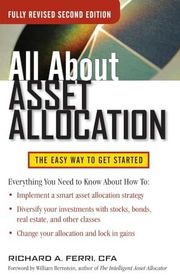
All About Asset Allocation
For readers who want an accessible guide to dividing investments across asset classes. Its practical organization offers an easier entrance than professional textbooks, though the product examples and allocation illustrations reflect a particular market and publication period.
What it's about
Richard Ferri introduces asset classes, diversification, risk, and rebalancing as parts of building an investment portfolio. He discusses how investors can connect their circumstances and objectives with allocation decisions, then maintain the chosen approach through changing market conditions.

Investment Analysis and Portfolio Management
For students who want security analysis and portfolio management covered within one broad textbook. Its structured coverage supports systematic study across assets, though the academic presentation and breadth are demanding for readers seeking a short practical introduction.
What it's about
Frank Reilly, Keith Brown, and Sanford Leeds introduce investment analysis and portfolio management across domestic and international markets. The textbook covers asset allocation, security valuation, equity and bond strategies, derivatives, ethics, and methods for evaluating portfolio performance.

Quantitative Equity Portfolio Management
An Active Approach to Portfolio Construction and Management
For readers building systematic equity portfolios who already know basic finance and statistics. Its attention to implementation connects factor models with trading and evaluation, though the technical material and older examples require careful adaptation to current tools.
What it's about
Ludwig Chincarini and Daehwan Kim guide readers through constructing and managing quantitative equity portfolios. They cover factor models, stock screening, portfolio weights, rebalancing, transaction costs, tax considerations, backtesting, and performance attribution, with practical financial examples.
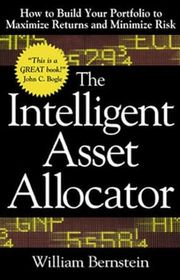
The Intelligent Asset Allocator
For individual investors who want the reasoning behind diversification rather than a list of suggested funds. Its quantitative examples make risk and allocation tangible, though comfort with numbers helps and the historical data does not prescribe a future portfolio.
What it's about
William Bernstein explains how the mix of assets influences a portfolio’s risk and return. Discussions of diversification, correlations, rebalancing, and investor behavior connect portfolio theory with decisions faced by individuals constructing and maintaining long term investments.

Behavioral Portfolio Management
How Successful Investors Master Their Emotions and Build Superior Portfolios
For readers examining the interaction between investor emotion and active portfolio decisions. Its emphasis on behavioral distortions offers a different lens from quantitative textbooks, though its proposed investment approach should be evaluated critically rather than assumed to outperform.
What it's about
C. Thomas Howard presents an investment approach centered on the effects of investor emotions on market prices. He examines behavioral distortions, portfolio decisions, manager selection, and the challenge of controlling one's own emotional responses to markets.
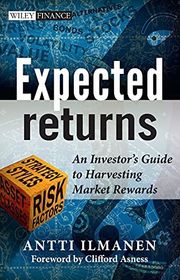
Expected Returns
For experienced investors who want to compare the drivers of returns across assets and strategies. Its broad empirical framework connects risks and rewards beyond equity selection, though the density and dependence on historical evidence make it demanding reading.
What it's about
Antti Ilmanen examines expected returns across asset classes, investment styles, and underlying risk factors. Drawing on financial research and market history, he explores how valuation, investor behavior, and economic conditions affect the rewards investors may expect for bearing different risks.

Investment Leadership and Portfolio Management
The Path to Successful Stewardship for Investment Firms
For investment leaders concerned with how teams make and explain decisions. Its stewardship focus connects organizational culture with client responsibilities, though readers seeking detailed allocation models or security analysis will need a more technical companion.
What it's about
Brian Singer and his coauthors examine how investment firms organize leadership and portfolio management around stewardship. They connect governance, organizational culture, investment philosophy, decision processes, communication, transparency, and ethics to the work of managing clients' assets.
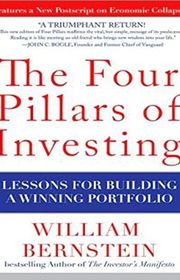
The Four Pillars of Investing
For individual investors who want portfolio construction connected with market history, psychology, and industry incentives. Its wider perspective complements a technical allocation guide, though the long argument asks for more patience than a compact implementation handbook.
What it's about
William Bernstein organizes investing around theory, history, psychology, and the investment business. He connects those subjects with diversification, costs, risk, and disciplined portfolio management, examining both how markets behave and how investors can misunderstand their own decisions.
Sources
- 1
Top 10 Best Portfolio Management Books [Updated 2026]
wallstreetmojo.com
- 2
Top 10 Portfolio Management Books to Start a Successful Business (2024)
educba.com
- 3
The Best Portfolio Management Books of 2026
conqueryourexam.com
- 4
Best Asset Allocation and Portfolio Management Books
abg-analytics.com
- 5
Academics and Faculty, Kellogg School of Management
kellogg.northwestern.edu
- 6
Portfolio Management Books
goodreads.com
- 7
Recommended Reading
allocatortraining.com




Edited by
Software engineer whose passion for tracking book recommendations from podcasts inspired the creation of MRB.
Lead investor at 3one4 Capital whose startup expertise and love for books helped shape MRB and its growth.
Comments
Spotted a missing book, a wrong order or a mistake? Tell us and we'll fix this page.
We're a reading guide, not the author or publisher, so we can't send books or pass on messages.