
14 Best Macroeconomics Books
The best macroeconomics books, ranked by how many expert sources recommend each one, with notes for beginners, business readers, and advanced students.
Our take
Macroeconomics asks how an economy grows, why unemployment and inflation change, and what governments and central banks can do. Learning it can mean understanding the news, making sense of business conditions, or studying the models used in economic research. Those aims call for quite different books, especially when it comes to mathematics and exercises.
A Concise Guide to Macroeconomics: What Managers, Executives, and Students Need to Know gives business readers a compact introduction. Principles of Macroeconomics starts with the foundations of a first course. Intermediate textbooks build fuller models and compare policy choices, while Advanced Macroeconomics and Recursive Macroeconomic Theory require much more technical preparation. Money and Government takes another route, examining the history of ideas and arguments about the state's economic role.
Begin with a book matched to your current comfort with graphs, algebra, and economic reasoning. Move toward the advanced texts when you want to derive and solve the models, rather than simply understand their conclusions.
14 books · 9 sources · Last updated
As an Amazon Associate, we earn from qualifying purchases (at no extra cost to you).
How to choose from this list
Skip to the full rankingIf you want a first course: Principles of Macroeconomics
If you need a compact business introduction: A Concise Guide to Macroeconomics: What Managers, Executives, and Students Need to Know
If you're ready for Mankiw's intermediate course: Macroeconomics → Advanced Macroeconomics
If you want monetary institutions and policy: The Economics of Money, Banking and Financial Markets
If you're preparing for graduate theory: Advanced Macroeconomics → Recursive Macroeconomic Theory
If you want the history of policy arguments: Money and Government
The 14 books, ranked
Ranked by how many expert sources name each book. Ties go to the book more people recommend.

Macroeconomics
For readers ready to move from basic principles into an intermediate course. Mankiw's clear model-based explanations offer a manageable bridge, though following the graphs and algebra still requires active study rather than reading alone.
What it's about
N. Gregory Mankiw introduces macroeconomic theory, research, and policy for intermediate students. Analytical tools and real-world case studies connect economic models to current questions, helping readers interpret evidence and examine issues such as inequality and financial regulation.

Advanced Macroeconomics
For advanced undergraduates or graduate students who want a broad theoretical foundation. Romer connects several research areas in one volume, though the mathematical arguments reward slow, repeated study rather than casual reading.
What it's about
David Romer develops formal models of economic growth, fluctuations, unemployment, and monetary policy for advanced students. The text connects theoretical analysis with empirical evidence and examines financial markets and crises as part of understanding modern macroeconomic behavior.

Macroeconomics
For beginning students who want a comprehensive course companion with familiar models and practice. Its organized coverage supports steady study, though the textbook format takes more commitment than a short explanation for general readers.
What it's about
This introductory macroeconomics textbook examines national output, growth, unemployment, and inflation. Models of aggregate spending, demand, and supply support discussions of fiscal and monetary policy, while international trade and exchange rates extend the analysis to the global economy.

Macroeconomics
For introductory students who learn through concrete examples and economic stories. Krugman and Wells connect models with events more readily than the graduate texts, though the full course structure is substantial for casual readers.
What it's about
Paul Krugman and Robin Wells introduce the study of the economy as a whole through models and examples. Their textbook examines output, growth, unemployment, inflation, and economic policy, connecting aggregate economic concepts with familiar events and decisions.
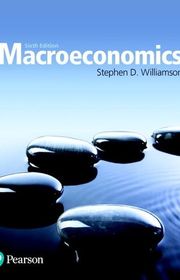
Macroeconomics
For intermediate students who want macroeconomic models built from microeconomic foundations. The careful derivations prepare you for further theory, though the abstraction and slower arrival at policy applications make it demanding for independent beginners.
What it's about
Stephen Williamson builds models of growth and business cycles from households' and firms' decisions. The textbook emphasizes microeconomic foundations, dynamic problems, and policy applications, providing preparation for more advanced study of macroeconomic theory and research.

Principles of Macroeconomics
For readers taking their first macroeconomics course. It introduces the vocabulary and core principles more gradually than Mankiw's intermediate textbook, though students already comfortable with the basics may prefer a more analytical starting point.
What it's about
N. Gregory Mankiw introduces the major principles of macroeconomics through accessible explanations and real-world scenarios. Designed for beginning students, the text connects economic concepts with familiar decisions and events, building a foundation for understanding the economy as a whole.
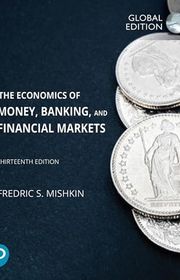
The Economics of Money, Banking and Financial Markets
For readers especially interested in central banks and the financial system. Mishkin combines institutional detail with monetary theory more extensively than a general macro textbook, though this specialization leaves wider macroeconomic questions less central.
What it's about
Frederic Mishkin examines money, banking, financial markets, and monetary policy through an analytical framework. The textbook connects economic principles with financial regulation, central bank decisions, and international markets, helping readers relate institutional details to economic models.

A Concise Guide to Macroeconomics
What Managers, Executives, and Students Need to Know
For managers and general readers who want economic relationships explained without working through a full textbook. Its compact business focus makes a useful entry point, though students needing detailed models and exercises will outgrow it.
What it's about
David Moss explains macroeconomic relationships for readers who need to understand their consequences for business. Examples illuminate output, money, expectations, exchange rates, and interest rates, providing tools for interpreting and responding to major changes in the global economy.
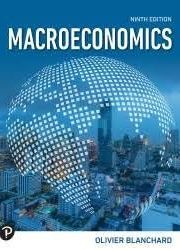
Macroeconomics
For students who want a connected view of goods, financial, and labor markets. Its short-, medium-, and long-run structure helps organize the models, though readers seeking a quick overview still face a full analytical textbook.
What it's about
Olivier Blanchard introduces macroeconomics through the connections among goods, financial, and labor markets. A core sequence examines short-, medium-, and long-run questions, followed by extensions that connect economic models with policy issues and global events.
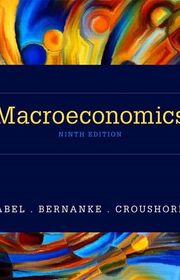
Macroeconomics
For intermediate students who want classical and Keynesian assumptions compared within a unified framework. The shared structure makes differences easier to examine, though it requires more familiarity with models and data than an introductory survey.
What it's about
Andrew Abel, Ben Bernanke, and Dean Croushore present intermediate macroeconomic theory using a unified framework. Their textbook compares classical and Keynesian approaches, introduces analysis of macroeconomic data, and applies models to growth, fluctuations, and economic policy.
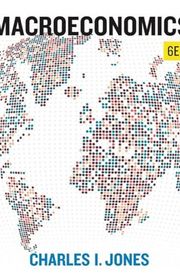
Macroeconomics
For students who want a bridge from introductory ideas toward intermediate analysis. Its attention to growth and interconnected economies gives the course a clear focus, though understanding the models still calls for exercises and quantitative work.
What it's about
Charles I. Jones introduces models for understanding economic growth, fluctuations, and the connections among national economies. Examples from financial crises and the pandemic accompany explanations and questions designed to help students apply and check their understanding of macroeconomic concepts.
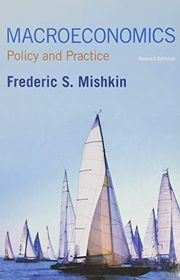
Macroeconomics: Policy and Practice
For intermediate students who want economic models connected directly to policy debates. Mishkin's step-by-step explanations emphasize practical interpretation, though the older edition's event examples need supplementing if your priority is understanding the latest developments.
What it's about
Frederic Mishkin presents intermediate macroeconomics through models and their use in economic policy. Detailed explanations of aggregate demand and supply accompany examples of economic events, helping students connect theoretical relationships with the decisions and debates facing policymakers.
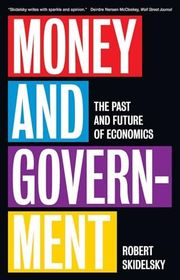
Money and Government
For readers who want the history and arguments behind policy disagreements. Skidelsky puts money, uncertainty, and government at the center of the discussion, though the Keynesian perspective is explicit and doesn't replace a general textbook.
What it's about
Robert Skidelsky traces debates over money, markets, and the state's economic role from classical economics through Keynes and the financial crisis. He argues that uncertainty makes government and money central to understanding how market economies function.

Recursive Macroeconomic Theory
For graduate students who need recursive methods for dynamic economic problems. The demanding applications connect mathematical tools with macroeconomic questions, though substantial preparation and sustained problem-solving are necessary before this becomes a useful study companion.
What it's about
This graduate textbook develops recursive methods for studying dynamic macroeconomic problems. Mathematical tools and applications address topics including taxation, labor markets, and differing beliefs, with exercises and computational material connecting economic theory to quantitative analysis.
Sources
- 1
Macroeconomics Books - 10 Best Textbooks [Updated 2026]
wallstreetmojo.com
- 2
The Best Macroeconomics Textbooks
fivebooks.com
- 3
Macroeconomics Books
goodreads.com
- 4
Intermediate Econ Textbooks
reddit.com
- 5
Adapting Macroeconomics Courses
economystudies.com
- 6
The Top Macroeconomics Books
inomics.com
- 7
Macroeconomics - Self-Study Resources
nabe.com
- 8
Macroeconomic Analysis - ANU
programsandcourses.anu.edu.au
- 9
What are the most common microeconomics and macroeconomics textbooks used by Masters and PhD program students?
reddit.com






Edited by
Software engineer whose passion for tracking book recommendations from podcasts inspired the creation of MRB.
Lead investor at 3one4 Capital whose startup expertise and love for books helped shape MRB and its growth.
Comments
Did we miss something? Have feedback?
Help us improve this page by sharing your thoughts