
19 Best Wealth Books
The best wealth books, ranked by how many expert sources recommend them, with guidance for money habits, financial independence, ownership, and spending well.
Our take
Wealth books ask several different questions: how to save and invest, how ownership can change income, and what financial independence should make possible. Some offer practical systems, others describe the habits of affluent households, and some focus mainly on motivation or personal beliefs. These approaches can be useful without being interchangeable.
The Millionaire Next Door challenges the association between expensive possessions and genuine financial resources. Your Money or Your Life connects spending with time and personal values, while The Simple Path to Wealth emphasizes a straightforward investing framework. For more specific interests, Building Wealth One House at a Time examines property, and How to Get Rich offers an entrepreneur's perspective on ownership and sacrifice.
Read descriptive success stories as examples rather than formulas, and check local tax and account details against current information. Start with I Will Teach You to Be Rich for practical money routines, or The Psychology of Money if you want to understand the behavior behind financial decisions.
19 books · 8 sources · Last updated
As an Amazon Associate, we earn from qualifying purchases (at no extra cost to you).
How to choose from this list
Skip to the full rankingIf you want practical money routines: I Will Teach You to Be Rich → The Simple Path to Wealth
If you want to reconsider spending and success: The Millionaire Next Door → Stop Acting Rich
If you want money aligned with your values: Your Money or Your Life → Die With Zero
If you want to understand financial behavior: The Psychology of Money
If you're exploring ownership: How to Get Rich → Building Wealth One House at a Time
If you prefer a story-based introduction: The Richest Man in Babylon → The Wealthy Barber
The 19 books, ranked
Ranked by how many expert sources name each book. Ties go to the book more people recommend.

Think and Grow Rich
For readers interested in classic achievement-oriented self-help and the role of goals and persistence. Hill offers a historically influential philosophy, though claims that directed thinking creates wealth should not be mistaken for an evidence-based financial plan.
What it's about
Napoleon Hill presents a philosophy of achievement centered on definite goals, persistent effort, and directed thought. Using stories of successful business figures, he explores desire, planning, cooperation, and overcoming fear as elements of his approach to wealth.
Also recommended by
7 people Neville Medhora recommended this book
Neville Medhora
"I’d bet money this book has restored countless relationships, made millions of millionaires and saved many lives." - Neville Medhora
Neville Medhora's recommendation of this book  Shay Carl recommended this book
Shay Carl
"Amazing." - Shay Carl
Shay Carl's recommendation of this book  Daymond John recommended this book
Daymond John
"The main takeaway from [this book] was goal-setting. It was the fact that if you don't set a specific goal, then how can you expect to hit it?" - Daymond John
Daymond John's recommendation of this book  Anthony Pompliano recommended this book
Anthony Pompliano
"[One of] the three most impactful books for me." - Anthony Pompliano
Anthony Pompliano's recommendation of this book  Tom Bilyeu recommended this book
Tom Bilyeu
Tom Bilyeu recommended this book on his website.
Tom Bilyeu's recommendation of this book  Jen Sincero recommended this book
Jen Sincero
"Do what he says (and really do all of it) and you will be large and in charge." - Jen Sincero
Jen Sincero's recommendation of this book +1
More recommendations
- Patrick Bet-David
Patrick Bet-David recommended this book on his website.
- Patrick Bet-David

The Richest Man in Babylon
For beginners who prefer memorable stories to financial terminology. Clason makes saving and restraint easy to discuss, though the ancient setting is fictional and the simple lessons leave modern taxes, products, and investment choices largely unexplained.
What it's about
George S. Clason presents lessons about money through parables set in ancient Babylon. The stories examine thrift, financial planning, saving, and investing, using the experiences of their characters to introduce practical principles of managing and building personal wealth.
Also recommended by
5 people DJ Vlad recommended this book
DJ Vlad
Most Recommended Books reached out to DJ Vlad directly.
DJ Vlad's recommendation of this book - Daymond John recommended this book
Daymond John
One of Daymond John's answers to "most-gifted or recommeded books?"
Daymond John's recommendation of this book  Sophia Amoruso recommended this book
Sophia Amoruso
"100 years later all the advice still holds up, which I find really great." - Sophia Amoruso
Sophia Amoruso's recommendation of this book - Anthony Pompliano recommended this book
Anthony Pompliano
"[One of] the three most impactful books for me." - Anthony Pompliano
Anthony Pompliano's recommendation of this book  Tai Lopez recommended this book
Tai Lopez
"Read this book." - Tai Lopez
Tai Lopez's recommendation of this book

For readers who confuse visible spending with accumulated wealth. Stanley and Danko make understated financial habits tangible, though the older US research is descriptive and should not be treated as proof that copying a profile guarantees similar results.
What it's about
Thomas Stanley and William Danko examine the habits of wealthy Americans, contrasting accumulated wealth with high incomes and conspicuous spending. Their research explores budgeting, frugality, occupations, and family decisions, challenging familiar images of how millionaires live.
Also recommended by
2 people Mr. Money Mustache recommended this book
Mr. Money Mustache
"The main thing it will do is give you reassurance that I am not actually making this shit up. I’m following a very time-honored formula for making you rich." - MMM
Mr. Money Mustache's recommendation of this book  Bernie Sanders recommended this book
Bernie Sanders
"I love [this book]. It talks about how it is a myth that most millionaires in America have inherited their money." - Bernie Sanders
Bernie Sanders's recommendation of this book
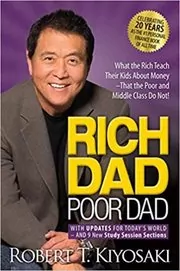
Rich Dad Poor Dad
What the Rich Teach Their Kids About Money That the Poor and Middle Class Do Not!
For readers who want to question familiar assumptions about income, assets, and ownership. Kiyosaki's contrasting stories are easy to remember, though the simplified categories and anecdotal claims offer much less practical detail than a complete financial guide.
What it's about
Rich Dad, Poor Dad contrasts the money lessons Kiyosaki says he learned from his poor biological father and his rich mentor. Through simple stories he explains assets versus liabilities, cash flow, and why working only for a paycheck rarely leads to lasting wealth.
Also recommended by
3 people Will Smith recommended this book
Will Smith
Will Smith mentioned sharing this book with his son.
Will Smith's recommendation of this book - Anthony Pompliano recommended this book
Anthony Pompliano
"My favorite book of all time." - Anthony Pompliano
Anthony Pompliano's recommendation of this book  Patrick Bet-David recommended this book
Patrick Bet-David
Patrick Bet-David recommended this book on his website.
Patrick Bet-David's recommendation of this book

For readers who respond to energetic prompts about learned money beliefs. Eker makes self-examination approachable, though the sharp rich-versus-poor contrasts oversimplify financial outcomes and understate structural constraints beyond individual attitude.
What it's about
T. Harv Eker argues that learned beliefs about money form a financial blueprint that shapes earning and spending. He contrasts habits he associates with wealthy and struggling people, then proposes exercises for changing those patterns.
Also recommended by
2 people- Jen Sincero recommended this book
Jen Sincero
"Does a great job of listing off the thoughts that either lead us to financial success or financial failure." - Jen Sincero
Jen Sincero's recommendation of this book - Patrick Bet-David recommended this book
Patrick Bet-David
Patrick Bet-David recommended this book on his website.
Patrick Bet-David's recommendation of this book

For readers who want to understand why knowledge alone does not settle money decisions. Housel's short essays connect wealth with temperament and personal experience, though the reflective approach offers fewer concrete implementation steps than a personal-finance workbook.
What it's about
Morgan Housel explores financial behavior through nineteen short stories about money and the people who use it. He examines the influence of personal history, ego, and incentives on choices that are often presented as purely mathematical decisions.
Also recommended by
1 person- Ankur Warikoo recommended this book
Ankur Warikoo
"Possibly the only money book one needs to read!" - Ankur Warikoo
Ankur Warikoo's recommendation of this book

Your Money or Your Life
9 Steps to Transforming Your Relationship with Money and Achieving Financial Independence
For readers who want wealth measured against their time and values rather than consumption alone. Robin's exercises connect spending with life choices, though the detailed tracking takes effort and older financial assumptions need current context.
What it's about
Vicki Robin and Joe Dominguez offer a program for rethinking the relationship between earning, spending, and personal values. Exercises help readers examine financial habits, reduce expenses, build savings, and consider what constitutes enough for a satisfying life.
Also recommended by
3 people- Mr. Money Mustache recommended this book
Mr. Money Mustache
"If you just get whatever the latest edition of that book is, it really teaches you a philosophy that’s pretty similar to mine." - MMM
Mr. Money Mustache's recommendation of this book  Ali Abdaal recommended this book
Ali Abdaal
"completely changed my relationship with money." - Ali Abdaal
Ali Abdaal's recommendation of this book  Roberto Blake recommended this book
Roberto Blake
"[One of my] 5 favorite personal finance books." - Roberto Blake
Roberto Blake's recommendation of this book

For readers who are already saving but struggle to decide when money should support experiences or other people. Perkins challenges endless accumulation, though the assumptions about financial security and future needs will not fit every household.
What it's about
Bill Perkins argues for using money to create meaningful experiences throughout life rather than accumulating savings indefinitely. He examines the changing balance of time, health, and wealth, offering a framework for deciding when experiences and generosity matter most.
Also recommended by
2 people- Anthony Pompliano recommended this book
Anthony Pompliano
"A fantastic book with a simple message." - Anthony Pompliano
Anthony Pompliano's recommendation of this book - Ali Abdaal recommended this book
Ali Abdaal
"A practical guide to getting the most out of your money." - Ali Abdaal
Ali Abdaal's recommendation of this book

I Will Teach You to Be Rich
No Guilt. No Excuses. No BS. Just a 6-Week Program That Works
For beginners who want a practical system connecting banking, spending, saving, and investing. Sethi makes implementation concrete while allowing room for enjoyment, though the US account and product details need adapting to your location and current rules.
What it's about
Ramit Sethi presents a six-week approach to personal finance centered on banking, saving, spending, and investing. His program emphasizes automated systems, managing debt, and directing money toward personal priorities without constant budgeting or guilt about chosen purchases.
Also recommended by
2 people BJ Fogg recommended this book
BJ Fogg
"Smart, practical & FUNNY." - BJ Fogg
BJ Fogg's recommendation of this book - Roberto Blake recommended this book
Roberto Blake
"[One of my] 5 favorite personal finance books." - Roberto Blake
Roberto Blake's recommendation of this book

The Simple Path to Wealth
Your Road Map to Financial Independence and a Rich, Free Life
For readers who want a straightforward connection between saving, simple investing, and financial independence. Collins makes the framework accessible, though the US focus and specific investment examples require adaptation to individual circumstances and other countries.
What it's about
Collins presents an approach to financial independence centered on saving, avoiding debt, and investing through low-cost index funds. Originally developed from advice to his daughter, the book discusses market volatility, accumulating wealth, and supporting a more independent life.
Also recommended by
1 person- Mr. Money Mustache recommended this book
Mr. Money Mustache
"Teaches everything you really need to be a successful lifetime investor, yet it’s ridiculously simple." - MMM
Mr. Money Mustache's recommendation of this book

The Science of Getting Rich
For readers curious about the New Thought tradition behind many modern wealth-mindset books. Wattles offers a short philosophical statement, though the word science in the title should not be confused with empirical evidence for its prosperity claims.
What it's about
Wallace Wattles presents a New Thought approach to wealth, arguing that a particular combination of thinking and action can create prosperity. The book emphasizes gratitude, purpose, creative activity, and acting effectively within one’s present circumstances.
Also recommended by
1 person- Jen Sincero recommended this book
Jen Sincero
"This is now easily the book I recommend to people the most, and the one I read over and over." - Jen Sincero
Jen Sincero's recommendation of this book

For readers who want a highly structured approach to debt repayment and rebuilding financial habits. Ramsey's clear sequence can reduce indecision, though its rigid rules and US focus leave less room for differing financial priorities and circumstances.
What it's about
Dave Ramsey presents a structured approach to changing money habits, paying down debt and building savings. The guide discusses common financial myths and uses practical resources to support planning for emergencies, retirement and other household financial goals.
Also recommended by
1 person- Shay Carl recommended this book
Shay Carl
Shay Carl recommended this book in the "Tools of Titans" book.
Shay Carl's recommendation of this book
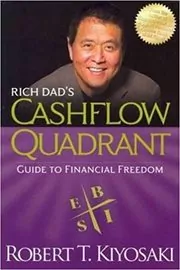
For readers comparing employment, self-employment, business ownership, and investment income. Kiyosaki's four-part model is memorable, though its preference for particular paths simplifies the different risks, resources, and responsibilities those choices involve.
What it's about
Rich Dad's Cashflow Quadrant introduces the four ways people earn money—employee, self‑employed, business owner, and investor—and explains why Kiyosaki favors the right side of the quadrant. He walks readers through the mindset shifts and skills needed to move toward business and investment income.

For readers who want a candid entrepreneur's account of ownership and the cost of pursuing substantial wealth. Dennis mixes practical observations with self-examination, though his unusual career is not a representative or reliably repeatable path.
What it's about
Felix Dennis shares lessons from his entrepreneurial career in a guide combining memoir and business advice. He emphasizes ownership and execution, examines hiring and selling decisions, and asks readers to consider the sacrifices involved in seeking substantial wealth.

For business owners and investors interested in how taxes shape financial decisions. Wheelwright makes tax incentives part of a broader strategy, though jurisdiction, current law, and personal circumstances matter more than a general book's examples.
What it's about
Tom Wheelwright explains tax planning principles for investors and business owners. He examines how tax laws create incentives and argues for incorporating legal tax reduction strategies into broader decisions about business activity, investment, and building wealth.

The Millionaire Mind
For readers interested in the backgrounds and decisions of affluent households beyond their spending habits. Stanley offers descriptive patterns and stories, though the older, selected US sample cannot establish which traits caused financial success.
What it's about
Thomas Stanley investigates the beliefs, backgrounds, and decisions of wealthy Americans through research and personal accounts. He explores education, careers, relationships, and responses to setbacks, asking how the people he studied developed and maintained substantial personal wealth.

For beginners who prefer personal finance explained through a friendly fictional conversation. Chilton makes gradual saving approachable, though the story format and edition-specific account, insurance, and tax details need supplementing with current local information.
What it's about
A fictional barber named Roy teaches ordinary people the basics of personal finance through conversations and humorous storytelling. David Chilton uses this framework to explain a gradual approach to financial independence that does not require an unusually large salary.

Building Wealth One House at a Time
For readers specifically interested in residential property as a route to wealth. Schaub connects acquisition with management and cash flow, though the US housing context, local legal rules, and operational demands make it a specialist choice.
What it's about
John Schaub presents a plan for building a real estate portfolio through individual houses. The guide covers buying, negotiating, financing, and managing properties, with attention to cash flow, market cycles, ethical investing, and retirement planning.

For readers who recognize pressure to display success through spending. Stanley develops the distinction between status consumption and financial resources, though the US survey-based patterns do not explain every household's opportunities, obligations, or choices.
What it's about
Thomas Stanley challenges the tendency to equate expensive possessions with wealth. Drawing on research into affluent households, he examines status consumption, spending habits, and the distinction between displaying success and accumulating the resources that support financial independence.
Sources
- 1
10 Best Books on Wealth and Wealth-Building
financialmentor.com
- 2
20 Must-Read Books to Build Wealth and Financial Freedom
due.com
- 3
Wealth Books
goodreads.com
- 4
Top 10 Personal Finance Books of All Time
inc.com
- 5
19 Best Books on Wealth Building
biggerinvesting.com
- 6
Recommended Books on Personal Finance, Investing, and Retirement Planning
help.boldin.com
- 7
Recommendation for best wealth building books.
reddit.com
- 8
Book Recs for Managing Unexpected Wealth
reddit.com



Edited by
Software engineer whose passion for tracking book recommendations from podcasts inspired the creation of MRB.
Lead investor at 3one4 Capital whose startup expertise and love for books helped shape MRB and its growth.
Comments
Spotted a missing book, a wrong order or a mistake? Tell us and we'll fix this page.
We're a reading guide, not the author or publisher, so we can't send books or pass on messages.