
13 Best Political Philosophy Books
The best political philosophy books, ranked by how many expert sources recommend each one, with notes on difficulty, key questions, and where to start.
Our take
Political philosophy asks what justifies government, which freedoms people should have, and how the benefits and burdens of living together should be shared. The books here approach those questions through ideal societies, arguments about rights, accounts of political power, and disputes over justice. This selection mainly follows Western political thought, so it provides one important route into a much wider subject.
New readers can begin with Jonathan Wolff’s An Introduction to Political Philosophy or Sandel’s Justice. The first maps central arguments; the second draws readers in through concrete dilemmas. The original works demand more patience. The Republic connects justice with education and character, while Leviathan and Second Treatise of Government give contrasting accounts of authority. A Theory of Justice and Anarchy, State, and Utopia form a useful modern pairing. Start with an introduction, then read two thinkers who disagree about a question that interests you. That comparison is often more revealing than treating any one book as a final answer.
13 books · 8 sources · Last updated
As an Amazon Associate, we earn from qualifying purchases (at no extra cost to you).
How to choose from this list
Skip to the full rankingIf you’re new to the subject: An Introduction to Political Philosophy → Justice
If you want ancient arguments about the state: The Republic → Politics
If you want to compare political authority: Leviathan → Second Treatise of Government → The Social Contract
If you want to debate distributive justice: A Theory of Justice → Anarchy, State, and Utopia
If you want power and personal freedom: The Prince → On Liberty
If you want arguments from several traditions: Arguing About Political Philosophy
The 13 books, ranked
Ranked by how many expert sources name each book. Ties go to the book more people recommend.

Leviathan
For readers who want to examine why political authority might be necessary at all. Its argument from insecurity to sovereignty provides a demanding foundation, though the seventeenth-century prose and religious sections slow a complete reading.
What it's about
Thomas Hobbes develops his account of human nature, society, and political authority in this seventeenth-century treatise. He argues for a social contract under a powerful sovereign, examining the conditions of order and the relationship between civil and religious power.

The Republic
For readers willing to explore justice through dialogue rather than a modern textbook. The connection between character, education, and government gives it unusual breadth, though its political proposals and extended digressions need critical engagement.
What it's about
Through conversations between Socrates and his companions, Plato examines justice and the relationship between an ideal community and its citizens. The inquiry expands into questions about goodness, knowledge, education, and the kind of rulers a well-ordered society requires.
Also recommended by
6 people Mark Zuckerberg recommended this book
Mark Zuckerberg
On the "favorite books" section of Mark Zuckerberg's Facebook profile.
Mark Zuckerberg's recommendation of this book  Sam Altman recommended this book
Sam Altman
One of Sam Altman's answers to "What are some of the best books you recommend for a young startup founder?"
Sam Altman's recommendation of this book  Maria Popova recommended this book
Maria Popova
"I’m actually gobsmacked that this isn’t required in order to be sworn into office, like the Constitution is required for us American immigrants when it comes time to gain American citizenship." - Maria Popova
Maria Popova's recommendation of this book  Vlad Tenev recommended this book
Vlad Tenev
"I like the classics such as The Republic by Plato and The Art of War by Sun Tzu." - Vlad Tenev
Vlad Tenev's recommendation of this book  Nolan Bushnell recommended this book
Nolan Bushnell
"[One of my ten favorite books] I might think of if I were asked the question at an interview this minute." - Nolan Bushnell
Nolan Bushnell's recommendation of this book  Mark Manson recommended this book
Mark Manson
Mark Manson recommended this book on his website.
Mark Manson's recommendation of this book

A Theory of Justice
For readers ready for a sustained argument about fair institutions. Its imagined choice of principles gives modern debates about distribution a common framework, though the technical detail makes an introduction useful before beginning.
What it's about
John Rawls develops justice as fairness, asking which principles people would choose without knowing their own social position. His political philosophy examines how a society can reconcile individual freedom with fair institutions and the distribution of advantages.
Also recommended by
1 person Ann Miura-Ko recommended this book
Ann Miura-Ko
"Actually a dialogue and a real logical debate." - Ann Miura-Ko
Ann Miura-Ko's recommendation of this book
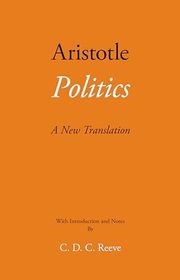
Politics
For readers who want to compare actual constitutions as well as ideals. Its attention to citizenship and different regimes complements Plato, though its defenses of hierarchy and slavery require direct critical examination.
What it's about
Aristotle examines households, citizenship, constitutions, and the purposes of political communities. By comparing forms of government and asking what makes them stable or just, he connects political organization with his account of human flourishing.

Second Treatise of Government
For readers interested in consent, property, and limits on government. Its argument offers a useful comparison with Hobbes’s stronger sovereign, though the historical setting and assumptions about ownership deserve close attention.
What it's about
John Locke sets out an account of limited government, private property, and the right to resist political authority. The treatise examines the foundations and proper extent of civil power and the conditions under which government may be challenged.

The Prince
For readers interested in the tension between effective rule and moral conduct. Its short, concrete discussions of power make a sharp contrast to ideal-state arguments, though historical background helps prevent overly literal readings.
What it's about
Niccolò Machiavelli examines how rulers acquire power, retain authority, and respond to political threats. Drawing on historical examples, he considers loyalty, fear, force, and the difficult relationship between effective rule and conventional morality.
Also recommended by
8 people Neil deGrasse Tyson recommended this book
Neil deGrasse Tyson
"To learn that people not in power will do all they can to acquire it, and people in power will do all they can to keep it." - Neil deGrasse Tyson
Neil deGrasse Tyson's recommendation of this book  Stewart Brand recommended this book
Stewart Brand
Stewart Brand recommended this book on his "Selected Books for the Manual for Civilization" blog post.
Stewart Brand's recommendation of this book  Ryan Holiday recommended this book
Ryan Holiday
Ryan Holiday recommended this book on his blog.
Ryan Holiday's recommendation of this book  Eric Ripert recommended this book
Eric Ripert
"A fascinating study and still wholly relevant." - Eric Ripert
Eric Ripert's recommendation of this book  Fred Wilson recommended this book
Fred Wilson
Fred Wilson recommended this book on his blog.
Fred Wilson's recommendation of this book  Garry Tan recommended this book
Garry Tan
"Methods still valuable and can be used for good." - Garry Tan
Garry Tan's recommendation of this book +2
More recommendations
- Ryan Shea
Ryan Shea recommended this book on his website.
- Patrick Bet-David
Patrick Bet-David recommended this book on his website.
- Ryan Shea

An Introduction to Political Philosophy
For newcomers who want questions and competing answers explained before tackling the classics. The clear progression makes political arguments easier to compare, though no short survey can give each tradition its full historical setting.
What it's about
Jonathan Wolff introduces political philosophy through enduring questions about government, authority, justice, and freedom. He compares influential thinkers' answers and examines competing arguments, showing how abstract principles bear on the organization of society and public life.

Anarchy, State, and Utopia
For readers who want a serious challenge to redistributive accounts of justice. Its entitlement arguments make it especially useful after Rawls, though the thought experiments move quickly and often demand rereading.
What it's about
Robert Nozick develops a defense of individual rights and a minimal state, responding to competing accounts of justice. His political philosophy examines entitlement, redistribution, and the possibility of diverse communities within a framework that limits coercive government power.

On Liberty
For readers who want a focused argument about individual freedom and social pressure. Its treatment of expression and the harm principle remains useful for debate, though deciding what counts as harm is left contested.
What it's about
John Stuart Mill examines the limits society may place on individual freedom, defending thought, discussion, and different ways of living. He argues that coercion requires harm to others rather than mere disapproval of a person’s choices.

For newcomers who prefer concrete moral dilemmas to abstract definitions. Its examples make rival approaches to justice easy to discuss, though the introductory treatment simplifies arguments that the original philosophical works develop at length.
What it's about
Michael J. Sandel uses moral dilemmas and public controversies to examine competing ideas of justice. Discussions of freedom, welfare, duty, and virtue introduce philosophical arguments while asking readers to consider the reasons behind their own political judgments.
Also recommended by
1 person J.K. Rowling recommended this book
J.K. Rowling
"I’d give our prime minister [this book]." - J.K. Rowling
J.K. Rowling's recommendation of this book

Arguing About Political Philosophy
For readers who learn by comparing original arguments on the same problem. The anthology brings more positions into one place than a single-author introduction, though excerpts sometimes need fuller context from the complete works.
What it's about
Edited by Matt Zwolinski, this anthology combines classic and contemporary political philosophy with readings from other disciplines. Its selections explore foundational concepts, government and economics, and applied controversies, including libertarian, feminist, socialist, and critical race perspectives.

Early Writings
For readers interested in alienation and the philosophical beginnings of Marx’s social criticism. These texts connect political questions with work and human development, though their engagement with Hegel makes some passages difficult without background.
What it's about
This collection brings together Karl Marx's early philosophical and political writings, including his critique of Hegel and the Economic and Philosophical Manuscripts. The texts explore alienation, civil society, democracy, human nature, and his developing arguments about the state.

The Social Contract
For readers interested in whether collective self-rule can preserve freedom. Its account of popular sovereignty challenges both absolute rule and purely private interests, though the general will is a difficult and much-disputed idea.
What it's about
Rousseau investigates how political authority can be legitimate while preserving citizens' freedom. His argument centers on a collective agreement, popular sovereignty, and the general will, exploring the relationship between individuals, laws, government, and the shared interests of a community.
Sources
- 1
Political Philosophy Reading List – The Best 14 Books to Read | Philosophy Break
philosophybreak.com
- 2
The best books on Political Philosophy
fivebooks.com
- 3
Political Philosophy | Thomas Jefferson Center for the Study of Core Texts and Ideas | Liberal Arts | UT - Austin
liberalarts.utexas.edu
- 4
Political Philosophy Reading Guide: Plato to Rawls
philosophyprofessor.com
- 5
Political Philosophy Reading List Books
goodreads.com
- 6
The Nine Best Introductory Political Philosophy Books - The Daily Idea
thedailyidea.org
- 7
Good political philosophy books?
reddit.com
- 8
Must-read books for beginners in Political philosophy
reddit.com


Edited by
Software engineer whose passion for tracking book recommendations from podcasts inspired the creation of MRB.
Lead investor at 3one4 Capital whose startup expertise and love for books helped shape MRB and its growth.
Comments
Spotted a missing book, a wrong order or a mistake? Tell us and we'll fix this page.
We're a reading guide, not the author or publisher, so we can't send books or pass on messages.