
31 Best Philosophy Books
The best philosophy books, ranked by how many expert sources recommend each one, with notes for choosing a beginner guide, ethical reflection, or a primary text.
Our take
Philosophy asks what we can know, how we should live, and what makes a life or society good. These books approach those questions through arguments, dialogues, personal reflections, spiritual testimony, and fiction. Most represent Western traditions, alongside important Chinese texts. They vary greatly in difficulty, so a famous title is not always the easiest place to begin.
What Does It All Mean? offers a short first encounter with philosophical problems, while Think develops the arguments in more depth. Sophie's World supplies a narrative route through intellectual history. Readers interested in conduct can turn to Meditations, Letters from a Stoic, or Nicomachean Ethics, remembering that these present particular traditions rather than neutral surveys. Larger works such as Critique of Pure Reason and Being and Nothingness reward preparation and supporting commentary. Begin with a question that interests you, read a clear introduction, and then try a primary text whose assumptions you are ready to examine.
31 books · 14 sources · Last updated
As an Amazon Associate, we earn from qualifying purchases (at no extra cost to you).
How to choose from this list
Skip to the full rankingIf you are starting from zero: What Does It All Mean? → Think
If you want the historical story: Sophie's World → History of Western Philosophy
If you want practical Stoic reflection: Meditations → Letters from a Stoic → Discourses and Selected Writings
If you want to examine ethics and politics: Nicomachean Ethics → The Republic → The Prince
If you want to explore knowledge and certainty: The Problems of Philosophy → Meditations on First Philosophy → Critique of Pure Reason
If you want different approaches to meaning and conduct: Tao Te Ching → The Analects → The Myth of Sisyphus
The 31 books, ranked
Ranked by how many expert sources name each book. Ties go to the book more people recommend.

The Republic
For readers interested in how personal justice connects with political order. The dialogue lets competing positions develop through conversation, though its length and excursions into education and knowledge make it a substantial first primary text.
What it's about
Through conversations between Socrates and his companions, Plato examines justice and the relationship between an ideal community and its citizens. The inquiry expands into questions about goodness, knowledge, education, and the kind of rulers a well-ordered society requires.
Also recommended by
6 people Mark Zuckerberg recommended this book
Mark Zuckerberg
On the "favorite books" section of Mark Zuckerberg's Facebook profile.
Mark Zuckerberg's recommendation of this book  Sam Altman recommended this book
Sam Altman
One of Sam Altman's answers to "What are some of the best books you recommend for a young startup founder?"
Sam Altman's recommendation of this book  Maria Popova recommended this book
Maria Popova
"I’m actually gobsmacked that this isn’t required in order to be sworn into office, like the Constitution is required for us American immigrants when it comes time to gain American citizenship." - Maria Popova
Maria Popova's recommendation of this book  Vlad Tenev recommended this book
Vlad Tenev
"I like the classics such as The Republic by Plato and The Art of War by Sun Tzu." - Vlad Tenev
Vlad Tenev's recommendation of this book  Nolan Bushnell recommended this book
Nolan Bushnell
"[One of my ten favorite books] I might think of if I were asked the question at an interview this minute." - Nolan Bushnell
Nolan Bushnell's recommendation of this book  Mark Manson recommended this book
Mark Manson
Mark Manson recommended this book on his website.
Mark Manson's recommendation of this book

The Prince
For readers interested in political effectiveness and the pressures of rule. Machiavelli's historical cases make tensions between power and morality concrete, though the narrow focus on rulers leaves much of political philosophy outside its scope.
What it's about
Niccolò Machiavelli examines how rulers acquire power, retain authority, and respond to political threats. Drawing on historical examples, he considers loyalty, fear, force, and the difficult relationship between effective rule and conventional morality.
Also recommended by
8 people Neil deGrasse Tyson recommended this book
Neil deGrasse Tyson
"To learn that people not in power will do all they can to acquire it, and people in power will do all they can to keep it." - Neil deGrasse Tyson
Neil deGrasse Tyson's recommendation of this book  Stewart Brand recommended this book
Stewart Brand
Stewart Brand recommended this book on his "Selected Books for the Manual for Civilization" blog post.
Stewart Brand's recommendation of this book  Ryan Holiday recommended this book
Ryan Holiday
Ryan Holiday recommended this book on his blog.
Ryan Holiday's recommendation of this book  Eric Ripert recommended this book
Eric Ripert
"A fascinating study and still wholly relevant." - Eric Ripert
Eric Ripert's recommendation of this book  Fred Wilson recommended this book
Fred Wilson
Fred Wilson recommended this book on his blog.
Fred Wilson's recommendation of this book  Garry Tan recommended this book
Garry Tan
"Methods still valuable and can be used for good." - Garry Tan
Garry Tan's recommendation of this book +2
More recommendations
- Ryan Shea
Ryan Shea recommended this book on his website.
- Patrick Bet-David
Patrick Bet-David recommended this book on his website.
- Ryan Shea

Meditations
For readers who want brief reflections on judgment and conduct rather than a formal course. The private notebook format makes individual passages easy to revisit, though it gives little systematic explanation of Stoicism's underlying arguments.
What it's about
Marcus Aurelius's personal reflections explore virtue, rational judgment, leadership, and responses to adversity. Written as exercises for his own conduct, these notes consider how to live responsibly, understand human behavior, and meet circumstances beyond one's control.
Also recommended by
19 people Naval Ravikant recommended this book
Naval Ravikant
"One of my favorite books of all time." - Naval Ravikant
Naval Ravikant's recommendation of this book  Tobi Lütke recommended this book
Tobi Lütke
"My most read book." - Tobi Lütke
Tobi Lütke's recommendation of this book  Jack Dorsey recommended this book
Jack Dorsey
"Finished reading." - Jack Dorsey
Jack Dorsey's recommendation of this book  Anna Kendrick recommended this book
Anna Kendrick
"I kind of thrive on stress, so I’m almost embarrassed by how comforting I find this book." - Anna Kendrick
Anna Kendrick's recommendation of this book - Sam Altman recommended this book
Sam Altman
"Great read." - Sam Altman
Sam Altman's recommendation of this book  Neil Strauss recommended this book
Neil Strauss
Neil Strauss recommended this book in the "Tools of Titans" book.
Neil Strauss's recommendation of this book +13
More recommendations
- Arianna Huffington
"I find [this book] so inspirational and instructive, it lives on my nightstand." - Arianna Huffington
- Stewart Brand
Stewart Brand recommended this book on his "Selected Books for the Manual for Civilization" blog post.
- Chip Conley
"I have given [this book] away to a number of people." - Chip Conley
- Ryan Holiday
"The private thoughts of the most powerful man in the world, admonishing himself on how to be better, more just, more immune to temptation, wiser." - Ryan Holiday
- Adam Robinson
"Someone would get more benefit from reading ten books multiple times. Like [this book]." - Adam Robinson
- Austen Allred
Austen Allred recommended this book on his website.
- Shane Parrish
"Really helped foster my interest in philosophy." - Shane Parrish
- Joe Rogan
"It's really wild when you think about how long that guy lived and how applicable some of his thoughts are today." - Joe Rogan
- Lex Fridman
Lex Fridman mentioned this book on Instagram.
- Mark Manson
Mark Manson recommended this book on his website.
- Ankur Warikoo
"Incredible book." - Ankur Warikoo
- James Clear
"[One of] the 10 best nonfiction books of all-time." - James Clear
- Patrick Bet-David
Patrick Bet-David recommended this book on his website.
- Arianna Huffington

History of Western Philosophy
For readers who want ideas connected to historical circumstances in one continuous account. Russell's clear, opinionated voice gives the survey momentum, though his judgments and Western focus make it a perspective to question rather than a neutral map.
What it's about
Bertrand Russell surveys Western philosophy from ancient Greece through modern thought, connecting ideas with their political and social settings. His account moves through classical philosophers, Christian thinkers, and later intellectual movements, offering commentary on their arguments.
Also recommended by
1 person Sam Harris recommended this book
Sam Harris
"Just a great example of how English should be written and just a great voice to have in your head as a result." - Sam Harris
Sam Harris's recommendation of this book

Nicomachean Ethics
For readers interested in character and flourishing rather than isolated moral rules. Aristotle's attention to habit, friendship, and practical judgment gives ethical life breadth, though the ancient social framework requires critical attention.
What it's about
Aristotle investigates what makes a flourishing human life, connecting happiness with the cultivation and practice of virtue. His ethical inquiry examines character, practical wisdom, pleasure, friendship, and the relationship between individual conduct and life in a political community.

For newcomers who learn better through narrative than a textbook. The fictional mystery provides continuity across lessons in Western philosophy, though the teaching passages can interrupt the story and necessarily simplify major thinkers.
What it's about
Fourteen-year-old Sophie receives mysterious letters asking fundamental questions about herself and the world. Lessons in the history of philosophy follow, while the identity and intentions of her correspondent turn her education into an increasingly puzzling personal mystery.

Man's Search for Meaning
For readers who approach questions of meaning through lived experience. Frankl combines testimony with an account of his therapeutic outlook, though the Holocaust material is distressing and his conclusions should not become a standard imposed on others.
What it's about
Viktor Frankl combines his account of imprisonment in Nazi concentration camps with an introduction to logotherapy. He explores the search for meaning, arguing that purpose and one's response to suffering can remain significant even under extreme circumstances.
Also recommended by
36 people Jordan Peterson recommended this book
Jordan Peterson
Recommended on Jordan Peterson's website.
Jordan Peterson's recommendation of this book  Jocko Willink recommended this book
Jocko Willink
Jocko Willink covered this book in "Jocko Podcast" Ep. 78
Jocko Willink's recommendation of this book  Esther Perel recommended this book
Esther Perel
"The book I’ve probably gifted the most is [this book], since I’m 16." - Esther Perel
Esther Perel's recommendation of this book  Emma Watson recommended this book
Emma Watson
"Loved it. Really loved it." - Emma Watson
Emma Watson's recommendation of this book - Naval Ravikant recommended this book
Naval Ravikant
"Wow it's dark." - Naval Ravikant
Naval Ravikant's recommendation of this book  David Blaine recommended this book
David Blaine
"One of my favorite books." - David Blaine
David Blaine's recommendation of this book +30
More recommendations
- Terry Crews
"Incredible." - Terry Crews
- Jimmy Fallon
"Talks about the meaning of life, and I believe you come out a better person from reading it." - Jimmy Fallon
- Tony Robbins
"Taught me that if you change the meaning, you change everything." - Tony Robbins
- Simon Sinek
"Single most important book you can read." - Simon Sinek
- Michael Gervais
"Outlines methods to discover deep meaning and purpose in life." - Michael Gervais
- Daniel Pink
"A hugely important book for me." - Daniel Pink
- Ev Williams
On the "books read" section of Ev Williams' GoodReads profile.
- Bryan Johnson
"His basic point is no matter the conditions we surround ourselves in, we can author our life." - Bryan Johnson
- Dustin Moskovitz
Dustin Moskovitz recommended this book on Twitter.
- Sam Altman
This book was on Sam Altman's bookshelf.
- Chelsea Handler
"One of those beautiful accounts of a terrible time in our history. His calm and sagaciousness, while witnessing one horror after another played out during his time in three separate concentration camps, is awe inspiring." - Chelsea Handler
- Ryan Holiday
"Looks at how we find purpose by dedicating ourselves to a cause, learning to love and finding a meaning to our suffering." - Ryan Holiday
- Maria Popova
"A meditation on what the gruesome experience of Auschwitz taught [the author] about the primary purpose of life: the quest for meaning, which sustained those who survived." - Maria Popova
- Aniela Gregorek
"A book I have gifted to many people because it changed the way I think about human suffering and grace in life." - Aniela Gregorek
- Fedor Holz
"[From it] I interpreted that we cannot avoid suffering, but we can choose how to cope with it, and that having meaning in our life is essential." - Fedor Holz
- Turia Pitt
"[If people are] doing a bit of soul searching, hands down [I give them this book]." - Turia Pitt
- Chip Conley
"If I were to take the meaning of [this book], and turn it into an equation, it would be despair equals suffering minus meaning." - Chip Conley
- Dave Elitch
Dave Elitch mentioned this book on "The Tim Ferriss Show" podcast.
- PewDiePie
"A great tool to help people. [...] In case something really bad happens, I feel like, from reading this book, I'm better equipped to handle it." - PewDiePie
- Shane Parrish
"As hard as you think your life is, it pales in comparison to Auschwitz." - Shane Parrish
- Phil Jackson
"An important book for me." - Phil Jackson
- Tom Bilyeu
Tom Bilyeu recommended this book on his website.
- Lex Fridman
"I reread [this book] quite often." - Lex Fridman
- Mark Manson
Mark Manson recommended this book on his website.
- Alastair Humphreys
"Slim but packed with wisdom that I often come back to. I really recommend you read it." - Alastair Humphreys
- Steve Kerr
"Incredibly inspiring." - Steve Kerr
- Robin Black
"One of the great books ever written exists because of one of the worst times in human history. From suffering comes beauty." - Robin Black
- Jim Kwik
"Illustrates that it’s not our circumstances but the decisions we make that diminish or develop us." - Jim Kwik
- Michael Hyatt
Michael Hyatt recommended this book on his website.
- Patrick Bet-David
Patrick Bet-David recommended this book on his website.
- Terry Crews

Critique of Pure Reason
For readers ready for sustained work on the conditions and limits of knowledge. Kant offers an ambitious framework for understanding experience and reason, though specialized terminology and intricate distinctions make guided study especially useful.
What it's about
Immanuel Kant examines the scope and limits of human knowledge, bringing rationalist and empiricist concerns into a new philosophical framework. He investigates the roles of experience and reason and the conditions under which metaphysical claims can be assessed.

Meditations on First Philosophy
For readers who want to follow one philosopher's search for certainty closely. The sequence of doubt and reconstruction provides a clear argumentative route, though the later claims about God and mind require careful scrutiny rather than passive agreement.
What it's about
Through six meditations, Descartes subjects familiar beliefs to radical doubt in search of a secure foundation for knowledge. He considers the thinking self, the existence of God, and the distinction between mind and body while examining certainty and perception.

Tao Te Ching
For readers drawn to concise, paradoxical reflections on conduct and leadership. The short chapters reward returning with different questions, though translations vary considerably and the compressed language offers little step-by-step argument.
What it's about
Traditionally attributed to Lao Tzu, this classic presents reflections on the Tao, or Way, and living in harmony with it. Its teachings connect humility, simplicity, and balanced conduct with personal life and leadership.
Also recommended by
10 people Rick Rubin recommended this book
Rick Rubin
"Always what you need to read at that particular period of time. It’s a magic book, in that way, in that it always fits." - Rick Rubin
Rick Rubin's recommendation of this book - Naval Ravikant recommended this book
Naval Ravikant
Naval Ravikant tweeted about this book.
Naval Ravikant's recommendation of this book  Michael Gervais recommended this book
Michael Gervais
"[The author's] depth of teachings are complicated to decode and provide foundations for wisdom." - Michael Gervais
Michael Gervais's recommendation of this book  Josh Waitzkin recommended this book
Josh Waitzkin
"Inspired my study of softness and receptivity as a counterpoint to my mad passions." - Josh Waitzkin
Josh Waitzkin's recommendation of this book  Brian MacKenzie recommended this book
Brian MacKenzie
"Once you get to a certain level, it’s like, wow." - Brian MacKenzie
Brian MacKenzie's recommendation of this book - Stewart Brand recommended this book
Stewart Brand
Stewart Brand recommended this book on his "Selected Books for the Manual for Civilization" blog post.
Stewart Brand's recommendation of this book +4
More recommendations
- Jason Nemer
"Oftentimes before meditation, I’ll just open [this book] randomly to a page and read about something and then just have that be what I steep in as I sit." - Jason Nemer
- Soman Chainani
"I remember reading it and being like okay, this makes no sense. But you just keep reading it again and again and slowly, I started to get the point of it." - Soman Chainani
- Jack Dorsey
One of Jack Dorsey's answers to "what are the books that had a major influence on you?"
- Jack Ma
Jack Ma always carries a copy of this book.
- Jason Nemer

The Analects
For readers interested in ethical learning through relationships, conduct, and social roles. The brief sayings open a different route from Western treatises, though their historical setting and compact form make commentary and translation choices particularly significant.
What it's about
This collection of sayings and conversations attributed to Confucius explores personal conduct, learning, and relationships. Teachings recorded by his followers emphasize humanity, righteousness, propriety, and wisdom, presenting reflections on how individuals might live and act within society.
Also recommended by
1 person Patrick Bet-David recommended this book
Patrick Bet-David
Patrick Bet-David recommended this book on his website.
Patrick Bet-David's recommendation of this book

Being and Nothingness
For experienced readers interested in consciousness, freedom, and self-deception. Sartre develops existential questions through detailed philosophical analysis, though the technical vocabulary and length make it a difficult entrance to existentialism.
What it's about
Jean-Paul Sartre develops an existentialist account of human consciousness, freedom, and choice. He argues that people create meaning and values through their engagement with the world, examining the human condition and the responsibilities that accompany existence.

Beyond Good And Evil
For readers ready to challenge the assumptions beneath moral and philosophical systems. Nietzsche's sharp, discontinuous style keeps received ideas unsettled, though the provocations and compressed arguments require context and resist a straightforward introductory reading.
What it's about
Friedrich Nietzsche interrogates the foundations of Western philosophy and conventional moral judgment. His arguments challenge religious dogma and established notions of truth while exploring the will to power and the demands of independent intellectual inquiry.
The Myth of Sisyphus
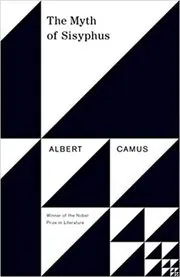
For readers drawn to the tension between wanting meaning and finding an indifferent world. Camus develops the problem through literary images as well as argument, though its focus on suicide and the absurd can be emotionally demanding.
What it's about
This landmark essay lays out Camus's philosophy of the absurd, asking whether life is worth living in a world without ultimate meaning. Using the figure of Sisyphus, it argues for lucid revolt and everyday joy instead of resignation or suicide.

For beginners who want to practice examining arguments across several philosophical problems. Blackburn emphasizes how to think through a question rather than memorize a timeline, though some chapters require slower reading than the conversational tone suggests.
What it's about
Simon Blackburn introduces central philosophical questions about knowledge, the mind, freedom, God, and moral judgment. Drawing on major thinkers and familiar problems, he shows how arguments are constructed and why examining their assumptions matters beyond academic philosophy.

For newcomers who want a short encounter with fundamental questions before choosing a longer book. Nagel makes the problems approachable without much historical background, though the brevity leaves competing answers deliberately underdeveloped.
What it's about
Thomas Nagel introduces nine philosophical problems for readers approaching the subject for the first time. Questions about knowledge, other minds, free will, morality, death, and the meaning of life encourage reflection without requiring familiarity with philosophical history.

For readers who want philosophical questions woven into a personal journey. Pirsig links abstract ideas with craft and experience, though the shifting narrative and idiosyncratic account of quality offer a different experience from a systematic introduction.
What it's about
During a summer motorcycle trip, a father reflects on his relationship with his son and his earlier intellectual struggles. The journey links practical maintenance with questions about reason, experience, and quality, blending personal narrative with philosophical exploration.
Also recommended by
9 people- Jordan Peterson recommended this book
Jordan Peterson
Recommended on Jordan Peterson's website.
Jordan Peterson's recommendation of this book  Paul Graham recommended this book
Paul Graham
Paul Graham mentioned this book on Twitter.
Paul Graham's recommendation of this book  Drew Houston recommended this book
Drew Houston
"[There are] engineers who [dismiss] all these things that can’t be fit into an algorithm, or that don’t have some kind of mathematical rigor underpinning them, [this book] is about that question." - Drew Houston
Drew Houston's recommendation of this book - Josh Waitzkin recommended this book
Josh Waitzkin
"Inspired my cultivation of dynamic quality as a way of life." - Josh Waitzkin
Josh Waitzkin's recommendation of this book  Bryan Johnson recommended this book
Bryan Johnson
Bryan Johnson recommended this book on Twitter.
Bryan Johnson's recommendation of this book  Ev Williams recommended this book
Ev Williams
"One of the few novels I’ve ever read twice." - Ev Williams
Ev Williams's recommendation of this book +3
More recommendations
- Austen Allred
"Didn’t get it first time." - Austen Allred
- Fred Wilson
"A great one." - Fred Wilson
- Phil Jackson
Phil Jackson recommended this book on Twitter.
- Austen Allred

Beyond Good And Evil
For readers ready to question familiar assumptions about morality, truth, and philosophical motives. Nietzsche’s aphorisms provoke active disagreement rather than passive learning, though the compressed arguments and polemical tone make context and rereading valuable.
What it's about
Friedrich Nietzsche challenges inherited assumptions about truth, religion, and morality. Through philosophical arguments and aphorisms, he criticizes conventional values and explores the will to power, individual judgment, and the possibilities of a different approach to ethics.
Also recommended by
4 people- Jordan Peterson recommended this book
Jordan Peterson
Recommended on Jordan Peterson's website.
Jordan Peterson's recommendation of this book  Lex Fridman recommended this book
Lex Fridman
Lex Fridman mentioned this book on Instagram.
Lex Fridman's recommendation of this book  PewDiePie recommended this book
PewDiePie
"Despite this being clearly above my reading comprehension, I'm really glad I still gave it a try." - PewDiePie
PewDiePie's recommendation of this book  Marc Andreessen recommended this book
Marc Andreessen
Marc Andreessen recommended this book on Twitter.
Marc Andreessen's recommendation of this book

Letters from a Stoic
For readers who like ethical reflection addressed to a person facing ordinary problems. Seneca's letters develop ideas more conversationally than a treatise, though the recurring themes and ancient assumptions benefit from selective, critical reading.
What it's about
Seneca's letters present Stoic reflections on living well amid uncertainty and hardship. Addressed to Lucilius, they explore friendship, virtue, mortality, and the discipline of judgment, connecting philosophical principles with concerns arising in everyday life.
Also recommended by
4 people Tim Ferriss recommended this book
Tim Ferriss
"[The author] is an outstanding thinker and this is, I think, one of his most accesible books." - Tim Ferriss
Tim Ferriss's recommendation of this book - Naval Ravikant recommended this book
Naval Ravikant
"That’s what I read [by Seneca]." - Naval Ravikant
Naval Ravikant's recommendation of this book - Ryan Holiday recommended this book
Ryan Holiday
"After Marcus Aurelius, this is one of my favorite books." - Ryan Holiday
Ryan Holiday's recommendation of this book  Jerzy Gregorek recommended this book
Jerzy Gregorek
"From [this book], I learned self-mastery: to constantly improve myself so I would be ready for any possible disaster." - Jerzy Gregorek
Jerzy Gregorek's recommendation of this book

A Treatise of Human Nature
For readers prepared to examine knowledge, emotion, and morality across a long argument. Hume connects these topics through an account of human experience, though the scale and eighteenth-century prose make it better suited to sustained study.
What it's about
David Hume investigates human understanding, the passions, and morality through an account of experience and the workings of the mind. He examines how perceptions become ideas and beliefs, questioning familiar assumptions about knowledge, identity, and the foundations of ethical judgment.

Ethics
For readers interested in a system connecting nature, mind, emotion, and freedom. Spinoza's proof-based structure offers an unusually unified philosophical project, though its definitions and cross-referenced propositions make it a demanding primary text.
What it's about
Spinoza develops an account of God, nature, human thought, and emotion through definitions and propositions. The work connects this picture of reality with questions about freedom, understanding, and how people might become less governed by destructive passions.

The Problems of Philosophy
For beginners who enjoy testing what seems obvious about knowledge and reality. Russell develops questions through concrete examples and clear argument, though its concentration on knowledge gives a narrower introduction than a broad survey of philosophy.
What it's about
Bertrand Russell introduces philosophical inquiry by asking what people can know with certainty. He explores appearance and reality, matter, induction, truth, and the limits of knowledge, developing an accessible account of how philosophy approaches fundamental questions.

Reasons and Persons
For experienced readers who enjoy precise arguments and imaginative thought experiments. Parfit connects personal identity with questions about what we owe others, though the intricate reasoning requires much more concentration than the introductory surveys.
What it's about
Derek Parfit challenges beliefs about morality, rational self-interest, and personal identity. His philosophical arguments examine when theories defeat their own aims, how identity affects ethical judgment, and difficult questions about obligations to people in future generations.
Also recommended by
3 people- Sam Harris recommended this book
Sam Harris
"Brilliant and written as though by an alien intelligence." - Sam Harris
Sam Harris's recommendation of this book  Will MacAskill recommended this book
Will MacAskill
"One of the most important books written in the 20th century." - Will MacAskill
Will MacAskill's recommendation of this book  Patrick Collison recommended this book
Patrick Collison
"I don't totally agree, but I think it's a really interesting modern take on moral philosophy." - Patrick Collison
Patrick Collison's recommendation of this book

The Complete Essays
For readers who enjoy questioning ideas through a writer's habits, memories, and contradictions. Montaigne makes uncertainty personally engaging, though the digressions and classical references reward browsing and annotation more than a search for tidy conclusions.
What it's about
Montaigne examines human nature through reflections on his own experiences and wide-ranging reading. Essays about friendship, politics, religion, desire, and everyday life turn personal inquiry into an exploration of judgment, uncertainty, and what it means to live.
Also recommended by
2 people Alain de Botton recommended this book
Alain de Botton
"I’ve given quite a lot of copies of [this book] to people down the years." - Alain de Botton
Alain de Botton's recommendation of this book  Shane Parrish recommended this book
Shane Parrish
"Really helped foster my interest in philosophy." - Shane Parrish
Shane Parrish's recommendation of this book

The Second Sex
For readers who want existential questions connected with women’s social position and lived experience. Beauvoir gives freedom and constraint a sustained social analysis, though the length, historical assumptions, and translation differences make this a demanding primary text.
What it's about
Simone de Beauvoir examines women's position through history, biology, psychology, literature and everyday experience. She investigates how social institutions and cultural expectations define women in relation to men and considers the possibilities for greater freedom and independence.
Also recommended by
2 people Laura R Walker recommended this book
Laura R Walker
"For young women, I get [this book], which I read when I was studying in Paris." - Laura R Walker
Laura R Walker's recommendation of this book  Brad Delong recommended this book
Brad Delong
Brad Delong recommended this book in his website.
Brad Delong's recommendation of this book

Discourses and Selected Writings
For readers who want practical Stoicism explained through teaching and discussion. The lectures give more context than a collection of isolated maxims, though the stern tone and ancient examples sometimes need patient interpretation.
What it's about
Epictetus's lectures, handbook, and surviving fragments offer practical instruction in Stoic ethics. They examine freedom, fear, friendship, and self-improvement through the distinction between what people can control and the circumstances they must learn to accept.
Also recommended by
1 person- PewDiePie recommended this book
PewDiePie
"A good introduction to stoic philosophy." - PewDiePie
PewDiePie's recommendation of this book

The Confessions of St. Augustine
For readers who want philosophy intertwined with spiritual autobiography. Augustine turns memory, desire, and belief into sustained personal inquiry, though the Christian framework and later theological reflections differ from a general introduction to religion or ethics.
What it's about
Augustine recounts his early life, education, ambitions, and struggle toward Christian faith. His spiritual autobiography examines desire, regret, and conversion through a personal reflection on the meaning of his experiences and his relationship with God.

For readers who want a compact encounter with Epicurean ideas about pleasure, fear, and nature. The collected surviving texts give direct access to the tradition, though fragments and compressed doctrines leave gaps that supporting commentary can clarify.
What it's about
Translated by Eugene M. O'Connor, this collection brings together Epicurus's letters, principal doctrines, sayings, and fragments. The surviving texts introduce his ideas about atoms, sensation, morality, the soul, and freedom from fear and disturbance.

The Art Of War
For readers interested in strategic judgment, preparation, and the limits of force. Sun Tzu presents ideas in a compact, memorable form, though military context and translation choices matter more than popular applications sometimes acknowledge.
What it's about
Sun Tzu's military treatise examines planning, leadership, deception, terrain, and adapting to an opponent. Its thirteen chapters consider how preparation and strategic judgment can secure an advantage while limiting the costs and dangers of warfare.
Also recommended by
12 people- Jocko Willink recommended this book
Jocko Willink
Jocko Willink covered this book in "Jocko Podcast" Ep. 23
Jocko Willink's recommendation of this book - Neil deGrasse Tyson recommended this book
Neil deGrasse Tyson
"To learn that the act of killing fellow humans can be raised to an art." - Neil deGrasse Tyson
Neil deGrasse Tyson's recommendation of this book  Marc Benioff recommended this book
Marc Benioff
"Served me well. [...] Advocates keeping one’s cool at all times." - Marc Benioff
Marc Benioff's recommendation of this book  Evan Spiegel recommended this book
Evan Spiegel
"After meeting Mark Zuckerberg, [Evan Spiegel] immediately bought every [Snapchat] employee a copy of 'The Art Of War'." - Business Insider
Evan Spiegel's recommendation of this book  Dave Camarillo recommended this book
Dave Camarillo
"Another [book] I have to mention." - Dave Camarillo
Dave Camarillo's recommendation of this book  Ryan Petersen recommended this book
Ryan Petersen
Ryan Petersen mentioned this book on Twitter.
Ryan Petersen's recommendation of this book +6
More recommendations
- Travis Kalanick
"It became [Travis Kalanick's bible]." - Mike Isaac
- Vlad Tenev
"I like the classics such as The Republic by Plato and The Art of War by Sun Tzu." - Vlad Tenev
- Fred Wilson
"Has to get onto my list." - Fred Wilson
- Lex Fridman
Lex Fridman mentioned this book on Instagram.
- Elon Musk
"I've read [this book] many times." - Elon Musk
- Patrick Bet-David
Patrick Bet-David recommended this book on his website.
- Travis Kalanick

For readers who want a conversation about living well grounded in religious experience. The exchanges and personal stories make the subject approachable, though this offers spiritual reflection and practical outlooks rather than a systematic philosophical argument.
What it's about
The Dalai Lama and Desmond Tutu discuss finding joy despite suffering during a week together in Dharamsala. With Douglas Abrams, they share personal stories, consider obstacles such as fear and grief, and explain practices underlying their approach.
Also recommended by
3 people Jack Kornfield recommended this book
Jack Kornfield
"A wonderful book." - Jack Kornfield
Jack Kornfield's recommendation of this book  Ellen DeGeneres recommended this book
Ellen DeGeneres
"When the Dalai Lama and Archbishop Desmond Tutu write a book, you gotta read it." - Ellen DeGeneres
Ellen DeGeneres's recommendation of this book  Alanis Morissette recommended this book
Alanis Morissette
"A beautiful book." - Alanis Morissette
Alanis Morissette's recommendation of this book

The Dialogues of Plato
For readers who want several kinds of philosophical conversation from one ancient author. The dialogues reveal inquiry through disagreement and changing perspectives, though a large collection benefits from a reading guide and careful attention to its contents.
What it's about
Plato presents philosophical inquiry through dialogues centered on Socrates and the intellectual life of ancient Athens. Conversations examine virtue, love, knowledge, and truth, as well as the relationship between society and the individual and the principles guiding human conduct.
Sources
- 1
Best Philosophy Books of All Time - Five Books Expert Recommendations
fivebooks.com
- 2
Best Philosophy Books - James Clear
jamesclear.com
- 3
49 Best Philosophy Books of All Time for Beginners
calvinrosser.com
- 4
The Best Philosophy Books Of All Time [Updated For 2026!]
taylorpearson.me
- 5
The Best 33 Philosophy Books You’ll Ever Need (2023 update) – Hasty Reader
hastyreader.com
- 6
Philosophy Books
goodreads.com
- 7
11 Essential Philosophy Books That Will Open Your Mind - LifeHack
lifehack.org
- 8
The Best Philosophy Books, Chosen by an Expert in the Field
explorethearchive.com
- 9
An Introduction to Philosophy – The Best 6 Books to Read | Philosophy Break
philosophybreak.com
- 10
Complete beginner in philosophy - where should I start? : r/PhilosophyBookClub
reddit.com
- 11
Best Philosophy Books for Beginners and Experts
whenyouwrite.com
- 12
Best Philosophy Books for Beginners: Where to Start
philosophyprofessor.com
- 13
100 Best Philosophy Books of All Time
shortform.com
- 14
The Best Simone de Beauvoir Books
fivebooks.com




Edited by
Software engineer whose passion for tracking book recommendations from podcasts inspired the creation of MRB.
Lead investor at 3one4 Capital whose startup expertise and love for books helped shape MRB and its growth.
Comments
Did we miss something? Have feedback?
Help us improve this page by sharing your thoughts