
12 Best Ethics Books
The best ethics books, ranked by how many expert sources recommend each one, with reader notes to help you choose an introduction or a deeper philosophical study.
Our take
Ethics asks what makes actions right, what people owe one another, and what a good life involves. These books suit curious beginners, students comparing moral theories, and readers who want to question the principles behind everyday judgments. Most concentrate on Western moral philosophy, with different routes through its disagreements about character, duty, consequences, and fairness.
The introductory surveys explain competing positions before asking you to tackle original arguments. The Elements of Moral Philosophy offers a manageable entry, while The Fundamentals of Ethics provides a more systematic course of study. Nicomachean Ethics, Groundwork for the Metaphysics of Morals, and Utilitarianism let you encounter three influential approaches directly. Practical Ethics and Justice bring those disagreements into concrete decisions, while Reasons and Persons and What We Owe to Each Other require greater patience with detailed reasoning. Start with a survey if the vocabulary is new, then choose a primary text whose central question interests you.
12 books · 9 sources · Last updated
As an Amazon Associate, we earn from qualifying purchases (at no extra cost to you).
How to choose from this list
Skip to the full rankingIf you are new to moral philosophy: The Elements of Moral Philosophy → The Fundamentals of Ethics
If you want to compare duty and consequences: Utilitarianism → Groundwork for the Metaphysics of Morals
If you want to explore virtue: Nicomachean Ethics → After Virtue
If you want debates about practical choices: Justice → Practical Ethics
If you are ready for detailed contemporary arguments: What We Owe to Each Other → Reasons and Persons
The 12 books, ranked
Ranked by how many expert sources name each book. Ties go to the book more people recommend.

Practical Ethics
For readers who want sustained arguments about concrete moral choices. Singer makes the implications of consequentialist reasoning unusually visible, but his controversial conclusions represent a particular position rather than a neutral survey.
What it's about
Singer applies moral reasoning to questions about equality, animals, poverty, abortion, euthanasia, and environmental responsibility. His examination challenges familiar assumptions and asks how competing interests, consequences, and the value of life should guide difficult ethical decisions.

Utilitarianism
For readers seeking a relatively short primary text on judging conduct by its consequences. Mill directly answers objections about happiness and justice, though the nineteenth-century prose and compressed defenses still benefit from commentary.
What it's about
John Stuart Mill defends an ethical theory that evaluates actions by their contribution to happiness and prevention of suffering. He considers objections, differences between pleasures, moral motivation, and the relationship between utility and the demands of justice.

Groundwork for the Metaphysics of Morals
For readers ready to examine duty rather than judge actions solely by results. Kant gives a concentrated argument about moral principles and human dignity, but the compressed reasoning needs slow reading and supporting notes.
What it's about
Immanuel Kant seeks the principle underlying morality and a defense of its application to human beings. His argument develops the categorical imperative through discussions of duty, good will, freedom, and the dignity of rational persons.

Nicomachean Ethics
For readers more interested in character and a flourishing life than rules for isolated dilemmas. Its treatment of friendship and practical judgment gives virtue ethics breadth, though ancient social assumptions need critical attention.
What it's about
Aristotle investigates what makes a flourishing human life, connecting happiness with the cultivation and practice of virtue. His ethical inquiry examines character, practical wisdom, pleasure, friendship, and the relationship between individual conduct and life in a political community.

The Republic
For readers drawn to the connection between personal goodness and political order. The dialogue invites you to test competing accounts of justice, though its excursions into education and knowledge make it a substantial commitment.
What it's about
Through conversations between Socrates and his companions, Plato examines justice and the relationship between an ideal community and its citizens. The inquiry expands into questions about goodness, knowledge, education, and the kind of rulers a well-ordered society requires.
Also recommended by
6 people Mark Zuckerberg recommended this book
Mark Zuckerberg
On the "favorite books" section of Mark Zuckerberg's Facebook profile.
Mark Zuckerberg's recommendation of this book  Sam Altman recommended this book
Sam Altman
One of Sam Altman's answers to "What are some of the best books you recommend for a young startup founder?"
Sam Altman's recommendation of this book  Maria Popova recommended this book
Maria Popova
"I’m actually gobsmacked that this isn’t required in order to be sworn into office, like the Constitution is required for us American immigrants when it comes time to gain American citizenship." - Maria Popova
Maria Popova's recommendation of this book  Vlad Tenev recommended this book
Vlad Tenev
"I like the classics such as The Republic by Plato and The Art of War by Sun Tzu." - Vlad Tenev
Vlad Tenev's recommendation of this book  Nolan Bushnell recommended this book
Nolan Bushnell
"[One of my ten favorite books] I might think of if I were asked the question at an interview this minute." - Nolan Bushnell
Nolan Bushnell's recommendation of this book  Mark Manson recommended this book
Mark Manson
Mark Manson recommended this book on his website.
Mark Manson's recommendation of this book

For general readers who learn through contested public questions rather than abstract definitions. Sandel turns rival theories into accessible debates about fairness and civic life, though the emphasis on politics leaves other ethical territory less developed.
What it's about
Michael J. Sandel uses moral dilemmas and public controversies to examine competing ideas of justice. Discussions of freedom, welfare, duty, and virtue introduce philosophical arguments while asking readers to consider the reasons behind their own political judgments.
Also recommended by
1 person J.K. Rowling recommended this book
J.K. Rowling
"I’d give our prime minister [this book]." - J.K. Rowling
J.K. Rowling's recommendation of this book
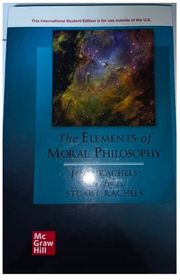
The Elements of Moral Philosophy
For newcomers who want to compare major moral theories before committing to a philosopher. Short chapters build arguments and objections around recognizable questions, though the survey necessarily gives less space to each individual thinker.
What it's about
James Rachels and Stuart Rachels introduce moral reasoning through competing accounts of right and wrong. Chapters explore cultural relativism, self-interest, duty, consequences, and virtue, using examples and objections to help readers assess ethical arguments.

What We Owe to Each Other
For readers seeking an alternative to adding up everyone's welfare. Scanlon develops moral reasoning through what people can justify to one another, but the detailed distinctions suit readers already comfortable with philosophical argument.
What it's about
T. M. Scanlon develops a contractualist account of morality based on principles that others could not reasonably reject. He connects right and wrong with mutual justification, examining reasons, value, well-being, fairness, and responsibility.

Reasons and Persons
For experienced readers who enjoy testing moral intuitions through carefully constructed cases. Parfit connects personal identity with obligations across generations in unusual depth, but the intricate arguments demand concentration rather than casual dipping.
What it's about
Derek Parfit challenges beliefs about morality, rational self-interest, and personal identity. His philosophical arguments examine when theories defeat their own aims, how identity affects ethical judgment, and difficult questions about obligations to people in future generations.
Also recommended by
3 people Sam Harris recommended this book
Sam Harris
"Brilliant and written as though by an alien intelligence." - Sam Harris
Sam Harris's recommendation of this book  Will MacAskill recommended this book
Will MacAskill
"One of the most important books written in the 20th century." - Will MacAskill
Will MacAskill's recommendation of this book  Patrick Collison recommended this book
Patrick Collison
"I don't totally agree, but I think it's a really interesting modern take on moral philosophy." - Patrick Collison
Patrick Collison's recommendation of this book
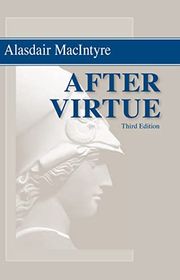
After Virtue
For readers who want to understand why modern moral arguments can seem irresolvable. MacIntyre places virtue within historical traditions and shared practices, though this sustained critique is demanding and argues a definite position.
What it's about
Alasdair MacIntyre argues that modern moral debate relies on fragments of older ethical traditions. His historical study revisits Aristotle and connects virtue with practices, communities, and the shape of a human life, challenging familiar assumptions about morality.

For students who want original arguments from many philosophers in one volume. The anthology supports comparison across periods and contemporary disputes, though its scale and changing voices require more direction than a single introductory textbook.
What it's about
Steven Cahn and Peter Markie collect readings in moral philosophy across historical sources, modern ethical theory, and contemporary issues. The anthology connects arguments from ancient thinkers through later philosophers with debates about morality and its practical applications.

The Fundamentals of Ethics
For beginners who want a structured account of competing theories and the arguments behind them. Its attention to both right action and morality's foundations provides breadth, though the textbook approach rewards study more than browsing.
What it's about
Russ Shafer-Landau introduces moral philosophy through questions about well-being, right action, and the status of morality. The textbook reconstructs and evaluates competing arguments, covering normative ethics and metaethics without assuming prior philosophical study.
Sources
- 1
Ethics and Morality Reading List – The Best 10 Books to Read | Philosophy Break
philosophybreak.com
- 2
The Eight Best Introductory Books on Ethics - The Daily Idea
thedailyidea.org
- 3
The Best Books on Ethical Problems - Five Books Expert Recommendations
fivebooks.com
- 4
Best Books on Ethics: A Moral Philosophy Reading Guide
philosophyprofessor.com
- 5
100 Best Ethics Books of All Time (Updated for 2026)
shortform.com
- 6
Ethics Books
goodreads.com
- 7
What books should I read for ethics and moral philosophy? : r/askphilosophy
reddit.com
- 8
The 5 Most Influential Books on Ethics | TheCollector
thecollector.com
- 9
Ethics Book Suggestions? : r/Ethics
reddit.com




Edited by
Software engineer whose passion for tracking book recommendations from podcasts inspired the creation of MRB.
Lead investor at 3one4 Capital whose startup expertise and love for books helped shape MRB and its growth.
Comments
Did we miss something? Have feedback?
Help us improve this page by sharing your thoughts