
11 Best Modern Philosophy Books
The best modern philosophy books, ranked by how many expert sources recommend each one, with notes on difficulty, interests and the best place to start.
Our take
Modern philosophy asks how we know anything, what a person is, and how people should live together. The term can refer to the period shaped by thinkers such as Descartes, Locke, Hume and Kant, or more loosely to recent philosophical writing. These books cover both uses: original arguments about knowledge and reality sit alongside biographies, ethical debates and contemporary guides to living.
Sophie's World provides an approachable historical route, while How to Live introduces Montaigne through his life and everyday questions. Readers ready for primary texts can begin with Meditations on First Philosophy before comparing different accounts of experience and knowledge. Anger and Forgiveness brings philosophical argument to personal relationships and public justice; The Path offers a practical encounter with classical Chinese thought. Start with a survey or biography if the vocabulary is unfamiliar, then choose an original text whose central question interests you enough to read slowly.
11 books · 7 sources · Last updated
As an Amazon Associate, we earn from qualifying purchases (at no extra cost to you).
How to choose from this list
Skip to the full rankingIf you're new to philosophy: Sophie's World → How to Live
If you want the foundations of modern knowledge: Meditations on First Philosophy → An Enquiry Concerning Human Understanding → Critique of Pure Reason
If you want a sustained account of experience: An Essay Concerning Human Understanding
If you want a systematic view of freedom and emotion: Ethics
If you want philosophy applied to everyday life: The Path → How to Be a Stoic → Anger and Forgiveness
The 11 books, ranked
Ranked by how many expert sources name each book. Ties go to the book more people recommend.

An Essay Concerning Human Understanding
For readers who want a sustained account of how ideas and knowledge arise from experience. Locke's discussions extend into language and personal identity, though the long, discursive argument takes more patience than Hume's shorter Enquiry.
What it's about
John Locke argues that knowledge comes from experience and perception rather than innate ideas. His philosophical inquiry examines how reason develops understanding, alongside questions about language, personal identity, free will, and the limits of human knowledge.

Critique of Pure Reason
For readers prepared for a demanding investigation of what makes knowledge possible. Kant offers a systematic response to earlier debates about reason and experience, though the terminology and architecture make a commentary or study group especially helpful.
What it's about
Immanuel Kant examines the scope and limits of human knowledge, bringing rationalist and empiricist concerns into a new philosophical framework. He investigates the roles of experience and reason and the conditions under which metaphysical claims can be assessed.

Meditations on First Philosophy
For readers ready to follow an early modern philosopher's argument directly. Descartes's staged doubts give the inquiry a clear dramatic shape, though the arguments about God, certainty and mind require slower reading than the short length suggests.
What it's about
Through six meditations, Descartes subjects familiar beliefs to radical doubt in search of a secure foundation for knowledge. He considers the thinking self, the existence of God, and the distinction between mind and body while examining certainty and perception.

An Enquiry Concerning Human Understanding
For readers interested in evidence, causation and the limits of rational certainty. Hume presents a comparatively compact route into empiricism and skepticism, though the measured prose contains arguments that need more attention than their apparent simplicity suggests.
What it's about
David Hume examines the limits of human knowledge and the relationship between experience, reasoning, and belief. His discussions of causation and evidence challenge the certainty of everyday assumptions and ask what can justify claims about the world.
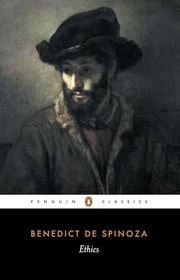
Ethics
For readers who want an interconnected account of reality, emotion and freedom. Spinoza builds ethical questions into a single philosophical system, though the definitions, propositions and proofs make this a demanding first encounter with modern philosophy.
What it's about
Spinoza develops an account of God, nature, human thought, and emotion through definitions and propositions. The work connects this picture of reality with questions about freedom, understanding, and how people might become less governed by destructive passions.

For readers who want to enter philosophy through a life rather than a system. Bakewell makes Montaigne's questions feel close to ordinary experience, though the biographical approach provides selected encounters rather than a comprehensive account of his arguments.
What it's about
Sarah Bakewell explores Michel de Montaigne’s life and essays through twenty approaches to the question of how to live. Her biography connects his observations about friendship, mortality, uncertainty, and everyday experience with the historical world he inhabited.
Also recommended by
3 people Marc Andreessen recommended this book
Marc Andreessen
Marc Andreessen recommended this book on Twitter.
Marc Andreessen's recommendation of this book  Anthony Bourdain recommended this book
Anthony Bourdain
"A book I love." - Anthony Bourdain
Anthony Bourdain's recommendation of this book  Ryan Holiday recommended this book
Ryan Holiday
"A series of essays about Montaigne, who invented the essay." - Ryan Holiday
Ryan Holiday's recommendation of this book

For readers interested in whether anger and forgiveness actually help people respond to wrongdoing. Nussbaum connects ethical argument with personal and political cases, though her challenge to familiar moral intuitions asks for careful, critical engagement.
What it's about
Martha Nussbaum examines anger and forgiveness in personal relationships, workplaces, criminal justice, and political movements. She questions the desire for payback and some traditions of forgiveness, arguing for responses to wrongdoing centered on generosity and future welfare.

For readers who want to see a philosopher thinking across books, politics and culture. Williams's reviews reward browsing and intellectual curiosity, though their occasional nature makes this a less systematic introduction than a single sustained argument.
What it's about
This collection gathers Bernard Williams's essays and book reviews written over more than four decades. Addressing philosophy, politics, history, and culture for a wider readership, the pieces show his critical approach through encounters with other thinkers and their work.

For readers seeking a contemporary application of Stoic ideas to everyday choices. Pigliucci links ancient principles with practical reflection, though the accessible approach gives less historical and argumentative detail than a close study of original texts.
What it's about
Massimo Pigliucci explores how Stoic philosophy can guide modern life. Ancient teachings and practical exercises address resilience, judgment, relationships, and the effort to focus on what lies within one's control.

For newcomers who prefer a story to a conventional survey of philosophy. Gaarder supplies a broad historical route through a fictional mystery, though the lessons simplify difficult positions and concentrate mainly on the Western tradition.
What it's about
Fourteen-year-old Sophie receives mysterious letters asking fundamental questions about herself and the world. Lessons in the history of philosophy follow, while the identity and intentions of her correspondent turn her education into an increasingly puzzling personal mystery.

For readers who want everyday assumptions challenged through classical Chinese thought. Puett and Gross-Loh emphasize habits and relationships rather than a fixed authentic self, though the practical framing condenses a diverse philosophical tradition into selected themes.
What it's about
Michael Puett and Christine Gross-Loh introduce classical Chinese philosophy through questions about everyday life. They explore how rituals and small changes in behavior can reshape relationships, challenging assumptions about a fixed authentic self and the search for personal fulfillment.
Sources
- 1
Modern Philosophy, 1580-1900
uwo.ca
- 2
Modern Philosophy Books
goodreads.com
- 3
Does anyone have specialised reading lists?
reddit.com
- 4
JH1 History of Modern Philosophy
gla.ac.uk
- 5
Best Modern Philosophy Books - Ideas That Shape Todays World
readingandthinking.com
- 6
Help choosing books on Kant and Hume
reddit.com
- 7
The Best 33 Philosophy Books You’ll Ever Need (2023 update)
hastyreader.com








Edited by
Software engineer whose passion for tracking book recommendations from podcasts inspired the creation of MRB.
Lead investor at 3one4 Capital whose startup expertise and love for books helped shape MRB and its growth.
Comments
Spotted a missing book, a wrong order or a mistake? Tell us and we'll fix this page.
We're a reading guide, not the author or publisher, so we can't send books or pass on messages.