
14 Best Political Science Books
The best political science books, ranked by how many expert sources recommend each one, with notes to help readers choose classic arguments and research.
Our take
Political science asks how power is organized, how people make political choices, and why institutions work differently across societies. Its books range from arguments about justice and legitimate authority to studies of elections, revolutions, cities, and war. Choosing a starting point means deciding whether you want to question political principles or examine how political life works in practice.
The Prince, Leviathan, and Second Treatise of Government offer contrasting accounts of power and authority. On Liberty narrows the question to individual freedom. Research-focused books take another route: The American Voter studies electoral behavior, States and Social Revolutions compares historical transformations, and Who Governs? investigates power within one city. Governing the Commons examines institutions for shared resources, while The Oxford Handbook of Political Science provides a wider disciplinary reference.
Start with the question that interests you, then pair a classic argument with an empirical study to see how political claims can be tested or challenged.
14 books · 7 sources · Last updated
As an Amazon Associate, we earn from qualifying purchases (at no extra cost to you).
How to choose from this list
Skip to the full rankingIf you want a map of the discipline: The Oxford Handbook of Political Science
If you want to compare political authority: The Prince → Leviathan → Second Treatise of Government
If you want to examine individual freedom: On Liberty
If you want to study political behavior: The American Voter → Who Governs?
If you want comparative historical research: States and Social Revolutions
If you want institutions and cooperation: Governing the Commons
The 14 books, ranked
Ranked by how many expert sources name each book. Ties go to the book more people recommend.
The Republic
For readers who want to examine justice and the purposes of political life. Its dialogue opens questions that later books take for granted, though the extended philosophical arguments make it a slower introduction to the discipline.
What it's about
Through conversations between Socrates and his companions, Plato examines justice and the relationship between an ideal community and its citizens. The inquiry expands into questions about goodness, knowledge, education, and the kind of rulers a well-ordered society requires.
Also recommended by
6 people Mark Zuckerberg recommended this book
Mark Zuckerberg
On the "favorite books" section of Mark Zuckerberg's Facebook profile.
Mark Zuckerberg's recommendation of this book  Sam Altman recommended this book
Sam Altman
One of Sam Altman's answers to "What are some of the best books you recommend for a young startup founder?"
Sam Altman's recommendation of this book  Maria Popova recommended this book
Maria Popova
"I’m actually gobsmacked that this isn’t required in order to be sworn into office, like the Constitution is required for us American immigrants when it comes time to gain American citizenship." - Maria Popova
Maria Popova's recommendation of this book  Vlad Tenev recommended this book
Vlad Tenev
"I like the classics such as The Republic by Plato and The Art of War by Sun Tzu." - Vlad Tenev
Vlad Tenev's recommendation of this book  Nolan Bushnell recommended this book
Nolan Bushnell
"[One of my ten favorite books] I might think of if I were asked the question at an interview this minute." - Nolan Bushnell
Nolan Bushnell's recommendation of this book  Mark Manson recommended this book
Mark Manson
Mark Manson recommended this book on his website.
Mark Manson's recommendation of this book
The American Voter
For readers interested in the foundations of research on voting behavior. Its treatment of party identification offers a clear historical reference point, though its mid-century US data cannot describe today’s electorate without further evidence.
What it's about
Angus Campbell and his coauthors investigate American voting behavior through a systematic account of political attitudes and social influences. The study examines party identification, candidates, turnout, ideology, economic circumstances, and group membership to explain electoral choices and their broader political significance.
The Prince
For readers interested in how political power is acquired and defended. Its compact, unsettling arguments offer an accessible classic, though advice for Renaissance rulers should not be mistaken for a general account of modern institutions.
What it's about
Niccolò Machiavelli examines how rulers acquire power, retain authority, and respond to political threats. Drawing on historical examples, he considers loyalty, fear, force, and the difficult relationship between effective rule and conventional morality.
Also recommended by
8 people Neil deGrasse Tyson recommended this book
Neil deGrasse Tyson
"To learn that people not in power will do all they can to acquire it, and people in power will do all they can to keep it." - Neil deGrasse Tyson
Neil deGrasse Tyson's recommendation of this book  Stewart Brand recommended this book
Stewart Brand
Stewart Brand recommended this book on his "Selected Books for the Manual for Civilization" blog post.
Stewart Brand's recommendation of this book  Ryan Holiday recommended this book
Ryan Holiday
Ryan Holiday recommended this book on his blog.
Ryan Holiday's recommendation of this book  Eric Ripert recommended this book
Eric Ripert
"A fascinating study and still wholly relevant." - Eric Ripert
Eric Ripert's recommendation of this book  Fred Wilson recommended this book
Fred Wilson
Fred Wilson recommended this book on his blog.
Fred Wilson's recommendation of this book  Garry Tan recommended this book
Garry Tan
"Methods still valuable and can be used for good." - Garry Tan
Garry Tan's recommendation of this book +2
More recommendations
- Ryan Shea
Ryan Shea recommended this book on his website.
- Patrick Bet-David
Patrick Bet-David recommended this book on his website.
- Ryan Shea
Democracy in America
For readers interested in democracy as a social experience, beyond elections alone. Its observations about associations and majority power remain useful questions to investigate, though the nineteenth-century American setting requires historical context.
What it's about
Alexis de Tocqueville examines American society and democratic institutions through observations from his travels. His analysis considers equality, majority power, civil associations, religion, and individualism, exploring both the opportunities of democratic life and the dangers it poses to liberty.
Also recommended by
2 people Patrick Collison recommended this book
Patrick Collison
Patrick Collison labeled this book "particularly great."
Patrick Collison's recommendation of this book  Patrick Bet-David recommended this book
Patrick Bet-David
Patrick Bet-David recommended this book on his website.
Patrick Bet-David's recommendation of this book
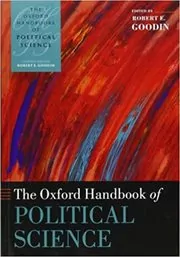
The Oxford Handbook of Political Science
For students wanting a map of the discipline and routes into further reading. Its range distinguishes it from single-argument classics, though the specialist chapters work better as a reference than as an easy first introduction.
What it's about
Edited by Robert Goodin, this handbook surveys major branches and debates within political science. Contributors examine political theory, institutions, parties, behavior, psychology, international relations, political economy, and public policy, connecting the discipline’s development with directions for further inquiry.
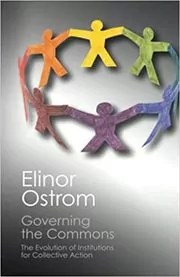
For readers who want to understand cooperation through institutions and real cases. Its treatment of shared resources moves beyond broad claims about markets or government, though the analytical detail rewards slow reading and some background.
What it's about
Elinor Ostrom examines how communities manage natural resources shared by many users. Comparing successful and unsuccessful arrangements, she investigates the institutions supporting collective action and questions assumptions that only privatization or central government can govern common resources.
Also recommended by
1 person- Stewart Brand recommended this book
Stewart Brand
Stewart Brand recommended this book on his "Selected Books for the Manual for Civilization" blog post.
Stewart Brand's recommendation of this book
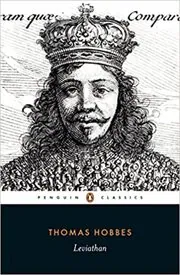
Leviathan
For readers asking why people accept strong political authority. Its systematic argument provides a sharp contrast with Locke’s limited government, though seventeenth-century language and extended religious discussion can make an unabridged edition demanding.
What it's about
Thomas Hobbes develops his account of human nature, society, and political authority in this seventeenth-century treatise. He argues for a social contract under a powerful sovereign, examining the conditions of order and the relationship between civil and religious power.
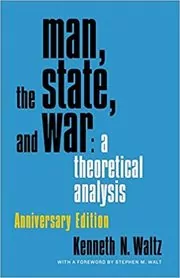
For readers beginning international relations who want to compare explanations for war. Its three-level framework organizes competing arguments clearly, though it is a theoretical foundation rather than a survey of recent conflicts.
What it's about
Kenneth Waltz examines explanations for war through three perspectives: human nature and individual leaders, the internal organization of states, and the international system. Engaging with political thinkers, he considers how these different accounts shape proposed paths toward peace.

On Liberty
For readers interested in free expression and the limits of social coercion. Its focused argument is easier to approach than the large treatises, though applying its harm principle to concrete disputes still requires judgment.
What it's about
John Stuart Mill examines the limits society may place on individual freedom, defending thought, discussion, and different ways of living. He argues that coercion requires harm to others rather than mere disapproval of a person’s choices.
Second Treatise of Government
For readers tracing arguments for consent, property, and resistance to government. Its direct engagement with legitimate authority pairs well with Leviathan, though its historical assumptions need scrutiny rather than automatic acceptance.
What it's about
John Locke sets out an account of limited government, private property, and the right to resist political authority. The treatise examines the foundations and proper extent of civil power and the conditions under which government may be challenged.
For readers ready to study revolutions through comparative historical research. Its attention to states and international pressures provides an alternative to leader-centered explanations, though the case detail makes it demanding for a first political science book.
What it's about
Theda Skocpol compares the French, Russian, and Chinese revolutions to explain major transformations of states and societies. Her historical analysis emphasizes how state structures, international pressures, and class relations interact, challenging explanations centered primarily on revolutionary ideology or leadership.
The Communist Manifesto
For readers wanting the original short statement of Marx and Engels’s revolutionary politics. Its polemical clarity makes the argument easy to locate, though it is a political intervention rather than a balanced introduction to political science.
What it's about
Karl Marx and Friedrich Engels set out their account of class conflict and call for working people to organize against capitalism. The pamphlet explains their theory of communism and proposes a transformation of property relations and political power.
The Israel Lobby and U.S. Foreign Policy
For readers studying interest groups and US foreign policy who want a sustained, contested argument. Its focused case invites close scrutiny of influence, though it should be read alongside competing explanations rather than as settled consensus.
What it's about
John Mearsheimer and Stephen Walt examine American support for Israel and argue that pro-Israel lobbying shapes US foreign policy. They assess the coalition’s influence on debate and Middle Eastern policy, questioning how these decisions relate to American and Israeli interests.
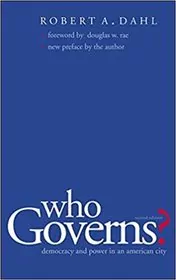
For readers interested in how political power can be investigated in practice. Its city-level case gives abstract debates about elites and pluralism concrete form, though conclusions from one American setting require care when applied elsewhere.
What it's about
Robert Dahl investigates the distribution of political power through a close study of New Haven, Connecticut. He challenges the idea of a single ruling elite, examining how groups with competing interests participate in decisions within an American city.
Sources
- 1
The Best Political Science Books
fivebooks.com
- 2
25 Most Influential Political Science Books 2010–2026
academicinfluence.com
- 3
Political Science Books
goodreads.com
- 4
The Political Science Books Top 100
listmuse.com
- 5
10 Political Science Books Everyone Should Read
dummies.com
- 6
What are the MUST READ Political Science books?
reddit.com
- 7
10 Best Political Science Books for Beginners
sociologygroup.com

Edited by
Software engineer whose passion for tracking book recommendations from podcasts inspired the creation of MRB.
Lead investor at 3one4 Capital whose startup expertise and love for books helped shape MRB and its growth.
Comments
Spotted a missing book, a wrong order or a mistake? Tell us and we'll fix this page.
We're a reading guide, not the author or publisher, so we can't send books or pass on messages.