
20 Best Political Books
The best political books, ranked by how many expert sources recommend each one, with notes for choosing theory, biographies, fiction, and guides to institutions.
Our take
Political books ask how power is gained, justified, exercised, and resisted. They can introduce theories of legitimate government, explain institutions, follow a political life, or explore the effects of authority through fiction. The selection here crosses those forms, so a useful starting point depends on whether you want a general orientation, a historical case, or an argument to examine closely.
What You Should Know About Politics . . . But Don't introduces American policy debates, while Why We're Polarized develops an explanation of political division. The Republic and The Social Contract address deeper questions about justice and authority. Long Walk to Freedom offers an autobiographical perspective, and Team of Rivals examines leadership through political relationships. Fiction such as Animal Farm and All the King's Men approaches power through character and story. Start with Conrad for a broad introduction to US issues, or Animal Farm for a short fictional entry before moving into more demanding theory and history.
20 books · 8 sources · Last updated
As an Amazon Associate, we earn from qualifying purchases (at no extra cost to you).
How to choose from this list
Skip to the full rankingIf you're new to American policy debates: What You Should Know About Politics . . . But Don't → Why We're Polarized
If you want to examine political authority: The Republic → The Social Contract
If you want a short fictional introduction: Animal Farm → 1984
If you want political lives and leadership: Long Walk to Freedom → Team of Rivals
If you want to understand legal power: The Nine → We the Corporations
If you prefer a compact political argument: The Prince → On Tyranny
The 20 books, ranked
Ranked by how many expert sources name each book. Ties go to the book more people recommend.

The Republic
For readers who want to examine justice, education, and political authority at their foundations. Plato's dialogue makes disagreement part of the inquiry, though its length and proposals for an ideal state require sustained argument rather than quick practical application.
What it's about
Through conversations between Socrates and his companions, Plato examines justice and the relationship between an ideal community and its citizens. The inquiry expands into questions about goodness, knowledge, education, and the kind of rulers a well-ordered society requires.
Also recommended by
6 people Mark Zuckerberg recommended this book
Mark Zuckerberg
On the "favorite books" section of Mark Zuckerberg's Facebook profile.
Mark Zuckerberg's recommendation of this book  Sam Altman recommended this book
Sam Altman
One of Sam Altman's answers to "What are some of the best books you recommend for a young startup founder?"
Sam Altman's recommendation of this book  Maria Popova recommended this book
Maria Popova
"I’m actually gobsmacked that this isn’t required in order to be sworn into office, like the Constitution is required for us American immigrants when it comes time to gain American citizenship." - Maria Popova
Maria Popova's recommendation of this book  Vlad Tenev recommended this book
Vlad Tenev
"I like the classics such as The Republic by Plato and The Art of War by Sun Tzu." - Vlad Tenev
Vlad Tenev's recommendation of this book  Nolan Bushnell recommended this book
Nolan Bushnell
"[One of my ten favorite books] I might think of if I were asked the question at an interview this minute." - Nolan Bushnell
Nolan Bushnell's recommendation of this book  Mark Manson recommended this book
Mark Manson
Mark Manson recommended this book on his website.
Mark Manson's recommendation of this book

The Communist Manifesto
For readers who want to encounter a major political argument in its original compact form. The polemical clarity makes its account of class struggle easy to identify, though its historical claims and predictions need context and critical comparison.
What it's about
Karl Marx and Friedrich Engels set out their account of class conflict and call for working people to organize against capitalism. The pamphlet explains their theory of communism and proposes a transformation of property relations and political power.

1984
For readers who want political power explored through dystopian fiction. Orwell makes the manipulation of language and memory concrete, though its deliberately extreme setting offers a concentrated warning rather than a description of how ordinary democratic institutions work.
What it's about
In a future dictatorship where Big Brother watches everyone, Winston Smith rewrites history for the Party but quietly begins to doubt the system. His search for truth and love becomes a struggle against torture, surveillance, and the erasure of reality.
Also recommended by
14 people Tristan Harris recommended this book
Tristan Harris
"[The author]'s dark vision." - Tristan Harris
Tristan Harris's recommendation of this book  Jordan Peterson recommended this book
Jordan Peterson
Recommended on Jordan Peterson's website.
Jordan Peterson's recommendation of this book  J. Cole recommended this book
J. Cole
J. Cole mentioned reading this book on The Fayetteville Observer.
J. Cole's recommendation of this book  Emma Watson recommended this book
Emma Watson
On the "books read" section of Emma Watson's GoodReads profile.
Emma Watson's recommendation of this book  Noam Chomsky recommended this book
Noam Chomsky
On the "Top 100 Books Referenced by Noam Chomsky" list.
Noam Chomsky's recommendation of this book  Richard Branson recommended this book
Richard Branson
Richard Branson recommended this book on his "70 must-read books" blog post.
Richard Branson's recommendation of this book +8
More recommendations
- Matt Mullenweg
Matt Mullenweg mentioned this book on "The Tim Ferriss Show" podcast.
- Christopher Hitchens
"We were all expected to read Animal Farm and [this book], which had been placed on the syllabus as part of the curriculum of the Cold War." - Christopher Hitchens
- Sahil Lavingia
Sahil Lavingia recommended this book on Notion.
- Jenn Im
"Highly recommend." - Jenn Im
- Winston Churchill
One of Winston Churchill's favorite books.
- Diane Rehm
"Examines the consequences of totalitarianism, mass surveillance and government repression." - Diane Rehm
- Anna Akana
Anna Akana recommended this book on Twitter.
- Brad Delong
Brad Delong recommended this book in his website.
- Matt Mullenweg

The Prince
For readers interested in the acquisition and preservation of political power. Machiavelli's compact attention to rulers' choices creates a sharp contrast with ideal-state theory, though the historical examples and disputed interpretation reward an edition with a substantial introduction.
What it's about
Niccolò Machiavelli examines how rulers acquire power, retain authority, and respond to political threats. Drawing on historical examples, he considers loyalty, fear, force, and the difficult relationship between effective rule and conventional morality.
Also recommended by
8 people Neil deGrasse Tyson recommended this book
Neil deGrasse Tyson
"To learn that people not in power will do all they can to acquire it, and people in power will do all they can to keep it." - Neil deGrasse Tyson
Neil deGrasse Tyson's recommendation of this book  Stewart Brand recommended this book
Stewart Brand
Stewart Brand recommended this book on his "Selected Books for the Manual for Civilization" blog post.
Stewart Brand's recommendation of this book  Ryan Holiday recommended this book
Ryan Holiday
Ryan Holiday recommended this book on his blog.
Ryan Holiday's recommendation of this book  Eric Ripert recommended this book
Eric Ripert
"A fascinating study and still wholly relevant." - Eric Ripert
Eric Ripert's recommendation of this book  Fred Wilson recommended this book
Fred Wilson
Fred Wilson recommended this book on his blog.
Fred Wilson's recommendation of this book  Garry Tan recommended this book
Garry Tan
"Methods still valuable and can be used for good." - Garry Tan
Garry Tan's recommendation of this book +2
More recommendations
- Ryan Shea
Ryan Shea recommended this book on his website.
- Patrick Bet-David
Patrick Bet-David recommended this book on his website.
- Ryan Shea

For readers who want political struggle understood through an individual's life. Mandela connects personal costs with organization, imprisonment, and negotiation, though the long autobiographical account presents his own perspective rather than a complete history of South Africa.
What it's about
Nelson Mandela recounts his childhood, political awakening, and involvement in the struggle against apartheid. His autobiography explores family life, underground activism, and twenty-seven years of imprisonment alongside the development of his commitment to a democratic South Africa.
Also recommended by
2 people Barack Obama recommended this book
Barack Obama
Barack Obama's favorite books of 2018 list.
Barack Obama's recommendation of this book - Richard Branson recommended this book
Richard Branson
Richard Branson recommended this book on his "70 must-read books" blog post.
Richard Branson's recommendation of this book

The Social Contract
For readers interested in what makes collective authority legitimate. Rousseau puts freedom and popular sovereignty into direct tension, though the compressed argument and contested idea of the general will make explanatory notes especially helpful for newcomers.
What it's about
Rousseau investigates how political authority can be legitimate while preserving citizens' freedom. His argument centers on a collective agreement, popular sovereignty, and the general will, exploring the relationship between individuals, laws, government, and the shared interests of a community.

For readers interested in the relationship between racial inequality and criminal justice in the United States. Alexander develops a clear, sustained argument, though its specific analytical lens and original policy context benefit from comparison with other research.
What it's about
Michelle Alexander argues that mass incarceration and the War on Drugs perpetuate racial caste in America. Her analysis examines how a formally colorblind criminal justice system targets Black communities and creates lasting barriers after conviction.
Also recommended by
4 people- J. Cole recommended this book
J. Cole
J. Cole mentioned reading this book on The Fayetteville Observer.
J. Cole's recommendation of this book - Mark Zuckerberg recommended this book
Mark Zuckerberg
"I've been interested in learning about criminal justice reform for a while, and this book was highly recommended by several people I trust." - Mark Zuckerberg
Mark Zuckerberg's recommendation of this book  Bill Gates recommended this book
Bill Gates
"Offers an eye-opening look into how the criminal justice system unfairly targets communities of color, and especially Black communities." - Bill Gates
Bill Gates's recommendation of this book  Sunny Hostin recommended this book
Sunny Hostin
Sunny Hostin recommended this book on Twitter.
Sunny Hostin's recommendation of this book

Why We're Polarized
For readers who want an accessible explanation of contemporary American political division. Klein connects identity with institutions and media, though the US-centered framework and interpretive synthesis provide less help with political systems elsewhere or a full range of competing explanations.
What it's about
Ezra Klein examines how American political identities became increasingly aligned with race, religion, geography, and party affiliation. Drawing on history and social science, he explores how institutions and media reinforce polarization and make compromise more difficult.
Also recommended by
3 people Julia Galef recommended this book
Julia Galef
"Really enjoyed it!" - Julia Galef
Julia Galef's recommendation of this book - Mark Zuckerberg recommended this book
Mark Zuckerberg
"Goes through this decades-long analysis in the US." - Mark Zuckerberg
Mark Zuckerberg's recommendation of this book - Bill Gates recommended this book
Bill Gates
"Fundamentally about American politics, but it’s also a fascinating look at human psychology." - Bill Gates
Bill Gates's recommendation of this book

For readers interested in the personalities and internal politics of the US Supreme Court. Toobin makes an often distant institution approachable, though its period-specific cast and cases make it a historical account rather than a guide to today's Court.
What it's about
Jeffrey Toobin examines the personalities, relationships, and ideological conflicts within the United States Supreme Court. His account brings readers inside the justices' world, exploring how individual convictions and institutional politics shape decisions with consequences for the nation.
Also recommended by
1 person Gary Vaynerchuk recommended this book
Gary Vaynerchuk
"My favorite book I've ever read is [this book]. It was about the supreme court." - Gary Vaynerchuk
Gary Vaynerchuk's recommendation of this book

Deterring Democracy
For readers who want a forceful critique of American foreign policy. Chomsky tests official language against international actions in considerable detail, though the strongly argued perspective and Cold War setting require attention to evidence and alternative interpretations.
What it's about
Noam Chomsky examines American foreign policy during the Cold War and its aftermath, questioning official claims about defending freedom. He argues that the pursuit of global dominance helps explain support for authoritarian regimes and resistance to independent governments.
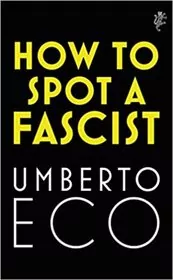
How to Spot a Fascist
For readers who want a brief introduction to Eco's thinking about recurring authoritarian traits. The essay format gives the ideas sharp focus, though its compact diagnostic language offers less historical depth than a sustained study of particular movements.
What it's about
Three timely essays, including Eco's classic piece on Ur Fascism, outline recurring traits of fascist movements, from cults of tradition to hatred of difference, and invite readers to recognize dangerous patterns in contemporary politics.
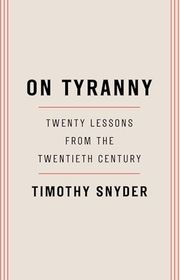
On Tyranny: Twenty Lessons from the Twentieth Century
For readers who want a brief, argued connection between twentieth-century history and civic responsibility. Snyder's twenty-lesson structure makes the themes memorable, though its urgency and compression leave less space for historical qualification or competing interpretations.
What it's about
Timothy Snyder draws twenty civic lessons from twentieth-century experiences of authoritarianism. The brief chapters connect historical examples with individual conduct, discussing institutions, professional responsibility, truth, public language, and the choices citizens make in political life.

Politics Is for Power
How to Move Beyond Political Hobbyism, Take Action, and Make Real Change
For readers interested in the difference between following political news and participating in organizations. Hersh gives sustained relationships and local involvement practical attention, though its American examples and argument-driven approach offer less of a broad political theory survey.
What it's about
Eitan Hersh examines political hobbyism, the habit of consuming political news without building influence. Research and examples of local organizing show how sustained relationships, community work, and participation in political organizations can turn interest into effective action.

For readers interested in how legal decisions shape business power. Winkler's historical approach makes corporate constitutional rights easier to trace, though the American legal focus and extended case history demand more attention than a short political introduction.
What it's about
Adam Winkler traces the history of American corporations’ efforts to gain constitutional protections. Court cases and the lawyers behind them show how a centuries-long struggle over corporate personhood helped shape decisions such as Citizens United and the political power of business.
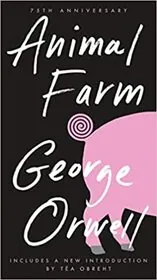
Animal Farm
For readers who prefer a short political fable to a long theoretical argument. The simple narrative makes the corruption of revolutionary ideals easy to discuss, though its allegorical compression needs historical context and leaves little room for institutional complexity.
What it's about
On a small farm, the animals overthrow their human master and promise equality, only to see new rulers rise in their place. This short, biting fable exposes how revolutions can be twisted into tyranny through fear, slogans, and lies.
Also recommended by
8 people- Jordan Peterson recommended this book
Jordan Peterson
Recommended on Jordan Peterson's website.
Jordan Peterson's recommendation of this book - J. Cole recommended this book
J. Cole
J. Cole mentioned reading this book on The Fayetteville Observer.
J. Cole's recommendation of this book  Whitney Cummings recommended this book
Whitney Cummings
Whitney Cummings mentioned this book on "The Tim Ferriss Show" podcast.
Whitney Cummings's recommendation of this book  Daniel Pink recommended this book
Daniel Pink
"I think that [this book] should be in every organizational behavior class in an MBA program." - Daniel Pink
Daniel Pink's recommendation of this book - Vlad Tenev recommended this book
Vlad Tenev
"When I was in sixth grade I remember being very upset by the ending of [this book]." - Vlad Tenev
Vlad Tenev's recommendation of this book  Christopher Hitchens recommended this book
Christopher Hitchens
"There is a timeless, even transcendent, quality to this little story." - Christopher Hitchens
Christopher Hitchens's recommendation of this book +2
More recommendations
- Sahil Lavingia
Sahil Lavingia recommended this book on Notion.
- Lex Fridman
Lex Fridman mentioned this book on Instagram.
- Sahil Lavingia
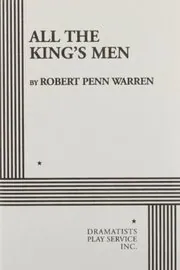
All the King's Men
For readers who prefer political questions embedded in a literary novel. Warren gives ambition and moral compromise psychological depth, though the reflective narration and regional setting demand more patience than a straightforward story of electoral competition.
What it's about
Reporter Jack Burden watches the rise of Willie Stark, a gifted populist who becomes the center of a ruthless political machine. It is a political novel, but also a story about history, guilt, and the cost of power.
Also recommended by
1 person Garry Kasparov recommended this book
Garry Kasparov
"One of my favorites." - Garry Kasparov
Garry Kasparov's recommendation of this book

A Vindication of the Rights of Woman
For readers exploring the intellectual history of women's political equality. Wollstonecraft connects education with reason and independence in a sustained argument, though the period language and assumptions about family and society need historical context.
What it's about
Mary Wollstonecraft argues that women’s apparent limitations arise from restricted education and social expectations rather than a lack of reason. This foundational feminist work connects intellectual equality with changes in women’s social position, relationships, and participation in society.

What You Should Know About Politics . . . But Don't
A Nonpartisan Guide to the Issues That Matter
For beginners who want a map of major American policy debates. Conrad explains positions across several issues in an approachable format, though the breadth limits depth and examples tied to a particular edition can age quickly.
What it's about
Jessamyn Conrad introduces major American political issues by explaining competing positions and their reasoning. This edition surveys topics including the economy, inequality, healthcare, foreign policy, education, immigration, and climate change for readers seeking a broad grounding in political debate.

For readers interested in the personal relationships behind political leadership. Goodwin's group biography makes rivalry and negotiation tangible, though the substantial length and focus on prominent individuals offer less of a general explanation of political institutions.
What it's about
Goodwin tells the story of Abraham Lincoln and the powerful men who once ran against him, then joined his cabinet. It is both a Civil War history and a sharp look at how Lincoln turned rivalry into effective leadership.
Also recommended by
7 people Alexandria Ocasio-Cortez recommended this book
Alexandria Ocasio-Cortez
Alexandria Ocasio-Cortez recommended this book on Twitter.
Alexandria Ocasio-Cortez's recommendation of this book  J.K. Rowling recommended this book
J.K. Rowling
"I lived in it the way that you do with truly great books; putting it down with glazed eyes and feeling disconcerted to find yourself in the 21st century." - J.K. Rowling
J.K. Rowling's recommendation of this book - Bill Gates recommended this book
Bill Gates
"I loved [this book]." - Bill Gates
Bill Gates's recommendation of this book  Scott Belsky recommended this book
Scott Belsky
Scott Belsky mentioned this book on "The Tim Ferriss Show" podcast.
Scott Belsky's recommendation of this book  Stewart Butterfield recommended this book
Stewart Butterfield
"Among the best historical books I've ever read (take that, Herodotus)." - Stewart Butterfield
Stewart Butterfield's recommendation of this book  Jamie Dimon recommended this book
Jamie Dimon
On Jamie Dimon's list of favorite books.
Jamie Dimon's recommendation of this book +1
More recommendations
- Sunny Hostin
"A terrific book!" - Sunny Hostin
- Sunny Hostin

The Years of Lyndon Johnson
The Path to Power; Means of Ascent; Master of the Senate; The Passage of Power
For readers who want a deeply reported study of acquiring and exercising power. Caro's attention to institutions and personal ambition makes the analysis unusually concrete, though this four-volume set requires a much larger time commitment than a single biography.
What it's about
This four-volume set follows Lyndon Johnson from his Texas childhood through congressional ambition, the disputed 1948 Senate election, legislative leadership, and his accession to the presidency. Caro examines the acquisition and exercise of political power.
Sources
- 1
25 Of The Best Political Books to Better Understand Political Issues
bookriot.com
- 2
14 of the Best Political Books to Better Understand Politics
hookedtobooks.com
- 3
Best Popular Politics Books on Goodreads (342 books)
goodreads.com
- 4
Give me political book recs : r/suggestmeabook
reddit.com
- 5
What political literature should I read? : r/PoliticalScience
reddit.com
- 6
7 Political Books That Aren’t Boring - The Good Trade
thegoodtrade.com
- 7
The Best Political Books To Read This Year | Penguin Random House
penguinrandomhouse.com
- 8
Crime Reads » 9 Essential Books To Learn About Our Badly Broken American Political System
crimereads.com






Edited by
Software engineer whose passion for tracking book recommendations from podcasts inspired the creation of MRB.
Lead investor at 3one4 Capital whose startup expertise and love for books helped shape MRB and its growth.
Comments
Spotted a missing book, a wrong order or a mistake? Tell us and we'll fix this page.
We're a reading guide, not the author or publisher, so we can't send books or pass on messages.